
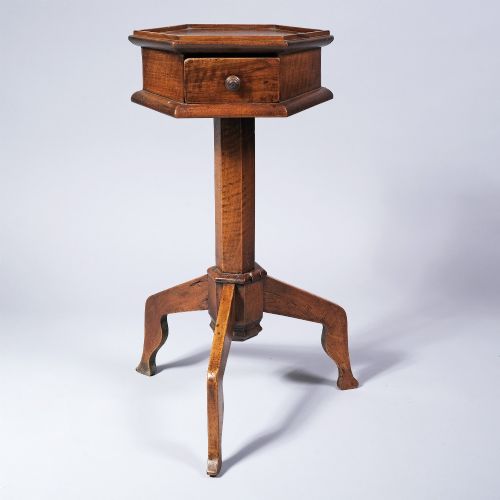
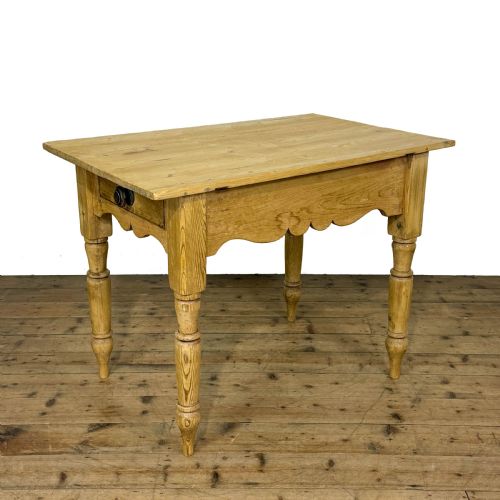
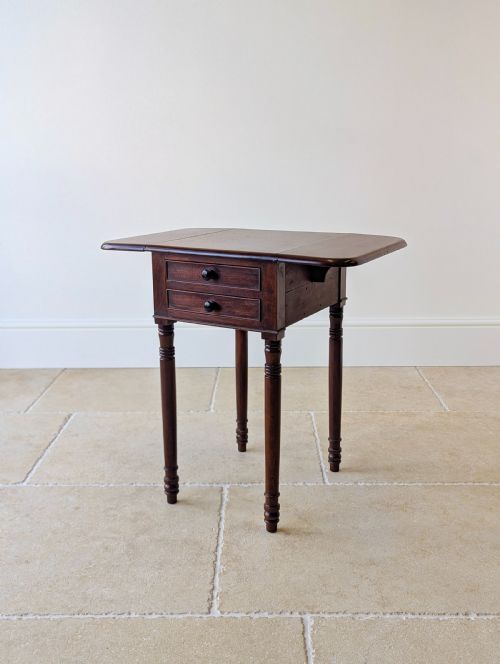
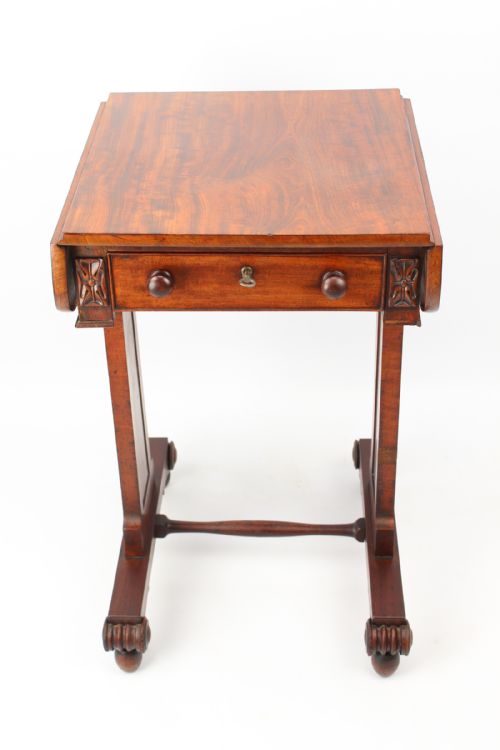

Small Wooden Work Table
A small wooden work table brings functional elegance to a room, offering compact proportions alongside clever fitted interiors designed for needlework or writing.

Small Wooden Work Table
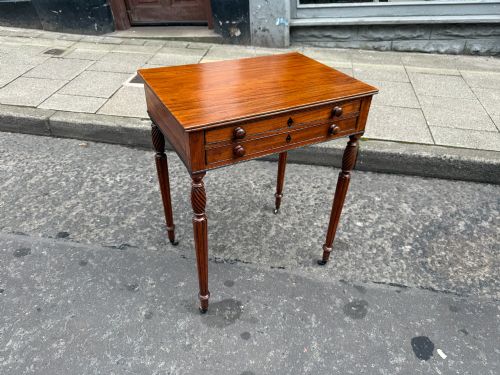
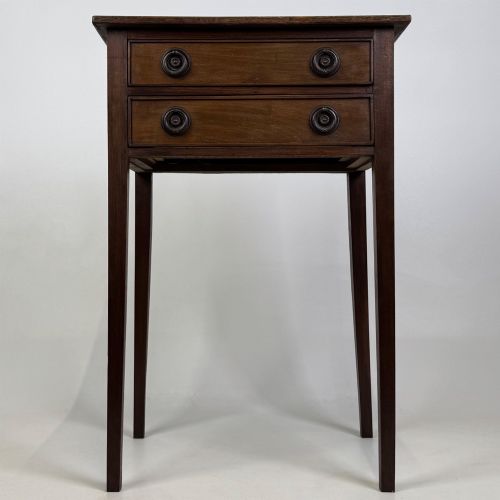
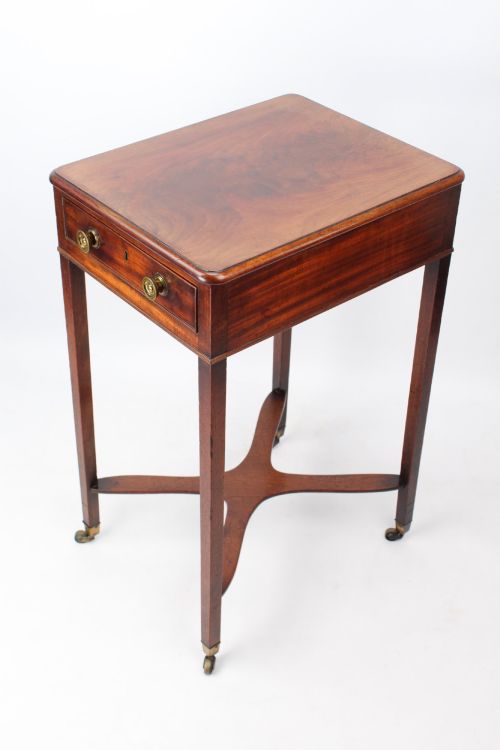
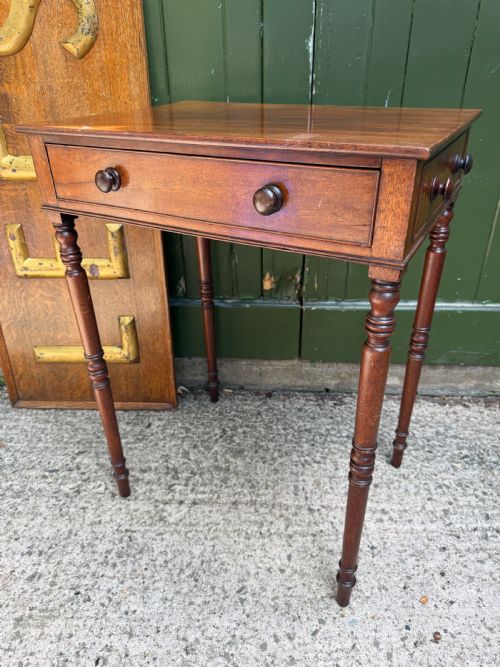
When searching for a small wooden work table, you encounter compact furnishings spanning the Georgian, Regency, Victorian, and Edwardian periods. These versatile pieces frequently function as side tables, lamp tables, or writing desks within domestic spaces.
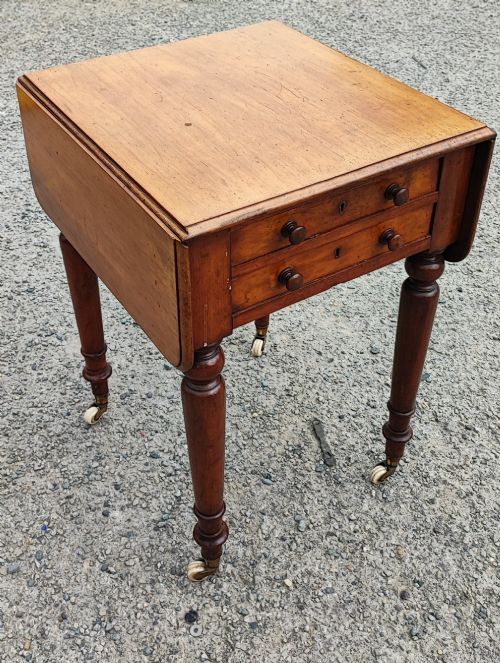
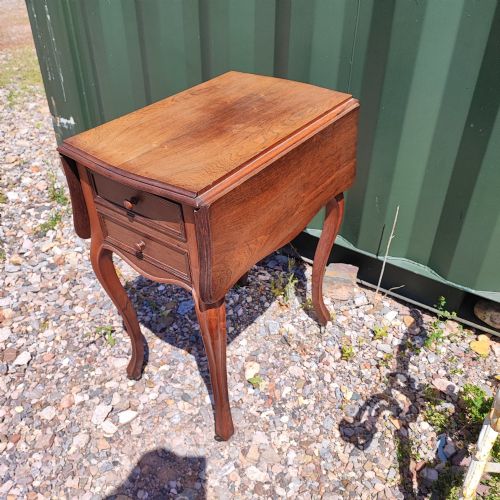
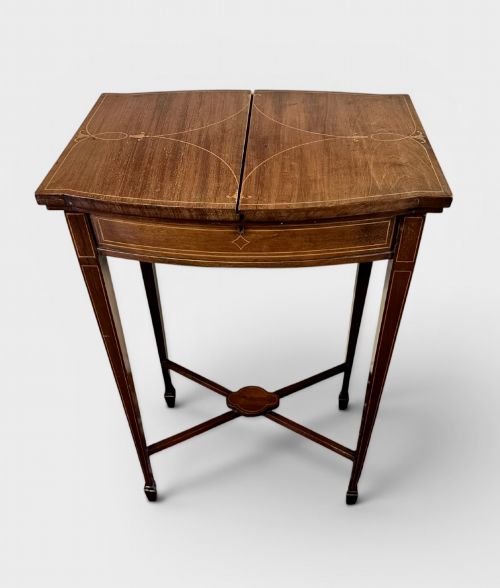
The version most commonly met on this page is the mahogany or satinwood work table, often featuring a drop-leaf or pembroke design with a fitted interior. Makers across the eighteenth and nineteenth centuries constructed these items to combine surface utility with concealed storage compartments.
Originating in diverse regional workshops, these tables demonstrate the evolution of domestic furniture from formal George III designs to practical Edwardian interpretations. Their enduring appeal lies in small proportions that adapt easily to modern rooms while retaining period character.
How they were made
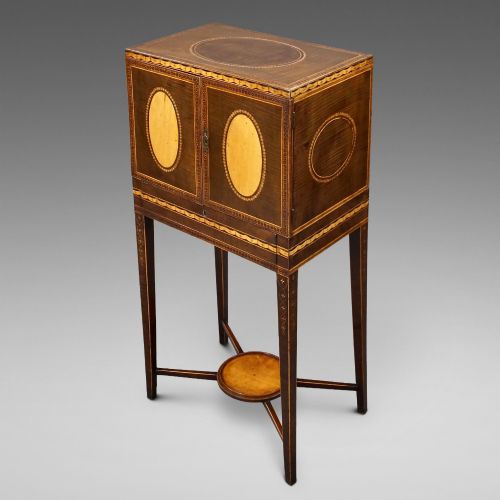
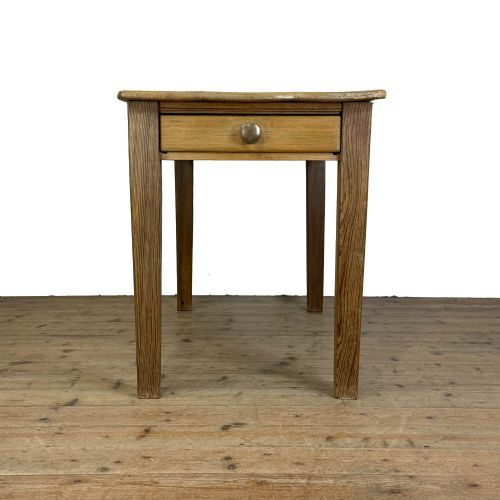
Cabinetmakers utilised dense hardwoods such as mahogany, walnut, and satinwood, often embellishing surfaces with boxwood inlay, brass accents, and contrasting veneers. Pine and oak frequently served as secondary timbers for internal framework and drawer construction.
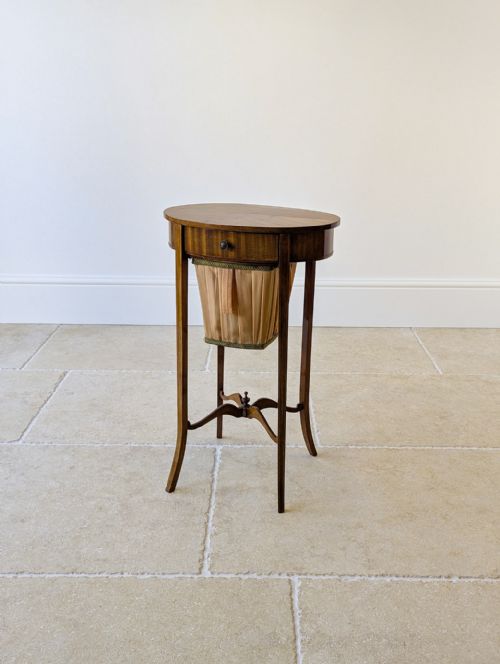
Many Victorian work tables still hide original silk workbags designed to catch loose yarn from long-forgotten embroidery projects.
What varies in quality
The distinction between standard and superior examples rests upon the precision of the cabinetmaking and the selection of timber figures. Finer pieces display meticulous attention to detail in their inlaid borders, well-figured veneers, and harmonious proportions.
Integrity of the fitted interior and the smoothness of drawer mechanisms further differentiate the range. High-grade specimens retain their original brass hardware, structurally sound joints, and uncompromised internal compartments designed for specialised tasks.
The Small Wooden Work Table Glossary
- Pembroke table
- A small occasional table with hinged flaps on either side that can be raised or lowered. These versatile surfaces gained popularity during the Georgian period for breakfast or light writing use.
- Inlay
- A decorative technique where pieces of contrasting wood, such as boxwood or satinwood, are inserted into recessed portions of a base timber. This creates geometric patterns or floral motifs across the surface.
- Drop-leaf
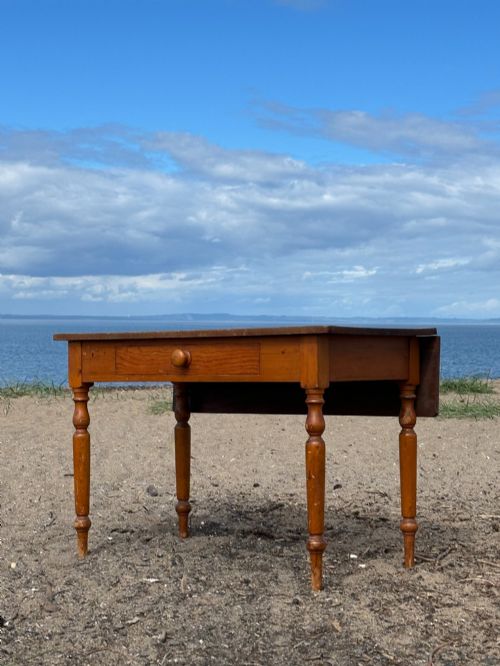
- A tabletop design featuring movable side leaves supported by hinged brackets or swinging legs. It allows the overall footprint of the furniture to expand or contract according to space requirements.
- Fitted interior
- An organised set of small compartments, lidded boxes, and shallow wells concealed beneath the work surface. These arrangements were originally intended to keep sewing implements or writing materials orderly.
Small Wooden Work Table: Frequently Asked Questions
How were work tables used historically?
These tables served as personal workstations for women of the household, housing threads, needles, and textile projects within their fitted compartments. They doubled as convenient writing surfaces and side tables in private sitting rooms.
Over time, their adaptable proportions allowed them to transition from specialised sewing furniture into versatile occasional tables for lamps and books.
How do I identify a Georgian work table?
Georgian work tables typically display restrained classical proportions, straight or slightly tapered legs, and high-quality mahogany or satinwood construction. Their hardware tends to be understated, relying on fine timber grain rather than heavy ornamentation.
Internal layouts in this period focus on straightforward compartmentalisation, often accompanied by pull-out fabric bags for textiles.
Where should I place a work table?
A work table fits easily beside a sofa or armchair as a lamp table, utilising its compact footprint to provide surface space without crowding a room. Their finished backs and freestanding forms allow them to sit away from walls.
Bedside placement also works well, offering a surface for reading materials alongside concealed drawer storage for small personal items.