
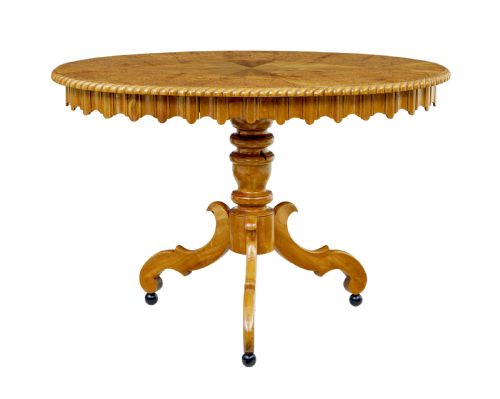
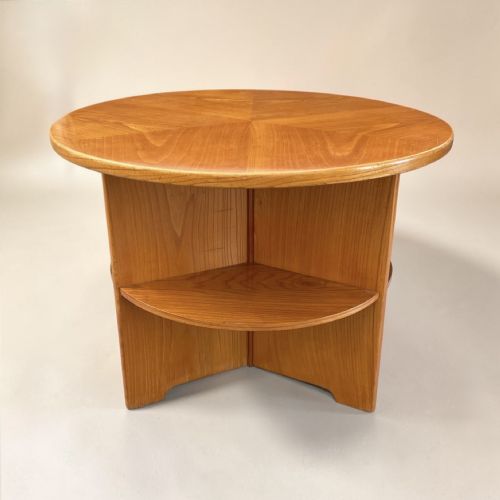


Honey Wood Occasional Table
A honey wood occasional table brings warmth and compact utility to a room, offering a practical surface with distinctive timber grain.
Honey Wood Occasional Table
A honey wood occasional table encompasses smaller auxiliary furniture designed for flexible placement around a room, spanning coffee tables, side tables, and nests. When searching this phrase, buyers encounter pieces configured for specific domestic tasks, such as holding lamps, drinks, or books beside seating.
The selections available here range widely across periods from the nineteenth century through the mid twentieth century, reflecting diverse international origins including Swedish, French, and Chinese workshops. Forms vary from simple circular and oval tops to folding frames and nested sets, often designated as side tables, coffee tables, or occasional tables.
Materials dominate the visual character, with timber grain providing the primary decorative effect across various stylistic movements. Buyers are most likely to meet pieces embodying Biedermeier revival, Art Deco, Arts and Crafts, and mid-century modern design sensibilities.
How they were made
Construction relies heavily on distinctive timbers and veneers selected for their visual movement, including burr birch, burr elm, satinwood, alder root, maple, and yew wood. Cabinetmakers utilised these figured woods to create striking patterns on table tops, often supported by solid timber frames.
Techniques range from traditional French polishing and fine joinery to specialist veneer work that highlights the natural figuring of the wood. Metal elements such as brass occasionally appear in mounts or fittings, complementing the warm tones of the primary timber.
Some tables double as folding bamboo or nesting units, proving that past generations loved adaptable furniture just as much as we do.
What varies in quality
The distinction between standard examples and finer pieces rests in the selection of the wood veneer and the precision of the cabinetmaking. Highly figured timbers like burr birch and burr elm require expert handling to lay smoothly across complex forms, ensuring stability alongside visual impact.
Proportion and structural integrity define the upper tier of these tables, where the grain alignment follows the contours of the top precisely. Subtle details in inlay work and the smoothness of folding mechanisms or nested fits indicate the level of craftsmanship invested in the piece.
Heal's
The Honey Wood Occasional Table Glossary
- Burr birch
- A woody outgrowth on a birch tree containing distorted grain patterns that produce highly decorative swirls when sliced into veneer. Cabinetmakers prize this material for creating striking, figured table tops.
- Satinwood
- A durable, yellowish timber with a lustrous, shimmering surface resembling satin. It was frequently utilised in high-end nineteenth-century furniture for decorative veneers and inlay.
- Biedermeier revival
- A nineteenth and early twentieth-century design movement that reinterprets the clean, utilitarian elegance of earlier Germanic domestic furniture. It prioritises honest wood grains and restrained ornamentation over heavy carving.
- Nest of tables
- A set of graded tables designed to fit neatly beneath one another when not in use. This clever space-saving form gained popularity during the early twentieth century.
- Occasional table
- A small, movable table intended for intermittent use around a living space. These pieces serve functions ranging from lamp placement to holding beverages.
Honey Wood Occasional Table: Frequently Asked Questions
What is a honey wood occasional table used for?
These versatile pieces serve as accessible surfaces for lamps, books, and drinks within a living space. Their compact dimensions allow them to move easily between rooms according to daily needs.
They function equally well beside a sofa, in a hallway, or tucked into an empty corner. The warm timber tones bring natural texture to interior layouts.
How do I identify a Biedermeier revival table?
Biedermeier revival pieces typically display clean architectural lines with an emphasis on unadorned timber surfaces. The design focuses on the natural beauty of the wood grain rather than applied ornamentation.
Such tables often feature warm honey-coloured veneers like birch or elm, paired with straightforward geometric forms. They reflect nineteenth-century ideals of domestic comfort and practical utility.
Where were these occasional tables made?
The pieces originate from various European and international workshops, spanning Swedish, French, and British cabinetmaking traditions. Different regions developed distinct preferences for specific native timbers and construction techniques.
Swedish makers frequently utilised local birch and alder roots, while British and French workshops employed satinwood, ash, and exotic veneers. This geographic diversity creates a rich mix of styles within the category.
How should I care for a wood veneer table?
Protect the polished timber surface by avoiding direct sunlight and excessive moisture. Use coasters and placemats to prevent heat marks or liquid rings from damaging the delicate veneer.
Routine maintenance involves gentle dusting with a soft, dry cloth to preserve the natural lustre of the wood. Avoid harsh chemical cleaners that can strip the historic polish.