

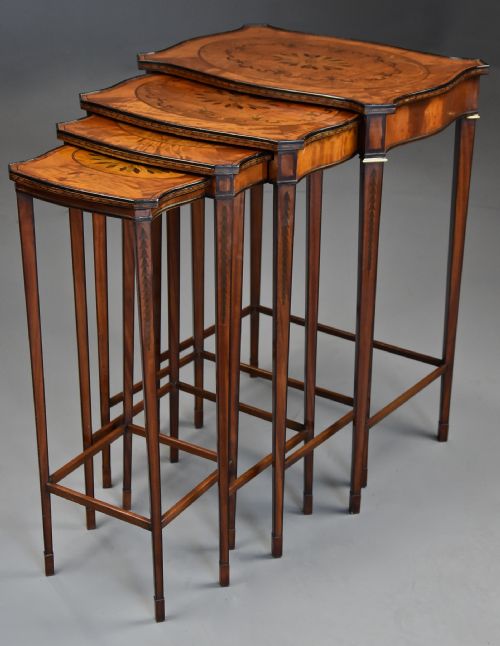


Brown Satinwood Accent Table
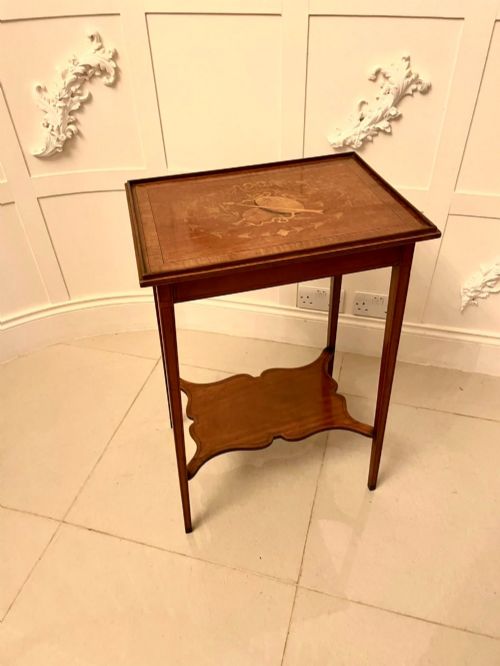
A brown satinwood accent table brings warmth and refined surface detail to a room, drawing on centuries of cabinet-making traditions.
Brown Satinwood Accent Table
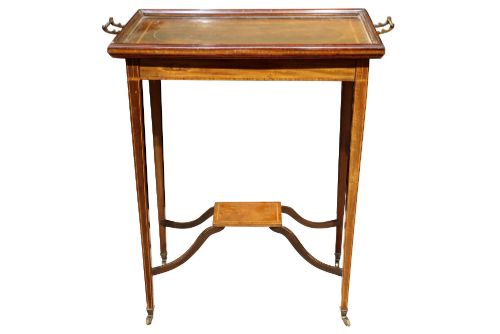
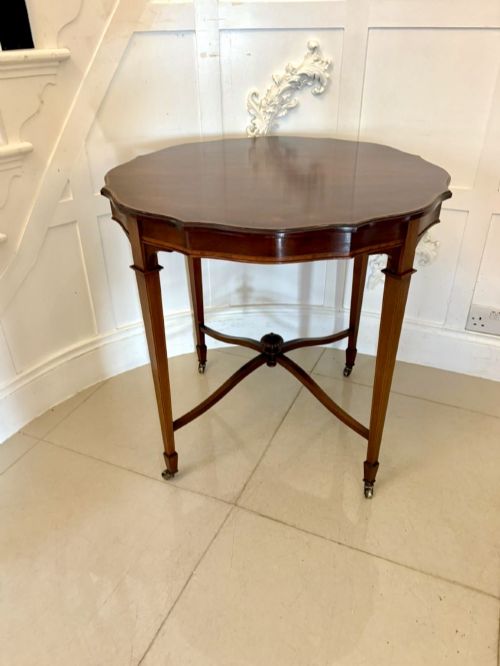
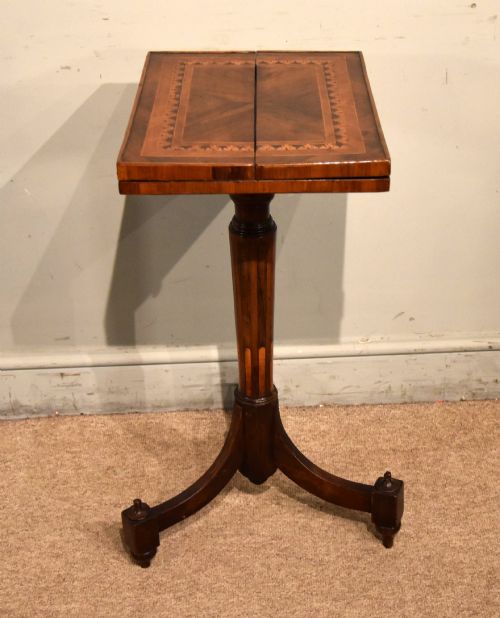
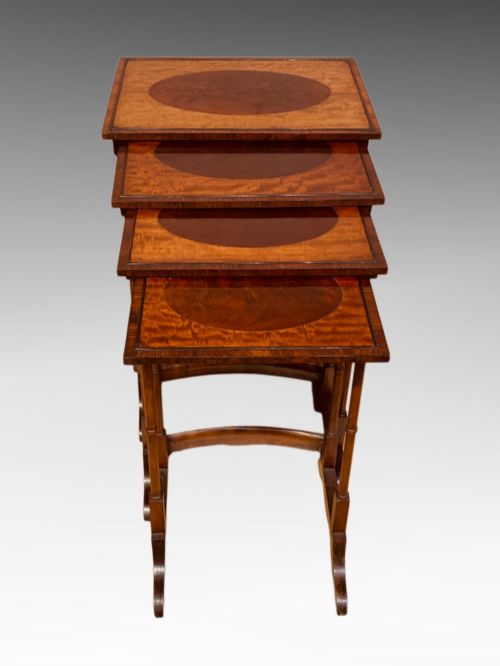
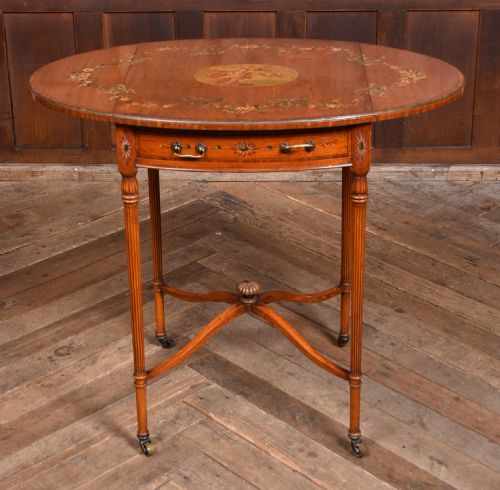
When searching for a brown satinwood accent table, buyers encounter a variety of small occasional forms designed to sit beside seating or against walls. The selection spans compact lamp tables, drop-flap Pembroke tables, nesting quartetto sets, and multi-tiered occasional tables.
The Edwardian period and the Sheraton Revival style dominate the current listings, alongside earlier Georgian and Victorian examples. These pieces frequently employ contrasting timbers and delicate proportions to serve functional roles in domestic interiors.
How they were made
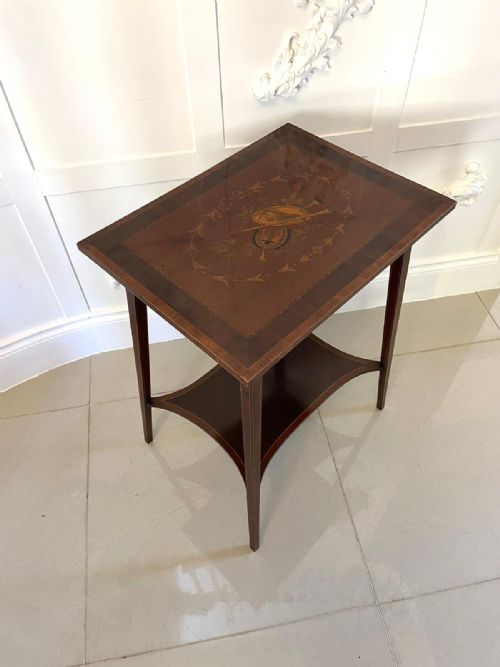
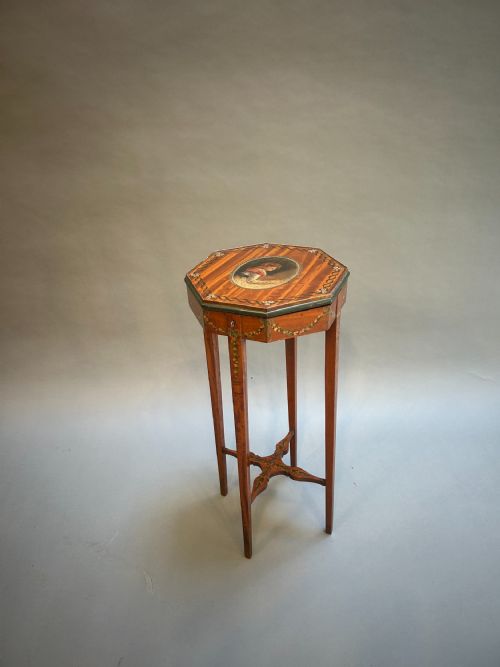
Cabinet-makers constructed these tables using solid structural woods such as mahogany, applying satinwood veneers and banding to create contrasting tonal surfaces. Artisans incorporated intricate boxwood stringing, shell motifs, and painted Neoclassical decorations to embellish the tops.
Veneered surfaces required precise hand-cutting and application over timber cores, while drop-leaf and nesting mechanisms demanded careful joinery. Brass fittings frequently appeared on casters, handles, and hinges to complement the warm tones of the wood.
Some Edwardian nested tables are cleverly engineered as quartetto sets, offering four surfaces that hide away like secret Russian dolls.
What varies in quality
The sophistication of the marquetry and inlay work distinguishes standard items from finer productions. Sharply defined botanical motifs, balanced proportions, and careful selection of figured satinwood veneers indicate higher craftsmanship.
The structural integrity of joints, the precision of serpentine or kidney-shaped forms, and the preservation of original painted surfaces determine the standing of each table within its period.
The Brown Satinwood Accent Table Glossary
- Satinwood
- A lustrous tropical hardwood native to Ceylon and India, prized for its golden colour and smooth grain. Cabinet-makers used it extensively as a veneer and for banding on 18th and 19th-century furniture.
- Quartetto nest
- A set of four graduating tables designed to fit neatly beneath one another. They gained popularity during the Edwardian Sheraton Revival period.
- Marquetry
- The art of applying pieces of veneer to a structure to form decorative patterns and pictures. Craftsmen utilised various coloured timbers to achieve pictorial depth.
Brown Satinwood Accent Table: Frequently Asked Questions
What is a brown satinwood accent table used for?
These versatile pieces serve as functional surfaces for lamps, books, and decorative objects in sitting rooms and hallways.
Their compact dimensions allow them to fit easily beside armchairs or into smaller alcoves without overwhelming the floor space.
How do I identify an Edwardian Sheraton Revival table?
Edwardian Sheraton Revival tables date from around 1900 and draw heavily on 18th-century neoclassical designs. They often feature painted motifs, satinwood banding, and tapered legs.
The lightness of construction and detailed inlay work clearly separate them from heavier Victorian furniture.
What is the difference between a Pembroke table and an occasional table?
A Pembroke table possesses folding leaves on two opposite sides, allowing the surface area to expand when needed. It frequently includes one or more small drawers.
An occasional table remains fixed in size and serves general display or supporting purposes around the room.
How should I care for antique satinwood furniture?
Keep wooden tables away from direct sunlight and strong heat sources to prevent the veneers from drying out and cracking. Regular dusting with a soft, dry cloth maintains the polished finish.
A quality beeswax applied sparingly helps preserve the natural lustre of the timber.