


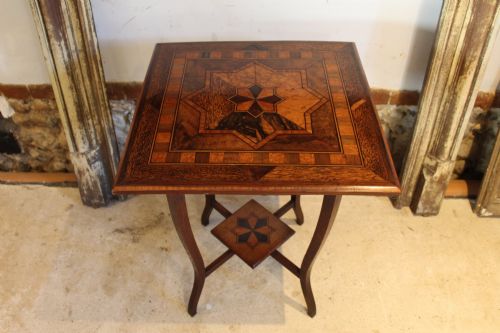
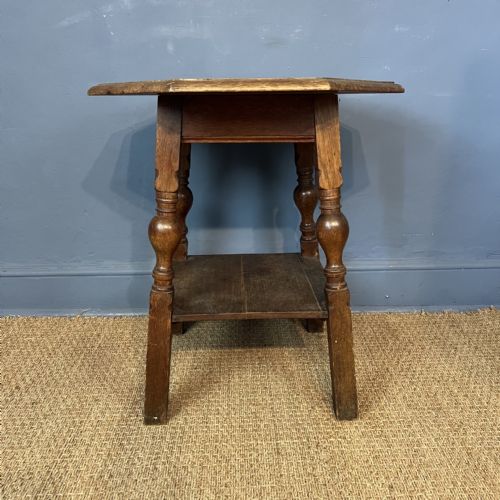
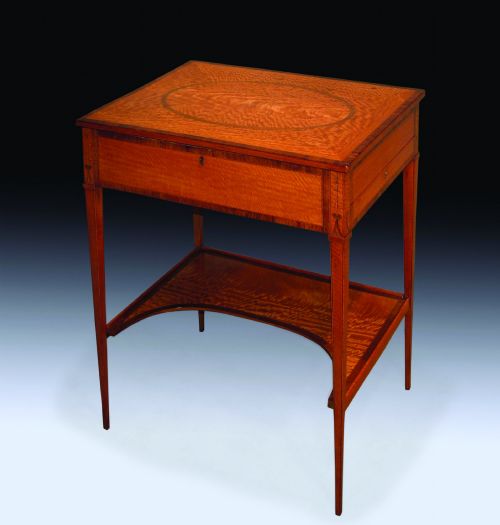
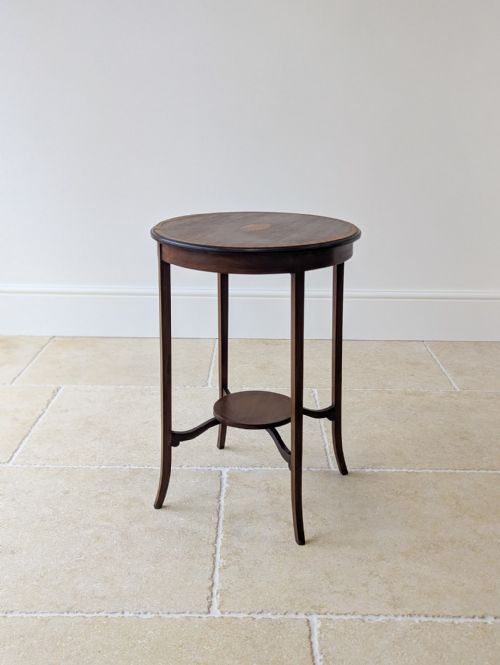


Undertier Occasional Table
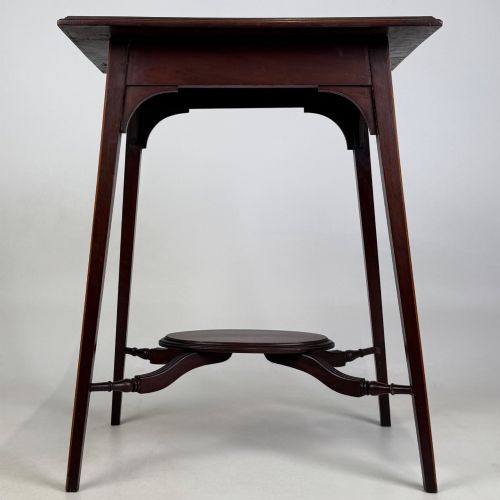
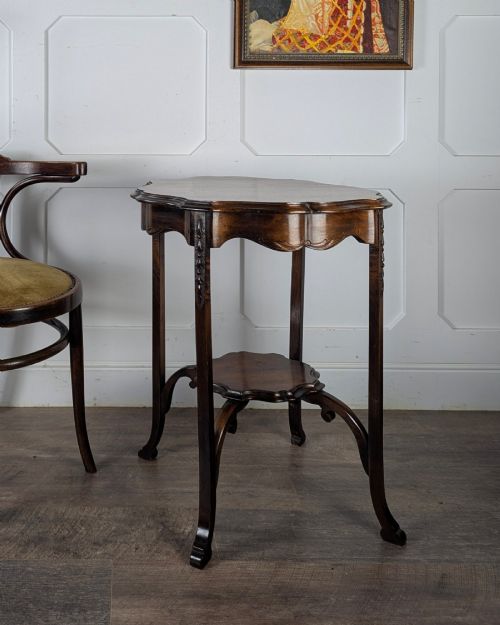
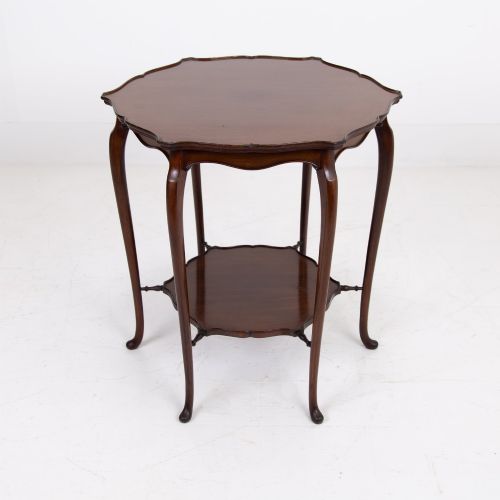
An undertier occasional table is a handy stand for a lamp or book, most commonly found here in Edwardian mahogany with a lower shelf.
Undertier Occasional Table
An undertier occasional table provides a compact surface for everyday use, with an extra lower shelf positioned between the legs for storage or display. Buyers searching for an undertier occasional table often find versatile lamp tables and side tables designed to sit beside armchairs or in corners.
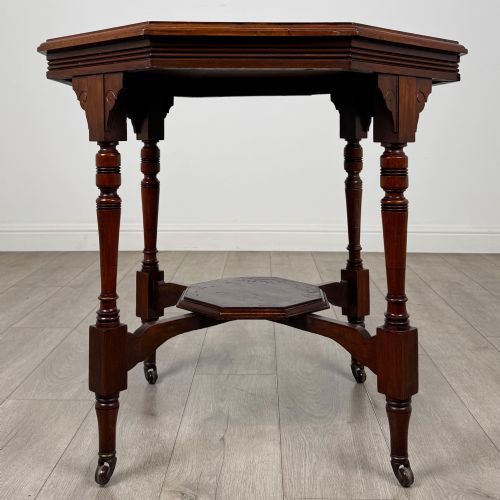
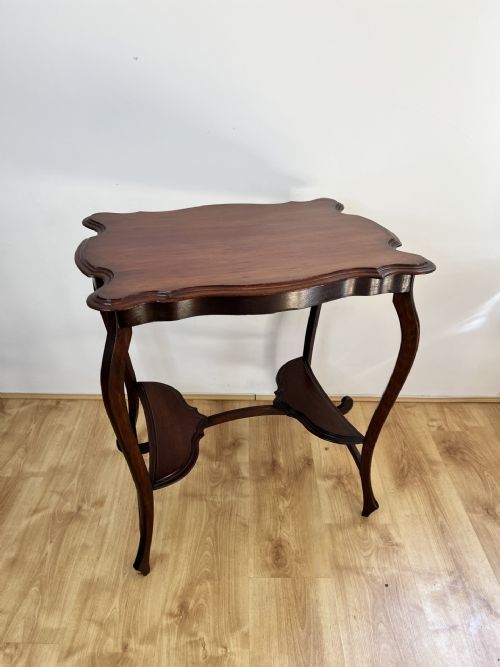
The pieces seen on this page span the Victorian and Edwardian eras, alongside several from around nineteen hundred. They take various top shapes, including circular, oval, square, octagonal, and six-sided formats.
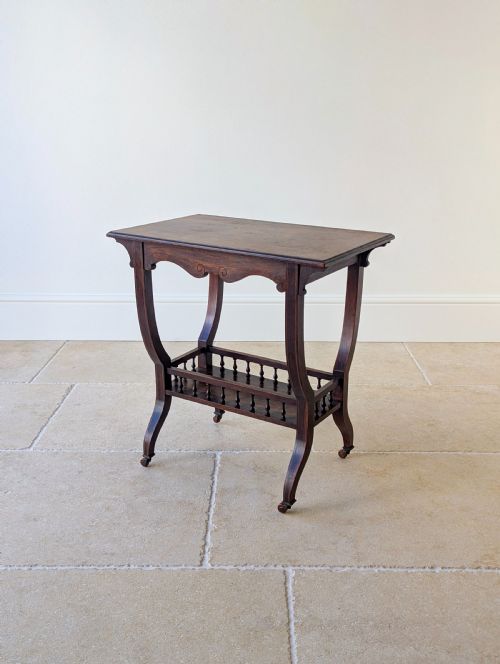
Makers of these tables utilised classic forms such as Sheraton and Chippendale revivals, alongside robust Arts and Crafts designs. Simpler country versions in pine, elm, and oak also appear, showing how widely the form was produced.
How they were made
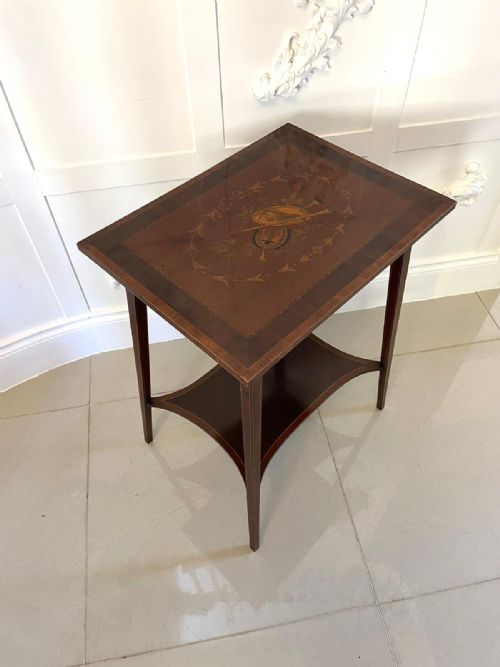
Cabinet makers constructed these tables primarily in mahogany, walnut, and oak, frequently employing satinwood, rosewood, and boxwood for decorative detailing. Inlays of satinwood and ebony create geometric or floral patterns across table tops and aprons.
Many examples feature turned or tapered legs supporting both the main top and the lower undertier shelf. Finer pieces incorporate marquetry decoration, painted surfaces, carved elements, or drop leaves for added function.
One cheerful country version arrives painted in a grey finish, ready to brighten a quiet hallway.
What varies in quality
Quality in an undertier occasional table rests upon the choice of timber and the crispness of its construction. Dense mahogany and figured walnut with balanced grain elevate a piece above standard utility furniture.
Detailing separates standard tables from finer examples. Precision in satinwood inlay, hand-carving on legs, and sturdy joinery where the undertier meets the legs indicate superior workshop practice.
Liberty and Co·Haentgos Freres Paris·Liberty of London
The Undertier Occasional Table Glossary
- Undertier
- A secondary lower shelf fitted between the legs of a table to provide extra space for books or small items.
- Marquetry
- A technique of inlaying decorative veneers of various woods into a background panel to form pictorial or geometric patterns.
- Occasional table
- A small, movable table designed to serve a specific, transient purpose in a room.
- Satinwood
- A hard, yellowish-brown timber from tropical trees, prized for its smooth grain and reflective lustre in inlay work.
- Cricket table
- A small, round three-legged wooden table originating from domestic country use.
Undertier Occasional Table: Frequently Asked Questions
What is an undertier occasional table used for?
These pieces serve as movable stands for lamps, tea cups, or decorative objects in sitting rooms and hallways. The lower shelf provides extra space to keep small items off the main surface.
Their compact proportions allow them to fit easily beside armchairs or in unused corners without crowding a room.
How do I identify an Edwardian table?
Edwardian tables often feature light timbers like mahogany or satinwood, sometimes decorated with delicate inlay work. They reflect a revival of eighteenth-century Sheraton and Chippendale styles.
Turned legs and the presence of a lower undertier shelf are typical structural details from this period.
Are all these tables made of mahogany?
Mahogany is common, but makers also utilised walnut, oak, satinwood, and rosewood. Country pieces often use pine, elm, or oak.
Inlays introduce contrasting woods such as boxwood and ebony alongside painted surface decorations.
What makes an Arts and Crafts table different?
Arts and Crafts examples focus on honest construction in solid oak rather than veneered surfaces or delicate inlays. They show the influence of makers such as Liberty and Co.
Their forms are simpler and sturdier, celebrating traditional woodworking methods over Revival ornamentation.