

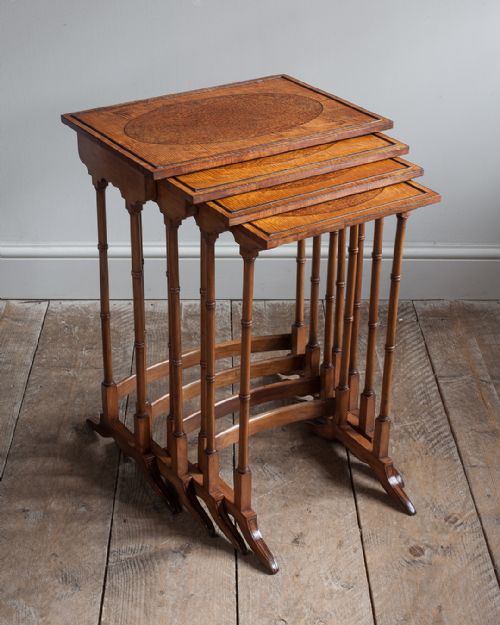


Golden Satinwood Occasional Table
A golden satinwood occasional table brings warmth and refined light to a room, drawing the eye with its shimmering timber and delicate inlay.
Golden Satinwood Occasional Table
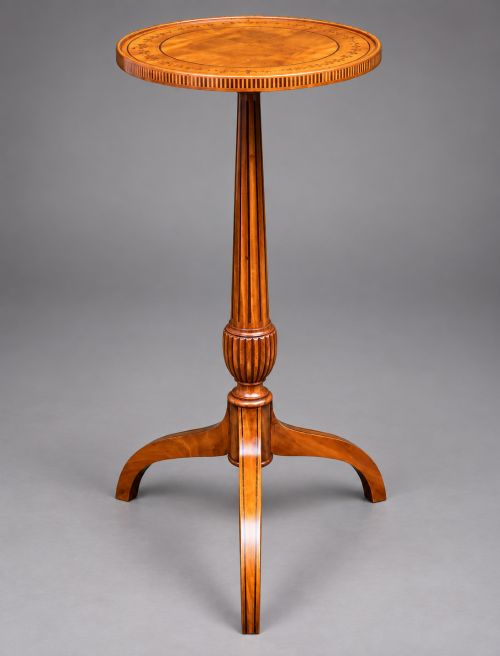
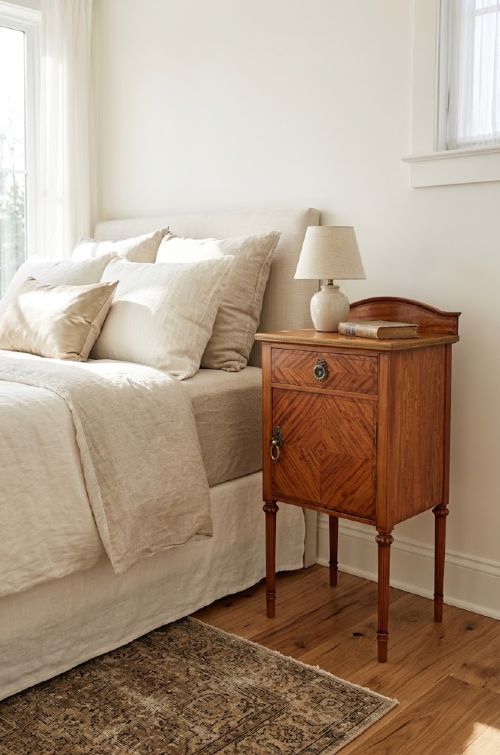
A golden satinwood occasional table encompasses small freestanding tables designed for versatility across sitting rooms and boudoirs. These pieces emerge predominantly from the eighteenth and nineteenth centuries, spanning Georgian, Regency, Victorian, and Edwardian eras.
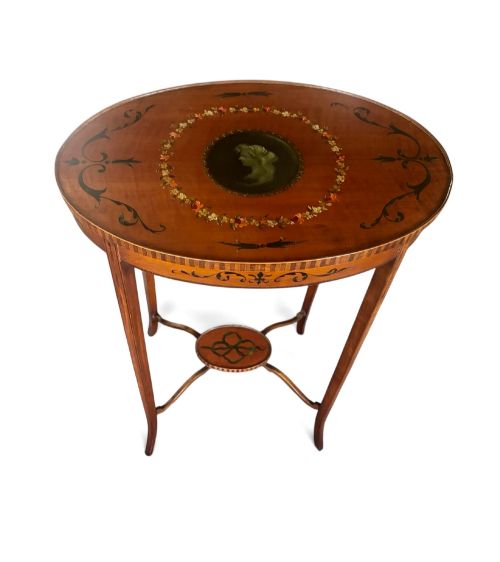
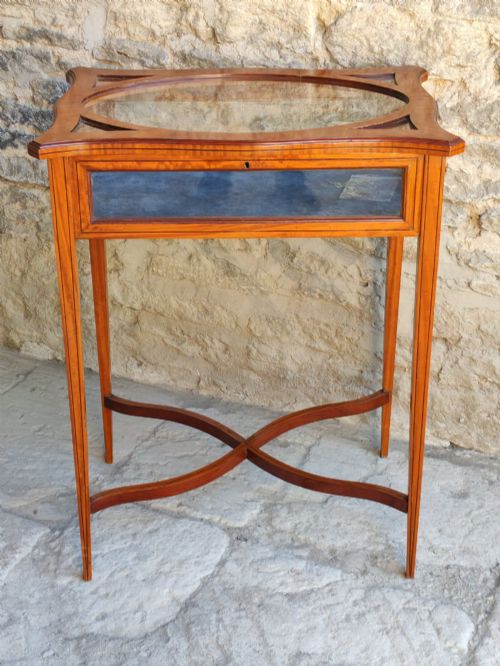
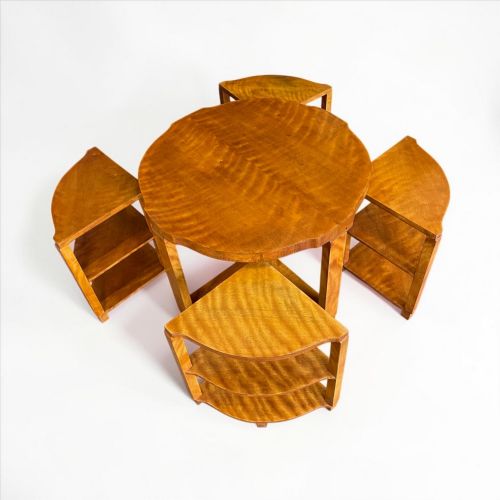
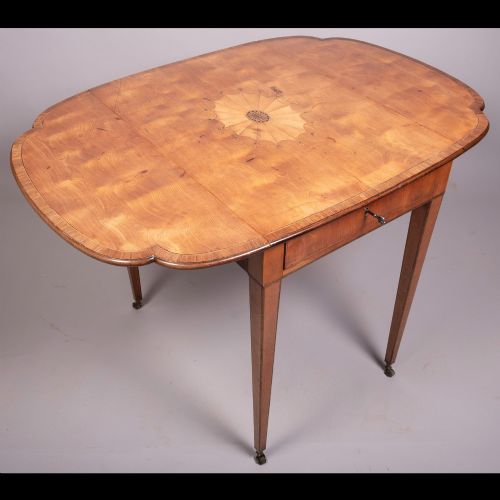
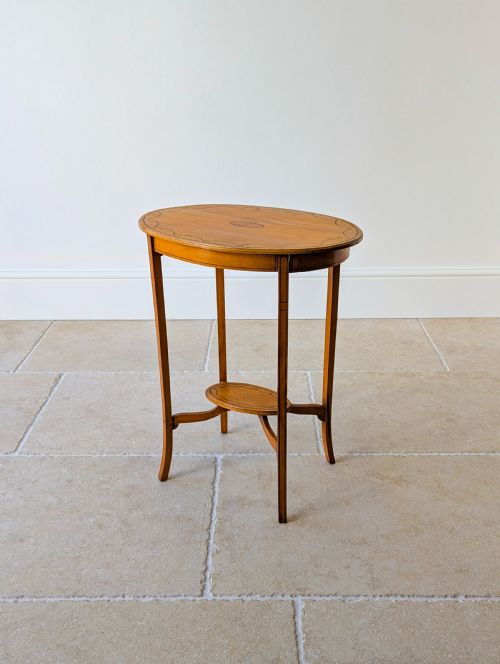
The versions most commonly met on this page include Pembroke tables, nests of tables, lamp tables, and oval occasional tables. Makers of the Sheraton and Sheraton Revival periods utilised the timber's natural lustre to create light, adaptable furniture for fashionable interiors.
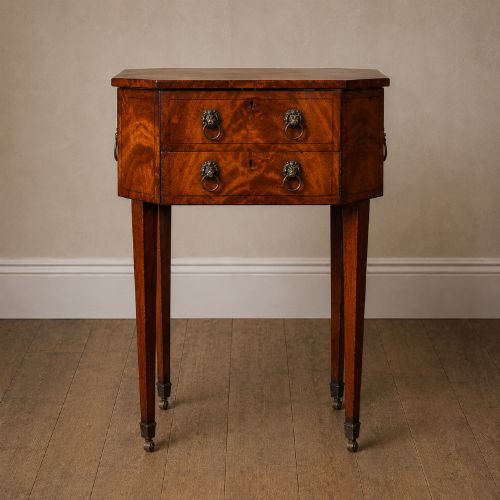
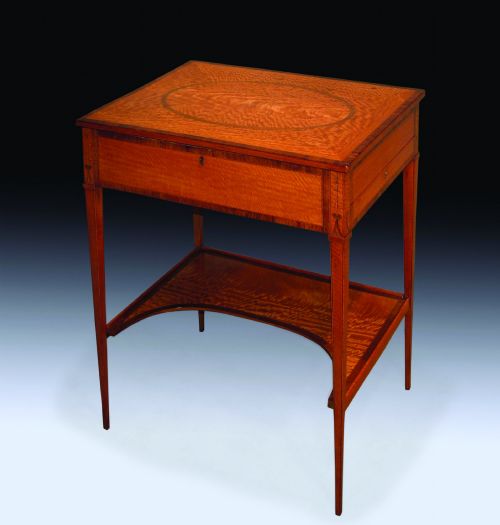
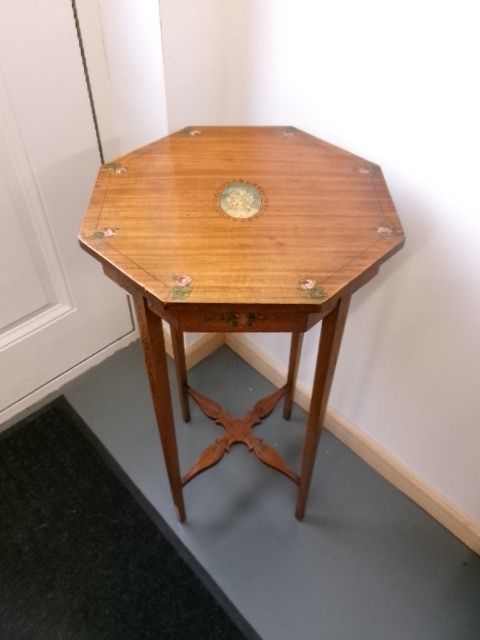
Forms range from simple drop-leaf Pembroke designs to multi-tiered etageres and octagonal work tables. Each object serves a specific domestic function while displaying the decorative grain prized by period cabinet makers.
Materials and Construction
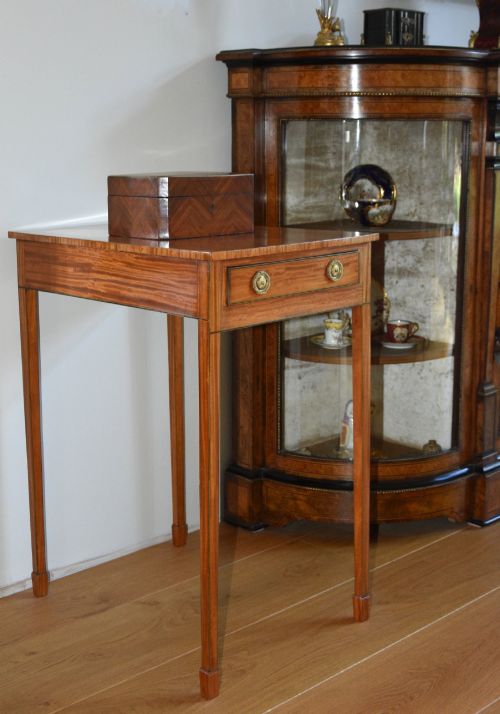
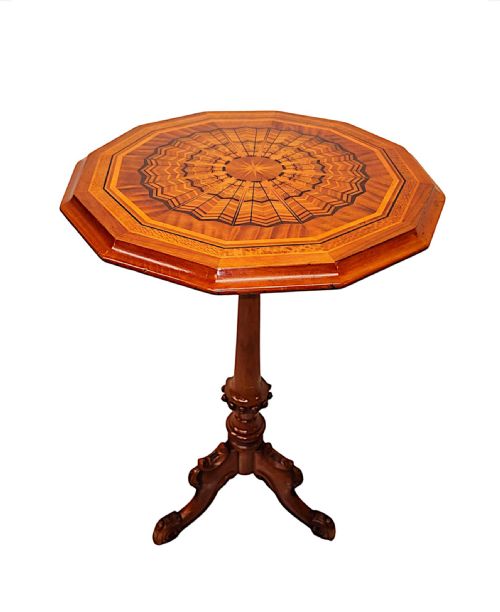
Cabinet makers constructed these tables using solid or veneered satinwood, often complemented by banding in rosewood, mahogany, ebony, and boxwood. The timber provides a luminous, golden ground that accepts detailed marquetry and crossbanding with crisp definition.
Surface ornament frequently includes hand-painted floral decoration or neoclassical motifs executed directly onto the wood. Structural stability is maintained through disciplined joinery, occasionally incorporating brass framing or lion mask handles.
Inlaid stringing defines the geometric outlines of tabletops and drawer fronts, contrasting the pale satinwood with darker woods. French polishing seals the timber, deepening its characteristic sheen without obscuring the grain pattern.
The listings span multiple centuries, uniting eighteenth-century George III pieces with Edwardian nests of tables.
Distinctions in Execution
The hierarchy of quality rests upon the sophistication of the timber selection and the precision of the marquetry. Superior examples display carefully matched veneer grains radiating from a distinct centre, whereas simpler pieces rely on plain surfaces.
Hand-painted decoration separates standard production from exceptional works attributed to premier workshops. Artisans who executed delicate floral subjects or classical figures achieved a depth of colour and realism that elevates the whole piece.
The finesse of secondary woods, drawer linings, and structural hardware indicates the original maker's intent. Heavy, clumsy framing lowers the status of a table, while slender, confident proportions denote an elevated commission.
Gillows·Maple & Co·Williamson·Edwards and Roberts
The Golden Satinwood Occasional Table Glossary
- Satinwood
- A hard, yellow-gold timber with a natural lustre, highly prized for fine furniture veneers. It takes a high polish and contrasts sharply with darker woods.
- Marquetry
- The art of forming decorative patterns by fitting together small pieces of veneer. Craftsmen use varied woods to create floral or geometric pictures on tabletops.
- Etagere
- A set of open shelves for displaying small objects or books. These tiered tables appeared in various light woods during the nineteenth and early twentieth centuries.
- Crossbanding
- A narrow strip of veneer laid around the border of a tabletop with the grain running perpendicular to the centre. This technique frames the primary surface panel.
Golden Satinwood Occasional Table: Frequently Asked Questions
What is a golden satinwood occasional table used for?
These tables provide convenient surfaces for lamps, books, or tea within a principal room. Their compact proportions allow them to sit easily beside seating or serve as central decorative accents.
Historically, specific variants accommodated sewing, writing, or the display of small curiosities. Today, they continue to function as flexible side furniture in traditional and modern interiors alike.
How do I distinguish Georgian satinwood from Edwardian Sheraton Revival?
Georgian pieces date from the late eighteenth century and generally exhibit restraint in their neoclassical proportions and hand-cut veneers. The construction details, such as hand-cut dovetails in drawers, reflect eighteenth-century workshop practices.
Edwardian Sheraton Revival pieces date around nineteen hundred and often feature machine-prepared elements alongside painted floral decoration. These later interpretations lean into lighter, airier forms with explicit references to earlier eighteenth-century designs.
Are painted satinwood tables original?
Many tables from the late eighteenth century and the Edwardian Sheraton Revival period left the workshop with hand-painted floral or neoclassical decoration. Artists painted directly onto the pale timber surface to enhance its decorative appeal.
Close inspection of the pigment integration into the grain helps confirm whether the paintwork belongs to the original construction date. Untangling later embellishments from period decoration requires observing wear patterns consistent with the age of the wood.
How do I care for a satinwood surface?
Protect the timber from direct sunlight to prevent the golden colour from fading or darkening unevenly. Regular dusting with a soft, dry cloth preserves the polished finish without chemical buildup.
Avoid placing damp items directly on the polish to prevent water rings. Applying a traditional microcrystalline wax occasionally helps nourish the historic polish safely.