

Small Wooden Stool
These small wooden stool pieces are compact domestic seats and low surfaces shaped by centuries of country and vernacular woodworking traditions.
Small Wooden Stool
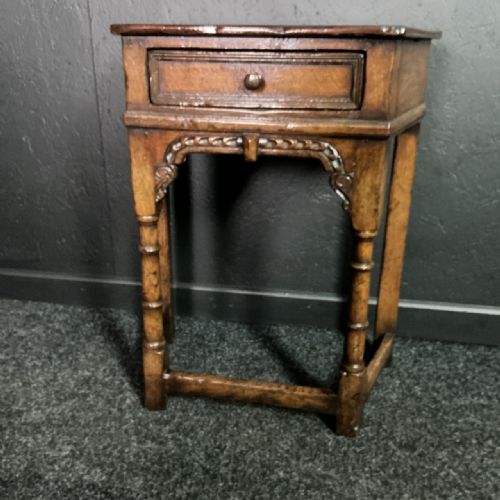
A small wooden stool brings together low seating and occasional utility across centuries of domestic life. When you examine this selection, you encounter forms that served as milking seats, nursery perches, close stools, and low side tables.
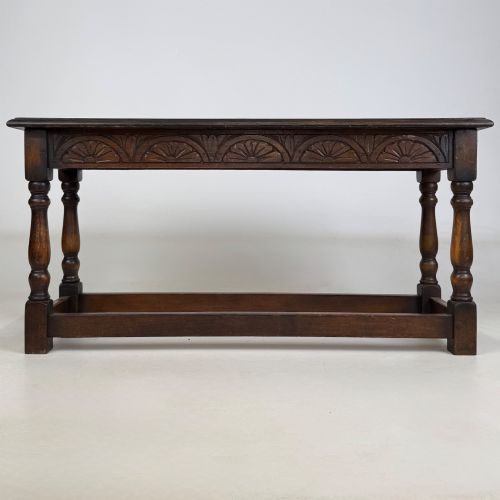
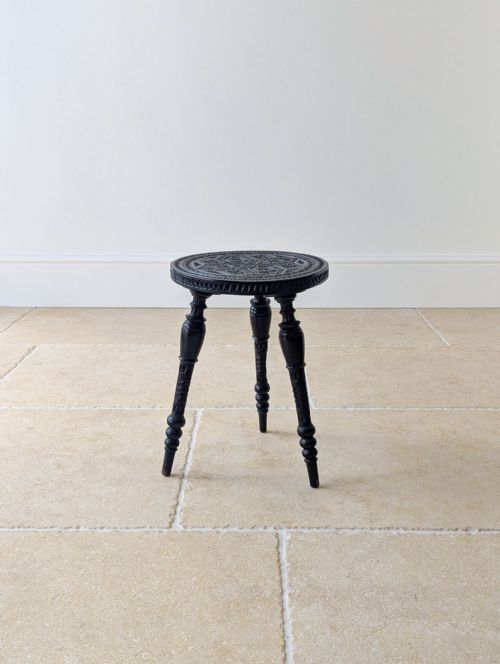
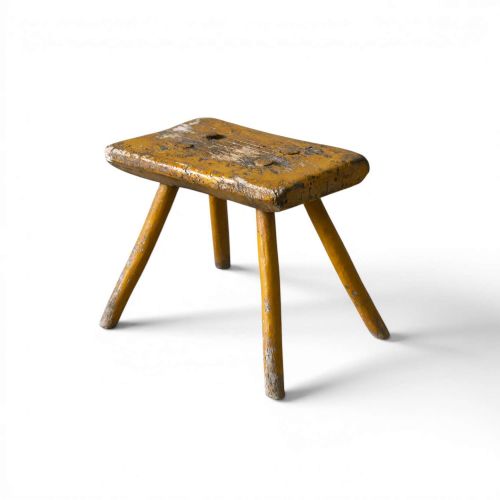
Beyond basic seating, many pieces double as low tables, box stools with internal storage, or diminutive vernacular designs with sculpted round seats. Their modest scale allows them to fit easily into modern hallways and beside low chairs.
Materials and construction
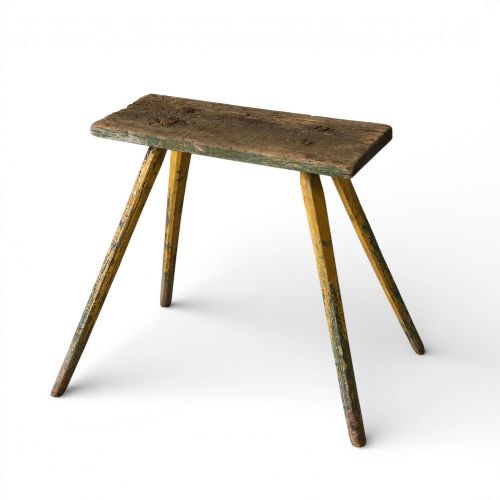
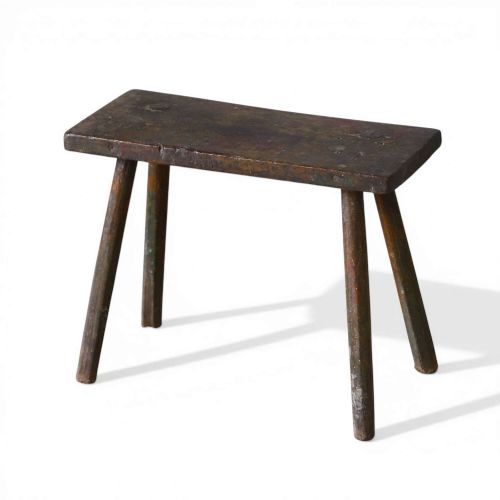
Makers relied primarily on native hardwoods such as oak, elm, ash, and walnut to withstand daily weight and wear. Turned beech, fruitwood, and pine also appear, sometimes finished with original paint or ebonised surfaces.
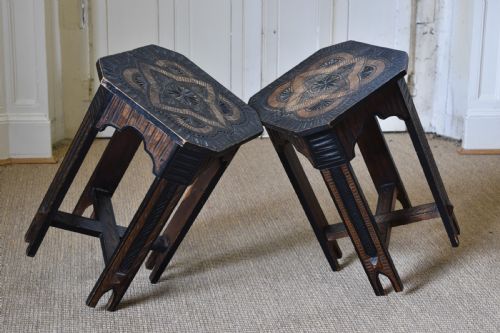
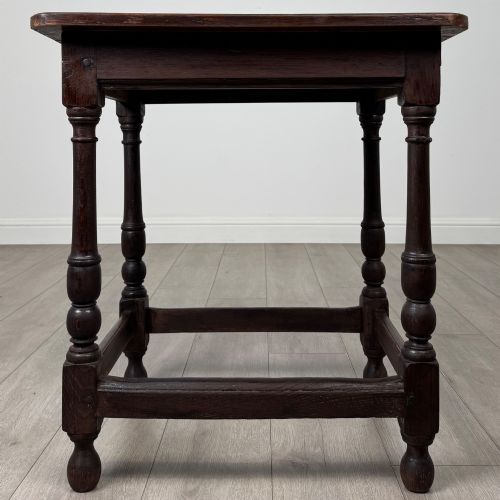
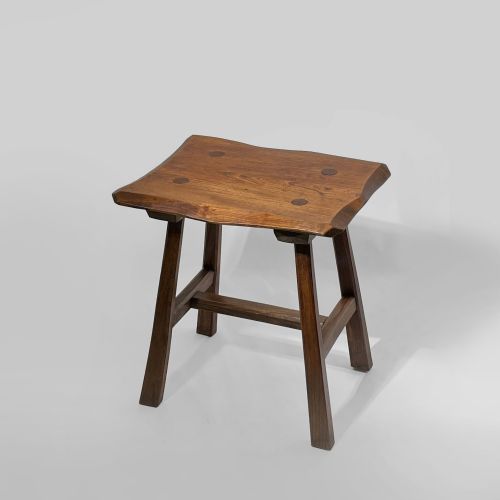
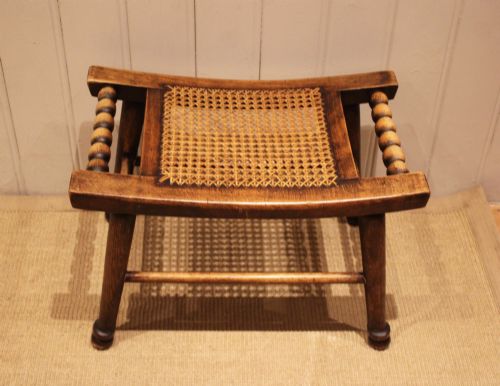
Construction techniques emphasise simple strength, using pegged joints, turned legs, and solid plank seats. Chip carving, bobbin turning, and rush seating add texture and decorative detail without compromising structural integrity.
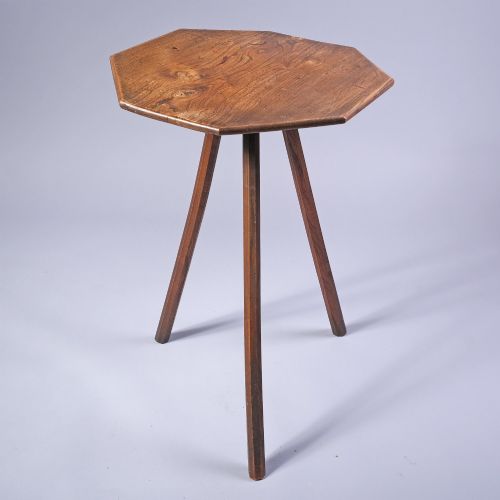
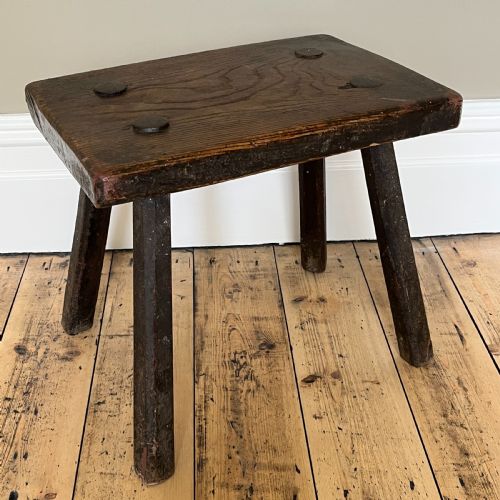
Forms range from simple three-legged ash tables to box stools, rush-seated chairs, and close chests.
Quality and distinction
Quality rests on the integrity of the timber, the honesty of the construction, and the preservation of original surfaces. Pieces retaining their early paint finishes or untouched pegged joints stand apart from heavily restored examples.
Proportion and sculptural presence also define the better items in this range. A well-turned leg or a deeply sculpted seat shows the maker's eye for form, turning a utilitarian object into a piece of enduring character.
The Small Wooden Stool Glossary
- Joint stool
- A sturdy wooden seat constructed with pegged mortise and tenon joints rather than turned legs driven into a seat slab. These form the backbone of early English domestic seating.
- Close stool
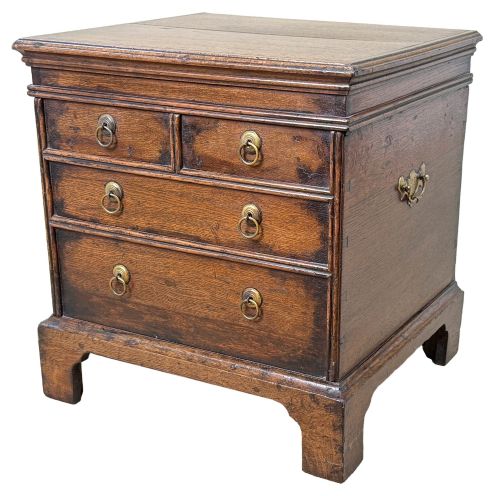
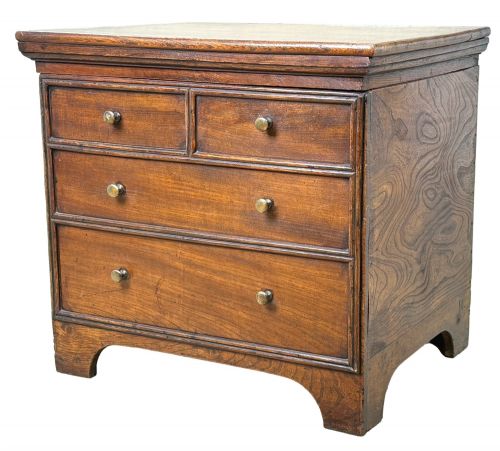
- An enclosed box stool designed to house a chamber pot, often disguised as a small bedside chest or cabinet. They represent a more formal piece of domestic furniture from the Georgian period.
- Milking stool
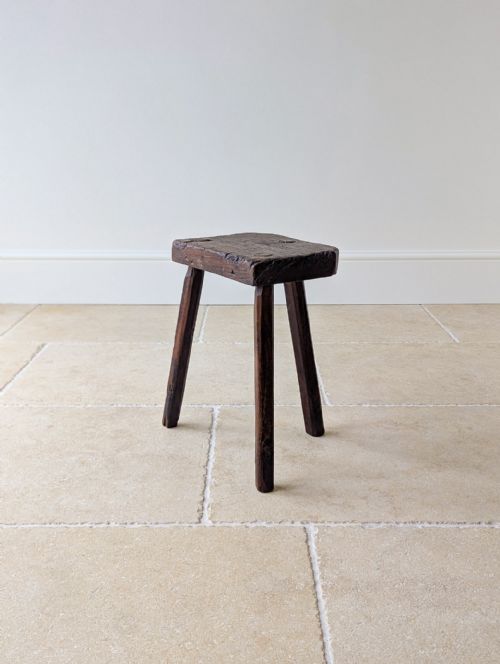
- A low, typically three-legged seat used by agricultural workers for milking livestock in barns and fields. Their simple tripod design kept them stable on uneven earthen floors.
- Chip carving
- A decorative technique where small chips are removed from the surface of the wood to create geometric patterns. It appears frequently on rustic and vernacular pieces from the Victorian era.
- Rush seat
- A woven seating surface made from dried marsh grasses twisted around a timber frame. This traditional method provides a resilient and comfortable top for country chairs and stools.
Small Wooden Stool: Frequently Asked Questions
What were small wooden stools used for?
These low seats served practical purposes around the home and farm, functioning as milking perches, nursery seats, and handy steps. Many also doubled as temporary surfaces for holding household items.
Over time, owners adapted them to sit beside low fires or serve as compact bedside tables. Their modest height made them versatile additions to any room.
Can I use an antique stool as daily seating?
Most sturdy oak, elm, and ash stools remain structurally sound enough for regular sitting. However, delicate or highly carved examples are better suited for display or gentle use as small side tables.
Checking the tightness of the joints and the stability of the legs will tell you if a piece can bear daily weight. Placing them on even floors prevents undue stress on individual legs.
How do I clean a wooden stool?
Dust the wood regularly with a dry cloth and occasionally feed the surface with a quality beeswax to nourish the timber. Avoid using harsh chemical cleaners or excessive water, which can strip historic finishes.
Preserving the original patina requires a gentle touch and protection from direct sunlight and sudden temperature changes. This keeps the wood stable and maintains its natural appearance.