




Vintage Tripod Stool
A vintage tripod stool offers simple three-legged utility, bringing honest historic character and compact seating to any room.
Vintage Tripod Stool
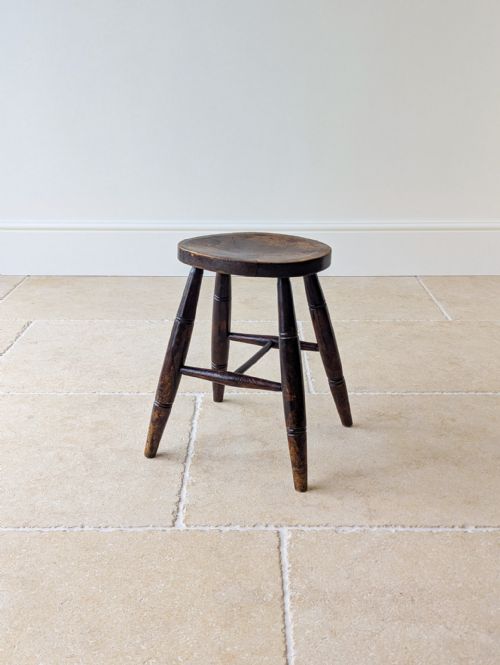
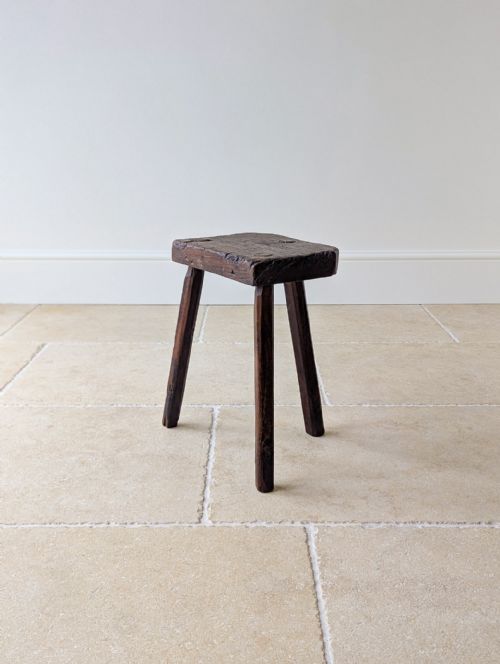
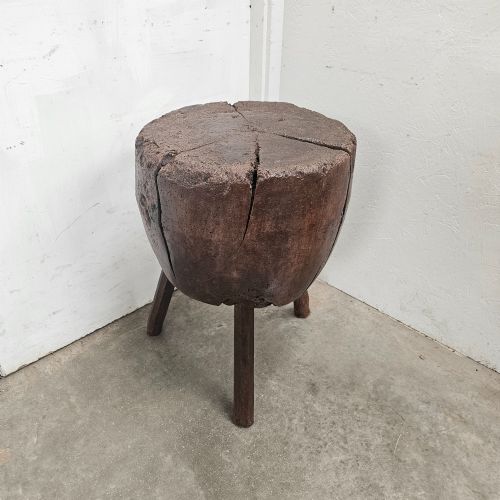
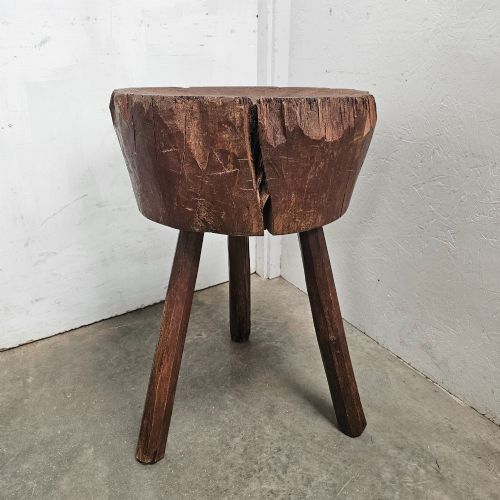
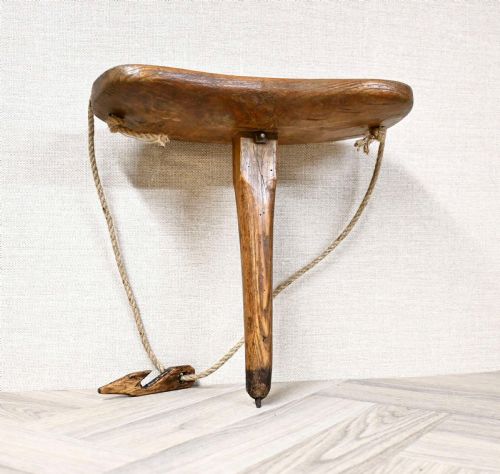
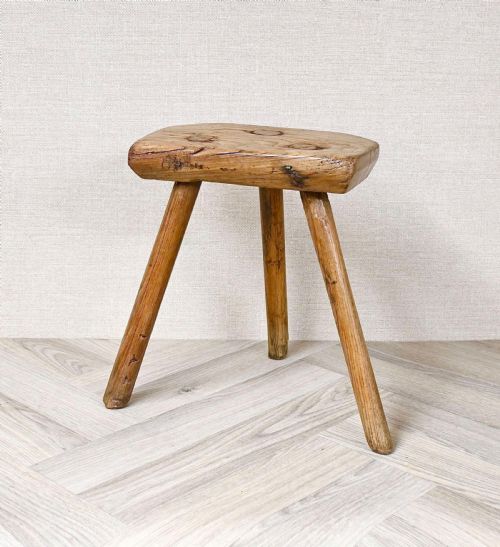
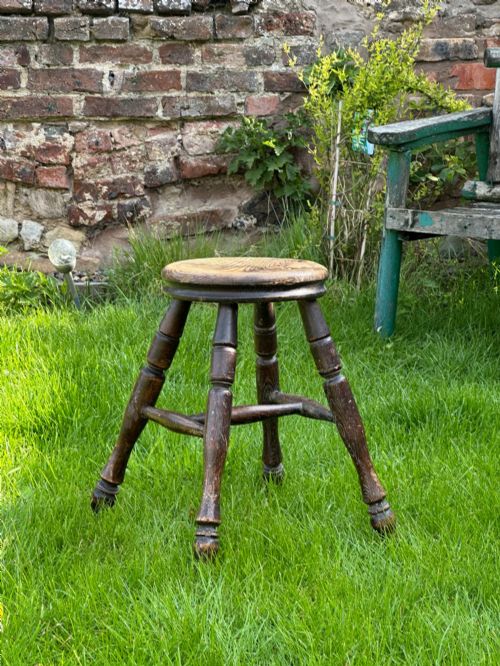
A vintage tripod stool is a versatile historic seating form defined by its three-legged construction, ensuring it sits firmly on uneven floors without rocking. The pieces found here span domestic, workshop and agricultural origins, ranging from humble milking stools to revolving piano stools and heavy chopping blocks.
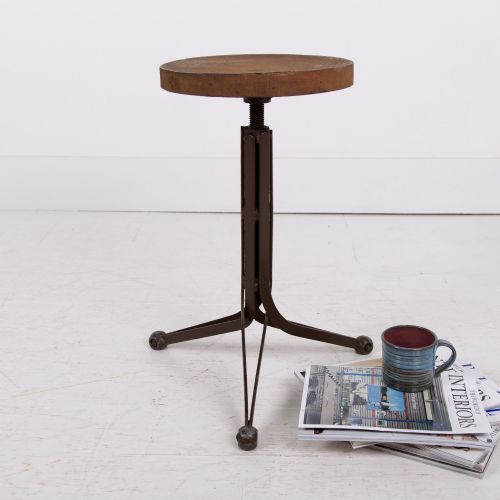
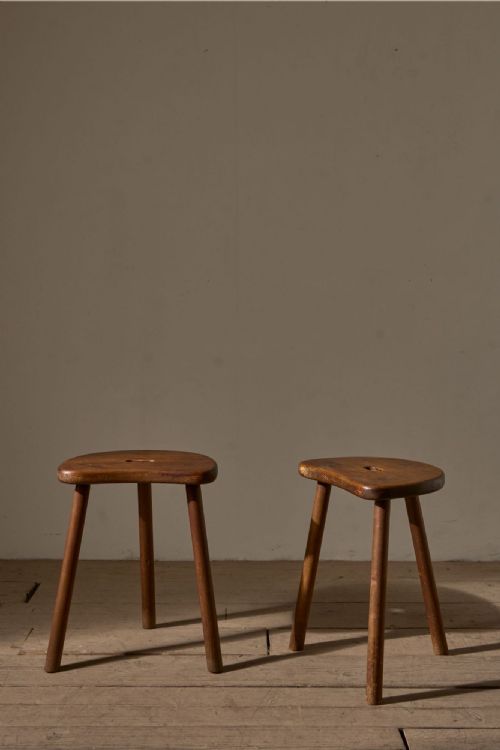
Rural domestic examples display straightforward vernacular construction in elm, oak, beech and pine, often shaped for daily utility by local makers. Industrial variants combine timber seats with cast iron bases and revolving mechanisms, reflecting utilitarian workshops and factories of the nineteenth and early twentieth centuries.
Materials and construction
These stools rely on solid native hardwoods like oak, elm, ash, beech and pine, chosen for strength and availability. Joinery is typically straightforward and robust, utilising wedged tenons and stretcher frames to secure the legs directly into shaped solid timber seats.
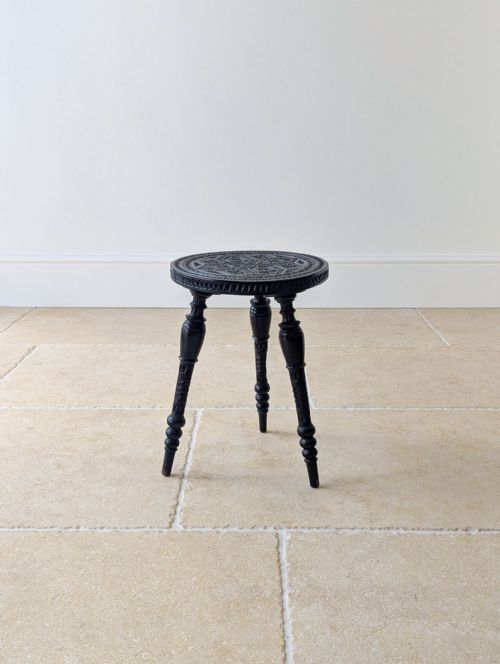
Industrial and workshop iterations introduce iron components and screw threads for adjustable height, while decorative examples incorporate ebonising, chip-carving, pokerwork or bone inlay to elevate plain timber forms.
One nineteenth-century Scottish pokerwork stool bears the spirited inscription 'Touch me wha daur'.
Distinguishing quality and character
Quality in a vintage tripod stool rests primarily on the integrity of the timber, the pleasing proportions of the seat and legs, and the honesty of wear accumulated through use. Patina tells the story of age, where centuries of handling impart a soft, tactile surface that modern reproductions cannot replicate.
Mechanisms in revolving piano stools or industrial variants separate standard items from finer examples, where smooth operation and original turnings demonstrate superior workshop execution.
The Vintage Tripod Stool Glossary
- Vernacular
- Everyday objects made by local craftspeople using regional materials without academic architectural pretension. These pieces reflect local traditions rather than high-style metropolitan fashions.
- Elm
- A tough, interlocking timber frequently chosen for traditional stool seats because it resists splitting under heavy use. Its characteristic grain patterns add visual movement to plain surfaces.
- Ebonised
- Timber treated with chemical stains or dark finishes to imitate expensive ebony. This technique was popular in the nineteenth century for accentuating carved details.
- Pokerwork
- A decorative technique using heated metal tools to burn designs into wood surfaces. Scottish examples occasionally utilise this method to incorporate traditional inscriptions.
- Revolving mechanism
- An adjustable screw thread or spindle allowing the seat height to change. This engineering is common on nineteenth-century piano and workshop stools.
Vintage Tripod Stool: Frequently Asked Questions
What is a tripod stool used for?
These pieces served practical roles in dairies, farmhouses, workshops and parlours, functioning as milking seats, piano stools or heavy butcher blocks.
Today, they adapt easily as side tables, plant stands or compact occasional seating in contemporary rooms.
How do I identify a milking stool?
Authentic milking stools generally feature three splayed legs and a simple, portable wooden seat designed for agricultural tasks on uneven ground.
They often display deep wear and simple peg-and-tenon construction without elaborate ornamentation.
Are these stools comfortable to sit on?
The comfort depends on the seat shape, with many traditional examples featuring a dished or saddled surface carved to fit the body.
While designed for utility rather than lounging, their sturdy proportions make them ideal for short periods of sitting.
How do I date a wooden stool?
Dating relies on observing tool marks, timber species, wear patterns and construction methods characteristic of periods like the Georgian or Victorian eras.
Subtle details in the turning of the legs and the method of securing them offer clear clues to a piece's age.