



Wooden Adjustable Stool
These wooden adjustable stool pieces give you versatile height and steady seating, combining period character with practical movement.
Wooden Adjustable Stool
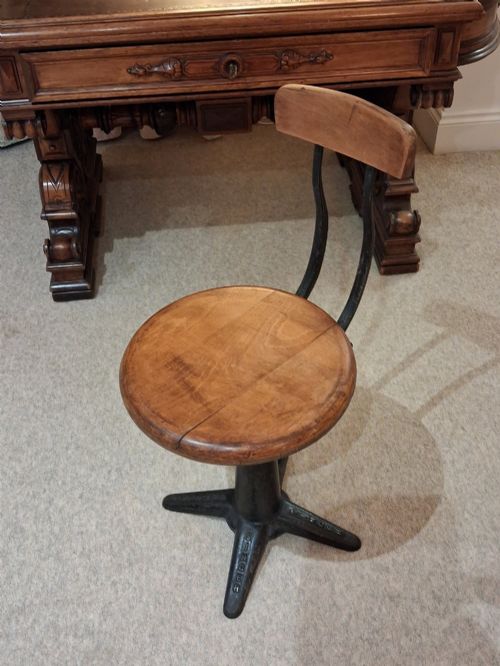
When you search for a wooden adjustable stool, you are looking at seating designed to alter in height or rotate for specific domestic and work tasks. The examples seen on this page span the 19th Century, Victorian period, Regency, Edwardian era, and 1930.
You are most likely to meet piano stools, music chairs, and revolving workshop seats in this selection. These forms originate from periods including 1850, 1860, and around 1880.
The styles present range from Victorian Country and Industrial to Regency and the Aesthetic Movement. Materials span walnut, mahogany, beechwood, rosewood, and stained beech, often paired with velvet, fabric, or other upholstery.
How they were made
Cabinet makers and workshops built these items using solid hardwoods like mahogany, walnut, beech, and rosewood. Turning, carving, and joinery formed the structural legs, pedestals, and rotating mechanisms.
Metal components were integrated into the wooden frames to enable the rise and fall or swivel action. Upholstered tops utilised fabric or velvet pads fixed over stuffing to provide comfort during extended sitting.
Wooden Adjustable Stool Retail Price Guide 2026
Typical asking prices for wooden adjustable stool among the pieces listed under this phrase on Sellingantiques today, from the lower quarter to the upper quarter. They describe what is for sale here now, not the wider market.
The listings on this site feature woods such as walnut, mahogany, beech, and rosewood paired with iron and fabric upholstery.
What varies in quality
The refinement of the carving on the wooden pedestal or legs dictates much of the visual distinction. Plain turned uprights sit at one end, while elaborate carved walnut or rosewood details sit at the other.
The mechanical smoothness of the adjustable height mechanism or revolving screw thread separates basic utilitarian items from finer workshop output. Robust joinery and well-fitted moving parts ensure the piece functions properly.
Gillows·Evertaut
The Wooden Adjustable Stool Glossary
- Rise and fall
- A mechanical system allowing the seat height to increase or decrease by rotation. This action relies on an internal threaded spindle.
- Gout stool
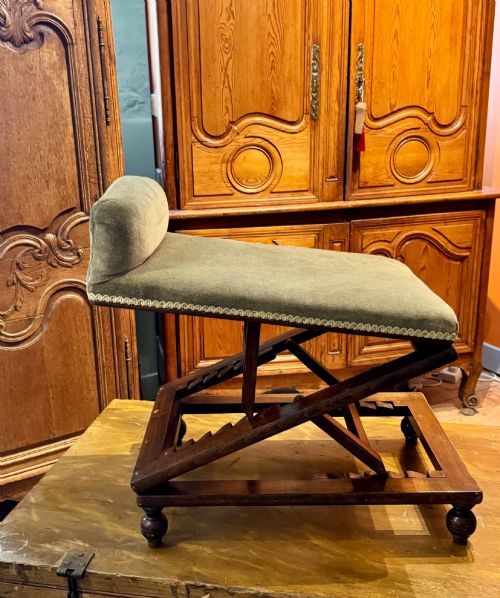
- A specialised footstool featuring an adjustable incline angle to support a foot or leg. These often include padded upholstery.
- Ebonised
- Wood finished to resemble ebony through dark staining or painting. This treatment appears frequently on Aesthetic Movement pieces.
- Metamorphic
- Furniture designed to transform into another form or function. In this context, it describes a piece shifting between a stool and a footrest.
Wooden Adjustable Stool: Frequently Asked Questions
How do I adjust the height?
Most of these pieces utilise a threaded wooden or metal screw mechanism hidden beneath the seat. Turning the top clockwise or anti-clockwise raises or lowers the seating surface.
Ensure the mechanism is clear of dust and debris before turning. Older threads require gentle handling to prevent binding.
Were they only used for pianos?
While many examples served pianists who needed precise height adjustment, others fulfilled different domestic and workplace roles. Industrial workshop seats, office chairs, and dressing table stools utilised the same adjustable format.
Music chairs and revolving piano stools provided the necessary mobility for musicians. Gout stools served a medical or restorative purpose for resting legs.
How do I date a wooden stool?
Dating relies on observing the secondary woods, turning styles, and fixing methods used in construction. Regency and Victorian pieces often display distinct carved motifs and denser timbers like mahogany or rosewood.
Industrial pieces from the 1930s incorporate metal brackets and simpler utilitarian framing. Comparing the timber grain and upholstery style helps narrow down the decade of manufacture.
Can I use them every day?
These items were built for daily use in homes, music rooms, and workshops. Regular sitting poses no problem if the joints remain tight and the height mechanism operates smoothly.
Avoid placing excessive weight on extended screw mechanisms. Periodic checks of the wooden joints keep the structure stable.