
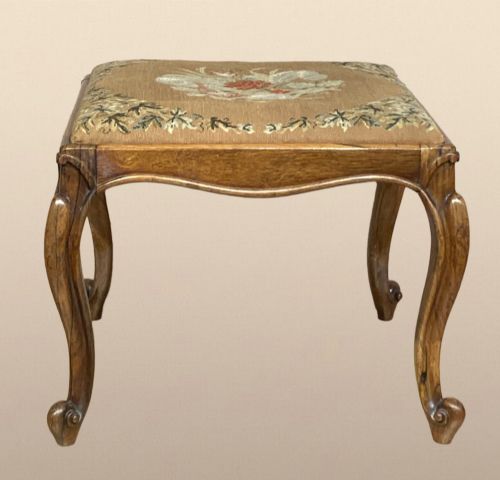


Victorian Wooden Piano Stool
A Victorian wooden piano stool is a sturdy and functional music seat that brings period charm and adjustable height to a home.
Victorian Wooden Piano Stool
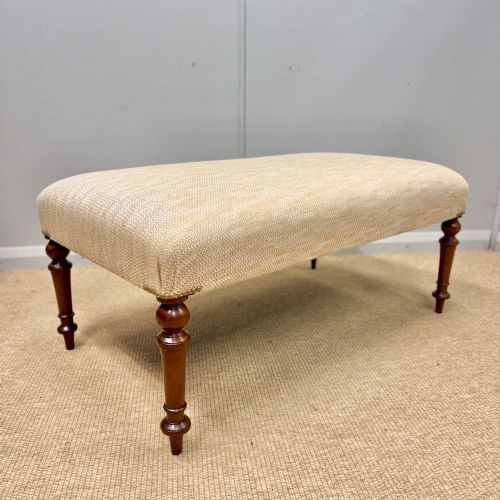
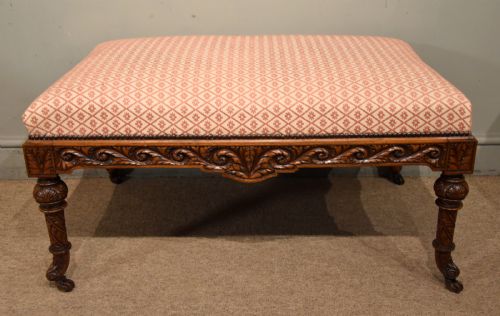
A Victorian wooden piano stool sits at the keyboard to provide comfortable seating for musicians, often featuring a mechanism to alter the height as needed. These pieces belong to the broader category of Victorian wooden piano stool designs that encompass revolving seats, pedestal bases, and duet proportions.
Makers utilised various stylistic revivals, ranging from Rococo and Grotto to the Aesthetic Movement, ensuring these seats complemented contemporary parlour interiors. The forms bridge domestic utility with ornamental woodwork, reflecting the prominent place of music in period homes.
Materials and construction
Cabinet makers relied heavily on solid hardwoods like mahogany, walnut, rosewood, and oak to construct the frames, ensuring stability for daily use at the instrument. Turned and carved components demonstrate traditional joinery techniques, while brass fittings often support the revolving and rise-and-fall mechanisms.
Upholstery forms a vital part of the construction, utilising textiles, velvet, fabric, and original needlepoint stretched over padding. These soft tops are secured to wooden foundations that conceal the internal screw mechanisms or simple box compartments beneath.
Materials appearing across the inventory include mahogany, walnut, rosewood, oak, goncalo alves wood, brass, and diverse textiles.
Judgements of quality
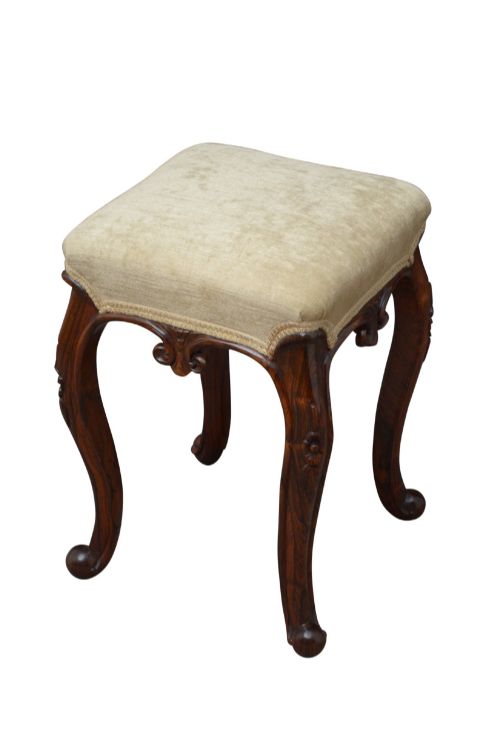
Quality rests upon the crispness of the timber carving and the architectural balance of the legs, whether cabriole, straight, or pedestal-supported. Superior examples display denser timbers, refined joinery, and sophisticated stylistic details that elevate them above standard utility pieces.
The mechanical integrity of the adjustable height mechanism also dictates worth, as smooth rotation or elevation indicates careful manufacture. Furthermore, the selection of secondary woods and the preservation of original upholstery elements separate ordinary items from finer workshop output.
Gillows·Jas Shoolbred
The Victorian Wooden Piano Stool Glossary
- Cabriole leg
- A furniture leg that curves outward at the knee and tapers inward to an ankle, typical of revival styles. This shape mimics animal legs and provides sturdy support.
- Revolving stool
- A seat designed with a threaded wooden spindle or screw that allows the top to turn and alter its height. Musicians used this to find a comfortable playing position.
- Needlepoint
- A type of canvas work embroidery often found on period upholstery. It provides a decorative, textured surface for the seat.
- Ebonised
- Wood treated with a dark finish to imitate ebony. This technique was popular in Victorian and Aesthetic Movement furniture.
- Duet stool
- An elongated bench designed to seat two players side by side. These wider forms accommodate four-hand piano arrangements.
Victorian Wooden Piano Stool: Frequently Asked Questions
How do I adjust the height on these stools?
Many examples feature a central wooden screw mechanism that allows the round or square top to twist upward or downward. Turning the seat clockwise or anti-clockwise alters the elevation to suit the player.
Other variants utilise a side lever or a rise-and-fall mechanism hidden beneath the upholstery. Checking the movement ensures the internal wooden or brass screw functions smoothly.
What is the difference between a piano stool and a dressing stool?
Piano stools typically incorporate swivel mechanisms, pedestal bases, or adjustable heights designed for keyboard performance. Dressing stools usually remain at a fixed height and often feature rectangular proportions suited for vanity tables.
Both forms share similar timber frames and upholstered tops from the nineteenth century. However, the presence of a rise-and-fall screw usually points to musical utility.
Are these seats suitable for daily use today?
The solid hardwood frames of mahogany and walnut provide robust support for regular seating at pianos or desks. Their sturdy joinery makes them practical additions to modern living spaces.
Care should be taken with the adjustable screw mechanisms to avoid straining the internal threads. Original upholstery may also require gentle treatment depending on its age and condition.
How do I identify an Aesthetic Movement stool?
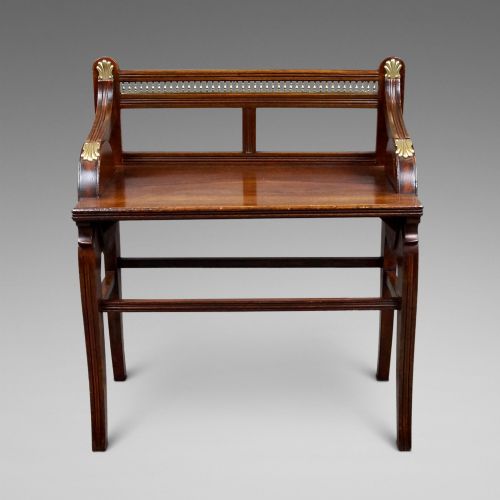
Aesthetic Movement pieces often display ebonised wood surfaces, geometric lines, and simpler ornamentation that moves away from heavy Victorian revival carvings. They reflect a shift towards artistic simplicity in late nineteenth-century design.
These seats frequently utilise walnut or stained hardwoods paired with textured fabric upholstery. Their restrained profiles contrast with the more ornate Rococo or Grotto revival forms.
Can I use a duet stool for piano practice?
Duet stools provide an extended seating area specifically proportioned for two people playing together at the keyboard. Their wider rectangular frames offer ample space for side-by-side seating.
These longer benches often include hinged lids revealing internal storage for sheet music. Their robust construction supports dual occupants comfortably.