



Turned Wooden Tripod Stool
A turned wooden tripod stool brings honest vernacular character to a room, offering simple utility built from solid native timbers.
Turned Wooden Tripod Stool
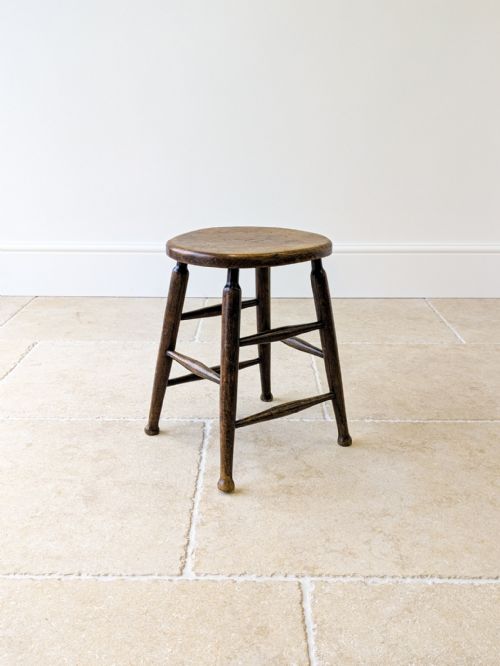
A turned wooden tripod stool is a sturdy three-legged seat rooted in traditional vernacular furniture, appearing across the Georgian, Victorian, and later nineteenth-century periods. These pieces serve practical functions as milking, dairy, or farmhouse seating, shaped for daily utility in domestic and agricultural settings.
The versions most commonly met on this page span the nineteenth century, capturing regional English country styles alongside occasional revival forms. Makers constructed these seats using simple forms, balancing functional stability with straightforward turning on the lathe.
Materials and Construction
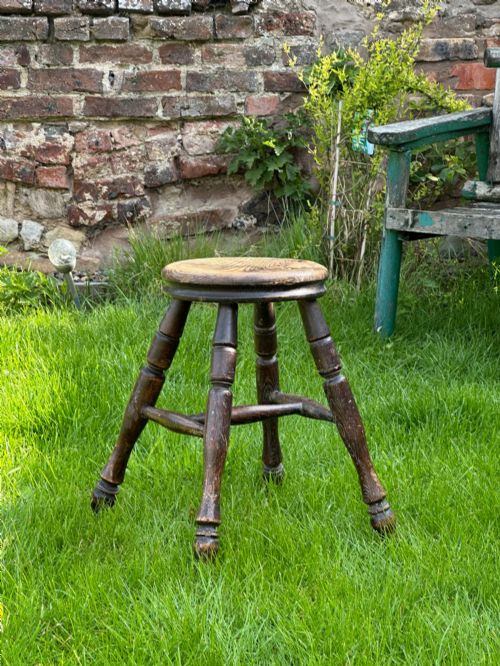
Construction relies heavily on native hardwoods such as elm, ash, and oak, chosen for their resilience and durability. Seat tops are frequently turned or shaped from single timber slabs, while the three legs are tenoned directly into the underside.
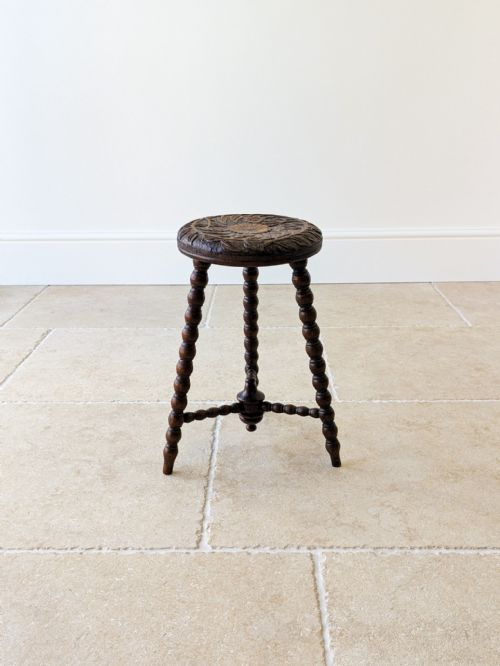
Turning techniques shape the components using lathes, producing spindles, ball feet, and bobbin details seen on various nineteenth-century examples. Some pieces retain traces of early paint, ebonising, or polished finishes applied to the wood surfaces.
Turned Wooden Tripod Stool Retail Price Guide 2026
Typical asking prices for turned wooden tripod stool among the pieces listed under this phrase on Sellingantiques today, from the lower quarter to the upper quarter. They describe what is for sale here now, not the wider market.
Some nineteenth-century dairy workers fitted their milking stools with swivel mechanisms so they could spin rapidly away from recalcitrant cows.
Assessing Quality
Quality rests in the choice of timber and the harmony of the turning, where well-proportioned legs and tight joinery elevate a utilitarian object. Superior examples display thoughtful selection of grained elm or ash for the seat top, joined securely without excessive later intervention.
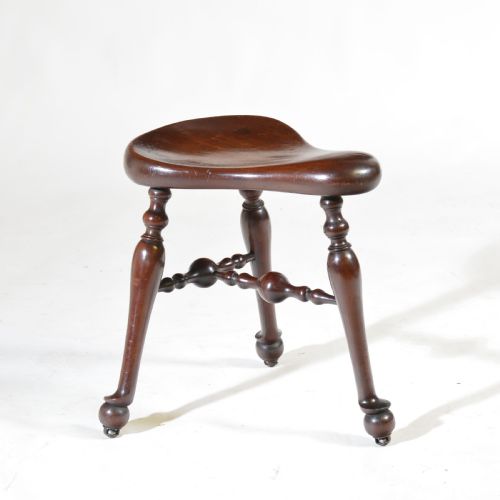
The sophistication of the lathe work separates standard farmhouse seating from more decorative forms like saddle stools or ebonised pieces. Finer execution shows in balanced proportions and crisp turning details that remain true to the period.
James Shoolbred
The Turned Wooden Tripod Stool Glossary
- Vernacular furniture
- Everyday objects made by local tradesmen for domestic or agricultural use. These pieces prioritise practical function over high-style ornament.
- Elm
- A tough, interlocking timber commonly used for stool seats. Its grain resists splitting under pressure from wedged legs.
- Bobbin turning
- A type of lathe work producing a series of rounded spheres resembling bobbins along a shaft. This decorative detail appears on nineteenth-century frames.
- Milking stool
- A low three-legged seat designed for stability on uneven floors during milking. The tripod base prevents wobbling on farm ground.
Turned Wooden Tripod Stool: Frequently Asked Questions
What is a turned wooden tripod stool?
A turned wooden tripod stool is a traditional three-legged seat made from native timbers like elm, ash, and oak. These pieces were utilised in rural homes and dairies for daily tasks.
Craftsmen shaped the seats and turned the legs on a lathe, resulting in sturdy, practical furniture with distinct regional character.
How were these stools used originally?
These stools served practical roles in farmhouses, dairies, and cottage kitchens where movable seating was essential. The three-legged design ensured stability on uneven floors.
Over time, they moved from working farm environments into domestic spaces as side tables or casual seats.
How do I date a turned wooden stool?
Dating relies on observing timber characteristics, tool marks, and turning styles associated with periods like the Georgian and Victorian eras. Earlier pieces often display simpler hand-turned legs and pegged construction.
Reference points include the specific turning patterns, such as bobbin details or ball feet, which reflect nineteenth-century taste.