

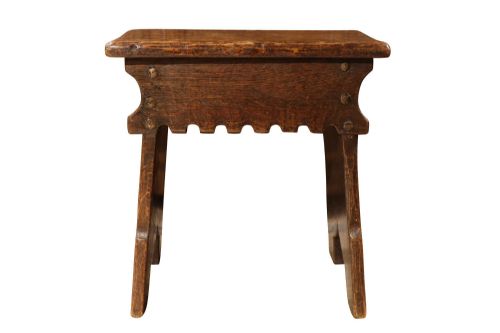


Traditional Milking Stool
A traditional milking stool brings honest vernacular charm to a modern interior through honest construction and time-worn timber.
Traditional Milking Stool
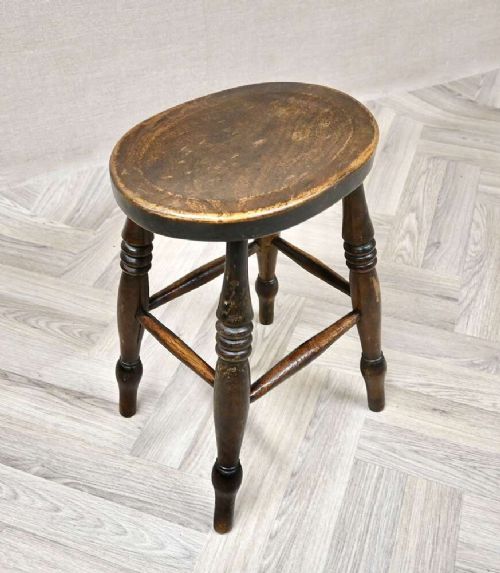
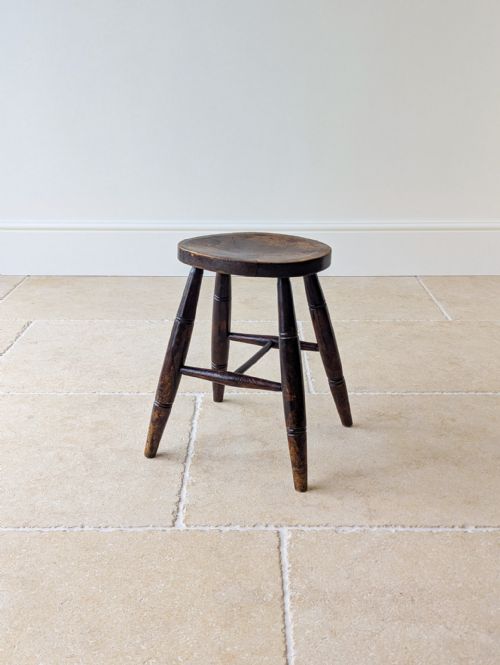
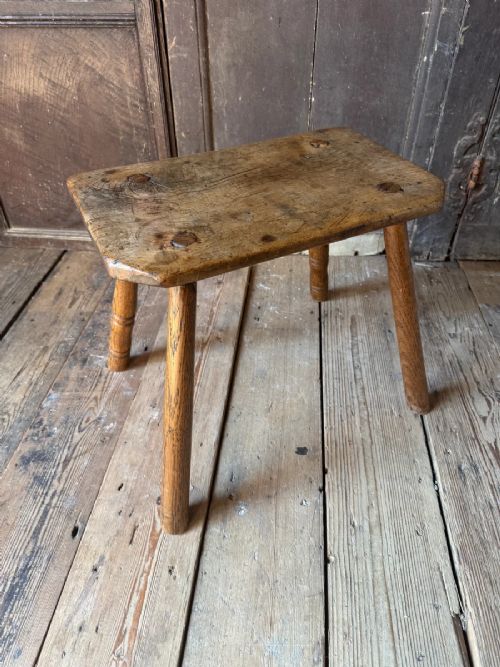
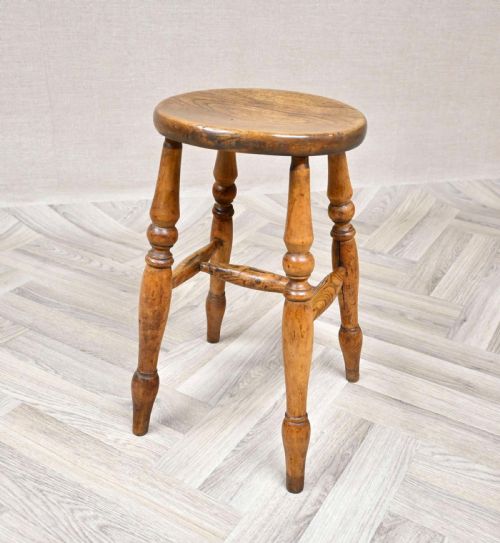
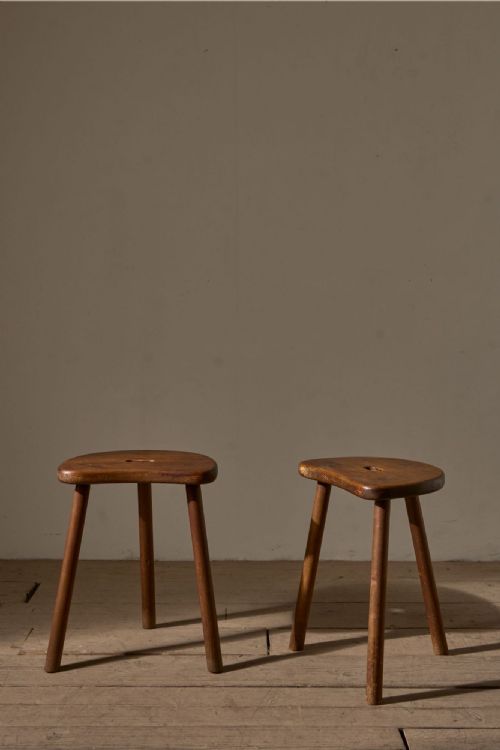
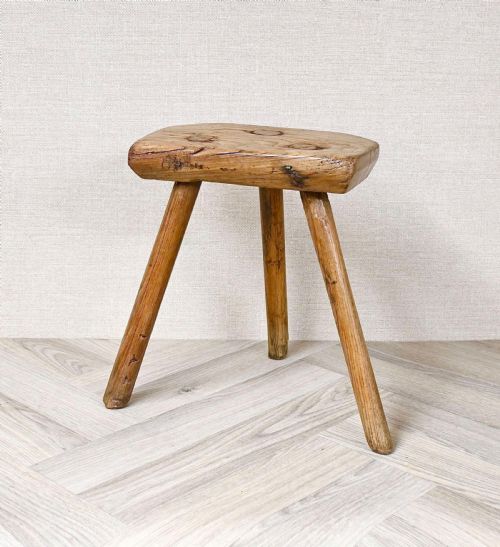
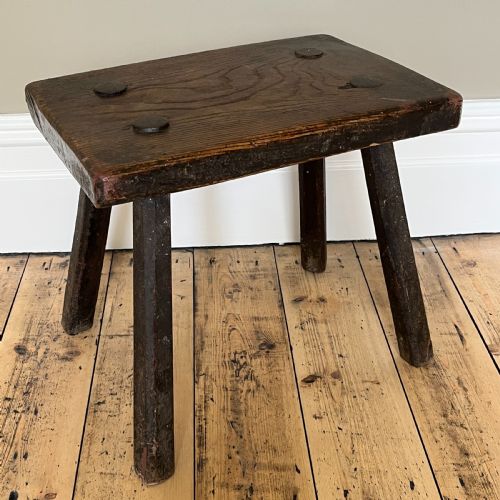
The selections available here span numerous regional expressions, including Windsor styles, vernacular ash and elm pieces, and simple dairy stools. Most examples rely on three or four legs inserted directly into solid wood seats, maintaining a low profile and rustic character.
Makers shaped these utilitarian objects from native hardwoods suited to farm life, producing functional seating that now finds a place beside modern tables and firesides. The forms remain resolutely unpretentious, reflecting the specific agricultural routines for which they were originally fashioned.
How traditional milking stool pieces were constructed
Constructing a traditional milking stool typically involved pairing a solid timber seat, often shaped from elm, sycamore, or pine, with turned or shaved legs of ash and oak. Makers utilised pegged construction and wedged tenons to secure the legs firmly into bored holes through the upper surface.
Surface treatments range from bare scrubbed wood to remnants of early paint, while joinery techniques prioritize raw stability over decorative flourish. Simple plank construction and pegged joints ensure the legs withstand uneven stone floors and heavy daily labour.
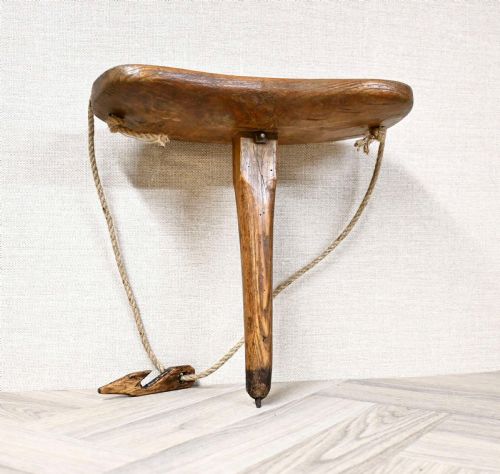
A singular one-leg stool survives among the selections, reminding us that some dairy workers balanced on a solitary peg strapped directly to the body.
What separates fine traditional milking stool examples
Quality in a traditional milking stool depends upon the harmony of the proportions, the figuring of the timber seat, and the integrity of the original joinery. Pieces with well-sculpted saddles and deeply patinated surfaces display superior character compared to heavier, unrefined iterations.
The relationship between the splay of the legs and the thickness of the seat dictates the overall balance of the piece. Surviving examples that retain their original height without extensive leg replacement command greater interest from collectors of vernacular furniture.
The Traditional Milking Stool Glossary
- Vernacular
- Everyday furniture made by local rural craftsmen for practical use rather than following high-style metropolitan fashions. These pieces utilise regional timbers and traditional woodworking methods.
- Pegged construction
- A method of joining wooden elements where a wooden pin secures a mortise and tenon joint without metal nails. This technique accommodates seasonal wood movement.
- Windsor
- A style of seating featuring a solid wooden seat into which the legs and back spindles are fitted directly. In stool forms, this typically means a shaped, comfort-moulded seat top.
- Splay
- The outward angle at which the legs of a stool are set from the seat base. Proper splay ensures stability on uneven ground.
- Patina
- The surface sheen and colour acquired by wood through age, handling, and wax polishing over generations. It indicates genuine antiquity and regular use.
Traditional Milking Stool: Frequently Asked Questions
How were traditional milking stools used?
These low seats were originally designed for dairy workers to sit close to the animal during milking. Their compact size allowed the milker to move swiftly around the parlour while keeping both hands free.
Over time, these pieces migrated from the barn to the farmhouse kitchen and hearth, serving as extra seating or low tables for domestic tasks.
Are these stools comfortable to sit on?
Many traditional milking stool seats feature a subtle concavity or saddled surface carved into the solid timber. This shaping provides surprising support despite the absence of upholstery.
Because they were built low to the ground for functional work, they suit occasional seating or decorative display rather than long periods of lounging.
What woods were used for these stools?
Country craftsmen relied on locally available native hardwoods and softwoods to build these sturdy items. Elm and sycamore frequently appear in the solid seats because they resist splitting under pressure.
Ash, oak, and beech typically form the turned or shaved legs, offering the rigidity needed to support daily weight on uneven surfaces.
How do I date an antique milking stool?
Dating relies on observing the tool marks, timber shrinkage, and joinery methods visible on the underside of the seat. Hand-augered holes and primitive wedged tenons often point to earlier eighteenth or nineteenth-century origins.
Later Victorian and early twentieth-century examples tend to display more uniform turning on the legs and machine-sawn components underneath.
How should I care for antique wood?
Maintaining a dry indoor environment prevents the historic timber from warping or splitting due to sudden humidity shifts. Regular dusting with a soft cloth keeps the surface clean without abrasive chemicals.
Occasional application of natural beeswax feeds the dry grain and preserves the accumulated surface sheen without altering the historic patina.