
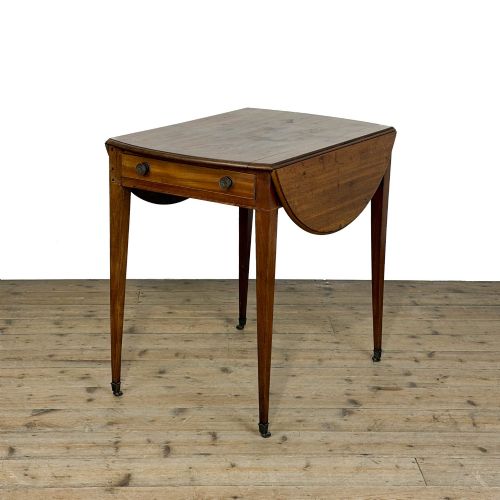

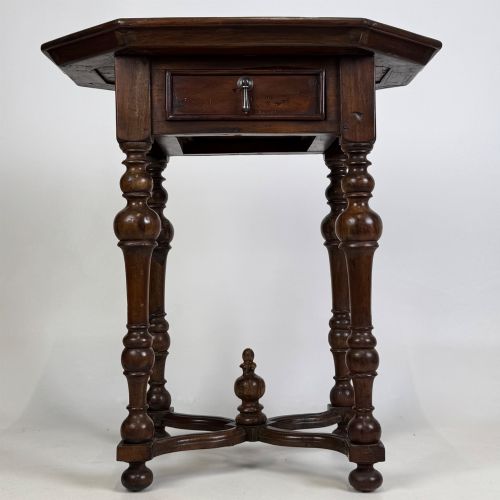
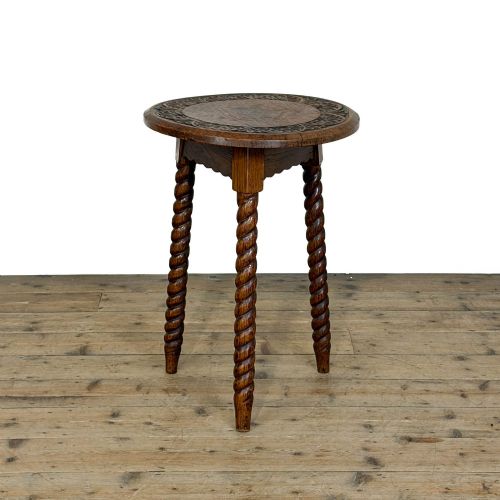
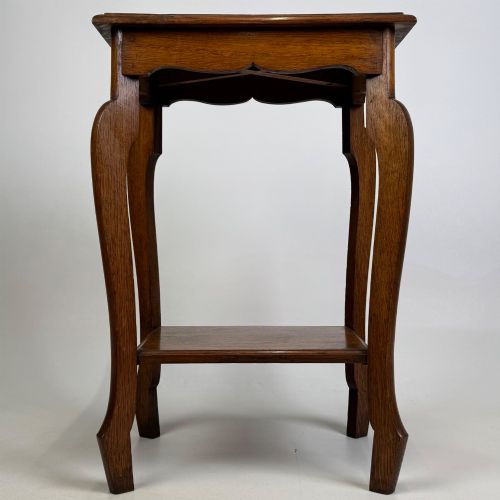
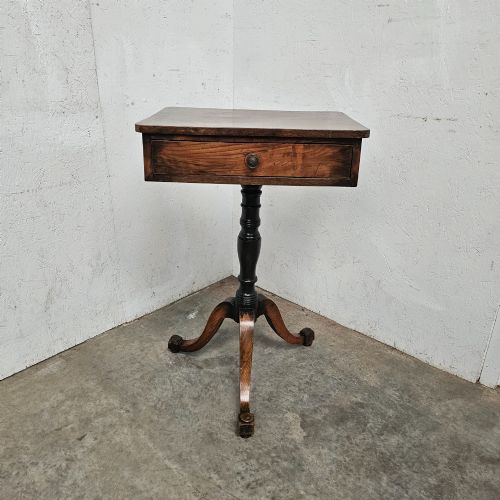
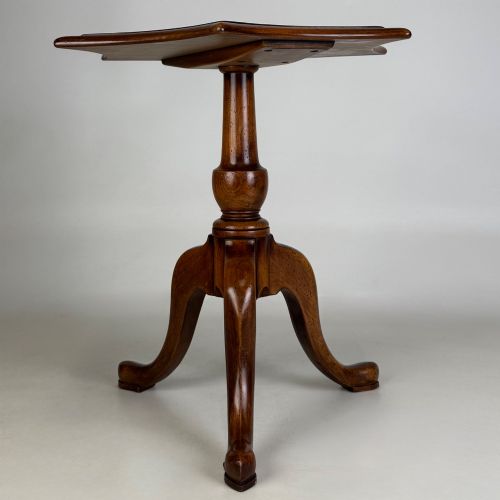
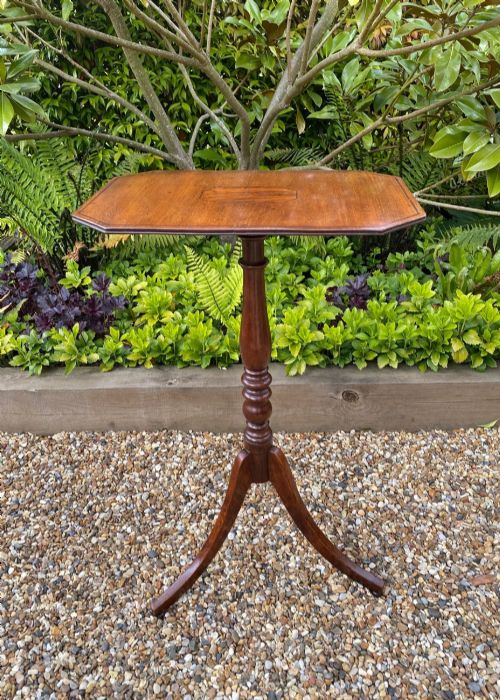
Small Wooden Accent Table
A small wooden accent table brings warmth and utility to an empty corner, offering a surface for a lamp or a book.
Small Wooden Accent Table
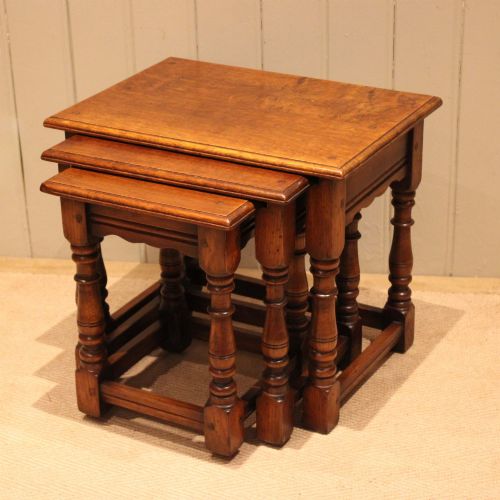
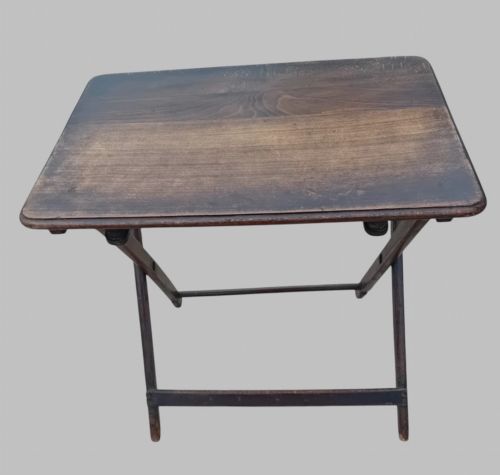
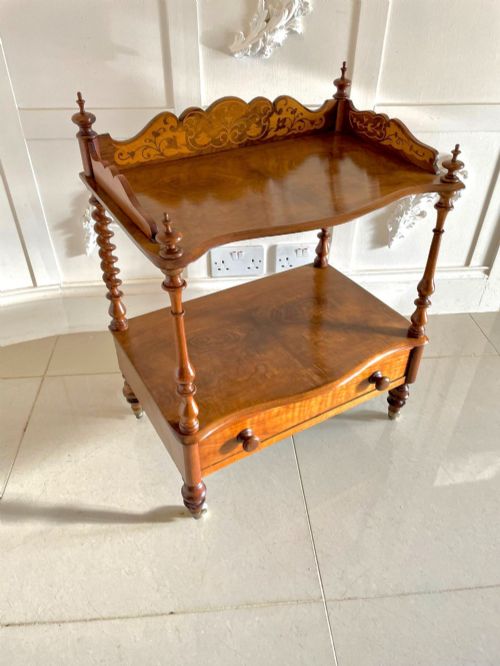
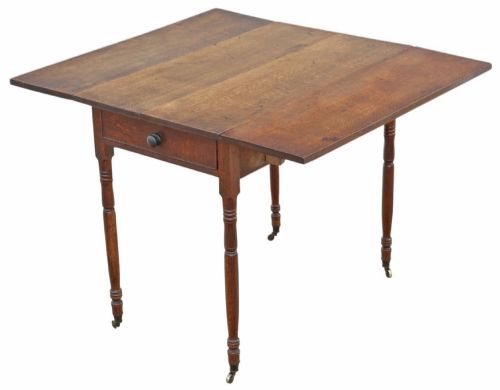
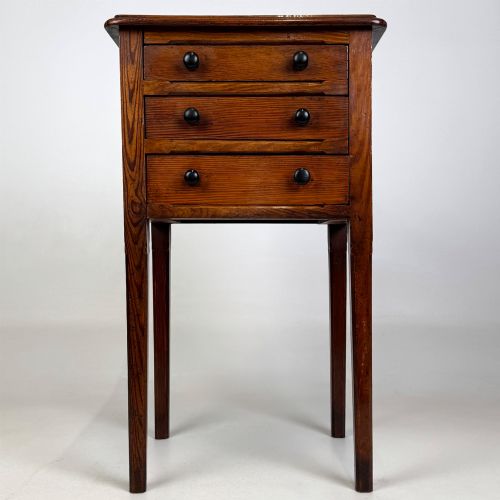
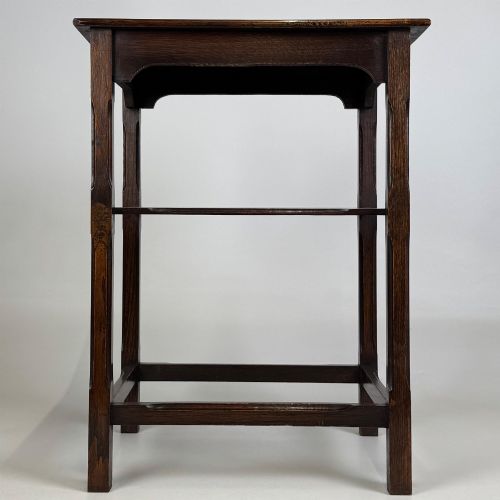
A small wooden accent table covers a range of compact secondary furniture designed to sit quietly beside a chair or in a hallway. These pieces appear across several centuries, spanning Georgian, Victorian, and Edwardian eras, as well as early twentieth-century production.
Origins stretch from English country workshops to formal metropolitan parlours, utilising regional timbers like elm and fruitwood alongside polished mahogany and walnut.
Distinctions in execution
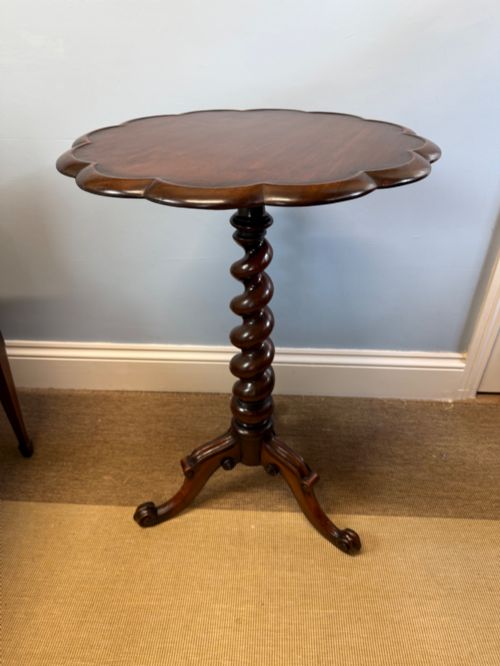
Quality rests in the selection of timber grain, whether the rich figuring of burr walnut or the honest density of quarter-sawn oak. The integration of decorative elements like brass galleries, marquetry, and turned barley twist legs marks the distinction between standard utility items and finer parlour pieces.
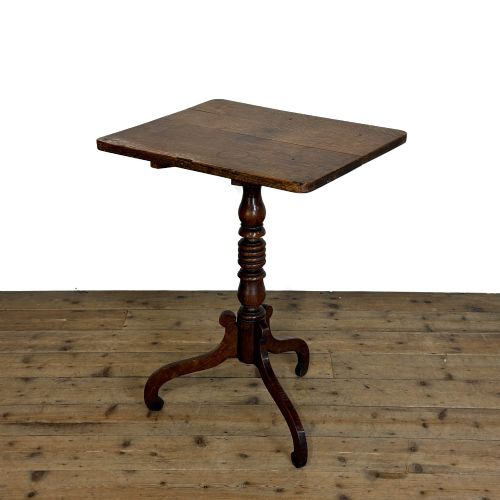
Structural integrity reveals itself in the stability of tripod bases, the smooth action of drop leaves, and the crispness of hand-carved details. Pieces retaining their original finish and surface patina command greater interest than those stripped and heavily restored.
Small Wooden Accent Table Retail Price Guide 2026
Typical asking prices for small wooden accent table among the pieces listed under this phrase on Sellingantiques today, from the lower quarter to the upper quarter. They describe what is for sale here now, not the wider market.
Periods represented span from the 18th century through the Georgian, Victorian, and Edwardian eras into the 1930s.
The Small Wooden Accent Table Glossary
- Pembroke table
- A small table with hinged drop leaves on two opposing sides, supported by folding brackets or swinging legs. These versatile pieces sat easily beside a hearth or in the centre of a modest room.
- Wine table
- A compact single-pedestal table designed to hold a glass or a candle, usually featuring a circular top and a tripod base. They emerged in quantity during the Georgian period for dining and drawing room use.
- Sutherland table
- A narrow drop-leaf table where the leaves fold down almost vertically, allowing the frame to take up minimal floor space when not in use. They became particularly popular during the Victorian era.
- Gateleg table
- A table with hinged leaves supported by legs that swing outward like a gate to hold the flaps. This sturdy form appears in oak and walnut across multiple centuries.
- Marquetry
- The art of applying decorative veneer pieces in wood to form intricate patterns and pictures on a surface. It appears on finer tabletops from the Georgian and Victorian periods.
Small Wooden Accent Table: Frequently Asked Questions
Where should I place a small wooden accent table?
These compact pieces fit naturally beside a sofa, in a narrow hallway, or tucked into an empty bedroom corner to hold a reading lamp.
Because of their modest proportions, they adapt easily to changing room layouts without overwhelming the surrounding furniture.
How do I care for antique wooden tables?
Keep wooden surfaces away from direct heat sources and strong sunlight to prevent the timber and veneer from drying out or cracking.
Apply a traditional beeswax polish occasionally to nourish the grain and maintain a soft, protective sheen.
What is the difference between an occasional table and a lamp table?
An occasional table is a general term for any small table brought out or moved around a room as needed for varied domestic tasks.
A lamp table specifically describes a sturdy small stand designed to support lighting and remain stationary beside seating.
Can I use an antique table for daily dining?
Certain forms like pembroke and small drop-leaf tables were originally constructed for dining or taking tea in smaller apartments.
While they provide useful surface area for light meals or drinks, modern daily wear may require protective mats to preserve historic finishes.