



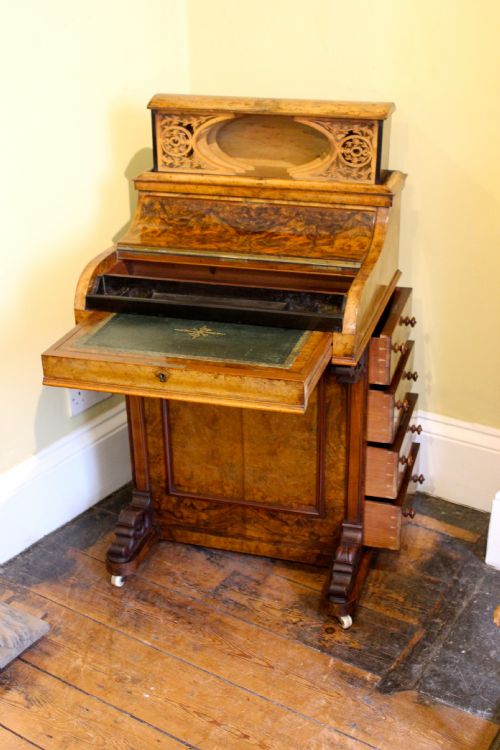

Small Walnut Writing Slope
A small walnut writing slope gives you a portable desk with fitted compartments, bringing rich timber grain and compact history straight to your lap.
Small Walnut Writing Slope
When you search for a small walnut writing slope, you are looking at portable writing boxes and compact desk forms designed for correspondence and document storage. The pieces you meet on this page span several decades and styles, crossing the Georgian, Victorian, and early twentieth century periods.
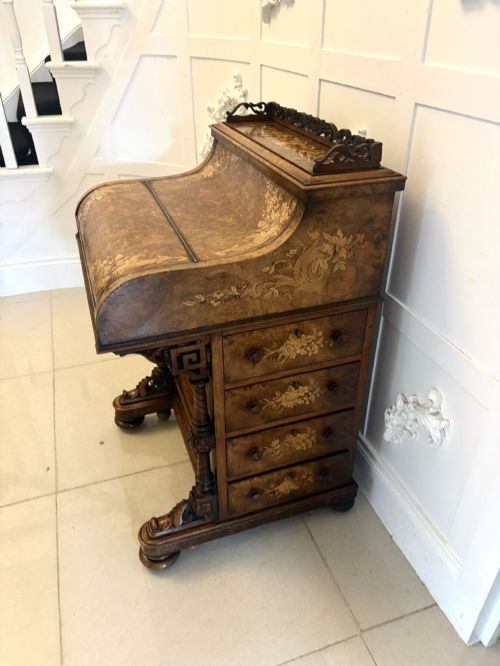
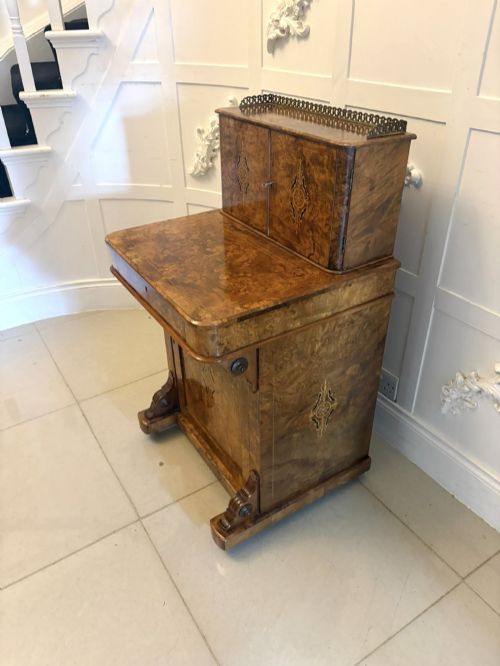
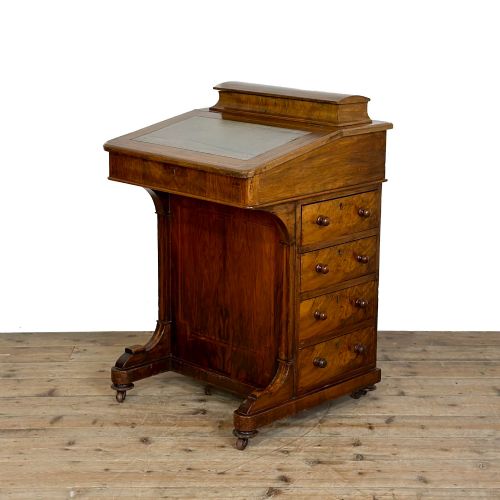
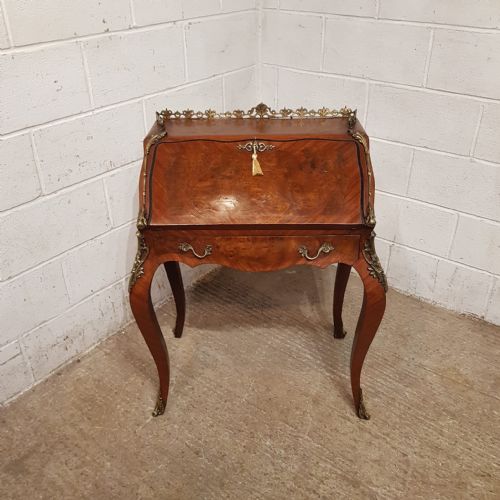
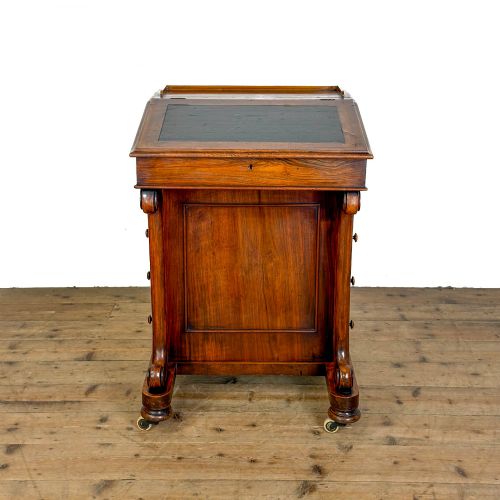
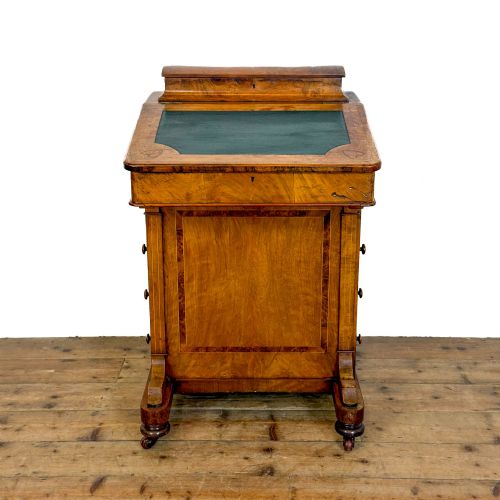
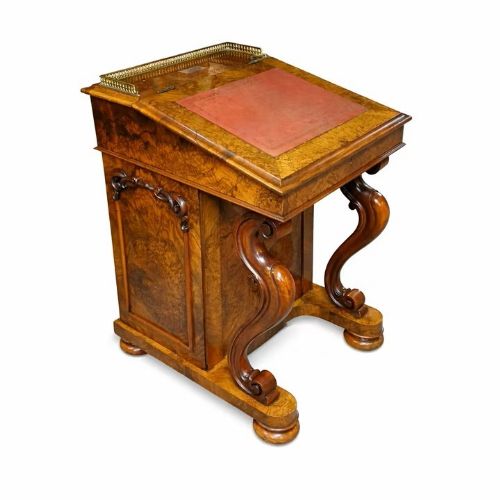
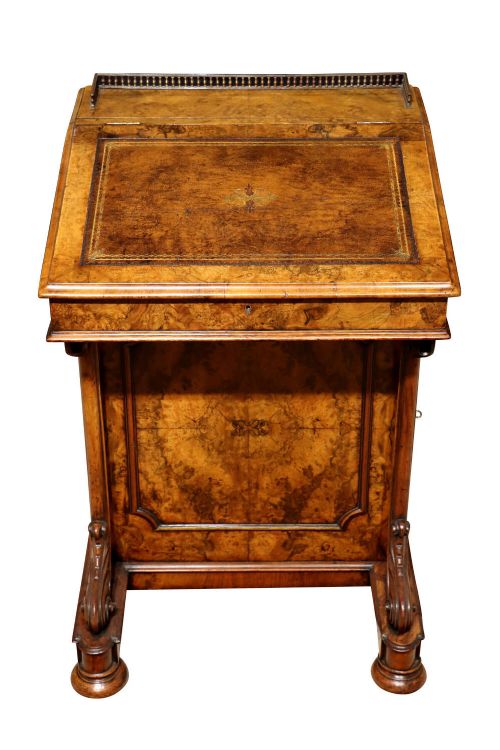
The selection ranges from traditional slope boxes that rest upon a table to standing Davenport desks and smaller bureau forms. Walnut and burr walnut dominate these listings, frequently accompanied by inlaid boxwood or marquetry details.
How they were made
Cabinet makers utilised solid walnut and figured burr veneers applied to structural timbers like oak, often employing crossbanding to frame the lid edges. Interiors frequently feature contrasting secondary woods such as satinwood alongside fitted stationery compartments and secret drawers.
Brass fittings, including hinges, escutcheons, and side handles, provide both structural reinforcement and decorative contrast to the dark timber. Inlaid boxwood and marquetry work demonstrate precise hand-cutting techniques applied directly into the veneer surfaces.
The site's listings demonstrate that burr walnut is the predominant decorative material for these writing forms, spanning from Georgian bureau styles to Victorian Davenports.
What varies in quality
The distinction between ordinary and exceptional pieces lies in the choice of timber and the depth of figure in the burr walnut veneer. Superior examples display symmetrical grain matching across the fall front or desktop, combined with finely executed marquetry and crisp inlay.
Interior architecture also separates the grades, with better pieces offering elaborate satinwood stationery fittings, working locks with original keys, and secondary timbers of higher density. The precision of the joinery around the secret drawers and writing surfaces dictates the standing of the piece.
The Small Walnut Writing Slope Glossary
- Burr walnut
- A veneer taken from the warted growths on walnut trees, prized for its swirling, highly figured grain patterns. It creates a rich, mottled surface texture across the main writing surfaces.
- Davenport
- A small compact desk featuring a sloping writing surface hinged above a pedestal of drawers. This form became particularly popular during the Victorian era for boudoir and parlour use.
- Crossbanding
- A narrow strip of veneer applied around the border of a panel with the grain running perpendicular to the centre. This decorative technique frames the primary timber and protects the edges.
- Marquetry
- The art of forming decorative patterns by fitting together small pieces of veneer of different woods and materials. It transforms plain surfaces into pictorial or geometric designs.
Small Walnut Writing Slope: Frequently Asked Questions
How were Davenport desks used?
Davenport desks served as compact writing tables where individuals could manage their correspondence in a parlour or bedroom. The sloping top provided a comfortable writing angle while the pedestal below held stationery.
These pieces combined a writing desk and a set of drawers into a single floor-standing unit. Many versions included side drawers and superstructure compartments for organising letters and inkwells.
How do I date a walnut slope?
Dating these pieces relies on examining the construction methods, hardware styles, and secondary timbers used inside. Georgian pieces often show simpler internal layouts while Victorian examples frequently incorporate elaborate burr veneers and Tunbridgeware details.
Cabinet-making techniques evolved from hand-cut dovetails in earlier periods to more mechanised production methods by the late nineteenth century. Comparing the style of the brass hinges and inlay patterns helps narrow down the decade of manufacture.
How do I care for walnut furniture?
Walnut surfaces benefit from regular dusting with a soft, dry cloth and occasional treatment with quality beeswax to nourish the timber. Keeping these pieces away from direct sunlight and heat sources prevents the wood from drying out and cracking.
Maintaining a stable room temperature protects both the solid walnut structure and the delicate burr veneers. Avoiding excess moisture during cleaning preserves the original polish and the integrity of any inlaid boxwood decoration.