
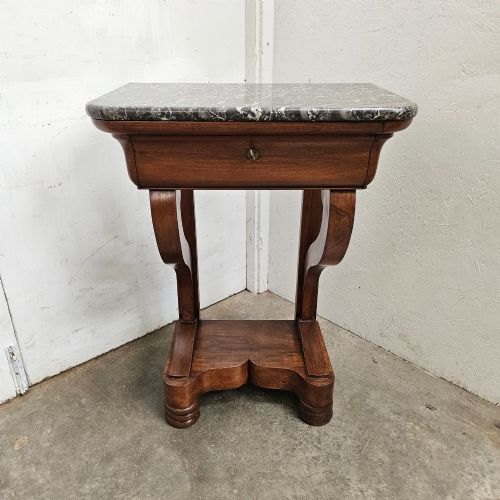


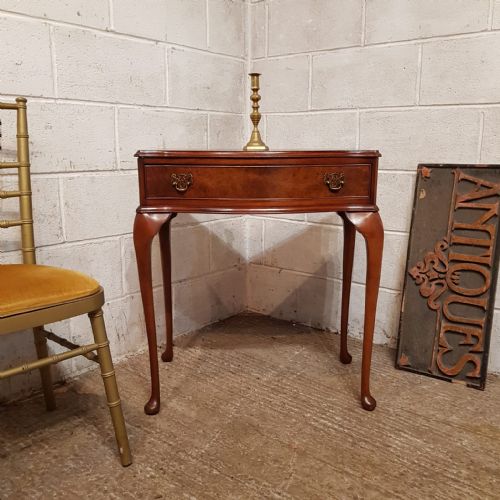


Small Walnut Console Table
A small walnut console table brings rich timber grain and compact proportion to a hallway or reception room.
Small Walnut Console Table
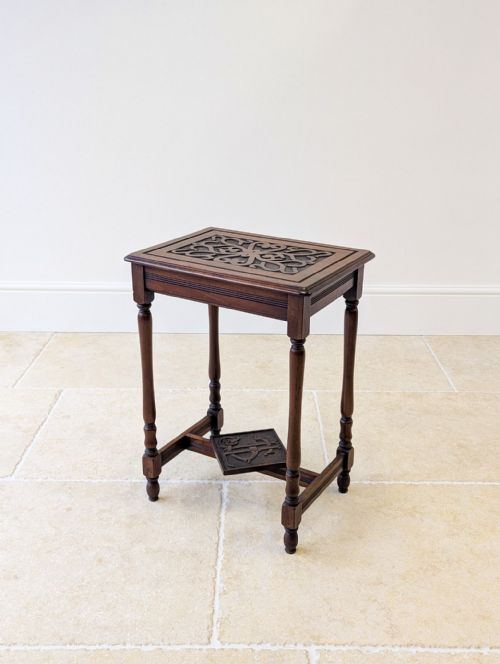
A small walnut console table is a compact surface designed to sit against a wall, frequently appearing in 18th Century, Victorian, Edwardian, and 1920s iterations. Buyers seeking this phrase encounter numerous variations including side tables, lowboys, and marble-topped console forms.
The material palette spans plain walnut, burr walnut, and satin walnut, often complemented by marble tops or brass hardware. Pieces range from formal Georgian and Queen Anne revival styles to French designs incorporating marquetry.
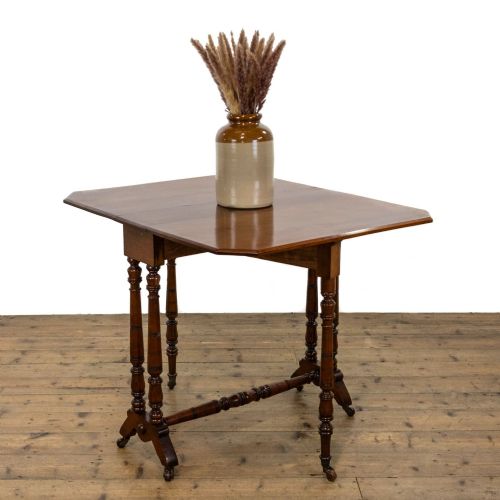
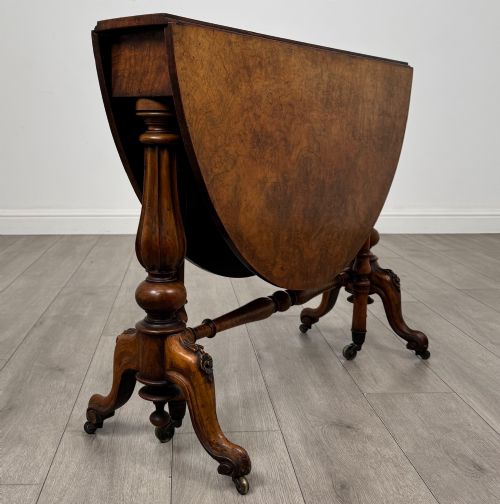
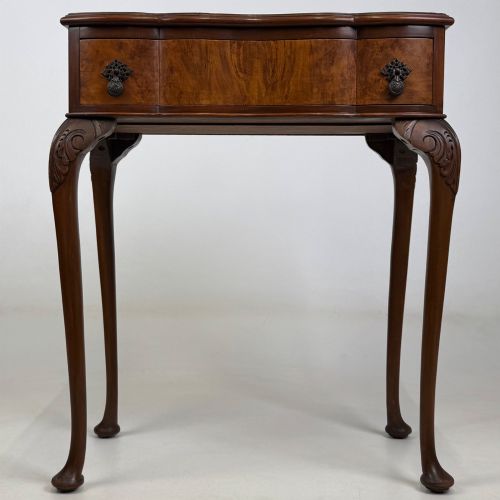
Victorian examples frequently take the form of Sutherland tables or burr walnut occasional tables, whilst later 1920s pieces present demi-lune shapes or serpentine fronts. Each variation offers a surface for display while maintaining a shallow footprint suited to narrow spaces.
What varies in quality
Quality rests in the selection of the timber veneer and the precision of the cabinetwork, distinguishing finely figured burr walnut from simpler plain wood surfaces. The integration of materials such as inset marble tops and detailed marquetry elevates the execution of the piece.
Proportion and structural harmony separate standard examples from superior items, particularly in revival styles that emulate Georgian or Queen Anne forms. The crispness of carved details and the stability of the frame determine the overall standard.
Listings feature walnut, burr walnut, satin walnut, marble, and brass across Victorian, Edwardian, Georgian, and 1920s periods.
The Small Walnut Console Table Glossary
- Burr walnut
- A highly figured wood veneer taken from the growth excrescences of walnut trees. It displays swirling patterns and rich mottling.
- Demi-lune
- A half-moon shape used for the tops and frames of console and side tables. This profile allows the furniture to sit flush against a wall.
- Lowboy
- A small kneehole dressing or side table with one or more rows of drawers, typically raised on slender cabriole legs.
- Sutherland table
- A narrow drop-leaf table with hinged flaps that fold down almost vertically. It was developed during the Victorian era.
- Marquetry
- The art of applying decorative pieces of veneer to a structure to form intricate patterns and pictures. It appears on French table surfaces.
Small Walnut Console Table: Frequently Asked Questions
Where should I place a small walnut console table?
These tables fit naturally in entrance halls, narrow corridors, or reception rooms where floor space is limited. Their shallow depth allows them to sit against walls without obstructing pathways.
They also function effectively beneath mirrors or windows, providing a surface for lamps, decorative items, or correspondence.
What is the difference between a console table and a side table?
Console tables are traditionally designed to stand against a wall, sometimes fixed in place or supported by brackets and legs. Side tables are free-standing items intended to be accessed from multiple sides.
In modern usage, the terms often overlap, especially within categories featuring demi-lune and serpentine shapes.
How do I care for antique walnut furniture?
Maintain walnut surfaces by dusting regularly with a soft, dry cloth and avoiding placement near direct heat sources or strong sunlight. These precautions protect the timber and veneer from drying out.
Apply appropriate furniture wax sparingly when the wood appears dry, following the direction of the grain.