

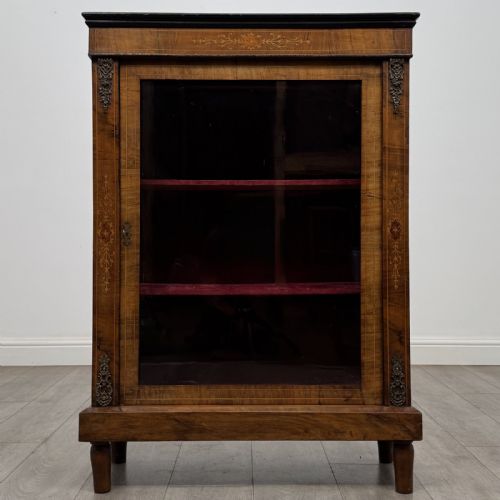

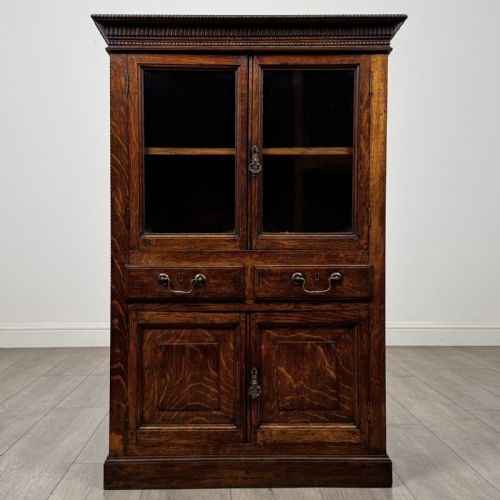
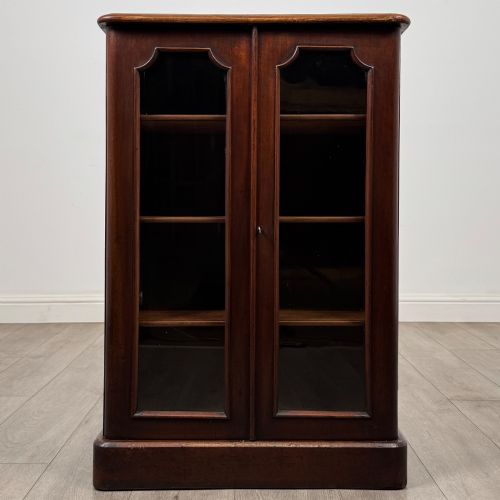
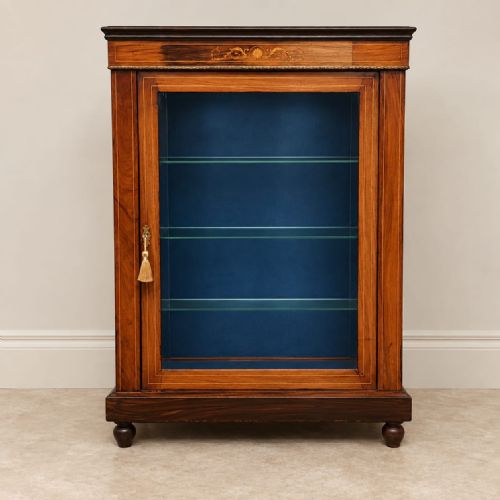
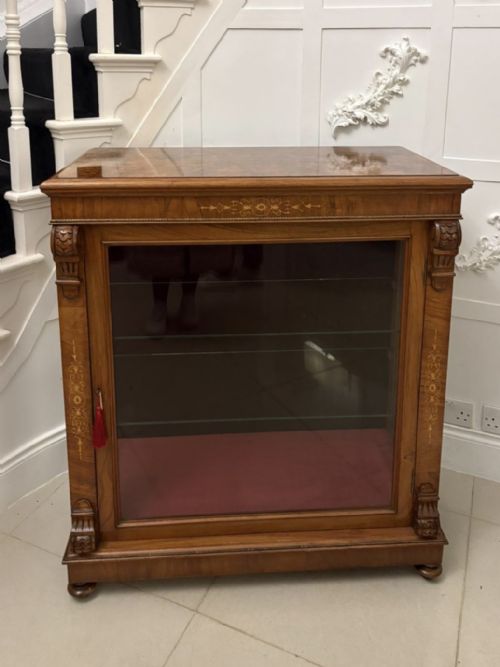

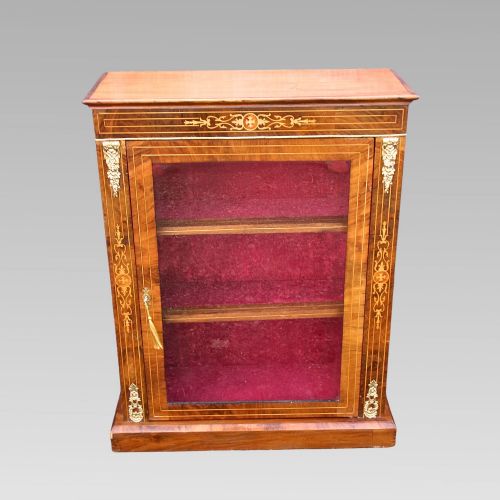


Small Victorian Glazed Bookcase
These small victorian glazed bookcases bring architectural timber and clear display glass together for compact rooms.
Small Victorian Glazed Bookcase
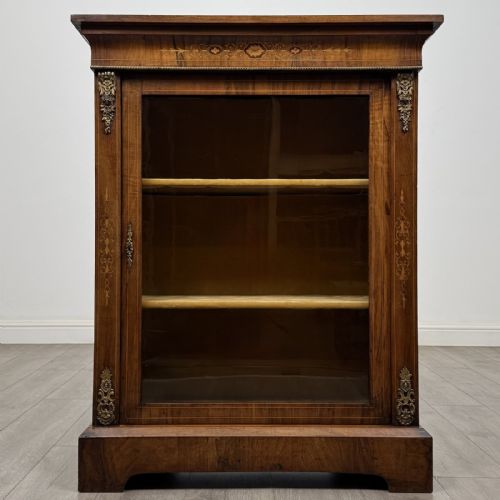
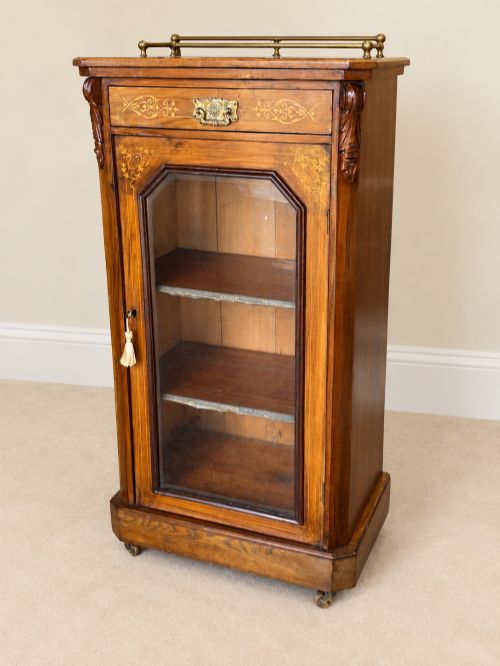
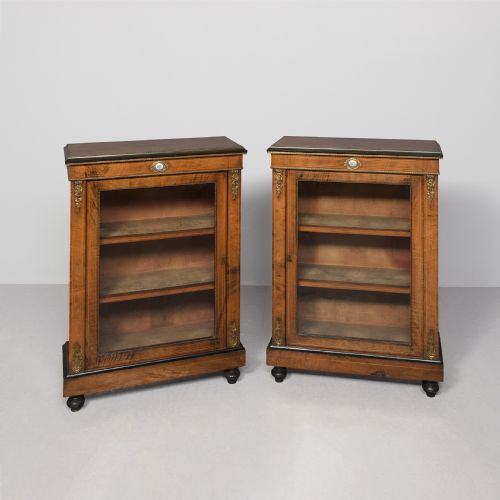
A small victorian glazed bookcase provides upright timber housing fitted with glass door panels to keep volumes visible yet protected from dust. These pieces serve smaller studies, parlours and bedrooms where full library shelving overwhelms the floor plan.
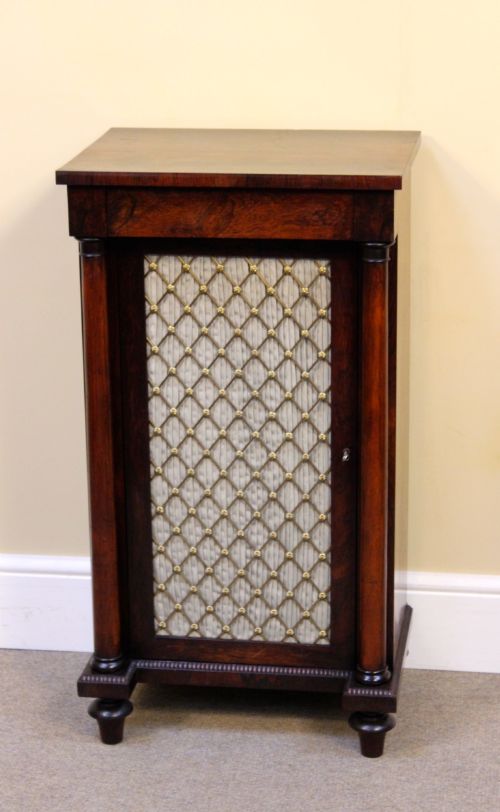
Most examples appearing here belong to the Victorian period, alongside related nineteenth-century workshops and occasional Regency or Edwardian pieces. Formats span from low counter-top display cabinets and narrow pier cabinets to tabletop miniatures and secretaire variations.
Makers shaped these upright proportions from timber carcasses, often integrating adjustable shelving and brass hardware. Buyers encounter side cabinets and wall cupboards adapted to hold books alongside decorative ceramics.
How they were made
Cabinet makers built these carcasses from native and imported hardwoods including walnut, burr walnut, mahogany, oak and rosewood. Timber veneers received marquetry inlays or boxwood stringing, while glass panels were glazed into wooden framework.
Internal surfaces often featured velvet linings, and exterior details relied on cast brass mounts, ormolu accents, dentil cornices and hand-carved mouldings. French polishing finished the wood, sealing the grain to produce a durable sheen.
Small Victorian Glazed Bookcase Retail Price Guide 2026
Typical asking prices for small victorian glazed bookcase among the pieces listed under this phrase on Sellingantiques today, from the lower quarter to the upper quarter. They describe what is for sale here now, not the wider market.
Listings feature walnut, mahogany, oak, rosewood and satinwood alongside glass and brass hardware.
What varies in quality
The standard of timber selection dictates visual merit, separating plain planks from richly figured burr walnut, figured mahogany or matched rosewood veneers. Crispness in carved ornament and precision in marquetry inlay reveal the hand of a skilled workshop.
Structural integrity depends on seasoned timber joints that withstand environmental shifts without warping the glazed doors. Original brass fittings, intact glass panes and functioning locks separate standard domestic items from superior expressions.
The Small Victorian Glazed Bookcase Glossary
- Pier cabinet
- A narrow display piece designed to fit the wall space between two windows. These glazed items protect books or curiosities within a compact footprint.
- Burr walnut
- Timber sliced from walnut tree growths, producing an intricate swirling grain pattern. Cabinet makers applied these decorative veneers to door fronts.
- Marquetry
- The art of forming decorative patterns using fitted pieces of differing wood veneers. Craftsmen set these thin wooden elements into the primary timber surface.
- Secretaire
- A cabinet incorporating a pull-down writing flap concealing small drawers and pigeonholes. This hybrid form combines desk space with upper shelving.
- Dentil cornice
- A classical architectural moulding featuring small rectangular blocks spaced evenly along the upper edge. This detail crowns the top of the bookcase carcass.
Small Victorian Glazed Bookcase: Frequently Asked Questions
Where should I place a small glazed bookcase?
These compact pieces suit narrower wall spaces, hallways, or corners where standard full-sized library furniture proves too deep. Their glazed doors protect contents in busy living areas while maintaining an open feel.
Position them away from direct heat sources and strong sunlight to protect nineteenth-century wood veneers and interior velvet linings from fading or drying out.
How do I care for nineteenth-century polished wood?
Dust the surfaces regularly with a soft, dry cloth to prevent particulate buildup on the French polished finish. Avoid silicone sprays or modern household cleaners that can damage historic timber polishes.
Feed the wood occasionally with a traditional wax polish designed for antiques, applying it sparingly and buffing to a soft natural sheen.
Are the shelves adjustable for different book sizes?
Many period cabinets feature traditional wooden support strips or metal ratchets that allow shelves to be repositioned. This adaptability accommodates varying heights of books or display objects.
Some earlier or simpler pieces have fixed shelving, so checking the interior configuration helps ensure it suits your specific collection.
What is the difference between a pier cabinet and a bookcase?
A pier cabinet traditionally refers to a narrow display piece built to occupy the narrow wall space between windows. While many function as glazed bookcases, they often emphasise decorative inlays and art objects.
A standard bookcase focuses primarily on shelving capacity for volumes, though smaller Victorian variations frequently blur this distinction with glass-fronted display doors.