


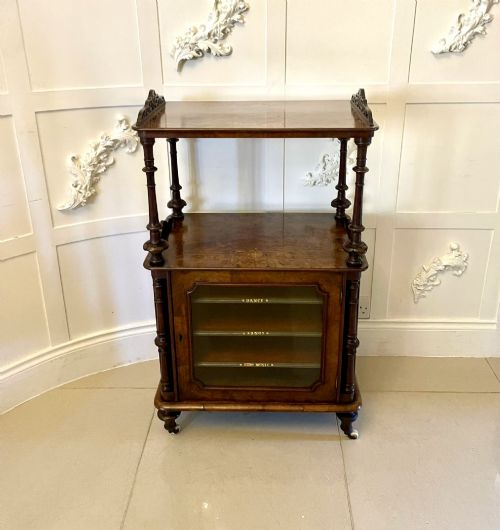


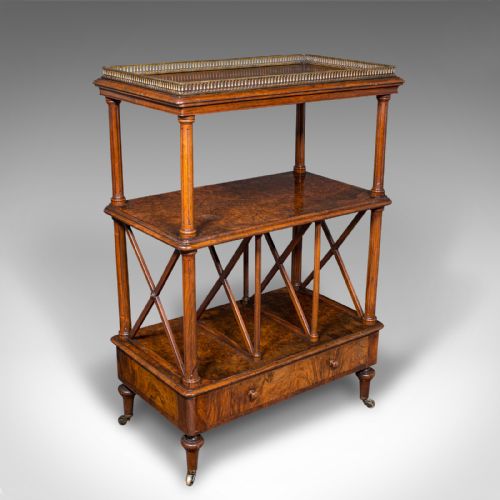


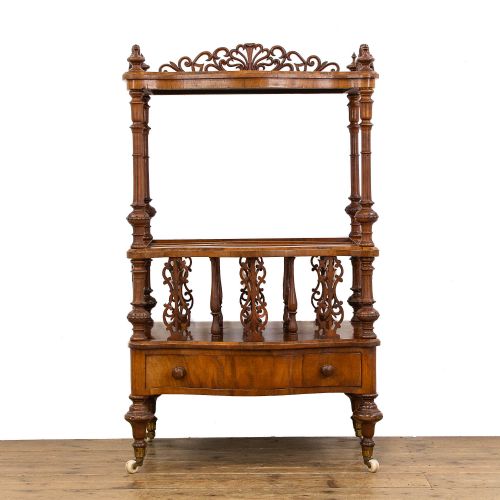
Antique Walnut Whatnot Cabinet
An antique walnut whatnot cabinet gives you tiered display and enclosed storage in one timber frame.
Antique Walnut Whatnot Cabinet
An antique walnut whatnot cabinet brings together open shelving and enclosed storage in a single piece of furniture, designed to hold books, sheet music, and display items. When you search for an antique walnut whatnot cabinet, you encounter multiple variations including corner units, canterbury music cabinets, and glazed display cupboards.
The pieces appearing on this page span the Victorian and Regency periods, stretching back through the nineteenth century. Common forms include tiered shelving units, music cabinets fitted with interior partitions, and chiffoniers combined with whatnot tops.
Makers utilised rich timbers, notably burr walnut, often enhanced with boxwood inlay, marquetry, and brass mounts. These cabinets function effectively in a modern interior as focal points for displaying ceramics, glassware, and small collections.
How they were made
Cabinet makers selected figured walnut and burr walnut veneers for their striking grain patterns, frequently applying them over secondary timbers. They embellished these surfaces with delicate boxwood inlay, marquetry motifs, and ebony stringing.
Structural elements involved turned columns, hollow barley twist supports, and pierced fretwork galleries. Glazed doors utilised fine timber glazing bars to house glass panels securely within the cabinet frame.
Antique Walnut Whatnot Cabinet Retail Price Guide 2026
Typical asking prices for walnut whatnot cabinet among the pieces listed under this phrase on Sellingantiques today, from the lower quarter to the upper quarter. They describe what is for sale here now, not the wider market.
Listings feature Victorian and Regency periods, predominantly utilising walnut, burr walnut, brass, glass, ceramic, satinwood, ormolu, and boxwood inlay.
What varies in quality
Quality in these cabinets rests upon the depth of the walnut figure and the precision of the inlay work. Finer examples display meticulously matched burr walnut veneers across all visible surfaces, avoiding plain or poorly figured timber.
The sophistication of the joinery and carving dictates the standing of a piece. Pierced fretwork galleries, crisp barley twist turnings, and well-executed brass mounts separate standard production from superior work.
The Antique Walnut Whatnot Cabinet Glossary
- Burr walnut
- Timber taken from the abnormal growth of a walnut tree, producing swirling, highly decorative grain patterns. Cabinet makers prized this wood for veneering prominent surfaces.
- Canterbury
- A piece of furniture designed to hold sheet music or books, featuring vertical divisions or slots. These units frequently incorporated whatnot tiers above the storage section.
- Fretwork
- Openwork patterns carved or pierced through thin sheets of wood. Victorian makers utilised fretwork to create decorative galleries around shelves.
- Marquetry
- The art of applying pieces of veneer to a structure to form decorative patterns and pictures. Craftsmen employed various contrasting timbers to achieve pictorial detail.
- Ormolu
- Gilded bronze ornamentation applied to furniture. This finish added metallic highlights to complement the dark tones of walnut.
Antique Walnut Whatnot Cabinet: Frequently Asked Questions
What is an antique walnut whatnot cabinet?
An antique walnut whatnot cabinet is a multi-tiered piece of furniture combining open display shelves with a lower enclosed cabinet or drawer. These items were designed during the nineteenth century to hold books, sheet music, and decorative objects in a drawing room.
The form bridges the gap between a display stand and a storage cupboard, utilising figured walnut and burr walnut timbers throughout. Victorian and Regency examples often feature glazed doors, brass mounts, and intricate inlay work.
How do you use a whatnot cabinet today?
These cabinets serve well in modern rooms for displaying small collections, ceramics, glassware, and framed photographs on the upper shelves. The enclosed lower sections provide practical storage for items you prefer to keep out of sight.
Corner versions fit neatly into unused room angles, while music cabinets with vertical divisions accommodate magazines, vinyl records, or stationery. The rich walnut timber and marquetry details add texture and traditional warmth to contemporary interiors.
How do I date a Victorian walnut cabinet?
Dating relies on examining the construction methods, timber selection, and stylistic details visible on the piece. Victorian examples from the mid-nineteenth century frequently display burr walnut veneers, boxwood inlay, and turned supports like barley twists.
Later Victorian pieces often incorporate more robust marquetry and glazed doors with fitted locks. Comparing the hardware, such as brass hinges and escutcheons, helps confirm the manufacturing era.
What is the difference between a whatnot and an etagere?
A whatnot generally refers to a set of open shelves used for small ornaments, sometimes combined with a lower cabinet or drawer. An etagere is typically a lighter, tiered piece of furniture intended primarily for displaying objects without enclosed storage.
In nineteenth-century usage, the terms sometimes overlap, particularly when dealers and makers combined display tiers with music storage or small cupboards. Both types utilise decorative woods like walnut and employ turned or carved supports.