
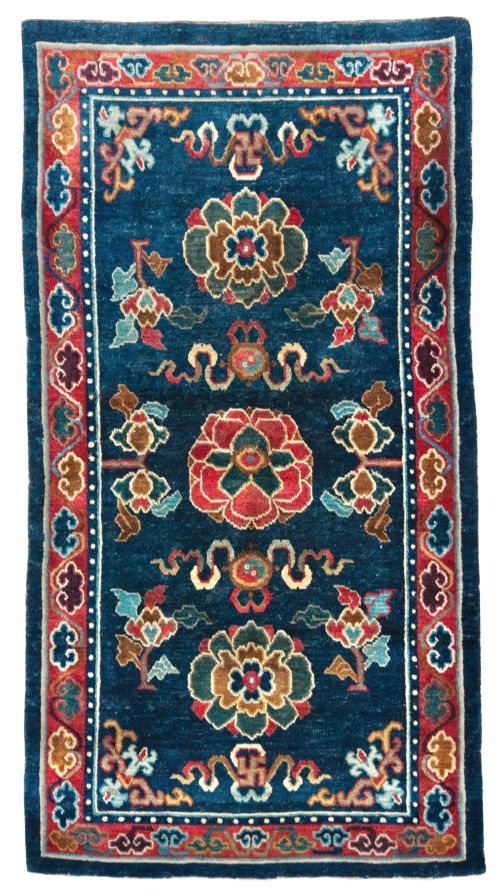
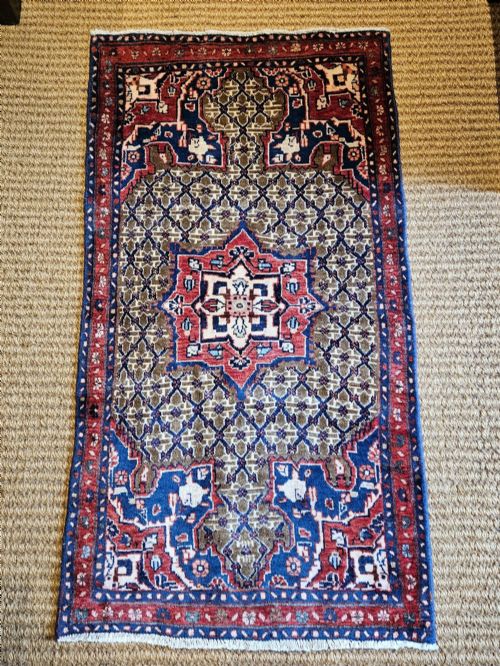
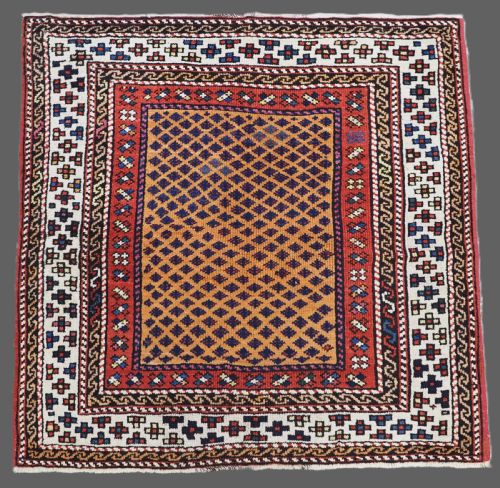
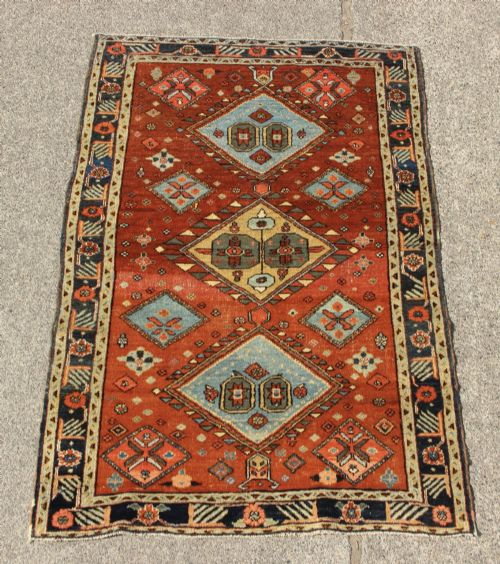
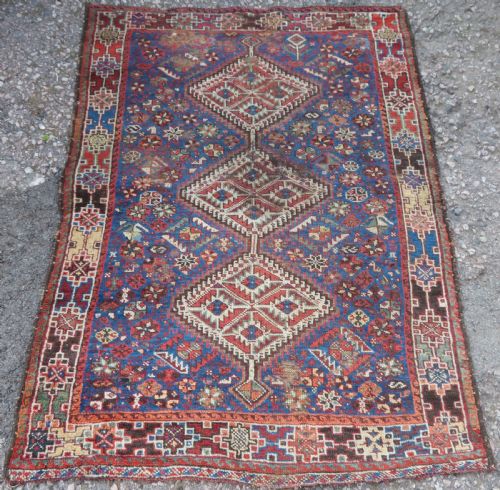

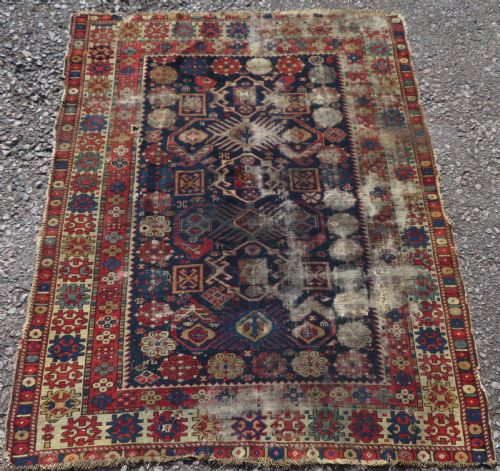
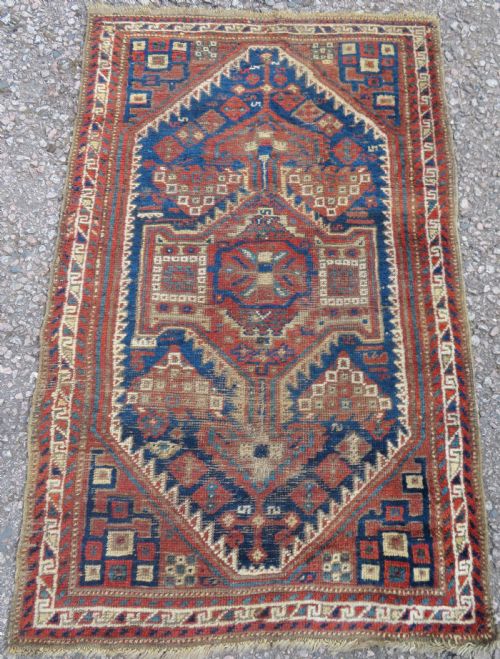
Small Tribal Wool Rug
A small tribal wool rug brings the grounded, nomadic character of Persian, Anatolian, and Caucasian weaving straight to a floor or wall.
Small Tribal Wool Rug
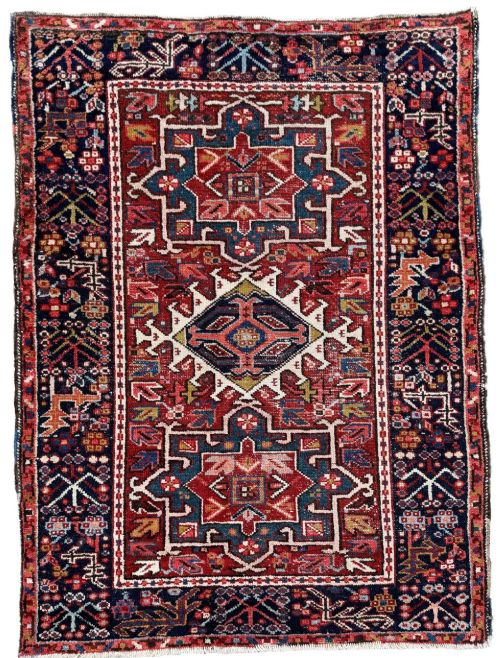
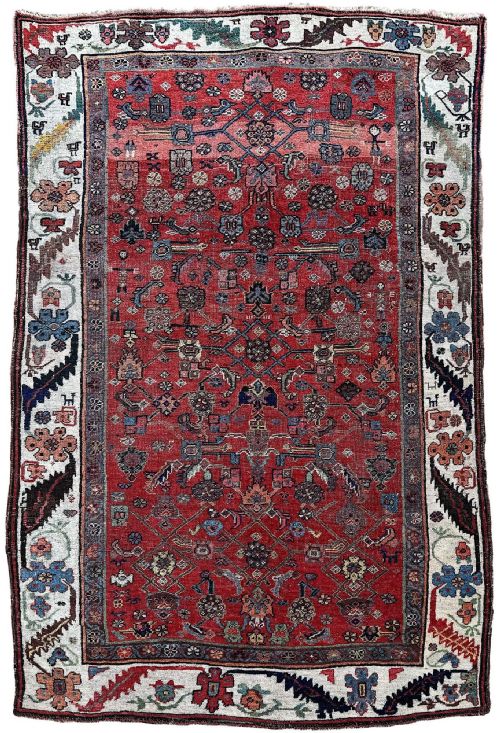
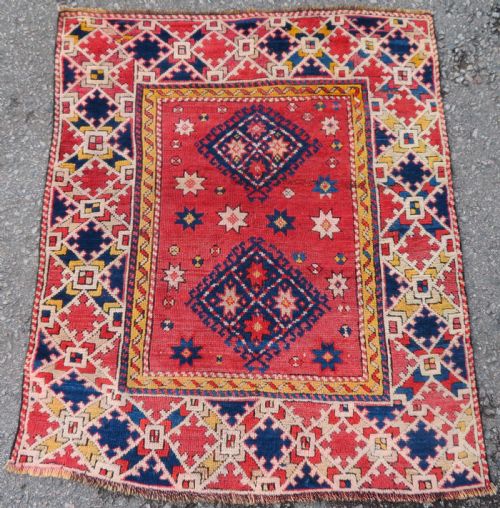
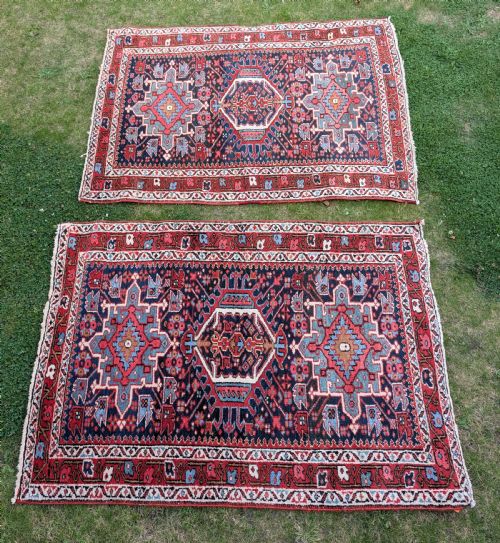
When a buyer searches for a small tribal wool rug, they encounter compact floor coverings, hearth-sized mats, and woven bags produced by village and nomadic weavers across Central Asia, Persia, and the Caucasus. These pieces originate primarily from the nineteenth and early twentieth centuries, spanning periods from the eighteen-fifties through the nineteen-thirties.
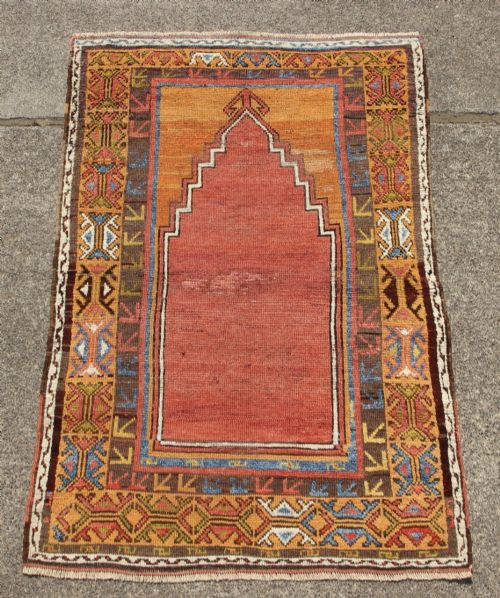
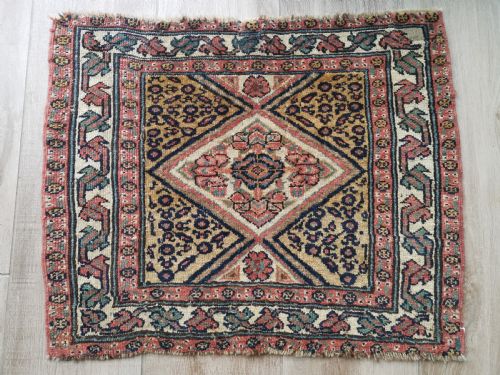
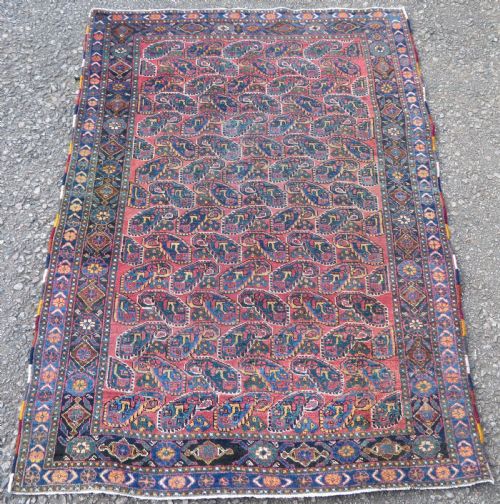
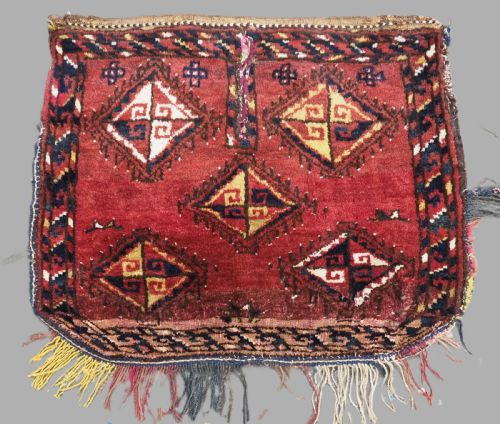
The most common formats on this page include room mats, scatter rugs, prayer rugs, and functional utilitarian pieces such as saddle bags, bagfaces, and tent door rugs. Regional identities emerge strongly through distinct geometric patterns, lattice designs, and localized weaving structures unique to groups like the Baluch, Khamseh, Afshar, and Karaja.
How they were made
The construction relies heavily on hand-spun wool for the pile, often combined with cotton foundations for structural stability in specific regional workshops. Weavers utilised natural dyes to achieve rich, enduring palettes that mellow gracefully over decades of use.
Nomadic and village artisans tied dense knots on vertical or horizontal looms, incorporating Tibetan wool and specialised animal fibres depending on the geographic origin of the textile. Every rug bears the individual hand of its maker, visible in minor irregularities within the symmetrical or asymmetrical knotting.
Some tiny mats served as miniature sleeping spots for household cats during harsh winters.
What varies in quality
Quality rests upon the tightness of the weave, the clarity of the primary design motifs, and the depth achieved through natural dye use. Tightly packed wool pile ensures resilience, while precise geometric execution distinguishes skilled village weaving from standard utility output.
The integrity of the original selvedges and ends plays a significant role in assessing the standard of a surviving textile. Superior examples retain their full dimensions and balanced proportions without heavy structural intervention.
The Small Tribal Wool Rug Glossary
- Pile
- The upright yarn loops that form the soft surface of a rug. It is sheared to an even height after knotting.
- Selvedge
- The reinforced edge of a textile that prevents the side cords from unravelling. It is wrapped tightly with coloured wool.
- Prayer rug
- A small format textile featuring a mihrab or niche design used historically for daily devotions. The pointed arch directs the worshipper's orientation.
- Bagface
- The decorative front panel of a nomadic storage bag, preserved and mounted as a small display rug. These items display concentrated geometric patterns.
- Knot density
- The number of knots per square unit, which determines the fineness of the detail and the durability of the textile.
Small Tribal Wool Rug: Frequently Asked Questions
Where were these rugs made?
These textiles originate from nomadic and village communities across Persia, Anatolia, the Caucasus, and Central Asia.
Weavers in regions such as Shiraz, Karaja, Daghestan, and Baluchistan produced these practical items for daily domestic use.
How do I care for a wool rug?
Regular gentle vacuuming without a rotating brush roll keeps dust from settling deep into the wool pile.
Professional cleaning tailored to antique textiles preserves the natural lanolin and protects the historical dyes.
What is a saddle bag?
Nomadic groups utilised large paired wool bags for transporting belongings on horses, camels, or donkeys during seasonal migrations.
Only the decorative front panels survive today as small collectible fragments displaying intricate tribal iconography.
How can I identify tribal designs?
Tribal designs typically feature repeating geometric motifs, stepped medallions, and stylized animal or plant forms rather than courtly floral curves.
Specific colour combinations and border arrangements often point directly to the particular tribe or confederacy that made the piece.