




Small Rococo Mirrors
Small rococo mirrors bring fluid, organic forms and ornate framing to compact spaces, prized for their asymmetrical scrolls and dramatic crests.
Small Rococo Mirrors
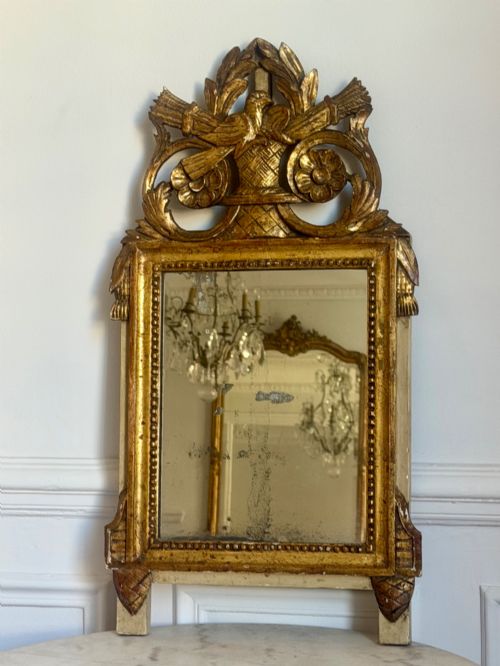
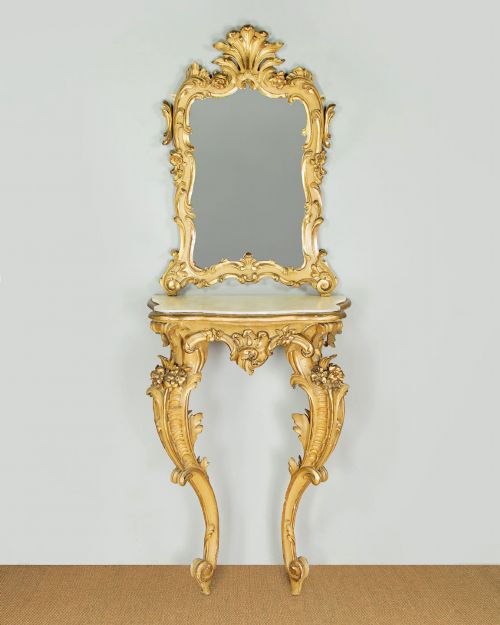
Small rococo mirrors span wall-mounted and table-standing forms, drawing heavily on French and Italian design vocabulary. When searching for small rococo mirrors, buyers frequently encounter 18th-century carved giltwood originals alongside later revival pieces from the 19th and early 20th centuries.
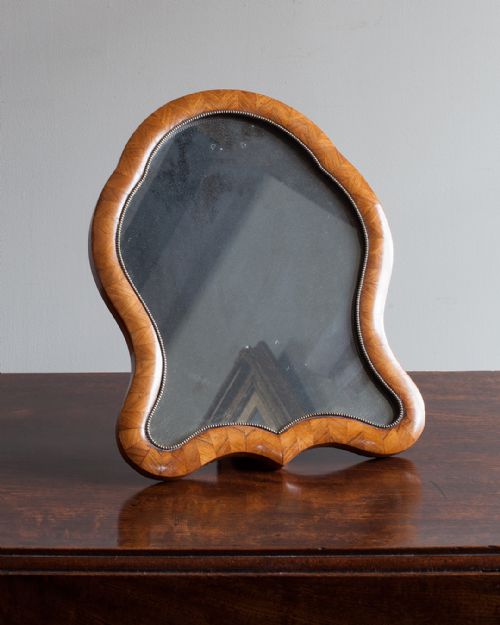
The selection includes cartouche mirrors, Florentine frames, and vanity glasses incorporating brass, kingwood, and sycamore. These pieces function equally well as intimate dressing table accessories or striking focal points in smaller rooms.
How they were made
Makers shaped these frames primarily from softwoods and hardwoods like kingwood, sycamore, and mahogany, applying intricate carved details directly to the timber. Giltwood and gesso surfaces were built up in layers before receiving fine applications of gold leaf or paint.
Mirror plates in older examples often show natural foxing and age, held within rebates using traditional slips. Brass components, including cast wall frames and table stands, utilise detailed mouldings and crests featuring masks and scrolls.
Small Rococo Mirrors Retail Price Guide 2026
Typical asking prices for small rococo mirrors among the pieces listed under this phrase on Sellingantiques today, from the lower quarter to the upper quarter. They describe what is for sale here now, not the wider market.
Listings feature pieces spanning the 18th century through to the 1920s, constructed from giltwood, brass, and kingwood.
What varies in quality
The crispness of the carving dictates much of the visual appeal, separating fluid, deeply undercut foliage from softer, more mechanically produced moulding. Original gilding and untouched surface patination hold significantly higher regard than later overpainting or heavy restoration.
Structural integrity within the joints of the wooden frame or the stability of the easel back on a table mirror indicates careful original construction. The presence of the original mirror plate, even with appropriate foxing, adds considerable character and authenticity.
The Small Rococo Mirrors Glossary
- Giltwood
- Timber that has been coated with a fine layer of gold leaf over a prepared gesso ground. This technique creates a luminous, reflective surface that catches natural light in a room.
- Cartouche
- An ornamental frame resembling a scroll or a sheet of parchment with scrolled edges. These frames often house asymmetrical mirror plates typical of the period.
- Gesso
- A plaster-like mixture applied to wood frames to provide a smooth base for gilding. Carvers cut intricate details directly into this layered composition.
- Foxing
- Age-related spots and discolouration within the silver backing of old mirror glass. This natural oxidisation creates distinctive dark marks that confirm the age of the plate.
- Fretwork
- Thin wood decoration cut into decorative patterns using a fretsaw. Eighteenth-century examples often feature delicate pierced designs along the crest or apron.
Small Rococo Mirrors: Frequently Asked Questions
How do I hang a heavy antique wall mirror?
Ensure the fixing matches the weight of the frame and secures directly into a wall stud or uses appropriate masonry anchors. Wall mirrors often require two fixing points to distribute the load evenly and prevent twisting.
Check that the hanging loops or rings attached to the back of the frame are secure before mounting. Professional framing hooks provide reliable support for delicate giltwood frames.
Can I polish the gold leaf on my mirror?
Avoid using metal polishes or harsh cleaning agents on gilded surfaces because they remove the thin layer of gold leaf. Dust the frame gently with a soft, dry brush to maintain the finish.
Moisture can damage the gesso beneath the gold, so keep these mirrors away from damp environments. Professional conservation is recommended if the surface requires deep cleaning.
Are table mirrors sturdy enough for daily use?
Table mirrors generally feature hinged easel backs or pivot stands designed for regular adjustment on dressing tables. Handle the pivoting mechanism gently to avoid stressing the joints where the frame meets the support.
Place the mirror on a stable, flat surface to prevent tipping during use. Older wooden fittings benefit from careful handling rather than frequent repositioning.
How can I tell an 18th-century mirror from a revival piece?
Eighteenth-century examples typically display hand-carved details with subtle irregularities, old timber shrinkage, and traditional joinery methods. The construction of the backboards and the type of nail or screw used offer strong clues to the period.
Revival pieces from the 19th and 20th centuries often feature machine-prepared timbers and more uniform composition work in the gesso. Examining the mirror plate and the overall weight helps clarify the manufacturing era.