




Small Oak Corner Cabinet
A small oak corner cabinet makes clever use of wasted angles, bringing solid timber and period character into rooms that lack floor space.
Small Oak Corner Cabinet
When you search for a small oak corner cabinet, you look for a triangular cupboard designed to fit flush against the junction of two walls. These pieces use timber selected for its hard-wearing grain and warm hue, shaped to sit snugly in an overlooked room angle.
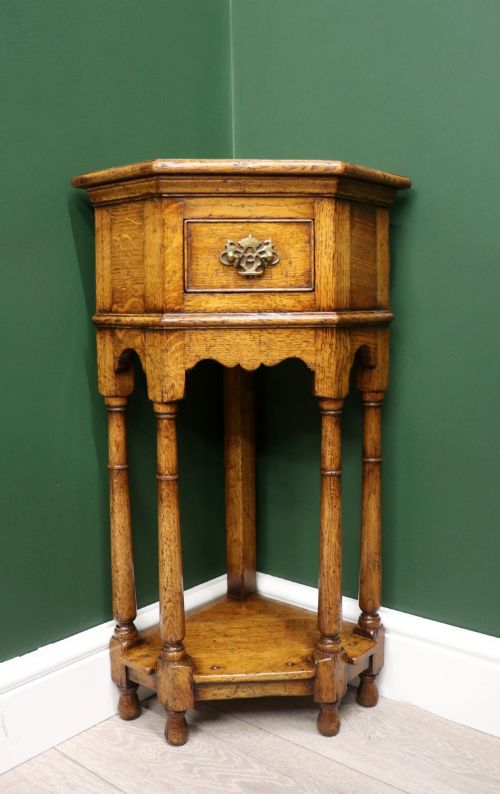
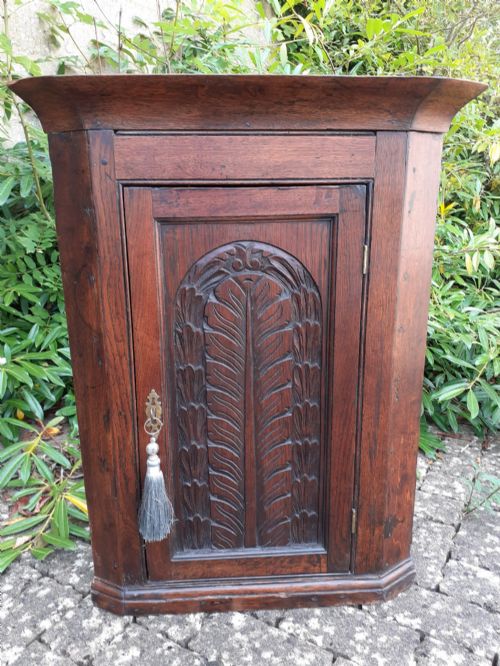
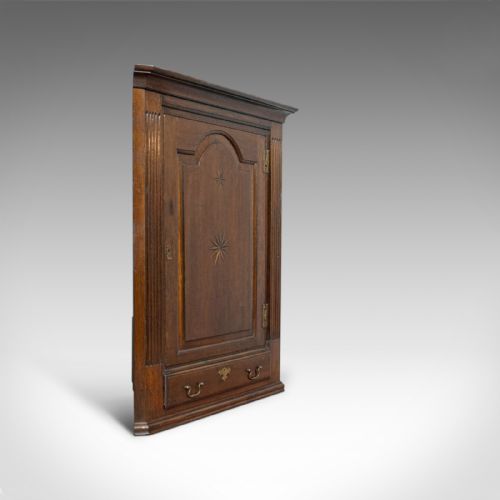
The versions most common on this page are wall-mounted hanging cupboards and low floor-standing tables, spanning periods from the eighteenth century to the mid-twentieth century. Georgian examples frequently feature panelled doors and brass H-hinges, while Edwardian and later pieces often incorporate glazed fronts or carved decorative details.
Makers built these items for domestic storage, housing china, dried goods, or household papers in farmhouse kitchens, parlours, and hallways. Their compact footprint allowed homes to maximise storage without cluttering the main living areas.
How they were made
Carpenters constructed these cupboards primarily from solid oak, utilising both plain-sawn and quarter-sawn boards to build the rigid triangular carcase. Backboards typically consist of thin vertical pine or oak planks nailed directly to the frame, keeping the overall weight manageable for wall hanging.
Joinery relied on traditional pegged mortise and tenon joints for the frame and panel doors, ensuring stability against seasonal wood movement. Brass and iron hardware, including butterfly hinges, escutcheons, and working locks with keys, secured the doors and added functional detail.
Listings feature oak combined with brass, glass, and iron across Georgian, Victorian, and Edwardian periods.
What varies in quality
The standard of a small oak corner cabinet depends heavily on the selection of the timber and the crispness of any hand-carved ornamentation. Finer pieces display carefully matched grain patterns across the door panels and tidy, uncompromised joinery at the wall-meeting edges.
Proportion and hardware also separate ordinary examples from exceptional ones. Cabinets retaining their original brass hinges, working locks, and interior shelving schemes command attention for their intact historical integrity.
The Small Oak Corner Cabinet Glossary
- Hanging cupboard
- A cabinet equipped with internal brackets or fixing points designed to be secured directly to a wall rather than resting on the floor.
- Chippendale revival
- A stylistic movement popular during the Victorian and Edwardian eras that reinterpreted eighteenth-century designs, often featuring scrolling pediments and carved motifs.
- Escutcheon
- A protective brass or iron plate surrounding a keyhole, designed to prevent the surrounding wood from wearing away through regular use.
- Panelled door
- A door construction where a central wooden board floats within a grooved frame, allowing the timber to expand and contract safely with humidity changes.
- Cotswold school
- A twentieth-century design and craft movement focused on traditional hand-tool woodworking and honest construction methods.
Small Oak Corner Cabinet: Frequently Asked Questions
How do I hang a wall cabinet safely?
These cupboards require sturdy fixings screwed directly into masonry or structural timber studs behind the plaster. Because the loaded weight pushes forward, proper wall anchors are essential.
Most period hanging cupboards feature internal mounting brackets or pre-drilled holes through the upper and lower interior back rails to distribute the weight evenly.
Are these cabinets difficult to clean?
Routine maintenance requires only a soft, dry cloth to remove dust from the grain and mouldings. Avoid modern silicone polishes that build up a greasy film over time.
Applying a traditional beeswax paste once or twice a year helps nourish the dry oak and maintains a natural, protective sheen on the surface.
How do I tell Georgian from Edwardian oak?
Georgian pieces generally show hand-planed surfaces, pegged joinery, and simpler structural lines with heavy brass H-hinges. The timber often exhibits a deeper, mellower patina developed over centuries.
Edwardian and revival versions typically display machine-sawn components, lighter golden oak tones, and stylistic influences from earlier eras, such as Jacobean geometric mouldings.
What were corner cupboards used for?
Households utilised these triangular pieces to store porcelain tea sets, glassware, or dry pantry goods away from damp kitchen floors. Their enclosed shelving kept contents clean and secure.
In parlours, they served as display units for valued ceramics, while bedroom variants held personal linens and everyday accessories.