

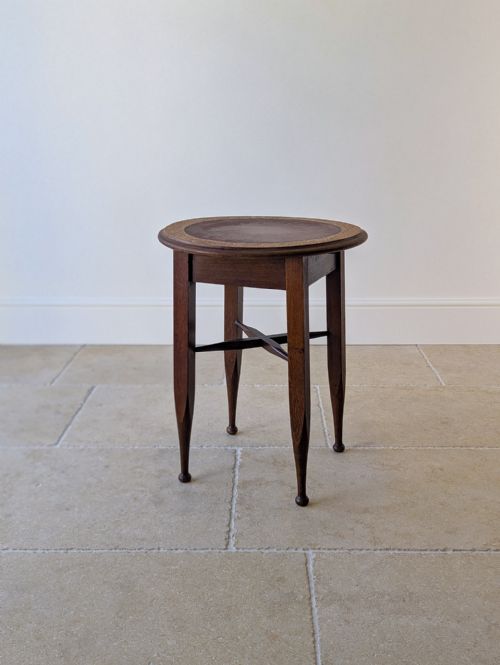
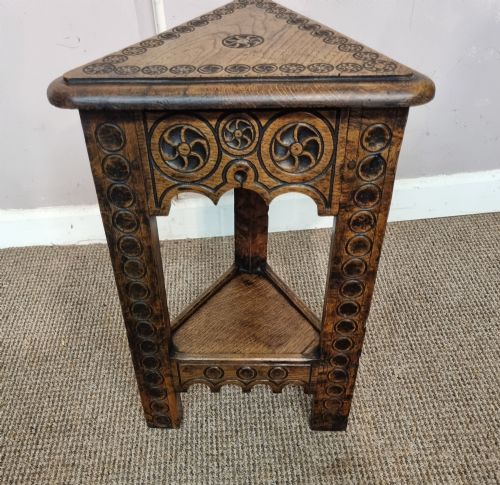
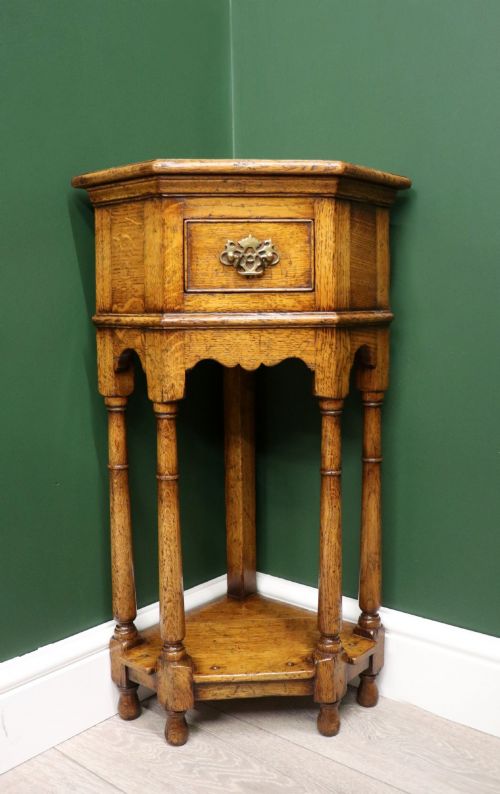
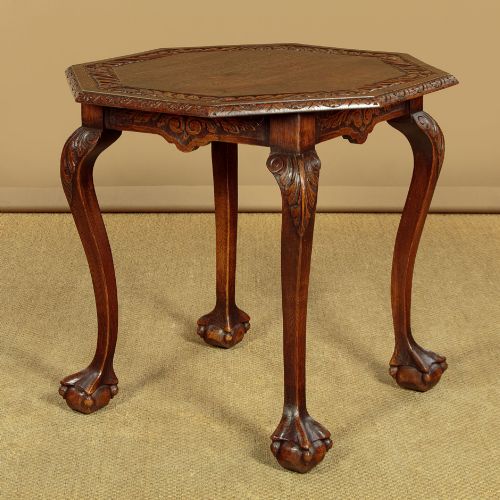


Carved Oak Corner Table
A carved oak corner table puts dead wall space to work with solid timber and traditional joinery.
Carved Oak Corner Table
A carved oak corner table is designed to fit snugly into a right angle, turning awkward junctions in a room into useful display or surface space. The examples recorded here span from the early nineteenth century through the Edwardian period to the mid-twentieth century, showing how cabinetmakers adapted the triangular form across generations.
The versions most commonly met on this page lean heavily into Arts and Crafts and Gothic Revival aesthetics, often utilising dense timber and deeply chased relief carving. Alongside standard three-legged formats, the listings include occasional tables, drop leaf variants, and triangular lift-top designs tailored for compact domestic interiors.
Materials and construction methods
The primary material across the archive is oak, selected for its strength and distinctive grain, though secondary woods such as walnut and ebonised timber appear alongside brass hardware and occasional leather inserts. Joinery relies on traditional pegged mortise and tenon joints to bear weight securely without modern fasteners.
Surface ornamentation is achieved through direct chisel work rather than applied mouldings, producing geometric panels, strapwork, and leaf motifs. Paint and dark wax finishes are also applied to seal the grain and highlight the carved relief.
Carved Oak Corner Table Retail Price Guide 2026
Typical asking prices for carved oak corner table among the pieces listed under this phrase on Sellingantiques today, from the lower quarter to the upper quarter. They describe what is for sale here now, not the wider market.
Some nineteenth-century makers hid small secret compartments beneath the hinged lids of triangular lift-top tables.
Judging the standard of execution
The standard of a carved oak corner table rests on the depth and crispness of the hand-carved decoration, where sharp undercutting separates bespoke workshop output from mass-produced factory work. Timber selection matters equally, with quartersawn oak displaying desirable medullary rays that add visual depth to the surface.
Structural integrity defines the lower and upper tiers of quality, visible in the snugness of the corner joints and the stability of the legs under weight. Pieces featuring integrated shelves, cantilevered drop leaves, or clever metamorphic mechanisms demonstrate a higher level of cabinetmaking ambition.
The Carved Oak Corner Table Glossary
- Corner table
- A small table specifically shaped with a flat back edge to fit into the ninety-degree junction of two walls.
- Quartersawn
- A method of milling oak logs that reveals striking parallel silver flecks known as medullary rays, valued for stability and appearance.
- Arts and Crafts
- A late nineteenth and early twentieth-century design movement prioritising hand craftsmanship, honest materials, and simple functional forms.
- Gothic Revival
- A nineteenth-century architectural and decorative style drawing inspiration from medieval buildings, featuring pointed arches, tracery, and heavy mouldings.
- Canted corners
- Bevelled or angled edges cut across a square corner, frequently used on table supports and tabletops to soften the profile.
- Metamorphic furniture
- Pieces designed to fold, swivel, or transform into alternative configurations, such as converting from a side table to a larger surface.
Carved Oak Corner Table: Frequently Asked Questions
How do I style a corner table?
Position your table in an unutilised corner of a hallway, sitting room, or landing to anchor the space without blocking walkways. Keep the surface arrangement minimal, perhaps adding a small lamp or a single ceramic vessel to complement the carved timber.
Because the footprint is compact, these pieces also serve well as occasional plant stands or display surfaces for framed photographs. Allow the natural grain and decorative carving to remain visible rather than crowding the top with clutter.
How do I tell an Edwardian piece from a Victorian one?
Victorian examples tend to favour heavier, highly detailed Gothic Revival or Jacobean Revival motifs with deep, dark finishes and robust turnings. The carving is often dense and imposing, reflecting nineteenth-century tastes for dramatic interior ornamentation.
Edwardian and later pieces, particularly those from the Arts and Crafts movement, generally display a lighter touch with simpler linear carving and brighter wax finishes. The timber selection may also show more visible grain variation rather than heavy ebonising or dark stains.
What maintenance does antique oak require?
Keep oak furniture away from direct heat sources and strong sunlight to prevent the timber from drying out, splitting, or fading. Dust regularly with a soft, dry cloth along the direction of the grain.
Apply a quality beeswax polish sparingly once or twice a year to nourish the wood and protect the carved surface from moisture. Avoid silicone-based sprays, as they build up a residue over time and dull the natural patina.