



Jacobean Style Plant Stand
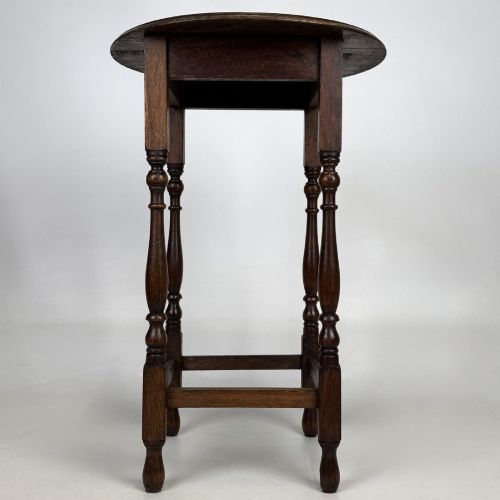
These jacobean style plant stand pieces bring sturdy timber and turned uprights into a room to hold greenery.
Jacobean Style Plant Stand
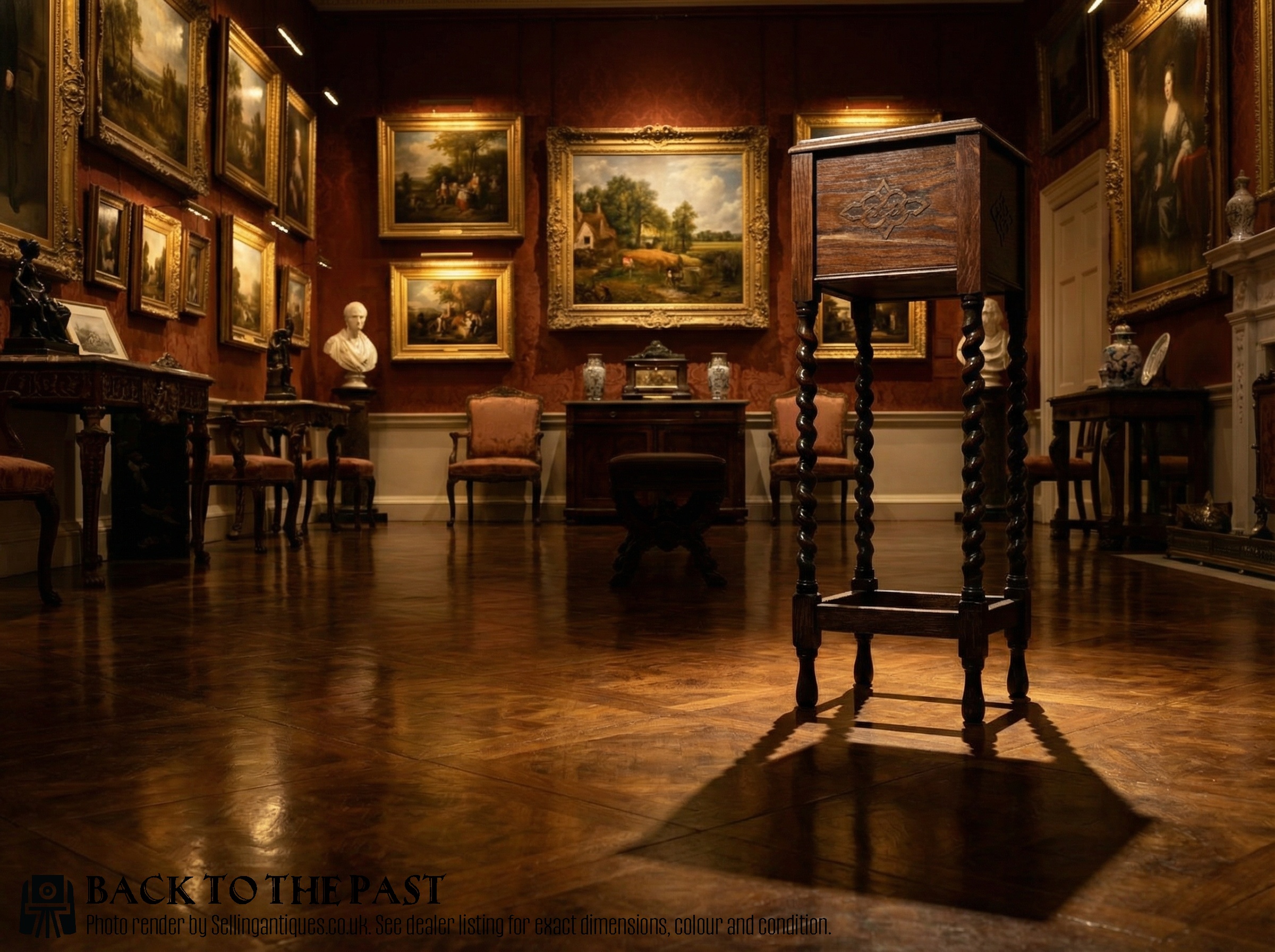
When you search for a jacobean style plant stand, you look for solid timber display furniture designed to hold pots, jardinières and small ornaments. The examples appearing here span from the nineteenth century through the Edwardian era and into the nineteen-twenties and nineteen-thirties.
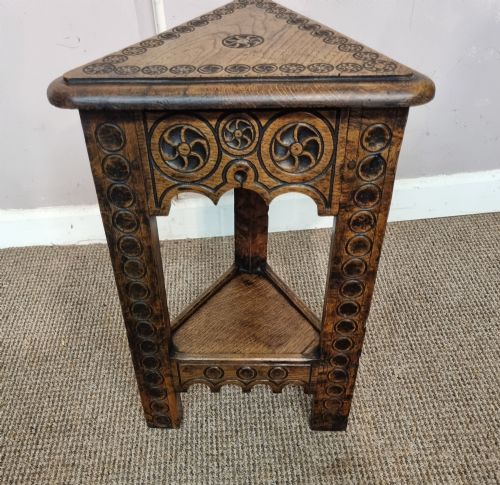
You meet a variety of forms on this page, including occasional tables, side tables, joint stools, pedestals, plinths and miniature apprentice pieces. The construction draws heavily on revival aesthetics, echoing older seventeenth-century joinery methods through heavy turned supports and dark timber surfaces.
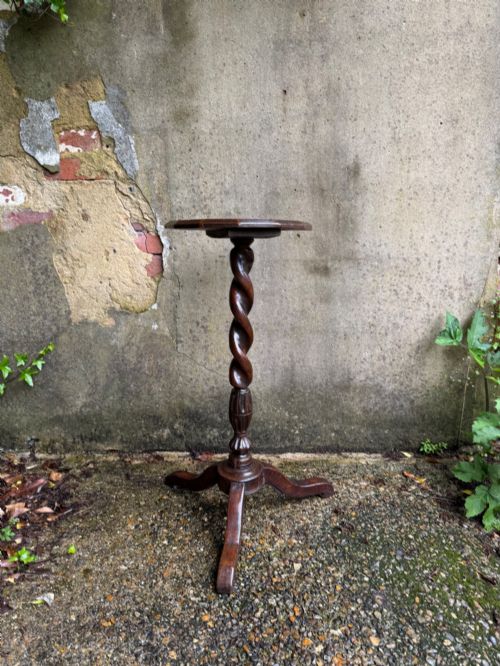
Oak dominates the selection, appearing alongside occasional pieces in ebonised wood and brass. Many items utilise barley twist legs or carved details, placing them firmly within the revival traditions popular across the Victorian, Edwardian and interwar periods.
Materials and construction
Makers relied primarily on oak for these pieces, shaping timber into thick tops, square frames and sturdy uprights. Ebonised wood also appears, offering a dark and uniform finish that mimics more costly materials.
Lathe turning created the characteristic barley twist legs seen across many examples on this page. Carving adorned table edges, friezes and stools, while occasional hardware incorporated brass components for structural or decorative effect.
Jacobean Style Plant Stand Retail Price Guide 2026
Typical asking prices for jacobean style plant stand among the pieces listed under this phrase on Sellingantiques today, from the lower quarter to the upper quarter. They describe what is for sale here now, not the wider market.
Tiny apprentice tables let woodworkers practice heavy seventeenth-century carving without wasting a full forest of oak.
Judging quality and craft
The density and grain of the oak set finer examples apart from simpler utilitarian items. Heavier timber frames and precise joint work indicate skilled cabinet-making rather than hurried mass production.
Depth and crispness in carved details distinguish superior decorative pieces. Smooth lathe turning on barley twist legs and stable, level framing show care taken during construction.
The Jacobean Style Plant Stand Glossary
- Joint Stool
- A sturdy wooden stool constructed with mortise and tenon joints rather than turned legs inserted into a seat. These low items served functional seating or display roles in early domestic interiors.
- Ebonised Wood
- Timber treated with a dark stain or finish to imitate the appearance of expensive ebony. This technique gained popularity during the Victorian period for accent furniture.
- Jardinière
- An ornamental pot or stand designed specifically to hold indoor plants and flowers. They frequently appear paired with wooden stands or plant pedestals.
Jacobean Style Plant Stand: Frequently Asked Questions
What is a jacobean style plant stand?
A jacobean style plant stand is a sturdy wooden display piece featuring turned legs and dark timber inspired by seventeenth-century design. These stands elevate potted plants and jardinières within a room.
The listings here include various small tables, pedestals, and stools dating from the nineteenth century through the nineteen-thirties.
How do I date an oak plant stand?
Dating relies on examining the construction methods, tool marks, and wood patination visible across the piece. Revival items from the Edwardian era and nineteen-twenties often combine older styles with modern assembly methods.
Hardware, screw types, and finish wear also provide clues to whether a piece originates from the Victorian period or later decades.
Where should I place a plant stand?
These compact tables and pedestals fit well in corners, beside windows, or next to seating areas where natural light reaches plants. Their small footprints suit hallways and smaller reception rooms.
Ensure the floor is even so that heavier oak stands and occasional tables remain stable beneath heavy ceramic pots.
What are barley twist legs?
Barley twist legs are wooden supports shaped on a lathe into a continuous spiral resembling a twisted rope. This decorative turning became a hallmark of Jacobean revival furniture.
You find this feature frequently on plant stands, side tables, and occasional furniture from the Edwardian period and the nineteen-twenties.