

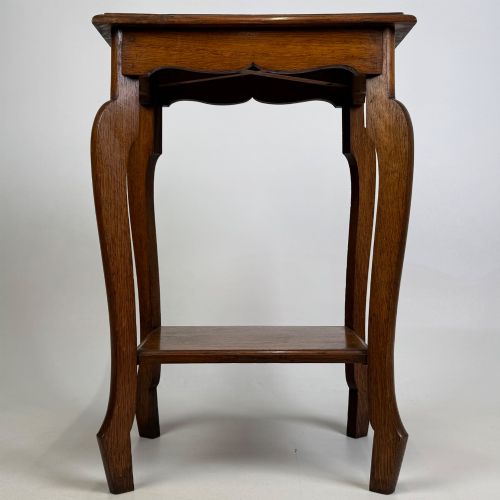
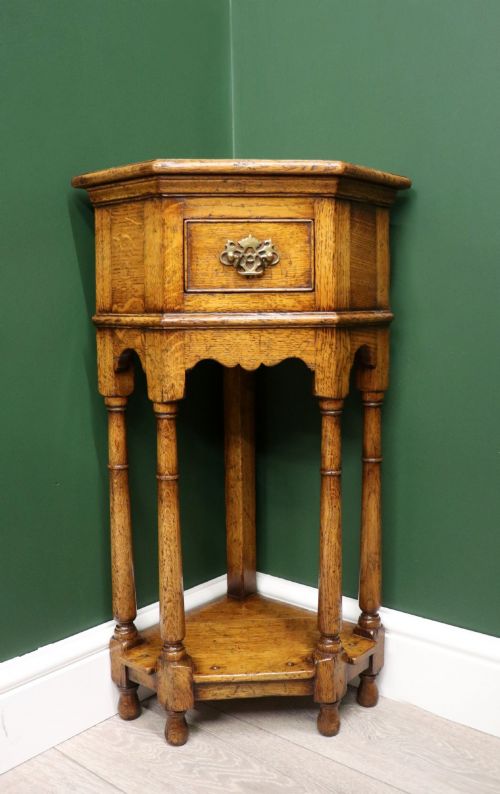
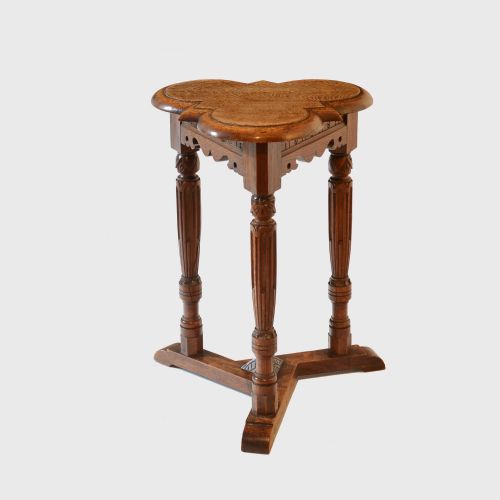


Antique Oak Urn Stand
These antique oak urn stand pieces are sturdy timber supports for display, spanning centuries of carved and turned design.
Antique Oak Urn Stand
An antique oak urn stand provides a raised platform for heavy vessels, plants, and decorative objects within domestic rooms. When you search for an antique oak urn stand, you uncover a lineage of small tables, plant stands, pedestals, and candle stands designed to elevate specific items.
The examples gathered here draw primarily from the nineteenth and eighteenth centuries, alongside Edwardian interpretations and mid-century pieces. You encounter forms ranging from rustic tripods and corner tables to barley twist planters and carved caryatid pedestals.
Makers historically shaped these items for practical display in halls, parlours, and drawing rooms. The surviving pieces reflect both formal revival styles and simpler English country furniture traditions.
How they were made
Makers relied principally on solid oak, frequently augmented by brass fittings, metal elements, and occasionally painted surfaces or secondary woods like elm and pine. Timber selection dictated the structural integrity needed to support heavy stone or ceramic vessels without sagging.
Joinery and turning techniques define the construction, utilising carved wood details, shaped legs, and barley twist supports. Carvers applied Gothic, Jacobean, Renaissance, and Rococo revival motifs directly onto the dense grain of the oak.
Antique Oak Urn Stand Retail Price Guide 2026
Typical asking prices for oak urn stand among the pieces listed under this phrase on Sellingantiques today, from the lower quarter to the upper quarter. They describe what is for sale here now, not the wider market.
Listings feature oak combined with brass, metal, and paint, spanning eighteenth-century country furniture to mid-century forms.
What varies in quality
The ambition of the carving and turning separates standard utility items from exceptional examples. Crisp execution of architectural elements like caryatids or trefoil tops indicates skilled workshop production.
Proportion and timber figure determine visual success. Pieces with well-balanced tripod bases or robust barley twist legs exhibit greater structural harmony than heavier, less refined country variants.
The Antique Oak Urn Stand Glossary
- Caryatid
- A carved human figure serving as an architectural support instead of a column. You see this sculptural detail on nineteenth-century pedestals.
- Trefoil
- A graphic ornament composed of three overlapping rings or leaf shapes. This motif appears frequently in Gothic revival table tops.
- Torchere
- A tall stand designed to hold a candle or light fixture. These slender supports elevate illumination sources in a room.
- Jardiniere
- An ornamental pot or stand for holding plants and flowers. Oak examples often incorporate turned legs and raised rims.
- Barley Twist
- A cylindrical furniture leg carved in a helical screw formation. This decorative turning style is common on Edwardian and nineteenth-century oak stands.
Antique Oak Urn Stand: Frequently Asked Questions
What were antique oak urn stands used for?
These stands served to elevate heavy decorative urns, water vessels, and large indoor plants above floor level.
Positioned in hallways and principal rooms, they protected delicate flooring from moisture while displaying prized household possessions.
How do I date an antique oak stand?
Dating relies on examining the timber preparation, tool marks, and stylistic vocabulary present in the construction. Eighteenth-century pieces typically show hand-shaped country joinery, while nineteenth-century examples often display machine-assisted turning and revival motifs.
Matching the leg style, such as barley twist or shaped tripod legs, against documented period traits confirms the era of manufacture.
Where should I place an urn stand in my home?
These compact tables fit well in corners, empty hallways, or beside seating where vertical height adds balance to a room.
Ensure the surface area and weight capacity match the object you intend to display on top.
Are these stands sturdy enough for daily use?
Solid oak construction gives these pieces inherent strength and durability for supporting substantial items.
Routine placement of plants, lamps, or decorative urns remains entirely secure provided the joints and feet are stable.