
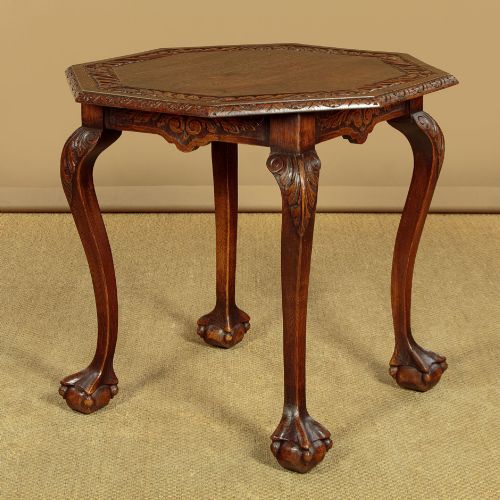


Oak Corner Plant Stand
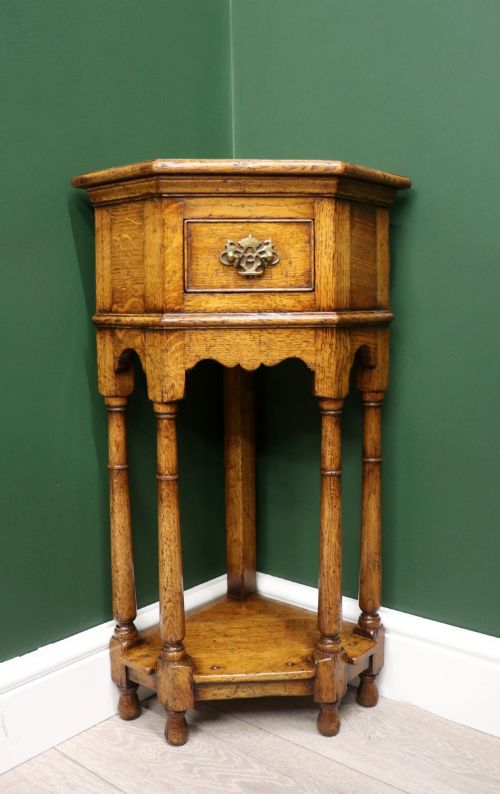
An oak corner plant stand fits neatly into unused room angles while elevating greenery on sturdy timber.
Oak Corner Plant Stand
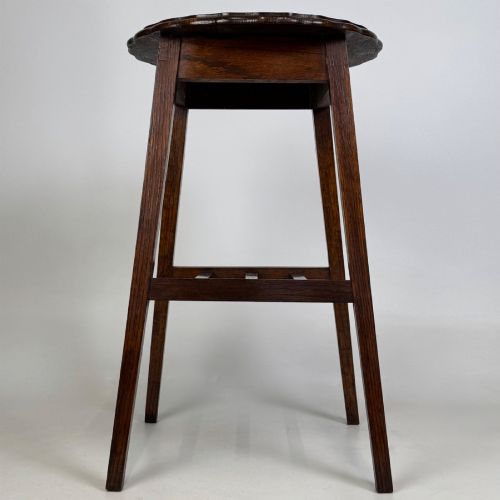
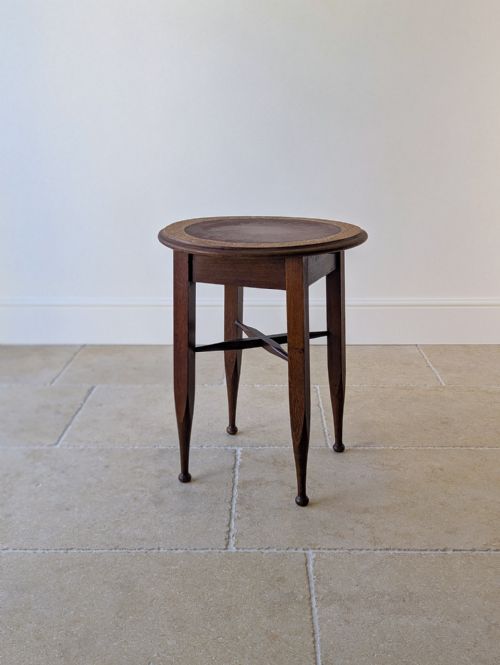
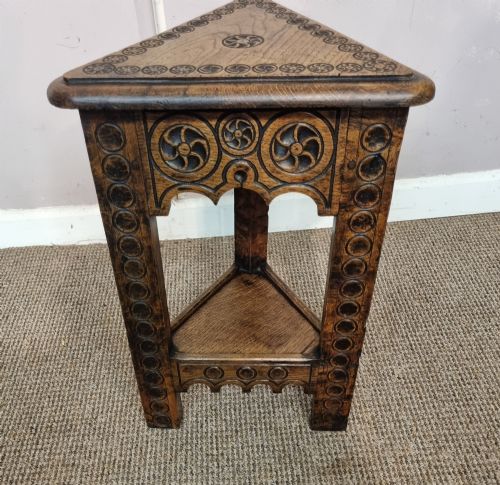
An oak corner plant stand sits within domestic interiors to utilise awkward angles and display botanical specimens at height. The selection ranges from compact triangular tables to tiered etageres and carved occasional pieces suited to corner placement.
Most examples date across the nineteenth and twentieth centuries, spanning Edwardian, Arts and Crafts, Regency, and revival movements. Buyers encounter sturdy timber constructions shaped specifically to fit room intersections rather than flat walls.
How they were made
Joiners built these stands using solid oak timbers, occasionally incorporating walnut or ebonised wood details for contrast. Structural elements relied on traditional joinery methods, sturdy legs, and angled stretchers designed to support heavy planters.
Surface decoration frequently includes hand carving, geometric moulding, and turned elements such as barley twist supports. Selected pieces utilise brass fittings or incorporate lift-top storage compartments into their triangular frames.
Some nineteenth century tables secretly double as lift-top storage boxes, ready to hide away your gardening secateurs.
What varies in quality
Quality rests upon the crispness of carved details, the selection of figured timber grain, and the overall structural stability of the corner frame. Superior examples demonstrate thoughtful proportion and balanced weight distribution across three or more legs.
Simpler utility items contrast with highly decorative pieces displaying distinct artistic movements like Arts and Crafts or Gothic Revival. The sophistication of the turned supports and the integrity of the joints dictate the standing of each piece.
The Oak Corner Plant Stand Glossary
- Triangular
- Having three sides and three angles, allowing a piece to fit snugly into a ninety-degree room corner. This geometry defines the footprint of many plant stands and corner tables.
- Barley twist
- A type of turning resembling a spiralling rope, popular in furniture legs during various revival periods. It adds dynamic visual texture to otherwise utilitarian vertical supports.
- Etagere
- A piece of furniture consisting of a set of open shelves for displaying small objects or plants. These tiered stands maximise vertical display space in limited floor areas.
- Lift-top
- A hinged surface that opens to reveal internal storage space within the body of the furniture. This functional attribute appears on select occasional tables and boxes.
Oak Corner Plant Stand: Frequently Asked Questions
Where should I place an oak corner plant stand?
These stands fit naturally into empty room intersections, hallways, or beside seating where floor space is limited. Their geometry allows them to utilise dead zones efficiently while bringing greenery or decorative objects to eye level.
Ensure the surrounding furniture style complements the period character of the stand, whether it exhibits Arts and Crafts simplicity or heavier carved revival motifs.
How do I identify an Edwardian plant stand?
Edwardian pieces often display lighter proportions, simplified Arts and Crafts influences, or refined surface carving characteristic of the early twentieth century. They frequently utilise quarter-sawn oak with visible medullary rays.
Compare the construction details and leg profiles against dated examples from the same era to confirm the likely period of manufacture.
Can these stands support heavy pots?
Sturdy oak construction and solid jointing generally provide strong support for standard ceramic or terracotta plant pots. Examining the underframe and leg stretchers reveals how much weight the piece can safely bear.
Distribute heavier displays towards the centre of triangular tops to maintain balance across the supporting legs.