



Small Mahogany Folding Table
A small mahogany folding table offers practical surface space that tucks away neatly when not in use.
Small Mahogany Folding Table
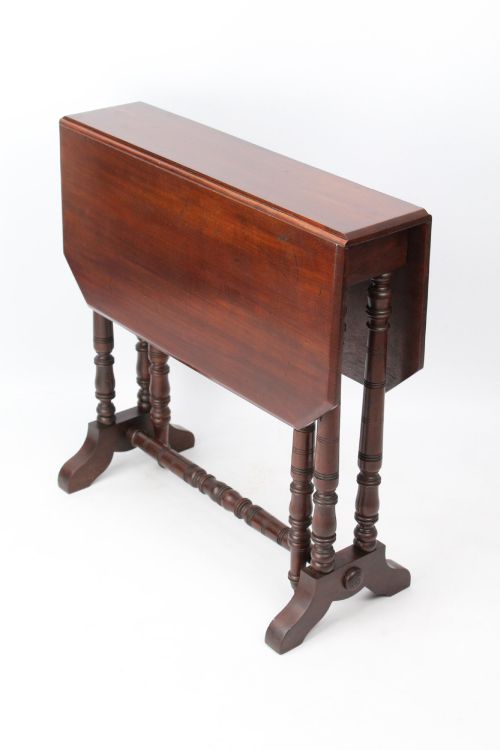
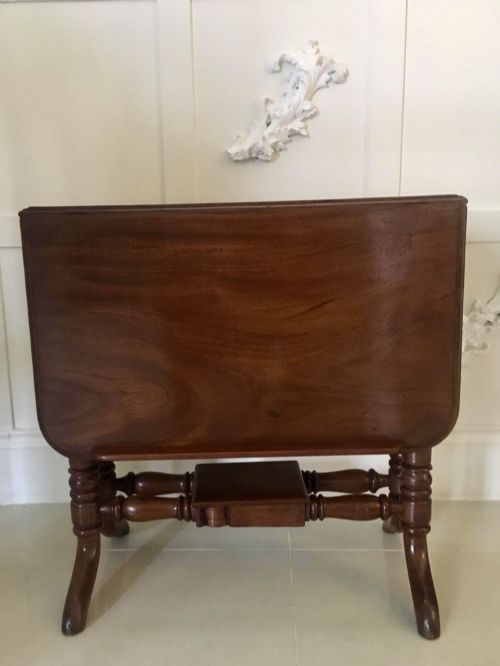
A small mahogany folding table provides versatile furniture designed to expand when needed and fold flat for compact storage. Buyers searching for a small mahogany folding table encounter various forms spanning the Georgian, Victorian, and Edwardian periods.
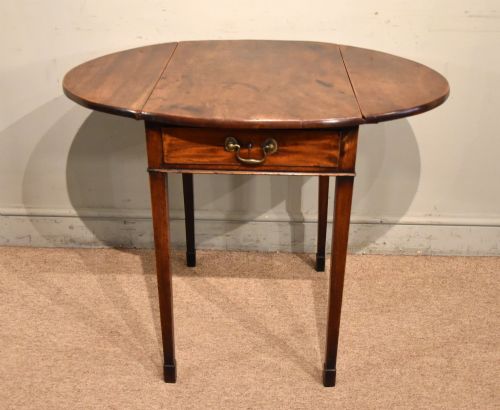
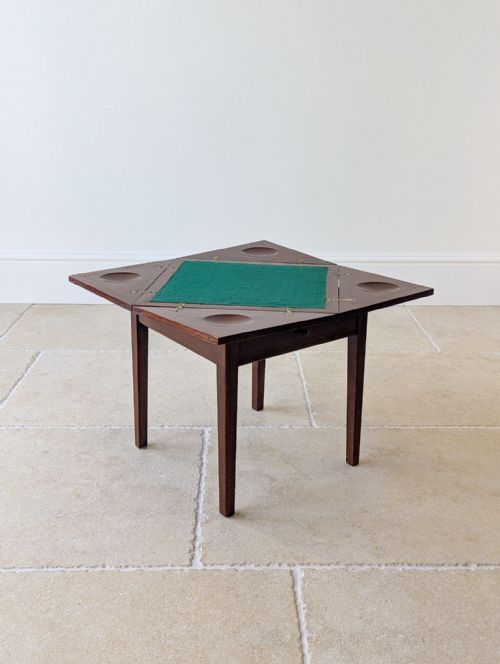
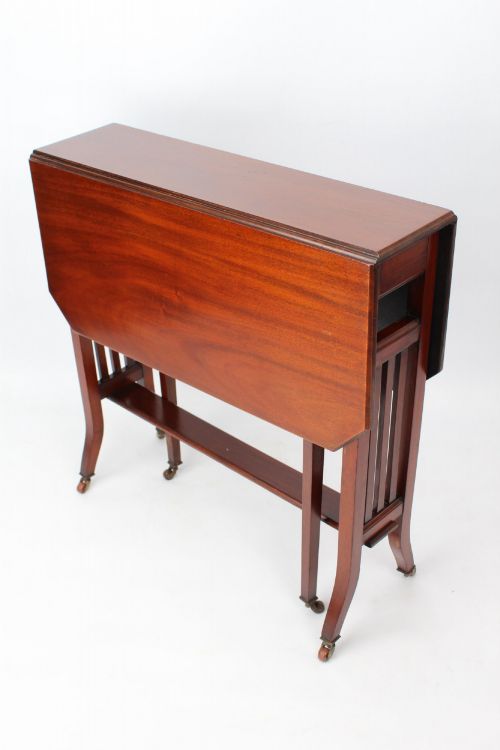
The selection on this page focuses heavily on Sutherland tables, Pembroke tables, and card tables with drop leaves or gateleg actions. These pieces originate from the 18th century through the early 20th century, utilising rich timbers suited to period interiors.
How they were made
Cabinet makers built these folding tables using solid mahogany and mahogany veneers supported by internal framing of secondary timbers. Brass hinges, castors, and swing brackets facilitated the folding and gateleg mechanisms.
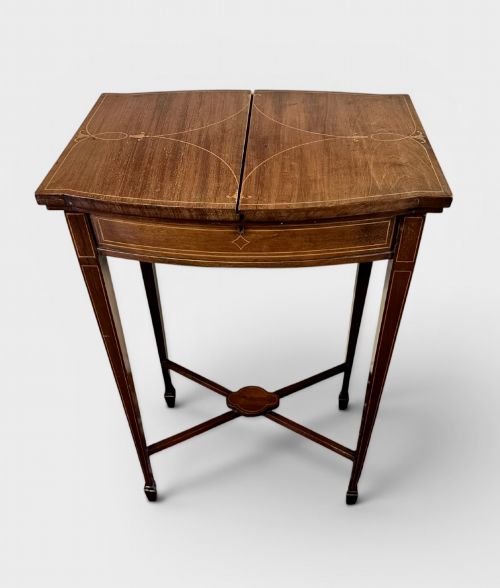
Decorative details included satinwood and boxwood inlay, contrasting stringing, and turned spider legs. Some variants incorporated baize surfaces for card playing or fitted interiors for reading materials.
Some Victorian reading tables doubled as resting spots for sleepy spaniels once the leaves dropped.
What varies in quality
The calibre of a folding table depends on the choice of timber grain, the precision of the joinery, and the stability of the folding action. Superior examples display crisp turning on the legs and tightly fitted joints that prevent wobble when extended.
Refined pieces incorporate subtle stringing or fine inlay rather than heavy decoration. The crispness of the carving and the original patination of the mahogany distinguish workshop standards.
Liberty & Co
The Small Mahogany Folding Table Glossary
- Sutherland table
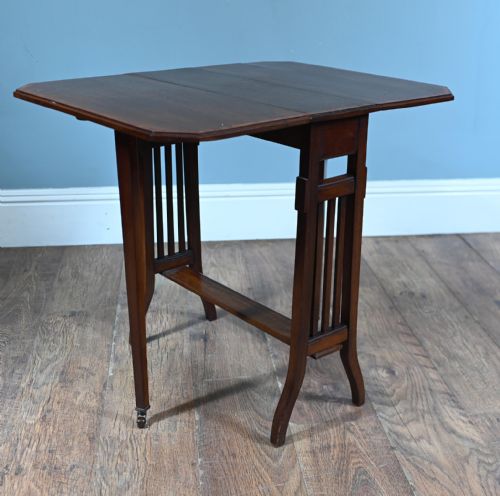
- A narrow drop-leaf table with exceptionally slim legs and leaves that fold down almost vertically. It was patented in the Victorian era and designed to occupy minimal space.
- Pembroke table
- A small rectangular table with two hinged drop leaves on opposite sides. It typically includes one or two small drawers.
- Gateleg table
- A table with legs hinged to swing outward like a gate to support folding leaves. This design provides sturdy support for drop leaves.
- Demi-lune
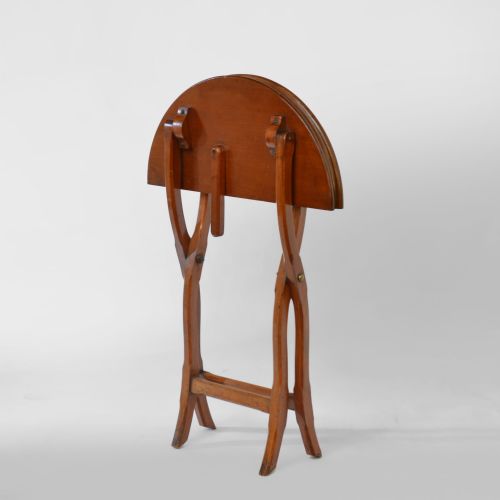
- A half-moon shape common in console and card tables from the Georgian period. These tables often feature folding tops supported by a pivoting rear leg.
- Spider leg
- Extremely slender turned wooden legs used on lightweight occasional tables. They create an airy silhouette while maintaining structural support.
Small Mahogany Folding Table: Frequently Asked Questions
How do I use a Sutherland table?
A Sutherland table functions primarily as an occasional or tea table in a sitting room. Drop the narrow leaves down to press the table flat against a wall when floor space is tight.
Raise the leaves and pull out the swinging leg supports when you need a stable surface for books or cups.
What is a Pembroke table used for?
A Pembroke table serves as a versatile writing or side table in a study or drawing room. The drop leaves allow you to adjust the surface area depending on the task.
Small drawers beneath the top hold stationery or sewing accessories.
How can I date an Edwardian folding table?
Edwardian folding tables, produced around 1900 to 1910, often feature lighter proportions and delicate satinwood inlay work. Look for Sheraton Revival influences and brighter reddish-brown mahogany tones.
Construction methods from this period also show machine-assisted precision alongside traditional hand joinery.
How do I maintain mahogany furniture?
Keep mahogany tables away from direct sunlight and heat sources to prevent the wood from drying out and splitting. Dust the surface regularly with a soft, dry cloth.
Apply a traditional beeswax polish occasionally to nourish the timber and preserve the natural sheen.