
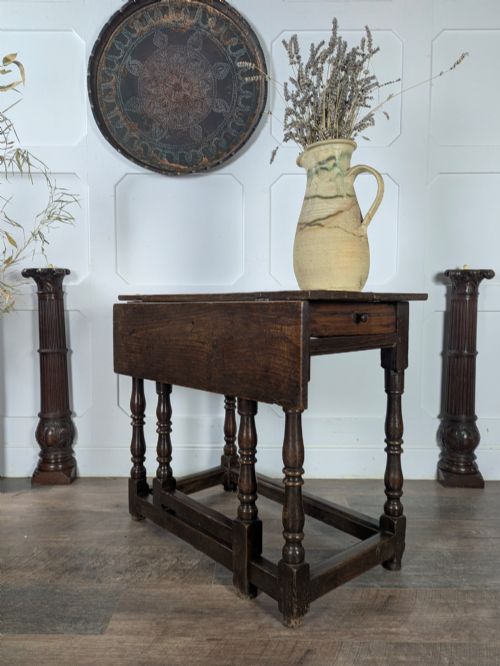
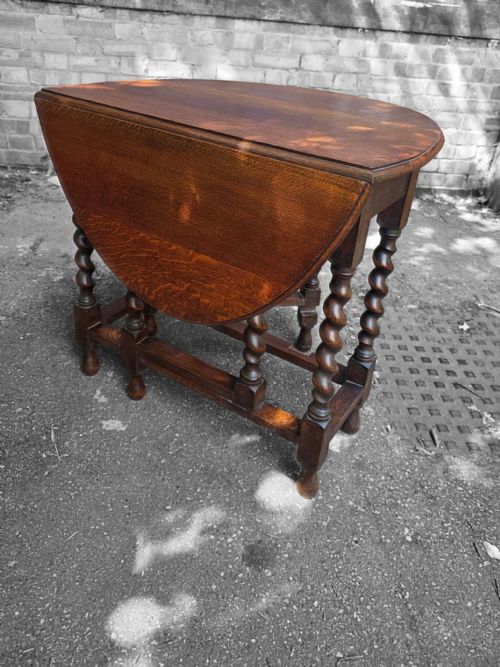
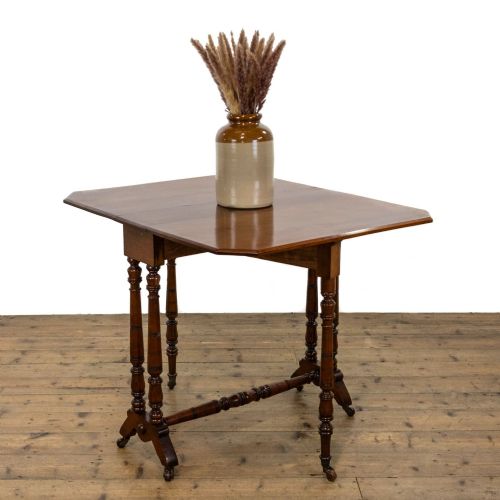
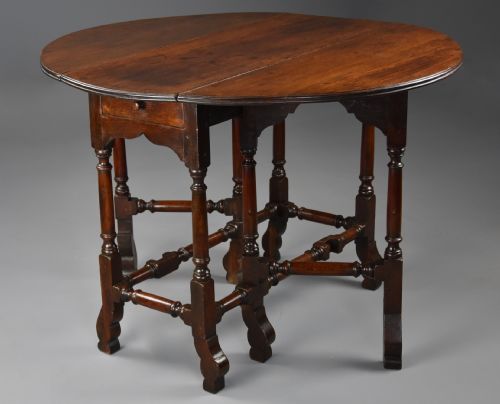
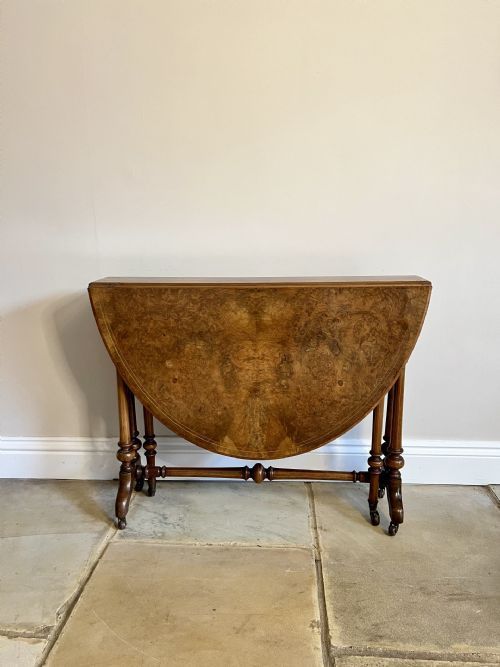


Small Folding Dining Table
A small folding dining table brings timber warmth and practical surface area to compact rooms without permanent footprint.
Small Folding Dining Table
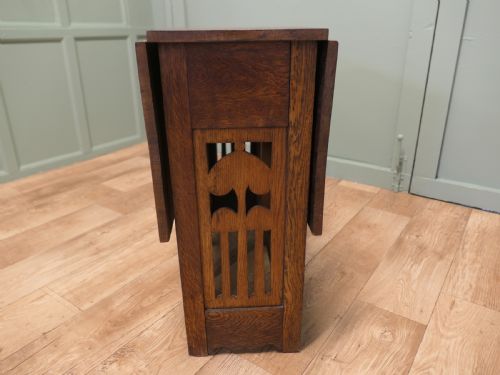
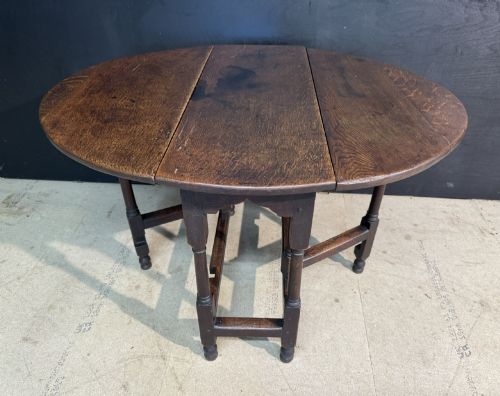
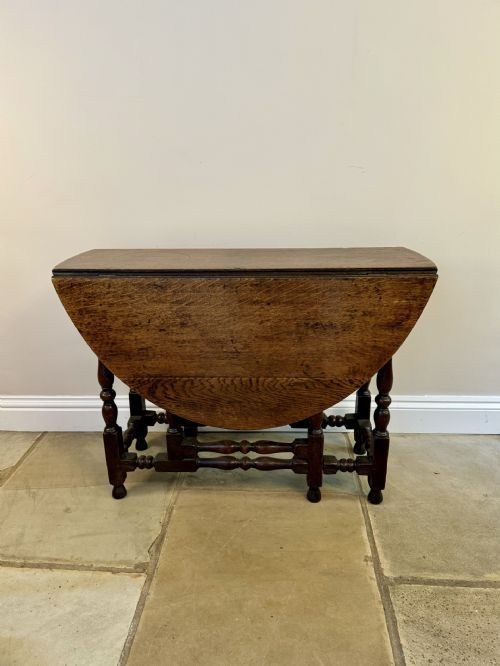
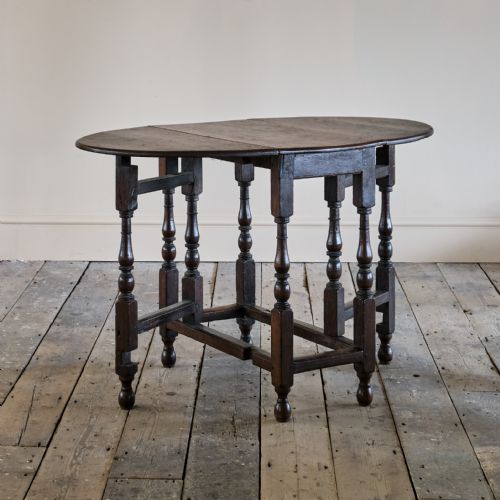
A small folding dining table is designed to expand when meals require space and drop its leaves against the wall when floor space matters. The selections span sturdy gateleg forms and slender Sutherland tables.
Makers across the eighteenth, nineteenth and early twentieth centuries built these pieces in oak, mahogany and walnut to serve dining and tea functions in smaller rooms. Gateleg and drop leaf mechanisms provide the folding action.
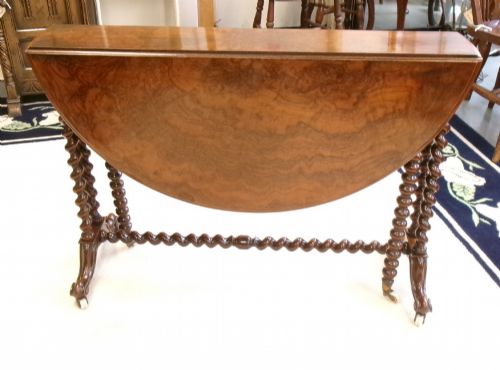
The pieces appearing here range from solid seventeenth and eighteenth century oak examples to Victorian burr walnut and Edwardian mahogany iterations, all sharing compact proportions.
How they were made
Cabinet makers utilised solid timbers like oak, mahogany and walnut, frequently selecting burr walnut veneers for ornamental surfaces on later Victorian pieces. Turning lathes shaped barley twist, bobbin and spider legs to support the folding leaves.
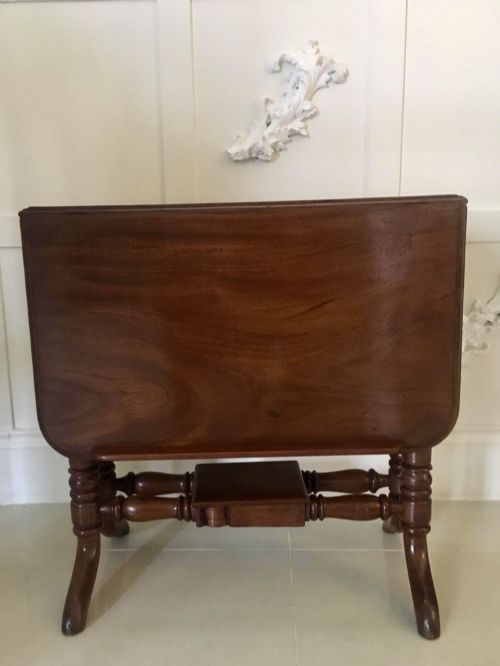
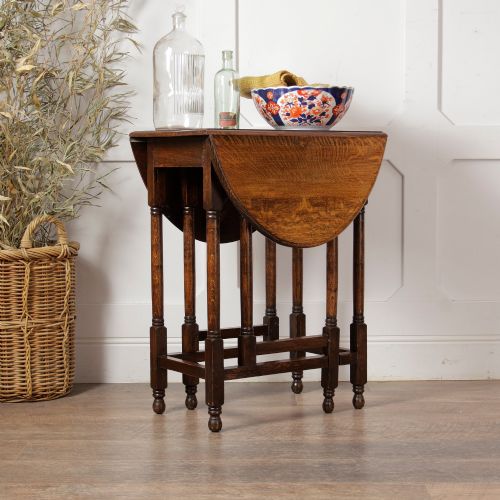
Gateleg actions rely on pivoted wooden swing legs that pull out from the centre frame to hold up the drop leaves, whilst Sutherland tables employ narrow hinged leaves on slender underframes.
Listings feature woods including oak, mahogany, walnut, burr walnut, pine and brass, spanning centuries from the 1700s to the 1930s.
What varies in quality
Quality rests in the choice of timber, from plain pine and oak up to figured burr walnut and rich red mahogany with deep natural patination. Joinery execution around the hinge knuckle and gate pivot determines whether the leaves remain level over decades of use.
Refined turning on the legs, such as crisp barley twists or delicate spider legs, separates standard utility items from superior parlour pieces.
The Small Folding Dining Table Glossary
- Gateleg table
- A drop leaf table where hinged legs swing outward like a gate to support the raised flaps. This structural design distributes weight securely across multiple leg supports.
- Sutherland table
- A particularly narrow drop leaf table featuring very small leaves and slender folding legs. They fold down to an exceptionally slim profile for storage against a wall.
- Pembroke table
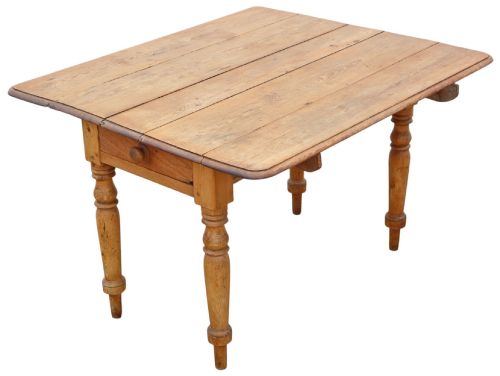
- A small rectangular table with two hinged drop leaves on opposite sides and usually a single drawer. They served varied occasional uses in Georgian and Victorian parlours.
- Barley twist
- A spiral turning technique resembling a twisted rope, carved into wooden table legs during the seventeenth and early twentieth centuries. This decorative form adds visual texture to oak frames.
- Patina
- The surface sheen and softening of colour developed by aged wood through decades of handling, light exposure and polishing. Collectors value this visual depth as a mark of genuine age.
Small Folding Dining Table: Frequently Asked Questions
How do I seat four people at a folding table?
Drop leaf and gateleg designs extend by lifting the hinged side flaps and swinging the supporting legs outward into position. This creates a full dining surface from a compact console.
Ensure the swing leg locks firmly into its designated stop block to bear weight safely before placing dishes on the extended leaves.
How do I tell an eighteenth century oak table from a later revival?
Early pieces display hand cut joinery marks, peg construction, and deep natural timber patination built up over centuries of use. Grain patterns show the irregularities of manual conversion.
Revival pieces from later periods often feature uniform machine sawn timbers, brighter original finishes, and standardised modern hardware within the hinge mechanisms.
Where should I place a drop leaf table in a small room?
Position the table flat against a wall with both leaves dropped to maintain an open walkway through the room. It functions well as a side table or a display surface in this configuration.
Pull the piece away from the wall and raise one or both leaves only when dining or requiring extra workspace.