

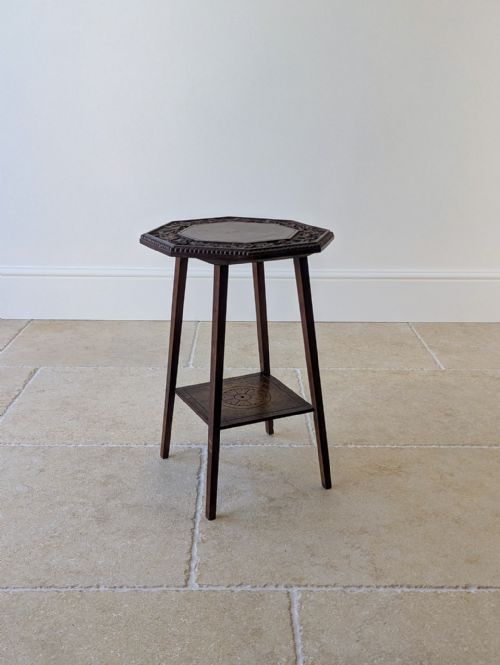
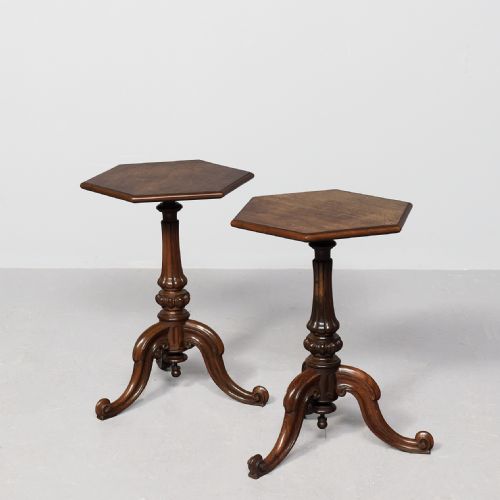
Small Carved Pedestal Table
A small carved pedestal table is a compact support piece offering versatile utility and period character for intimate spaces.

Small Carved Pedestal Table
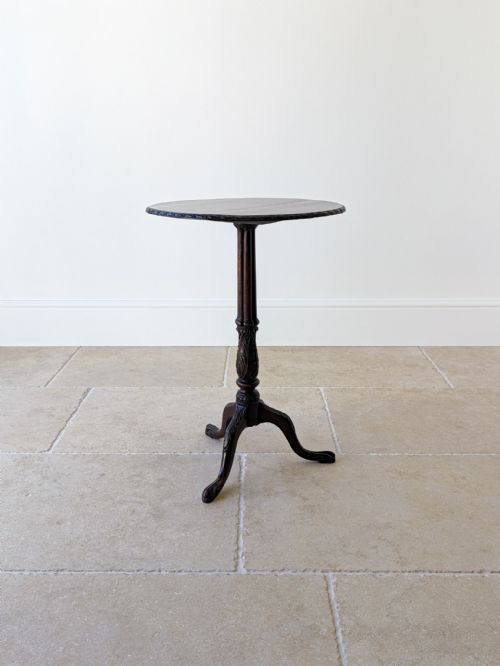
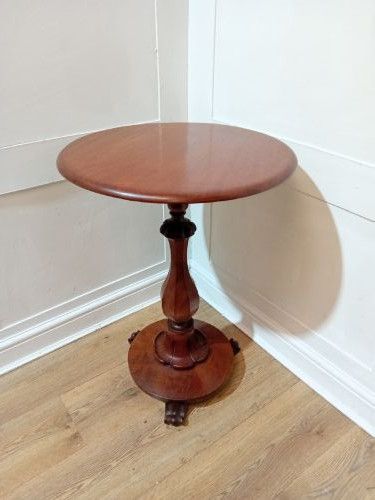
A small carved pedestal table functions primarily as an occasional piece, wine table, or lamp stand designed to occupy minimal floor space while providing a stable central column support. When searching for this phrase, buyers encounter various forms including tilt-top designs, tripod bases, and circular tops spanning periods from the nineteenth century into the twentieth.
How they were made
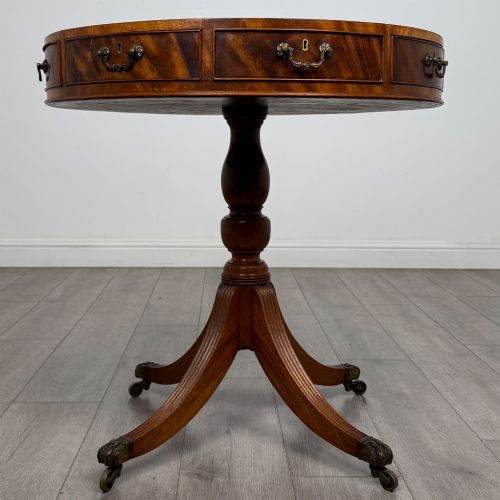
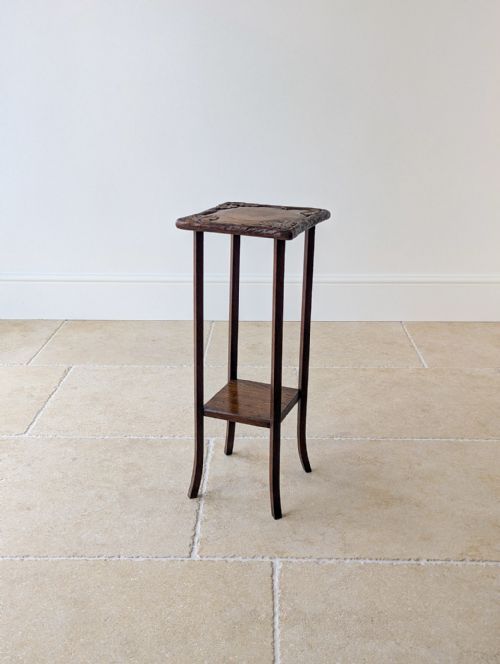
Cabinet makers utilised dense hardwoods such as mahogany, walnut, burr walnut, and rosewood, often pairing solid structural elements with figured veneer surfaces. Oak and beech also appear frequently, particularly in Arts and Crafts iterations and earlier vernacular pieces.
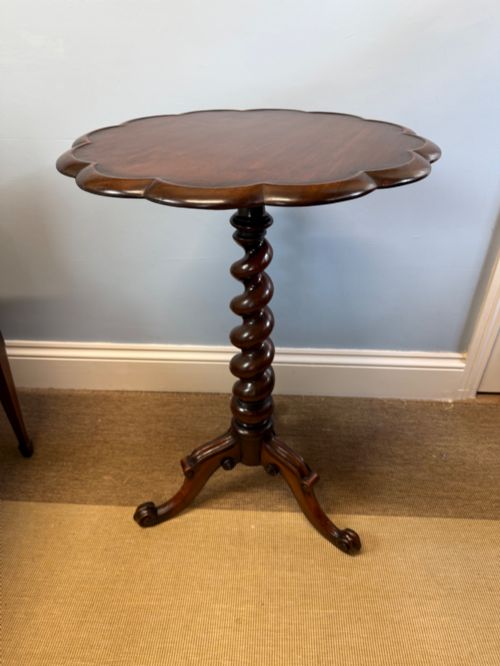
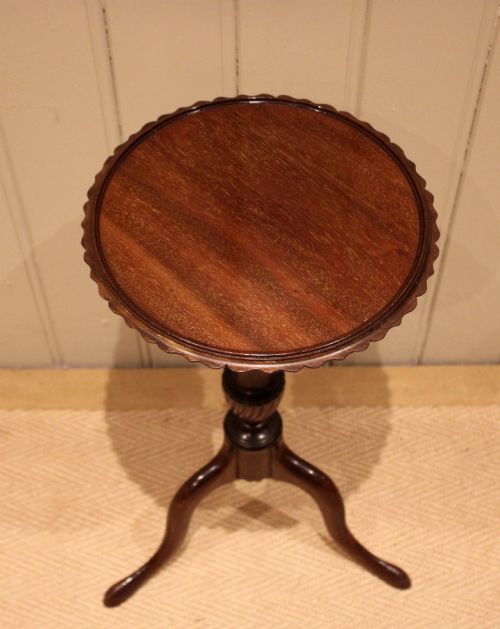
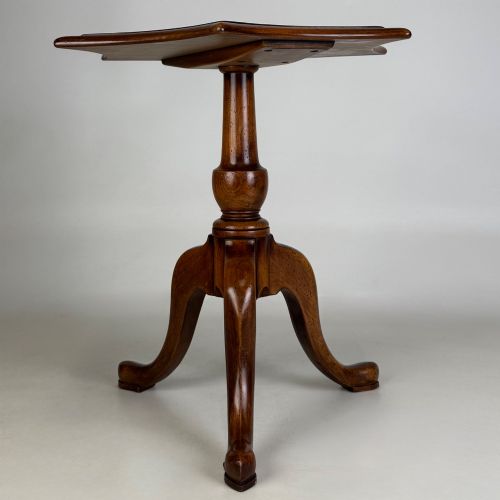
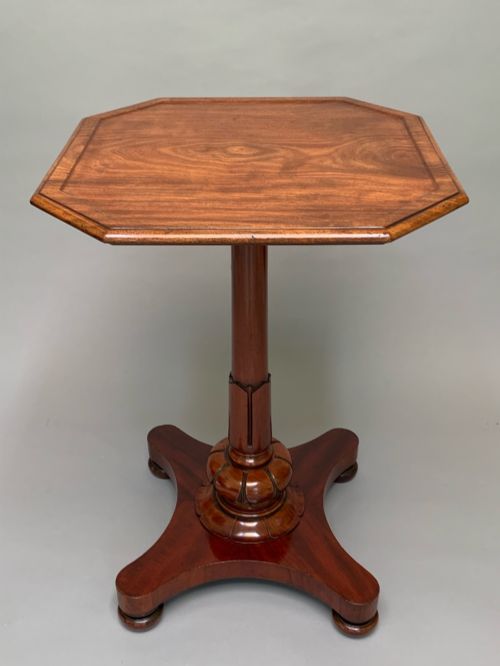
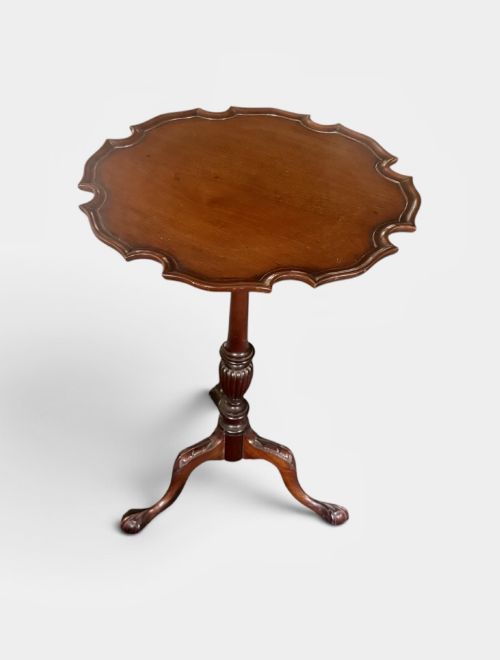
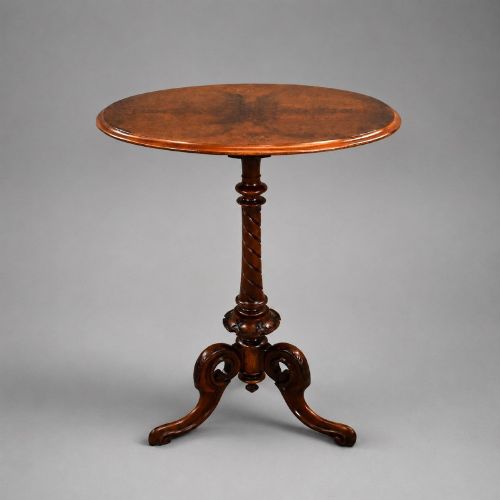
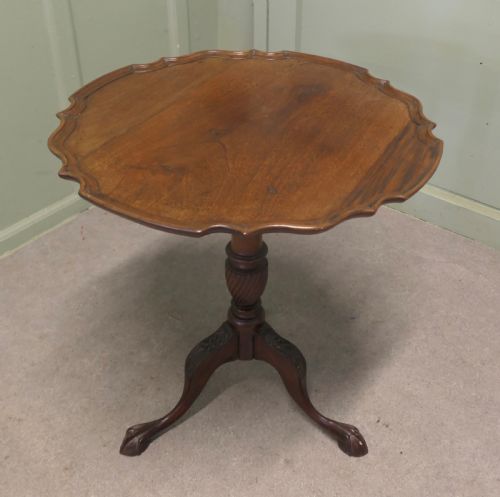
Support mechanisms rely on central pillars rising from tripod legs, frequently decorated with turned barley twists, bobbin galleries, or hand-carved detailing. Tops range from simple round boards to shaped pie crust rims and tilt-top mechanisms allowing vertical storage when not in use.
Tilt-top tables spent much of their historic lives hiding vertically against drawing room walls like stiff wooden servants waiting for tea.
What varies in quality
The standard of timber selection and the crispness of the carved or turned detail largely define the grade of a pedestal table. Superior examples exhibit tightly figured wood grain, well-proportioned columns, and stable tripod bases that sit firmly without rocking.
Construction methods also distinguish finer workshops from utilitarian production, visible in the snugness of joints, the precision of tilt-top latches, and the harmonious integration of brass or wooden mounts.
The Small Carved Pedestal Table Glossary
- Tripod base
- A three-legged support structure beneath a central pedestal. This design prevents rocking on uneven floors.
- Tilt-top
- A hinged table top that folds vertically to save space when stored against a wall. This mechanism was popular on eighteenth and nineteenth-century wine tables.
- Pie crust rim
- A raised, decoratively carved edge shaped like pastry crust. It prevents small items from rolling off the table.
- Burr walnut
- Timber taken from the abnormal growth of a walnut tree, yielding complex swirling patterns. Cabinet makers prized this veneer for high-status occasional furniture.
- Barley twist
- A spiral carving resembling a turned column of barley sugar. It appears frequently on Victorian pedestals and legs.
Small Carved Pedestal Table: Frequently Asked Questions
Where should I place a pedestal table?
These compact pieces fit easily beside armchairs, in tight corners, or beside a bed as an alternative to bulky cabinetry. Their small footprint allows them to serve as functional lamp stands or drink supports without crowding a room.
Because the central column permits comfortable leg clearance, they sit neatly next to seating without causing obstruction.
How do I identify a tilt-top table?
Look underneath the circular surface for a wooden catch or brass latch mechanism connecting the top to the central column. Releasing this catch allows the surface to pivot ninety degrees into a vertical position.
This historical feature allowed servants to store multiple tables compactly against the perimeter of a dining or drawing room.
What is the difference between a wine table and a lamp table?
Wine tables generally feature smaller, circular tops originally intended for holding drinking glasses during evening gatherings. Lamp tables tend to offer slightly broader surfaces designed to support the weight and width of a lighting fixture.
In practice, makers and buyers often use both terms interchangeably for small single-pillar occasional furniture.
How do I date a Victorian pedestal table?
Examine the timber, fixing screws, and secondary woods visible beneath the top or inside the pedestal mechanism. Mid-nineteenth-century examples often display rich mahogany or burr walnut with hand-turned joinery and traditional patination.
Later Edwardian and twentieth-century reproductions frequently adopt revival styles such as Chippendale or Regency while employing machine-cut components.