
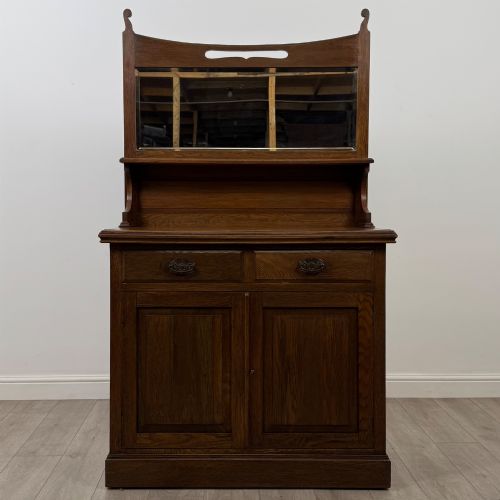
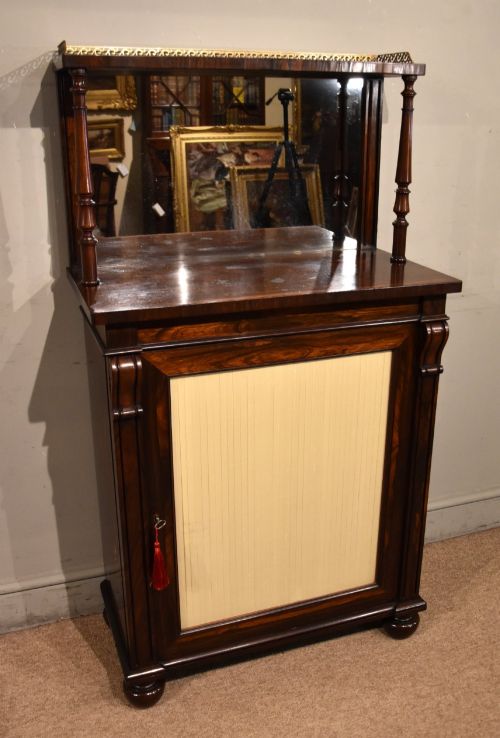
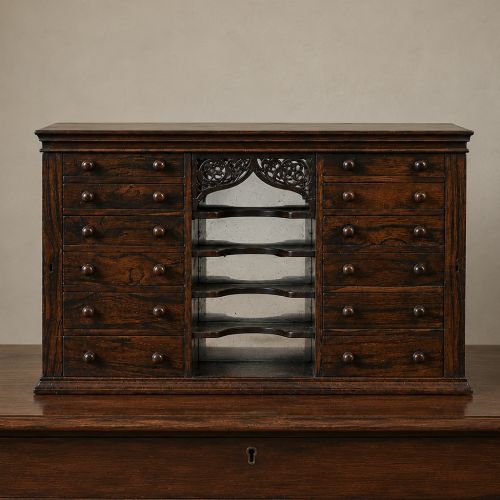
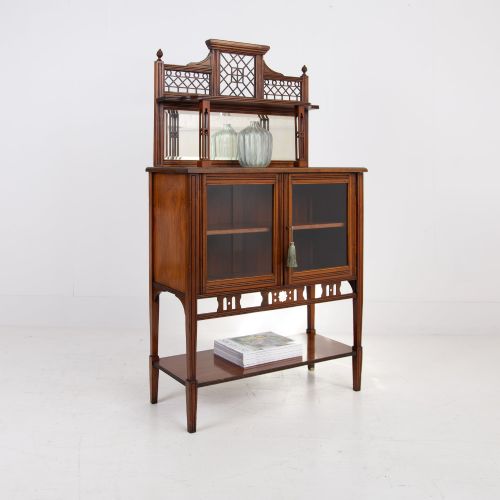
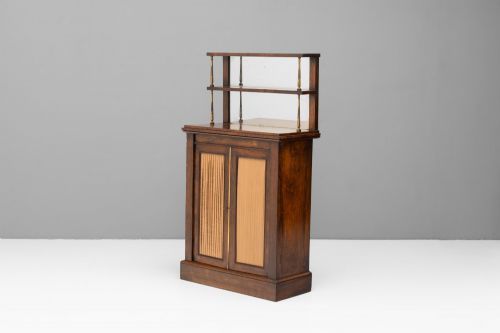
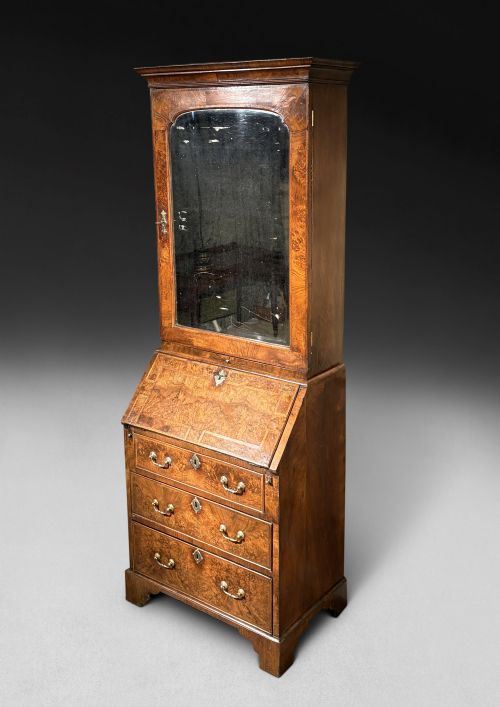
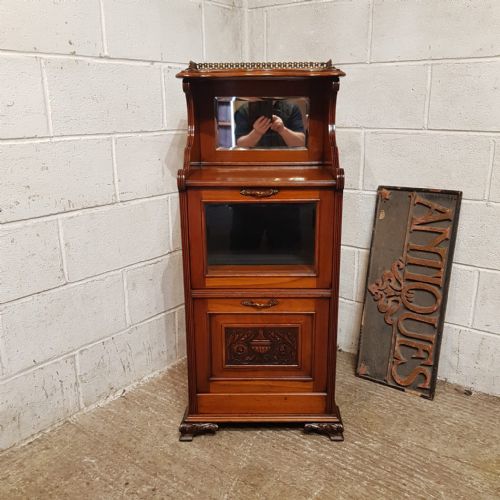


Small Mirror Cabinet
A small antique mirror cabinet combines compact storage with reflective glass, offering practical function and period character for intimate spaces.
Small Mirror Cabinet
A small antique mirror cabinet represents a specialised group of compact storage furniture incorporating reflective glass panels within the door or superstructure. These pieces emerge across the eighteenth, nineteenth, and early twentieth centuries in forms such as side cabinets, wall cabinets, and dressing units.
The versions most frequently met on this page span the Victorian and Edwardian eras, alongside Georgian and Regency examples. They appear in configurations designed for tabletops, walls, or narrow floor spaces, utilising timbers like mahogany, walnut, and rosewood.
Buyers seek these cabinets to introduce functional display space and reflected light into smaller rooms. Their varied regional origins and stylistic influences, from Queen Anne to Art Deco, provide distinct decorative options for contemporary interiors.
How they were made
Cabinet makers constructed these pieces using dense hardwoods such as mahogany, walnut, and rosewood, often applying figured veneers to principal surfaces. Joinery techniques included dovetailing for drawers and secure mortise and tenon joints for frames.
Glass integration required precision rebate cutting within wooden doors, sometimes accompanied by brass hinges, ormolu mounts, and porcelain details. Surfaces received hand-applied polishes that enhanced the natural grain of the timber.
Some Edwardian wardrobes scaled down entire bedroom suites into miniature forms, proving great storage comes in tiny footprints.
What varies in quality
Quality rests upon the selection of timber veneers and the crispness of applied mouldings, ormolu mounts, or brass hardware. Finer workshops employed figured walnut or rosewood with careful grain matching across the doors and drawer fronts.
Structural integrity and the originality of the mirror glass distinguish superior examples from standard production. Cabinets retaining their original glass panels, working locks, and solid secondary timbers demonstrate higher craftsmanship.
The Small Mirror Cabinet Glossary
- Chiffonier
- A low sideboard or cabinet featuring shelves or enclosed storage below a mirrored or tiered superstructure. This form evolved during the Georgian and Victorian periods to serve dining and drawing rooms.
- Credenza
- A low cabinet, frequently mounted with ormolu or porcelain, designed for display and storage. Originating in Italy, the form adapted into ornate nineteenth-century English reception room furniture.
- Ormolu
- Gilded bronze ornamentation applied to furniture surfaces for decorative contrast. This technique highlights key architectural points on nineteenth-century pieces.
- Bureau bookcase
- A writing desk fitted with a bookcase or cabinet top enclosed by doors. These multi-functional pieces combine a sloping writing flap with upper shelving.
- Veneer
- A thin layer of figured timber applied over a secondary wood base to provide decorative visual patterns. Craftspeople selected burr walnut or mahogany for these outer surfaces.
Small Mirror Cabinet: Frequently Asked Questions
Where should I place a small antique mirror cabinet?
These compact cabinets suit entryways, bedrooms, or living rooms where floor space is limited. Their reflective glass helps brighten darker corners while offering discreet storage.
Wall-mounted versions require secure fixings into studwork or masonry to support their weight. Tabletop or freestanding variants sit comfortably on sideboards, chests, or dedicated tables.
How do I identify the period of a cabinet?
Dating relies upon timber choice, hardware style, and construction methods visible inside the piece. Georgian and Regency examples often feature linear mahogany or rosewood, while Victorian and Edwardian items display heavier carved walnut or inlaid satinwood.
Examining secondary woods like oak or pine inside drawers provides further clues. Hand-cut dovetails and original backboards help narrow down the decade of manufacture.
Can I use these cabinets to store books?
Bureau bookcases and larger side cabinets easily accommodate books behind glazed or mirrored doors. Shallower wall cabinets suit smaller volumes, decorative objects, or glassware.
Checking shelf depth and weight capacity ensures the internal structure remains secure. Most small cabinets function best for lighter display items rather than heavy libraries.
Are the mirror panels original?
Antique mirrors often exhibit minor foxing, slight silvering loss, or subtle distortion due to age. These characteristics confirm the glass predates modern industrial manufacturing methods.
Pristine, completely clear glass in an eighteenth or nineteenth-century frame frequently indicates a later replacement. Inspecting the edges behind the wooden rebate reveals how the glass was secured.