

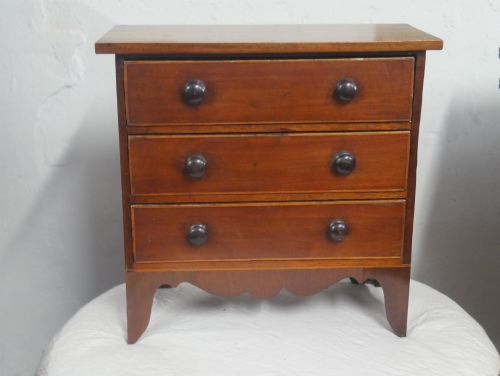
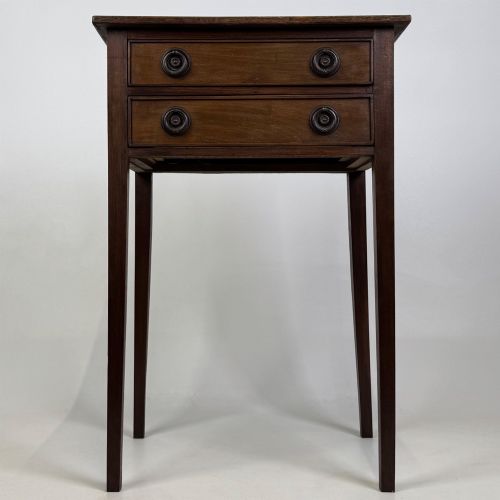
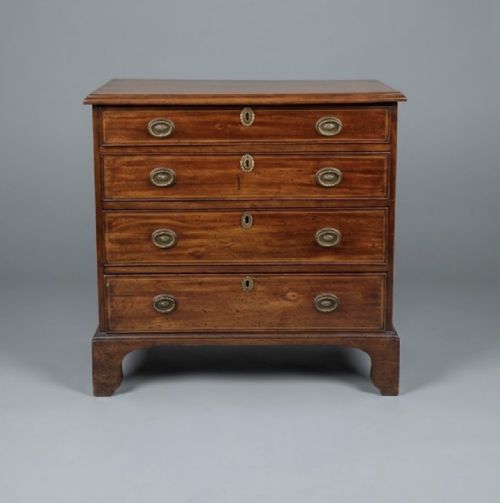
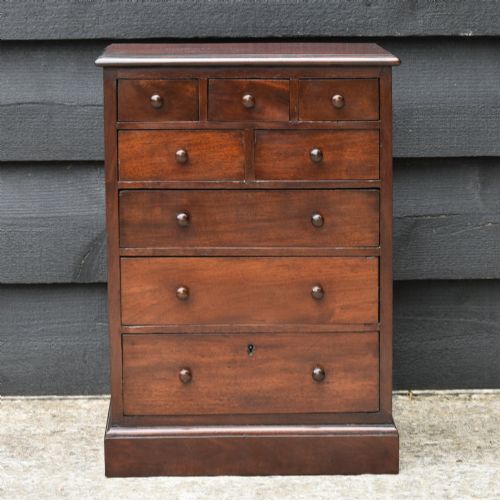
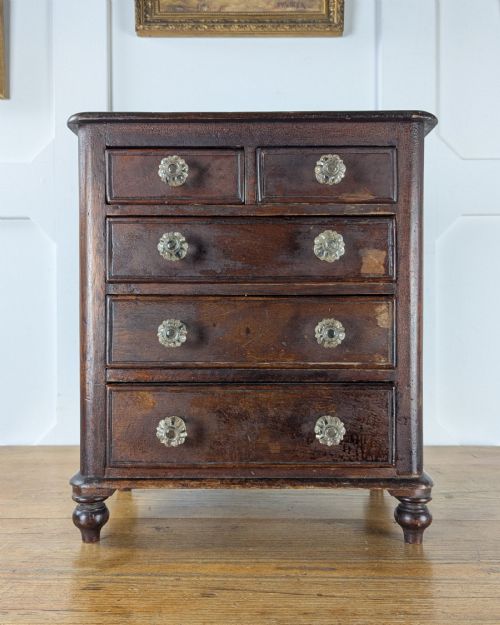
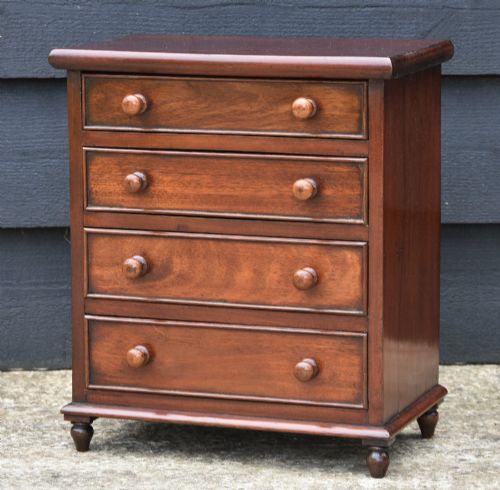
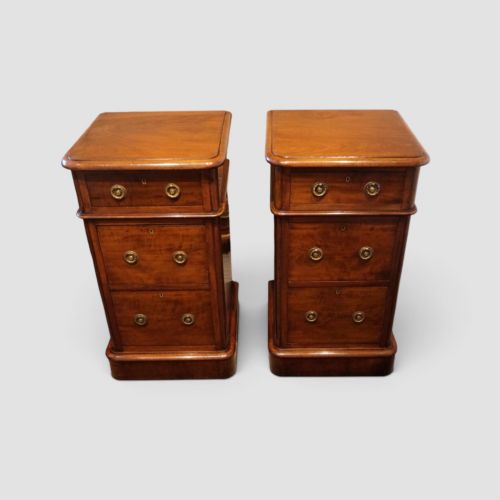
Small Mahogany Furniture
Small antique mahogany furniture brings warm timber tones and compact proportions into everyday rooms without overwhelming the floor space.
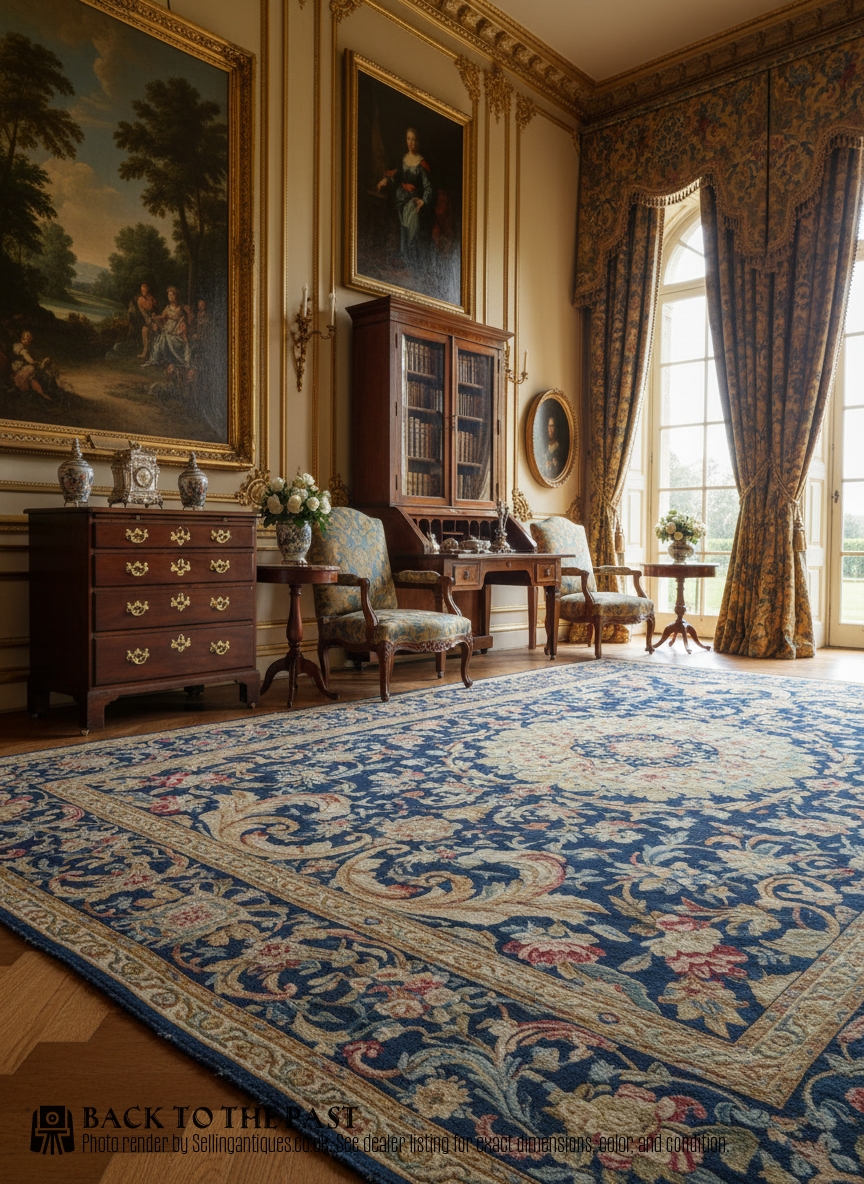
Small Mahogany Furniture
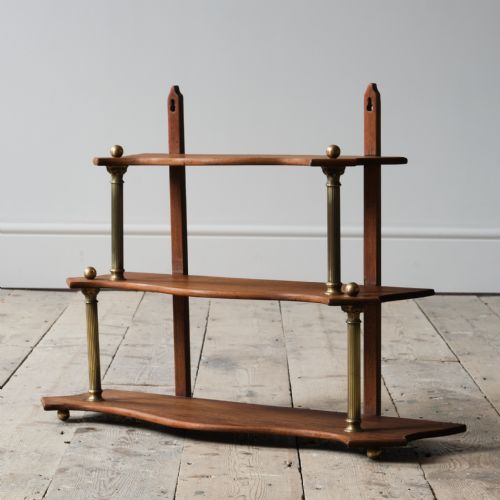
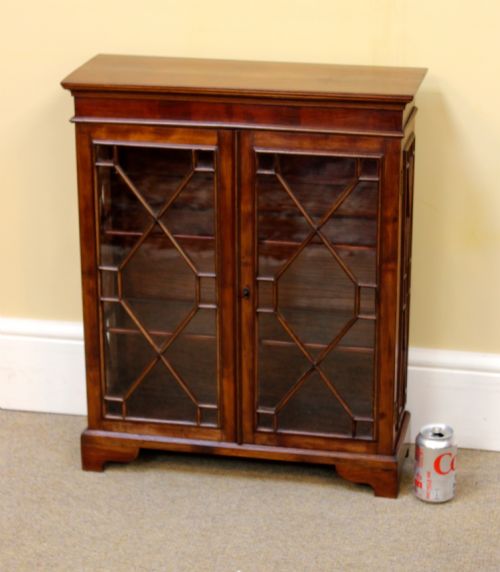
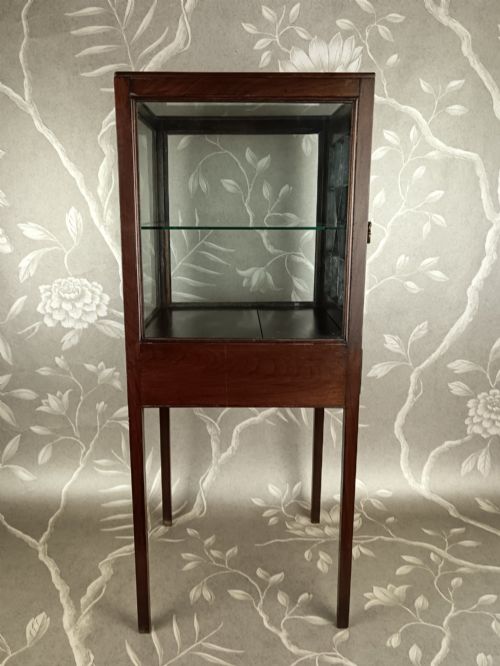
Small antique mahogany furniture encompasses compact chests of drawers, diminutive display cabinets, bedside tables, and hanging shelves produced across the eighteenth, nineteenth, and early twentieth centuries. These items serve practical storage and display functions while retaining the rich grain patterns typical of the timber.
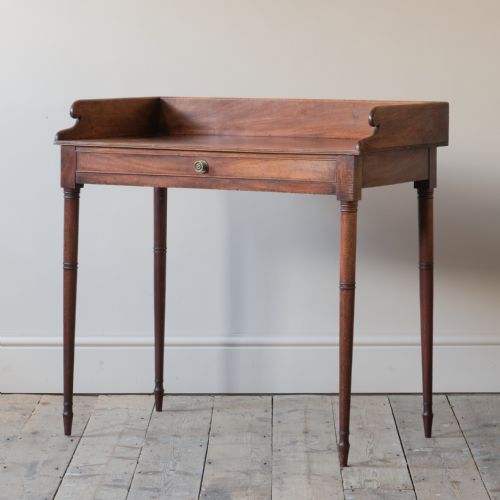
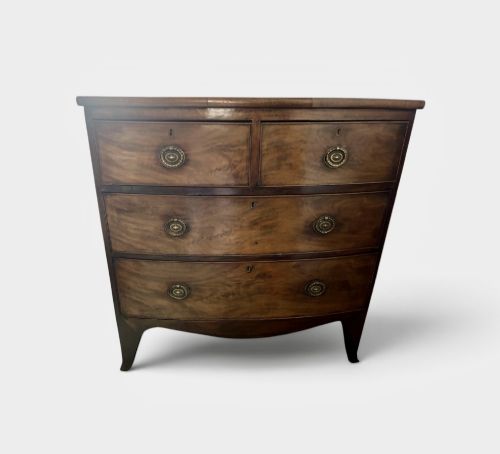
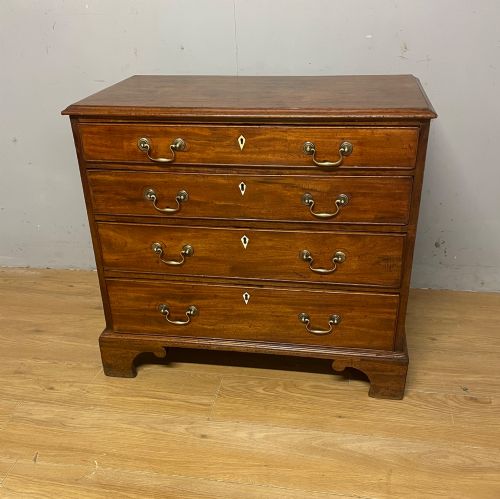
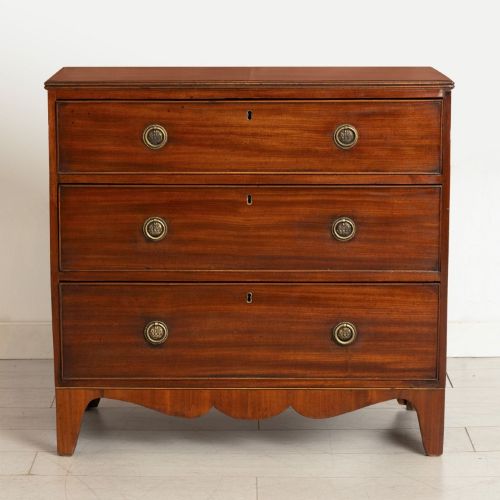
The pieces appearing most frequently range from Georgian bow-front and straight-front chests to Victorian miniature apprentice pieces and Edwardian occasional tables. Buyers seeking these items often encounter variations including side tables, washstands, corner cupboards, and revolving bookcases originating from British regional workshops and London makers.
Dated examples stretch from the late eighteenth century through the Regency and Victorian eras, demonstrating how craftsmen adapted large furniture forms into domestic sizes. Such pieces suit contemporary hallways, bedrooms, and sitting rooms requiring period character paired with reduced physical dimensions.
Materials and construction methods
Carpenters constructed these pieces primarily using solid mahogany and flame mahogany veneer, frequently accented with secondary timbers like pine alongside stringing in boxwood or satinwood. Drawer linings and secondary elements often reveal structural pine or oak depending on the regional workshop and period.
Decorative detailing relies on precision techniques such as crossbanding, hand-turned feet, and hand-cut dovetails joining drawer frames. Surface finishing involved polishing the timber to enhance the natural red-brown depth of the mahogany grain without heavy artificial staining.
Secret drawers tucked covertly behind moving mouldings remind us that Victorians loved hiding their spare keys and secret love letters.
Factors separating standard pieces from exceptional examples
Quality rests heavily on the selection of timber, where matched flame mahogany veneer and carefully aligned crossbanding elevate a simple chest or table far above plain stock. The crispness of hand-cut mouldings and the retention of original brass hardware contribute significantly to an item's architectural integrity.
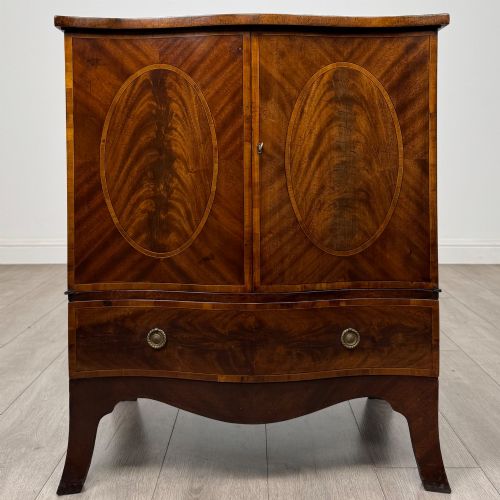
Proportion and execution define the superior pieces in this category, distinguishing finely scaled miniature chests and serpentine cabinets from bulkier regional adaptations. Original patination developed through centuries of gentle waxing marks the difference between a well-preserved survivor and an over-restored surface.
Druce And Co London·Harrods
The Small Mahogany Furniture Glossary
- Crossbanding
- A border technique where thin strips of veneer are laid perpendicular to the grain of the primary surface, framing drawer fronts or table tops. This method demands high precision from the cabinetmaker.
- Flame mahogany
- A highly figured timber veneer prized for its dramatic, flickering flame-like grain patterns. It typically decorates the primary focal points of high-status case furniture.
- Apprentice piece
- A diminutive item demonstrating a craftsman's skill to secure entry into a trade guild, often taking the form of a scaled-down chest of drawers. These pieces replicate full-size furniture construction in miniature.
- Serpentine
- A front contour characterised by a gentle convex curve flanked by two concave curves, creating an undulating visual rhythm. This shape requires advanced woodworking skill to execute accurately.
- Wellington chest
- A tall, narrow chest of drawers secured by a hinged locking side stile that fastens with a key. The design originates from the nineteenth century to protect sensitive documents or linen.
Small Mahogany Furniture: Frequently Asked Questions
What is an apprentice chest of drawers?
An apprentice chest is a small-scale model built by a trainee craftsman to prove competency in joinery before joining a guild. These miniature pieces mirror the exact construction methods of full-sized furniture.
Collectors prize them for their charming proportions and the meticulous detail applied to drawers, feet, and handles.
How do I date a mahogany chest?
Dating relies on examining construction techniques like hand-cut dovetails, secondary timbers such as oak or pine, and the style of the brass handles and feet. Georgian pieces often feature bracket feet and simple brass pulls, while Victorian versions showcase turned feet.
The evolution of the timber's finish and the presence of flame mahogany veneer or crossbanding also help narrow down the manufacturing decade.
Where can I place a small bureau?
A small bureau fits well in compact studies, bedrooms, or living room alcoves where a full-sized desk would prove too bulky. The drop-front writing surface provides a functional workspace that conceals paperwork when closed.
Pairing the piece with a low chair creates a dedicated writing station without cluttering the room's circulation space.
What distinguishes Regency furniture?
Regency pieces often draw inspiration from classical antiquity, featuring clean lines, restrained brass inlays, and figured mahogany surfaces. The style spans the early nineteenth century and emphasises balanced proportions over heavy ornamentation.
Bow-front chests and small side tables from this era demonstrate a transition toward lighter, more portable domestic furnishings.