




Small Card Table
A small antique card table folds open for play and tucks against a wall when the room needs its floor space back.
Small Card Table
A small antique card table arrives in various formats across this selection, from Georgian demilune folding tops to Edwardian envelope designs and Victorian walnut games tables. Buyers seek these compact pieces for their dual nature as decorative side furniture and functional gaming surfaces.
The materials span mahogany, walnut, and beech, often paired with baize linings inside the folding leaves. Pieces cross several eras including Georgian, Victorian, and Edwardian periods, alongside specific aesthetic and campaign styles.
Materials and construction
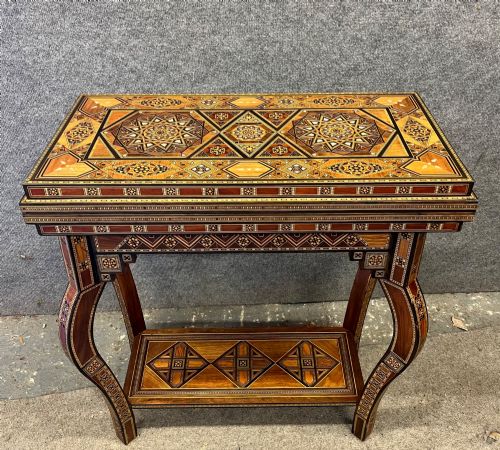
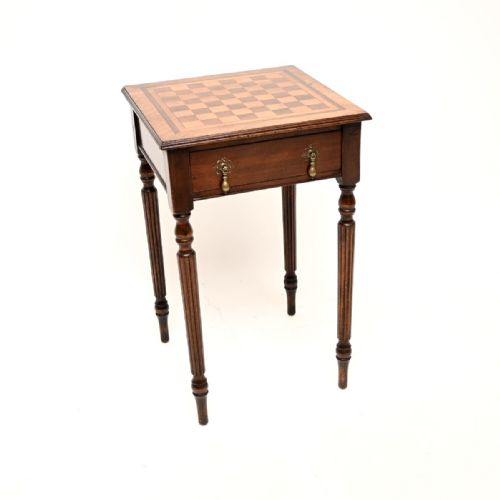
Cabinetmakers built these folding surfaces primarily in solid mahogany and walnut, occasionally employing beech and ebonised wood for specific structural elements. Surfaces frequently feature marquetry inlay and brass fittings to secure the folding leaves.
Internal mechanisms rely on clever pivoting and folding hinges that allow the top to rotate and open flat over a recessed well. The interiors are lined with baize to provide a soft playing surface for cards and counters.
Card tables often reveal faint chalk tallies hidden beneath the baize where players kept score centuries ago.
Judging quality in folding tables
The distinction between standard examples and superior pieces rests on the precision of the timber matching and the crispness of any inlaid marquetry. Finer specimens exhibit seamless joint work where the folding leaves meet when closed.
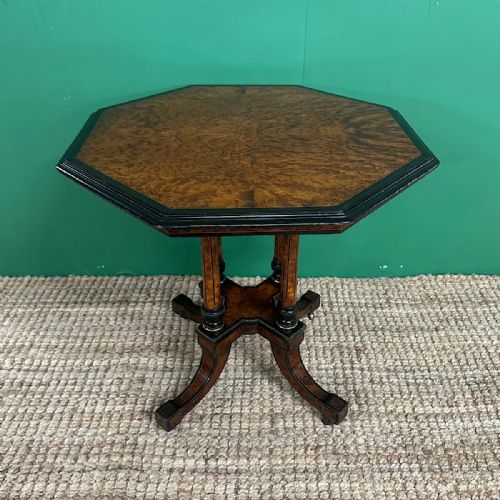
The integrity of the internal folding mechanism dictates daily usability, with better examples operating smoothly without sagging corners. Timber selection also defines value, particularly where burr walnut or figured mahogany is employed across the top.
William Hutton & Sons
The Small Card Table Glossary
- Demilune
- A half-moon shape common in Georgian card tables that fit flat against a wall when closed. The straight edge contains the hinge for the folding leaf.
- Envelope table
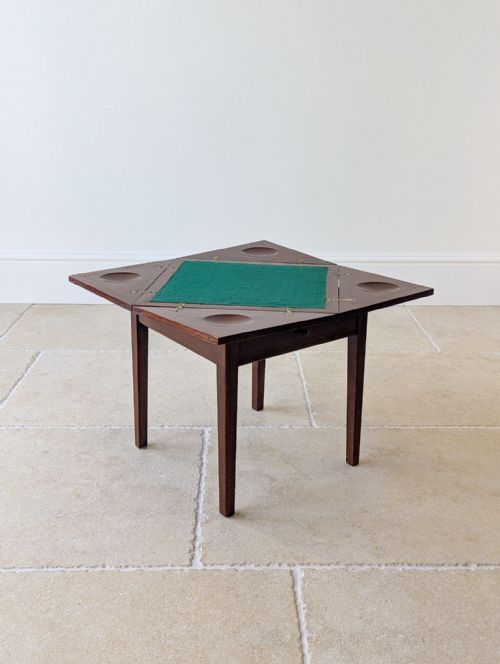
- A square table with four triangular flaps that fold inward like an envelope to reveal the baize-lined interior. This clever design emerged strongly in the Edwardian period.
- Baize
- A coarse woollen fabric, typically green, used to line the playing surface of card and games tables. It provides traction for cards and dampens sound during play.
- Marquetry
- Decorative veneer work arranged in intricate patterns using different coloured woods. This technique frequently ornaments the tops of Victorian and Edwardian examples.
- Campaign style
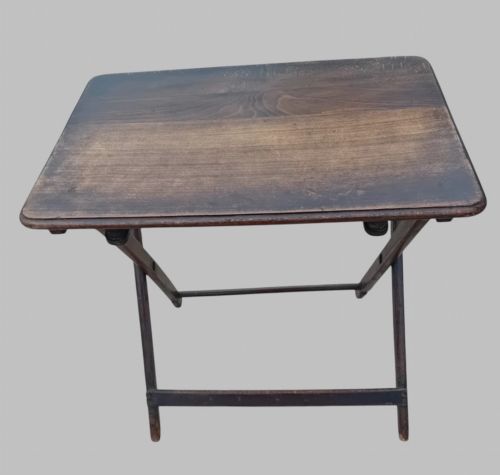
- Portable furniture designed for military officers on the move, often featuring folding frames and brass corners. Beech and mahogany folding tables frequently adopt this robust aesthetic.
Small Card Table: Frequently Asked Questions
What is a small antique card table used for?
These tables served primarily for evening card games, chess, and social pastimes in period homes. When folded shut, they functioned as side tables or console tables against a parlour wall.
Today, they suit modern living rooms as occasional lamp tables that quickly expand when extra surface area is required for guests.
How do I tell a Georgian table from a Victorian one?
Georgian examples often feature simpler mahogany veneers, clean lines, and demilune shapes with tapered legs. They rely on proportion and timber grain rather than heavy ornamentation.
Victorian and Edwardian versions frequently incorporate marquetry inlay, burr walnut, or specialised mechanisms like the folding envelope top. Ebonised finishes and distinct stylistic movements also point firmly to the later nineteenth century.
Are the folding tops stable when open?
Well-constructed folding leaves rest on swing legs or pivoted frames designed to bear weight evenly across the extended surface. The original hinges and pivot joints provide the primary support when the table is open for play.
Careful alignment of the timber ensures the opened top remains level without requiring excessive downward force.
What woods were used for these tables?
Mahogany and walnut dominate the selection, providing durable and richly grained surfaces for both folding tops and structural frames. Beech and ebonised wood appear in specific campaign and aesthetic movement pieces.
Inlays often utilise contrasting lighter timbers to create geometric or floral patterns across the show woods.