

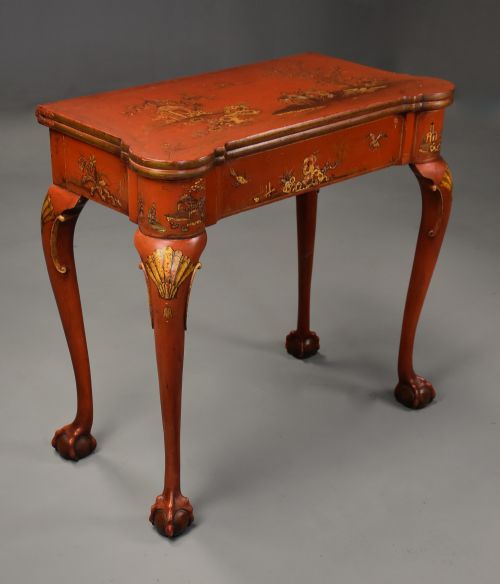


Folding Envelope Card Table
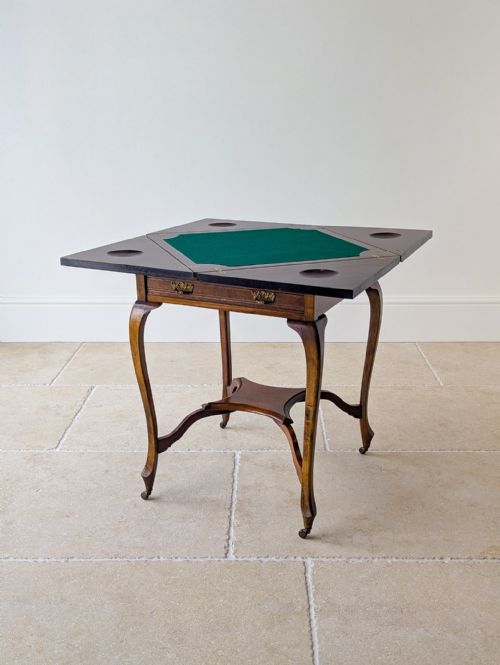
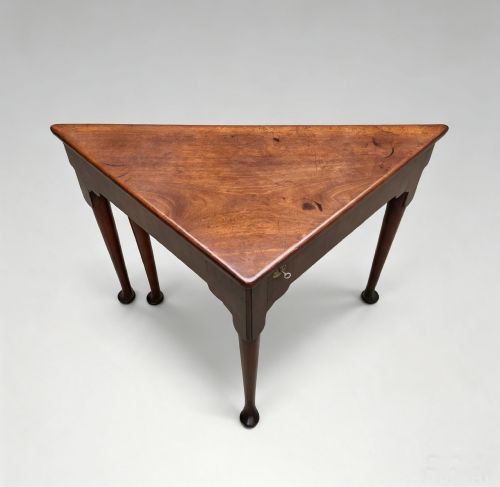
A folding envelope card table is a clever multi-surface piece of furniture that opens from a compact square into a spacious baize-lined playing area.
Folding Envelope Card Table
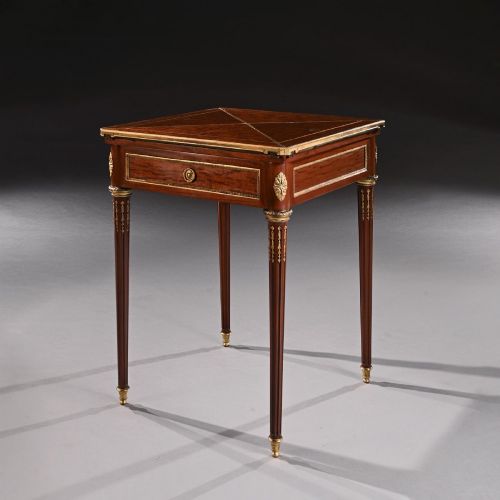
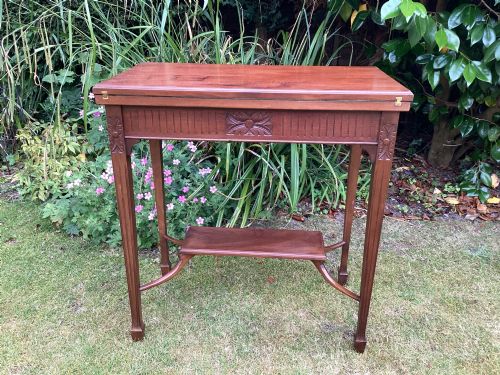
The selections span simple mahogany models to elaborate examples decorated with satinwood inlay, brass, or ormolu. Makers utilised woods like rosewood and walnut, alongside revival styles influenced by Louis XVI and Edwardian Chippendale aesthetics.
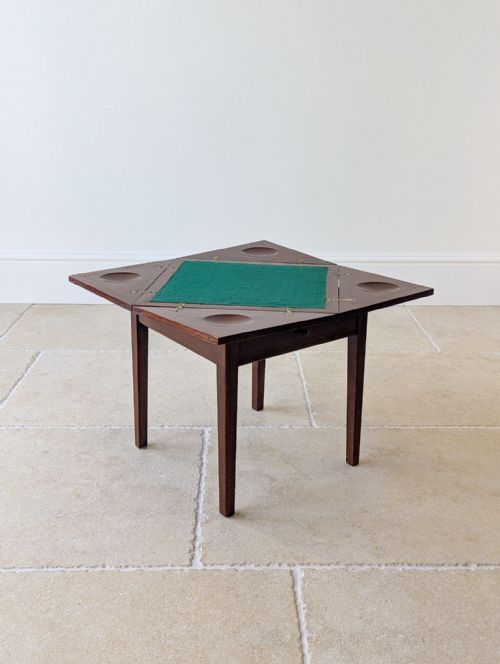
Many examples include subtle gaming wells or small drawers beneath the surface for storing cards and counters. They served polite society for evening entertainment, transitioning easily from a decorative corner piece to a functional games surface.
Materials and construction
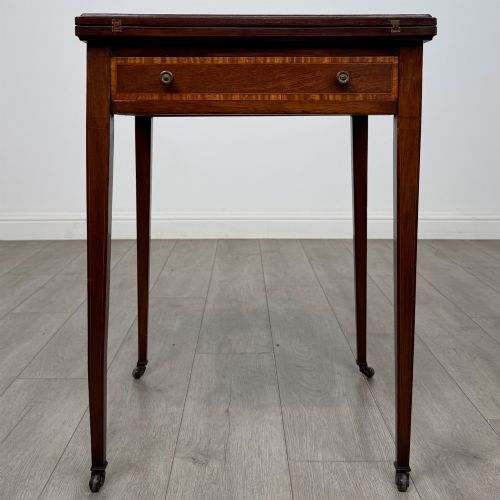
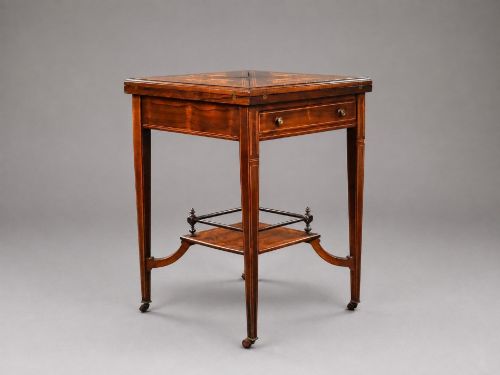
Cabinet makers built these tables using solid timbers and veneers of mahogany, rosewood, walnut, and satinwood, often supported on slender tapered legs. The folding mechanism relies on precision hinges that allow the triangular flaps to move smoothly in tandem as the top is rotated.
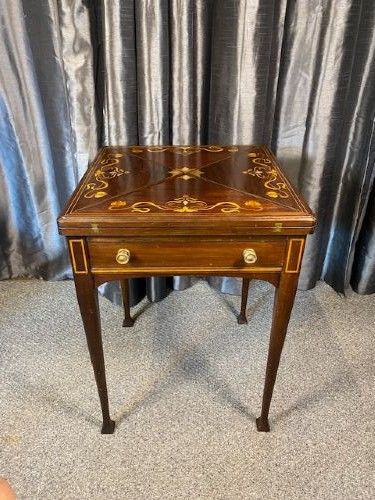
Inlays of contrasting woods, satinwood, and brass create delicate geometric borders and floral motifs across the surface. Interiors are traditionally lined with baize, providing a soft texture specifically chosen for dealing cards and dampening the sound of play.
Periods represented span from the eighteenth century through the Georgian, Regency, Victorian, and Edwardian eras.
Distinctions in quality
Quality rests upon the crispness of the timber selection, the precision of the rotating mechanism, and the intricacy of the inlay work. Finer examples display finely figured mahogany or rosewood veneers matched symmetrically across all four opening flaps.
The sophistication of the internal mechanism dictates the grade of the piece, with superior models ensuring the flaps fold down evenly without binding. Details such as castors, integrated gaming wells, and finely cast brass mounts elevate the standing of a piece.
Antoine Lampre·Maple and Co·Howard and Sons Ltd·Francoise Linke
The Folding Envelope Card Table Glossary
- Envelope top
- A table top composed of four triangular flaps that fold diagonally towards the centre to conceal the playing surface. This ingenious design doubles the surface area when fully opened.
- Baize
- A coarse woolen fabric woven like felt and traditionally used to line gaming and card tables. It provides a durable, non-slip surface for handling playing cards.
- Marquetry
- The art of applying decorative pieces of veneer to a structure to form intricate patterns and pictures. Cabinet makers utilised contrasting woods to achieve striking pictorial designs.
- Gaming wells
- Small recessed compartments built into the corners of the table surface to hold counters, coins, or markers during card games. They keep the playing area orderly and prevent pieces from rolling away.
- Ormolu
- Gilded bronze mounts applied to furniture for decorative enrichment, popular in French revival pieces. The technique involves treating bronze with a gold amalgam to produce a bright metallic finish.
Folding Envelope Card Table: Frequently Asked Questions
How do the folding flaps work?
The top section pivots on a central pivot while the four triangular flaps are connected to internal hinges. As you swivel the top, the flaps automatically unfold outwards to create a square surface.
This clever mechanical action allows the table to remain small and neat when closed against a wall, expanding instantly for an evening of cards.
What were gaming wells used for?
Gaming wells are small recessed corners set into the baize surface designed to hold betting counters, chips, or coins securely during a game. They kept the central area clear for cards and prevented pieces from sliding off.
Not all models include them, but they appear frequently on pieces intended for serious card playing.
Where should I place one?
These pieces function ideally as side tables or occasional tables against a hallway or drawing room wall when closed. Their compact footprint makes them versatile for smaller rooms without sacrificing surface space.
Pull them into the centre of the room only when you need the expanded playing surface for guests.
How do I date these tables?
Dating relies on stylistic clues such as the choice of timber, inlay motifs, and leg shapes. Edwardian examples often feature lighter satinwood and delicate brass stringing, while Victorian versions lean towards heavier rosewood and walnut.
Construction methods inside the drawer framing and the type of secondary timbers used also help confirm the era of manufacture.