


Portable Wooden Side Table
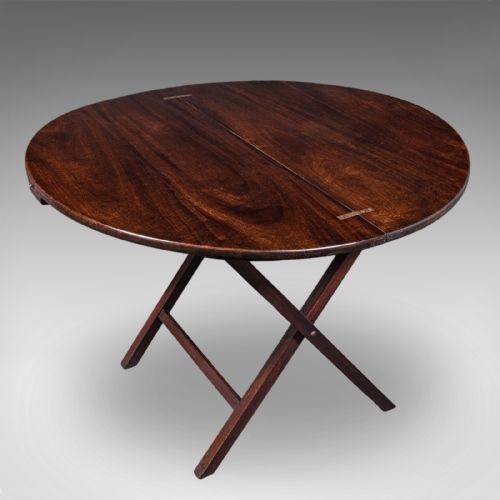
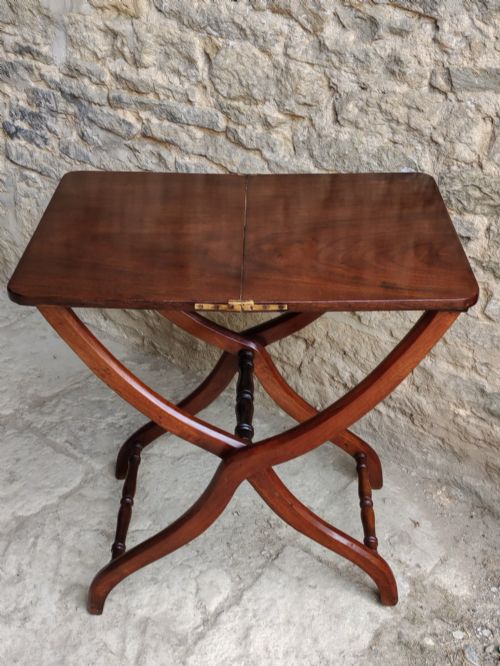
These portable wooden side table pieces are folding tables built for travel and compact spaces.
Portable Wooden Side Table
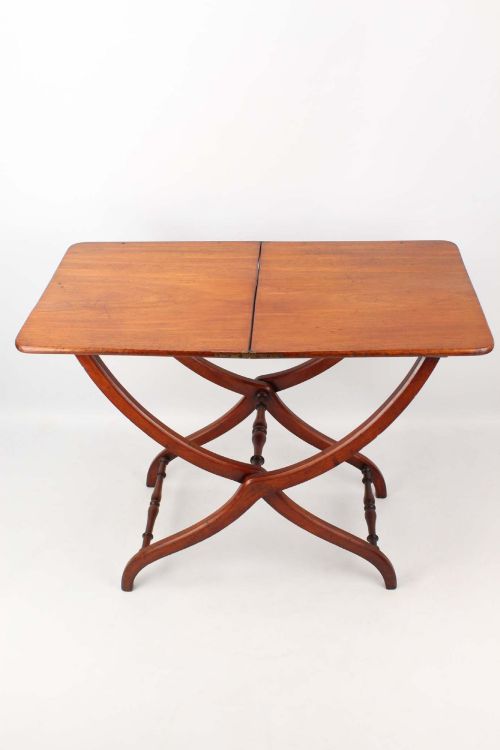
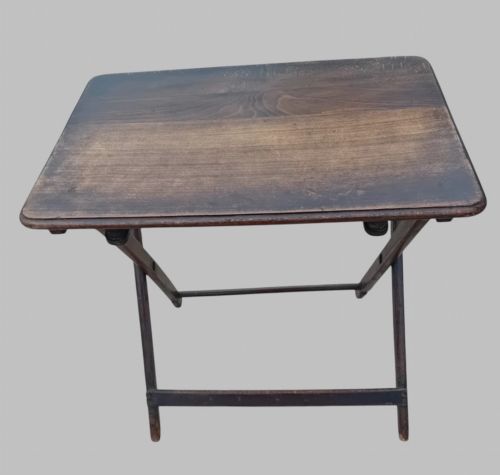
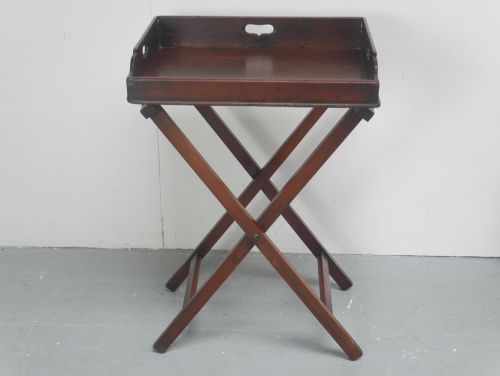
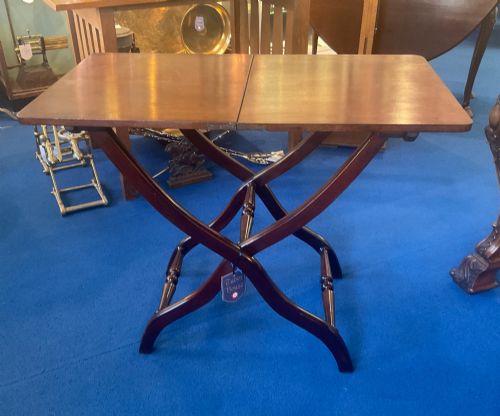
A portable wooden side table serves as a flexible surface designed to fold away when not in use. The selections gathered here span the nineteenth century into the early twentieth century, taking forms such as campaign tables, butlers tray tables, and occasional tables.
You are most likely to encounter mahogany and beech folding frames styled after Victorian and Edwardian military campaign pieces. These items include separate stands and removable trays, as well as hinges that allow the whole structure to collapse flat.
How they were made
Cabinetmakers constructed these frames primarily in mahogany, teak, and beech, utilising brass hinges and mounts to withstand repeated folding and transport. The timber was selected for strength and finished to highlight the grain while maintaining a durable surface.
Some examples incorporate carved details into teak or feature webbing alongside folding wooden legs designed for rapid assembly and disassembly. Each joint requires precise alignment so the table locks securely into position when opened.
Some folding tables were built to pack inside an officer's trunk before officers even finished their morning tea.
What varies in quality
The distinction between ordinary and superior examples lies in the tightness of the joinery and the quality of the brass hardware. Finer pieces maintain rigid stability when open without wobble in the folding action.
Timber selection and the crispness of any carved ornamentation also set better items apart from utilitarian versions. Original brass fittings and well-figured mahogany indicate higher workshop standards.
The Portable Wooden Side Table Glossary
- Campaign style
- Furniture designed to fold or dismantle for military travel. These pieces prioritise portability and robust construction.
- Butlers tray
- A removable wooden tray with hinged or panelled sides that rests upon a separate folding stand. It functions as a portable serving surface.
- Coaching table
- A folding wooden table historically used during travel and coaching journeys. They feature X-frame or scissor bases that collapse flat.
- Occasional table
- A small, movable table intended for specific, temporary use in a room. They can be repositioned easily according to need.
- Mahogany
- A durable tropical hardwood prized for its rich reddish-brown colour and fine grain. It forms the primary material for many nineteenth-century examples.
Portable Wooden Side Table: Frequently Asked Questions
What is a portable wooden side table used for?
These folding tables serve as flexible surfaces for serving drinks, holding books, or placing beside seating in compact rooms.
Because they fold flat, owners often store them away in cupboards or behind furniture until an extra surface is required.
How do you fold a campaign table?
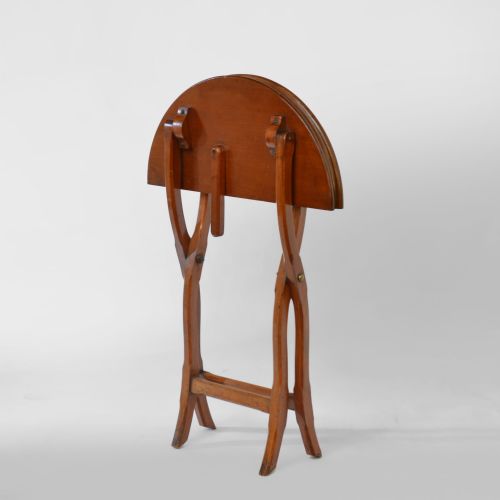
Most folding tables utilise a scissor action or hinged legs that lift out of slots or cross braces.
Lifting the top slightly allows the wooden supports to pivot inward until the frame collapses completely flat for storage.
Are butlers trays attached to their stands?
Traditionally, the tray lifts off the folding stand entirely to allow separate use for carrying items.
The supporting base then folds flat independently of the tray top.
What woods were used for these tables?
Maker workshops predominantly utilised mahogany, teak, and beech for their strength and resistance to warping during travel.
Brass fittings and occasional metal elements provided the necessary reinforcement for folding joints.