


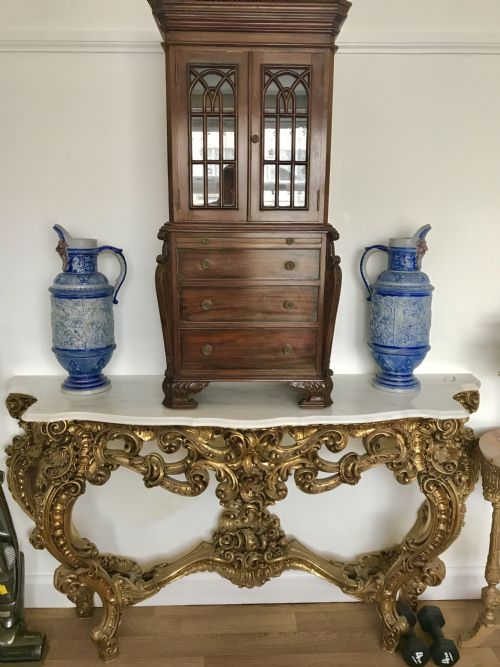

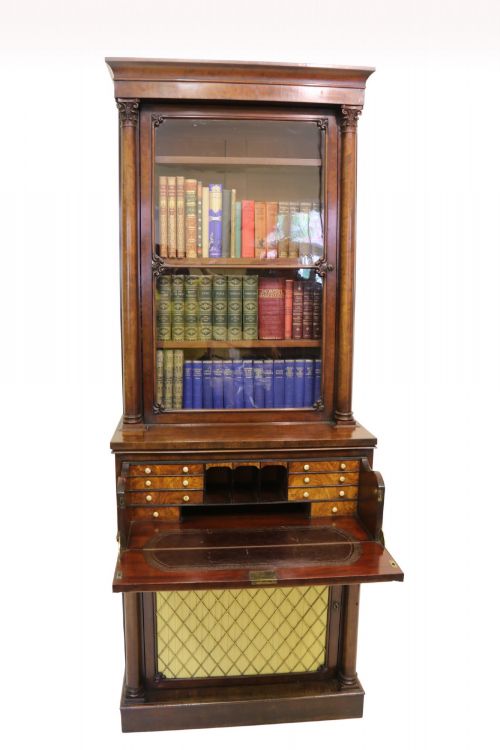
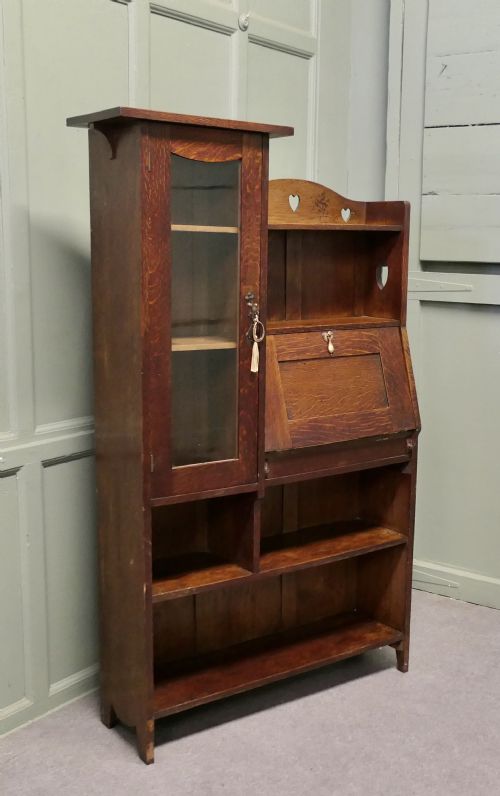


Small Bureau Cabinet
These small antique bureau cabinets combine a compact writing slope with fitted drawers or upper shelving, offering a practical workspace for modern rooms.
Small Bureau Cabinet
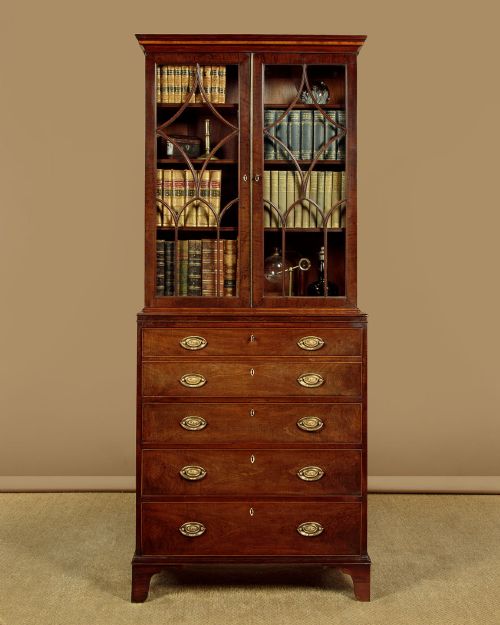
A small antique bureau cabinet serves as a dual-purpose piece, combining a sloping or pull-out writing surface with concealed compartments and upright storage in the form of drawers or a bookcase. These pieces originated to provide private correspondence spaces in domestic interiors, adapting through successive design movements.
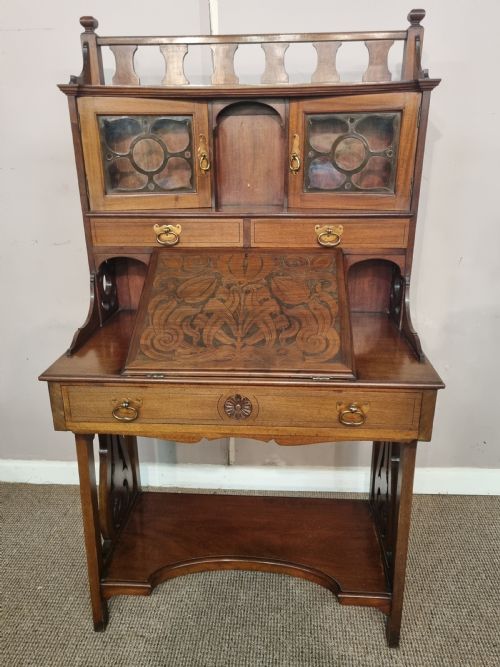
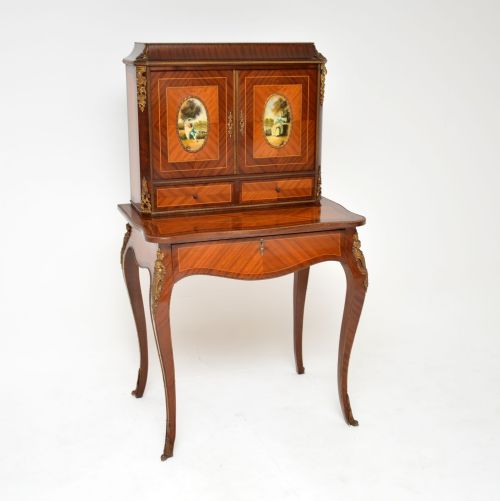
Makers utilised various scales, ranging from full-height bureau bookcases down to miniature apprentice pieces and compact bonheur du jour writing tables. The primary forms focus on maximising storage efficiency within a modest footprint suitable for contemporary spaces.
Assessing Quality and Execution
Quality rests in the selection of timber veneers and the precision of the underlying joinery, particularly within the internal pigeonholes and secret drawers of the writing compartment. Superior examples display continuous grain matching across drawer fronts and crisp hand-carved or inlaid ornamentation.
Hardware integrity and structural stability separate standard production items from master-workshop pieces. Well-executed pieces maintain smooth drawer movement and tightly fitted fall-fronts without relying on heavy modern reinforcement.
Listings feature pieces spanning from the 17th century through the Arts and Crafts movement, constructed in mahogany, walnut, oak, and rosewood.
Gillows of Lancaster
The Small Bureau Cabinet Glossary
- Bureau
- A writing desk featuring a sloping fall-front lid that opens to reveal internal compartments and small drawers. This form provides a concealed workspace that can be locked when not in use.
- Secretaire Bookcase
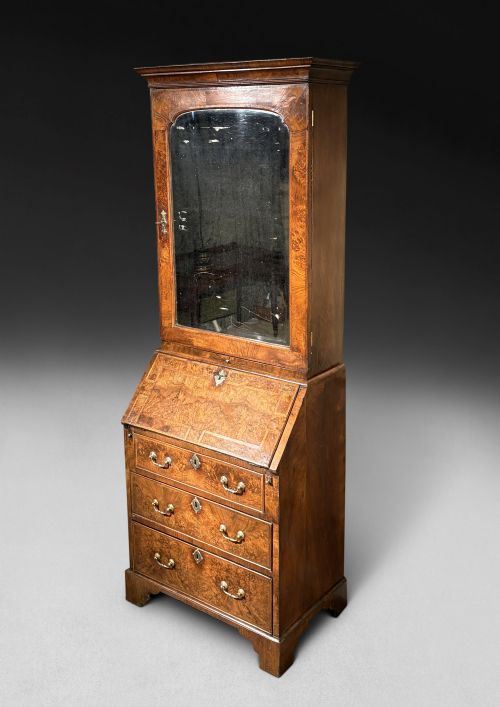
- A tall piece of furniture combining a writing drawer or fall-front desk section with upper shelving enclosed by glass or wooden doors. It merges a library cabinet with a functional writing station.
- Davenport
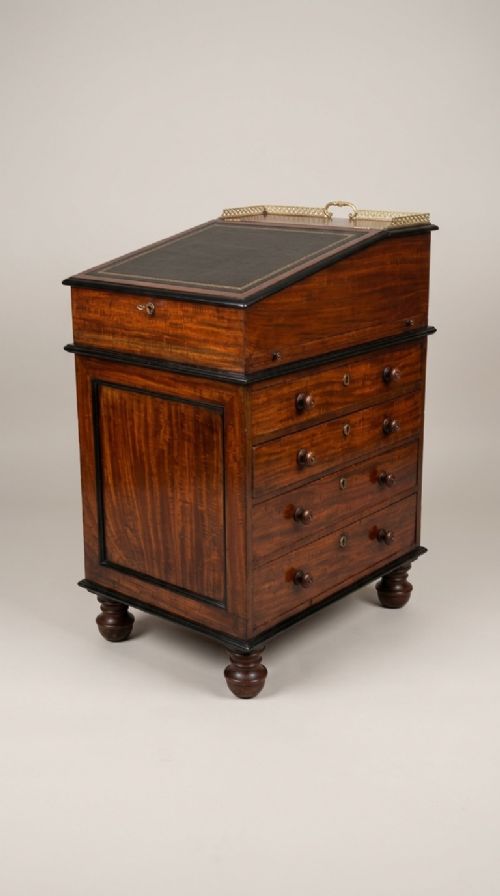
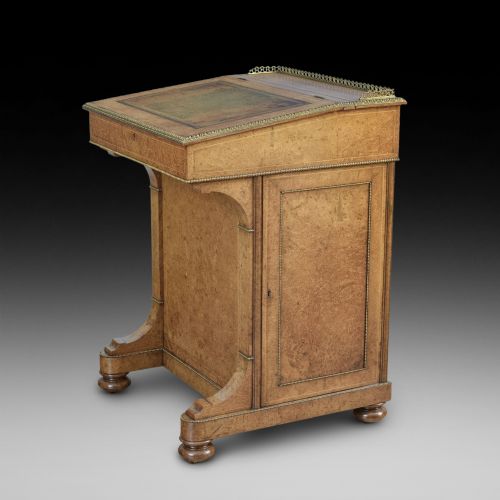
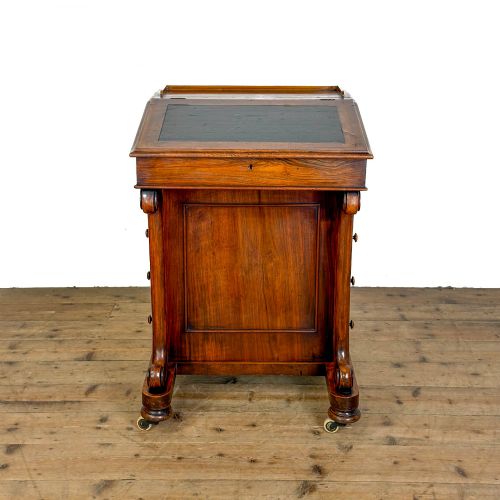
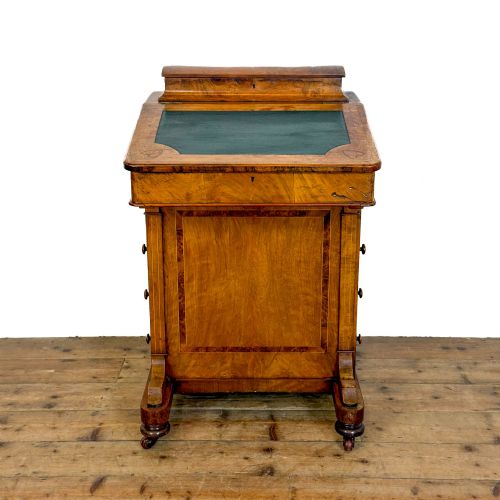
- A compact pedestal desk featuring a sloping writing surface hinged at the top, lifted to access a stationery well, with drawers positioned down one side. The form became popular during the Regency and Victorian eras for parlour use.
- French Polish
- A wood finishing technique that applies numerous thin coats of shellac using a rubber pad to achieve a high-gloss surface. This method accentuates the depth and figure of underlying mahogany or walnut veneers.
Small Bureau Cabinet: Frequently Asked Questions
What is a Davenport desk?
A Davenport is a compact writing desk featuring a sloping top and a bank of drawers down one side. They were designed for domestic correspondence in smaller rooms.
Most examples include a stationery compartment beneath the hinged writing slope and rest on small castors for mobility.
How do I use a bureau cabinet today?
These cabinets function well as laptop workstations or writing desks in living rooms and studies. The internal pigeonholes help organise modern stationery and small accessories.
Keeping the fall-front closed conceals work materials entirely, maintaining a tidy appearance in multipurpose spaces.
What timber was most commonly used?
Mahogany and walnut dominate the selection, especially in Georgian and Victorian pieces. Cabinetmakers also utilised oak, rosewood, and exotic veneers like amboyna.
Finer versions often feature burr walnut or satinwood inlay to create decorative contrast on the writing surfaces.
Are apprentice pieces functional furniture?
Apprentice pieces and miniature furniture were created as scale models or skill demonstrations by woodworkers. They replicate full-size bureau cabinets in exact detail but on a reduced scale.
Collectors prize these smaller items for their intricate craftsmanship and the challenge makers faced in scaling down complex joinery.