
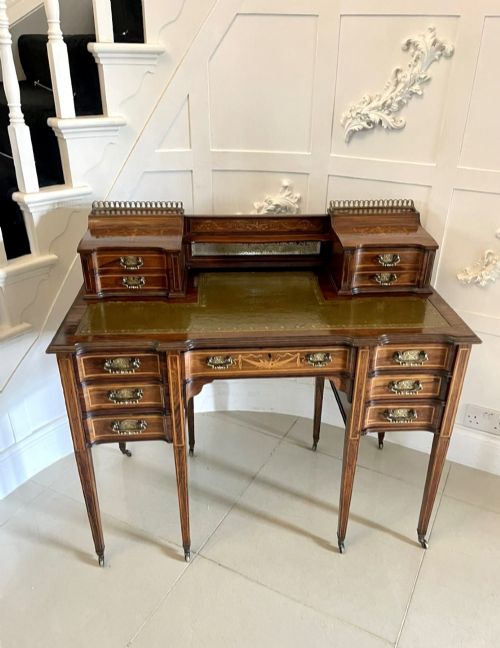
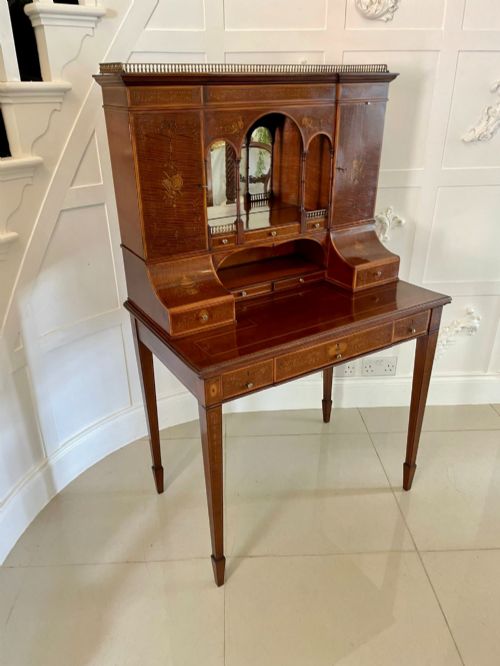
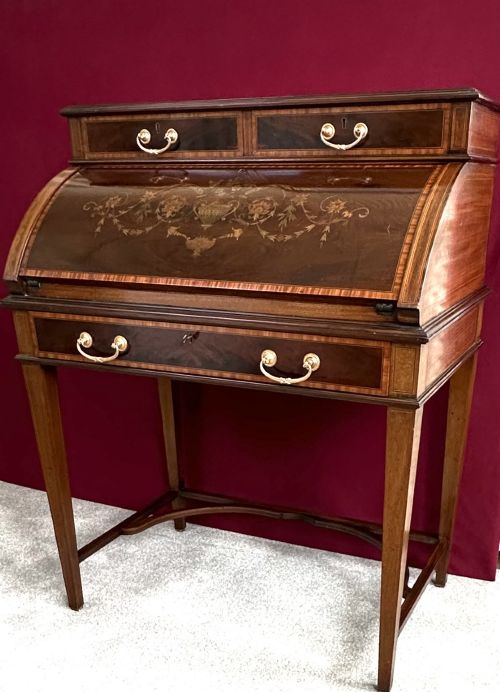
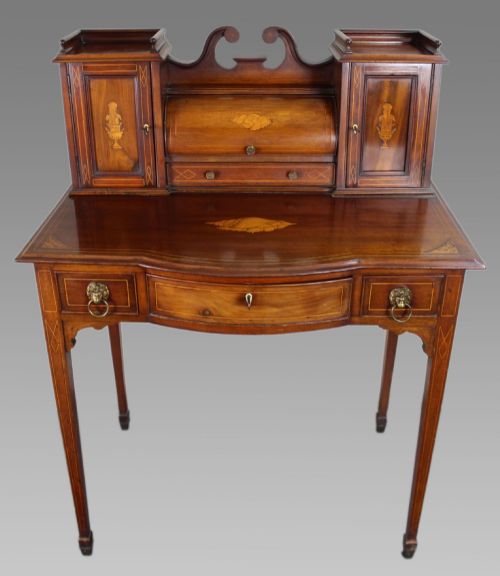
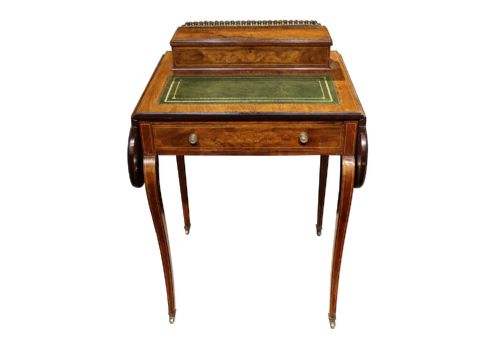
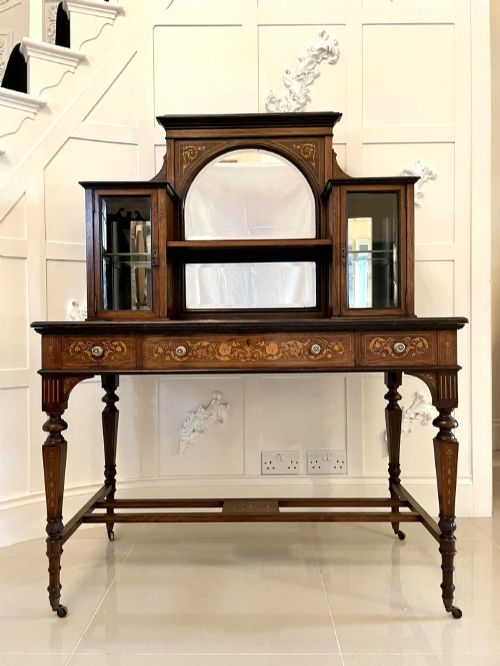
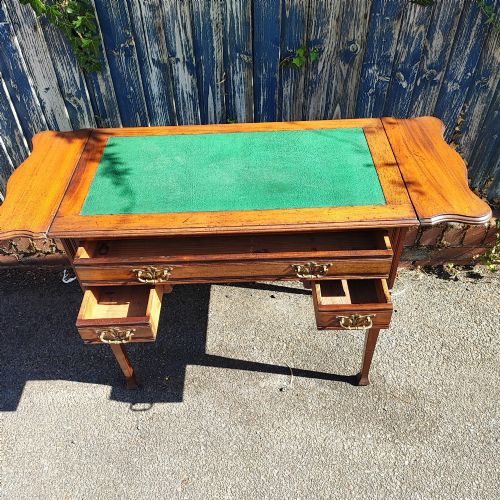
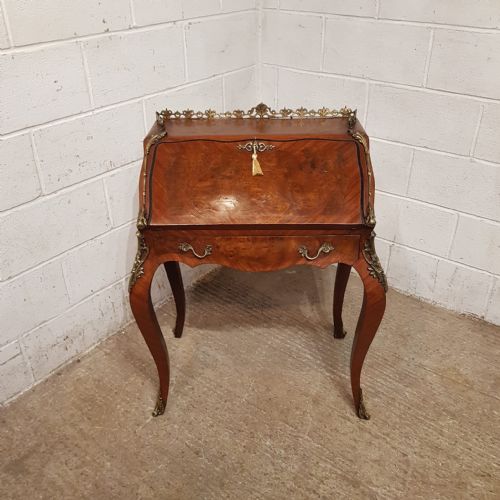


Edwardian Ladies Bureau
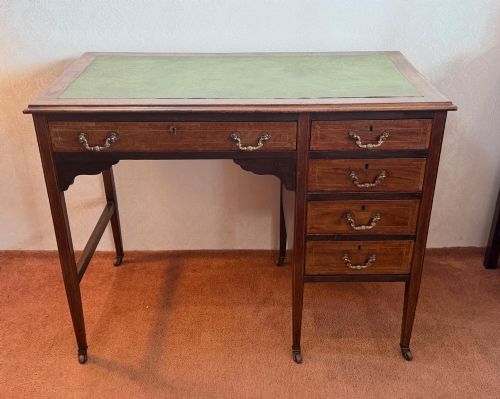
An edwardian ladies bureau offers a compact writing space suited for correspondence, combining fine cabinet work with period elegance.
Edwardian Ladies Bureau
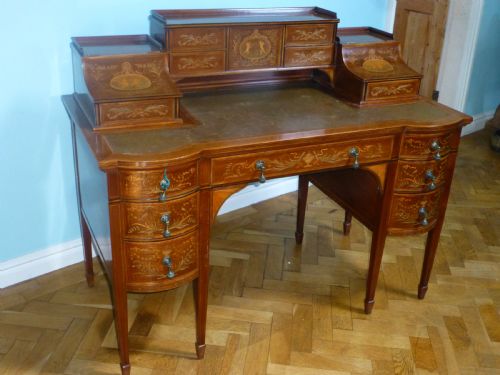
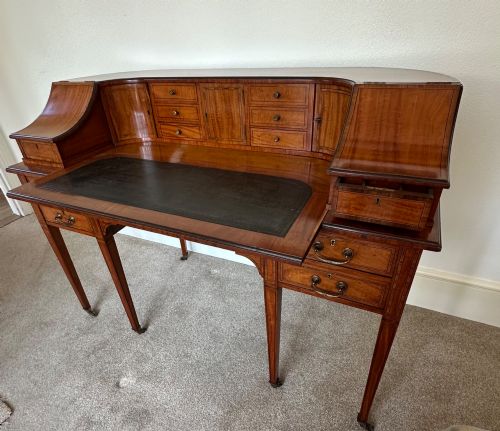
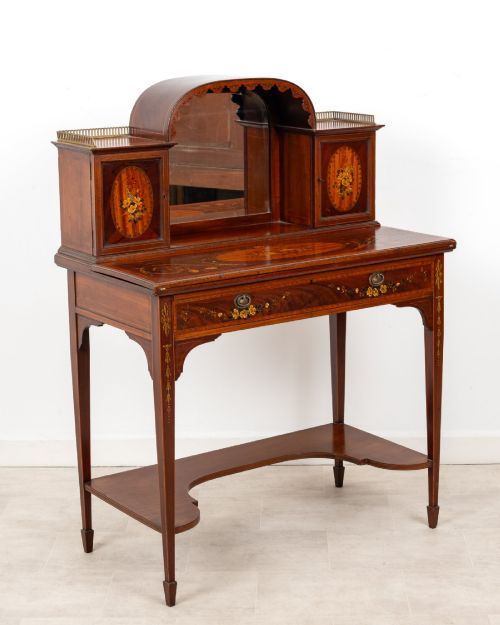
The edwardian ladies bureau brings together refined writing desks, fall-front writing bureaux, and small bonheur du jour tables spanning the late nineteenth and early twentieth centuries. These pieces emerge predominantly from the Edwardian and Victorian eras, often incorporating Sheraton Revival design motifs.
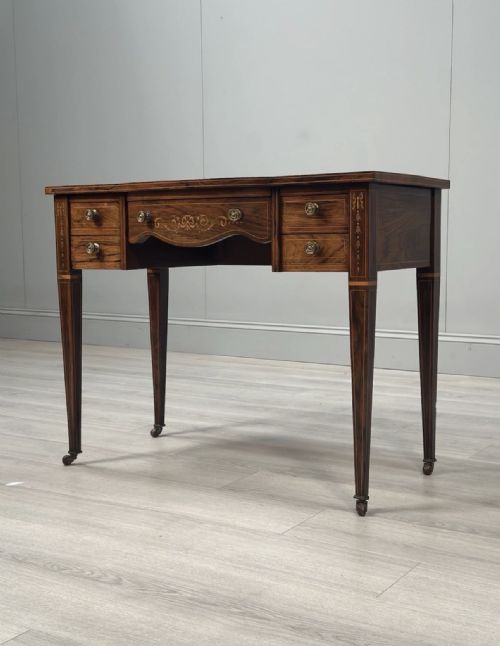
Buyers regularly encounter mahogany, satinwood, and rosewood examples outfitted with fitted interiors, drop-side flaps, or mirrored superstructures. Compact proportions and delicate framing define these smaller writing tables designed specifically for private correspondence.
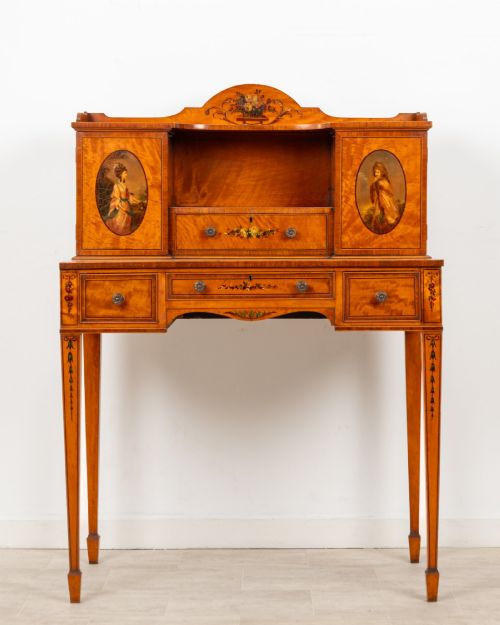
The selection ranges from simple walnut bureau forms to elaborately painted satinwood Carlton House desks and marquetry inlaid writing desks. Pieces frequently date from around nineteen hundred, reflecting the refined craftsmanship of the period.
Materials and Technique
Cabinet makers utilised dense hardwoods including mahogany, walnut, and rosewood as the structural carcass for these desks. Satinwood veneer frequently covers primary surfaces to provide a bright, contrasting ground for decorative work.
Inlay and marquetry form the central decorative technique, combining lighter satinwood, brass, and dark timbers to create geometric or floral patterns. Hand-painted panels and tooled leather writing inserts complete the refined surfaces of these tables.
Fitted interiors incorporate small pigeonholes, concealed drawers, and fall-front mechanisms requiring precise joinery. Ormolu mounts and brass hardware occasionally accent the corners, handles, and gallery rails.
The inventory spans Victorian, Edwardian, and early twentieth-century periods with Sheraton Revival styling.
Judging the Standard
The fineness of the marquetry inlay and the complexity of the painted details set the superior examples apart from standard production pieces. Elaborate Carlton House desks and intricate rosewood marquetry demonstrate a higher level of cabinet maker skill.
The choice of primary timber and secondary wood thickness dictates the structural integrity and visual weight of the bureau. Richly figured satinwood veneers and undamaged hand-painted surfaces elevate the standing of an individual desk.
Original fitted interiors, working locks, and integrated leather writing surfaces contribute significantly to the integrity of the piece. The harmony between proportion, secondary woods, and decorative brass elements defines the upper tier of surviving examples.
Maple and Co·Edwards and Roberts
The Edwardian Ladies Bureau Glossary
- Bureau
- A writing desk featuring a sloping fall-front that opens to reveal a fitted interior of small drawers and pigeonholes.
- Bonheur du Jour
- A light lady writing desk featuring a small superstructure with shelves, drawers, or a cabinet above the main work surface.
- Carlton House Desk
- A horseshoe-shaped writing desk fitted with a continuous tier of drawers and compartments around the upper surface.
- Marquetry
- Decorative veneer work forming pictures or patterns using various woods, shells, or metals applied to the carcass.
- Escritoire
- A small writing cabinet or chest of drawers containing a writing compartment.
- Sheraton Revival
- A late nineteenth and early twentieth century design style drawing inspiration from the lighter neoclassical furniture of Thomas Sheraton.
Edwardian Ladies Bureau: Frequently Asked Questions
What is a bureau de dame?
A bureau de dame is a feminine writing desk, typically featuring a fall-front writing flap and delicate proportions suited for domestic correspondence.
These pieces often include internal compartments for stationery and small drawers for keepsakes.
How do I identify a Sheraton Revival piece?
Sheraton Revival furniture employs classical proportions, tapered legs, and subtle inlay work reminiscent of eighteenth-century designs.
Makers working in this revival style favoured satinwood veneer, painted floral swags, and light mahogany framing.
Were these desks meant for daily writing?
These compact writing surfaces were designed for private household correspondence, letter writing, and managing personal accounts.
The inclusion of lockable fall-fronts and fitted stationery compartments kept private papers secure.