



Sloped Oak Desk Box
A sloped oak desk box brings domestic writing surfaces of the seventeenth and eighteenth centuries straight to a modern tabletop.
Sloped Oak Desk Box
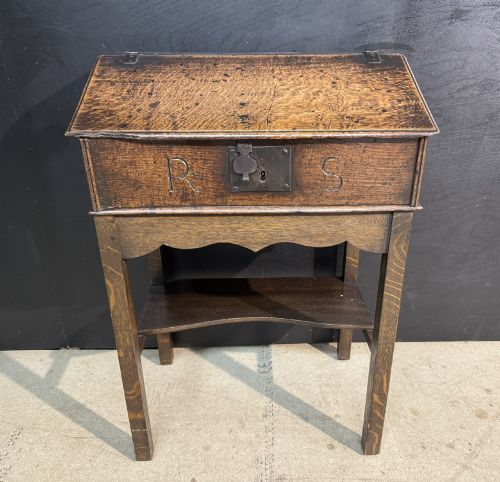
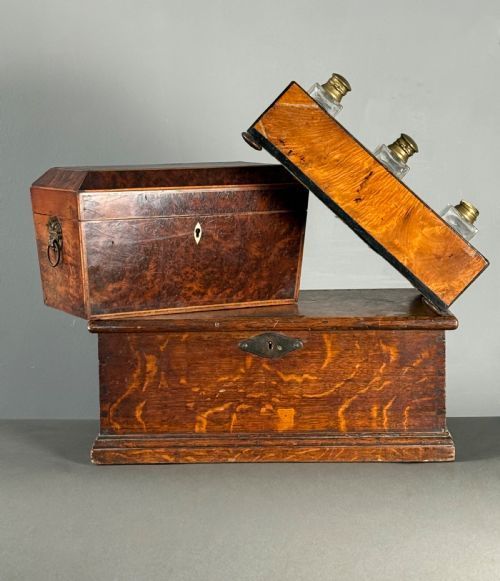
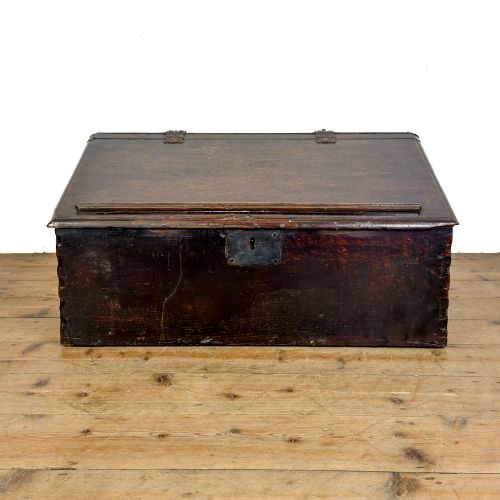
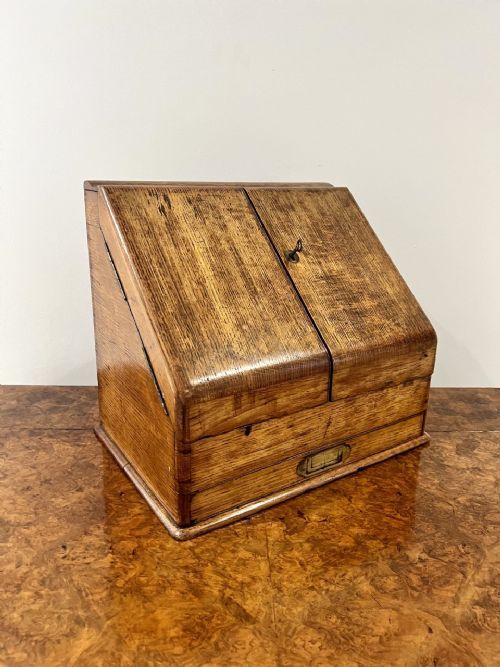
A sloped oak desk box serves as a portable or tabletop writing surface, taking forms such as bible boxes, slant-front boxes, and miniature bureaux. These pieces date across several distinct eras, with seventeenth-century and eighteenth-century examples appearing alongside Victorian and Edwardian stationery cabinets.
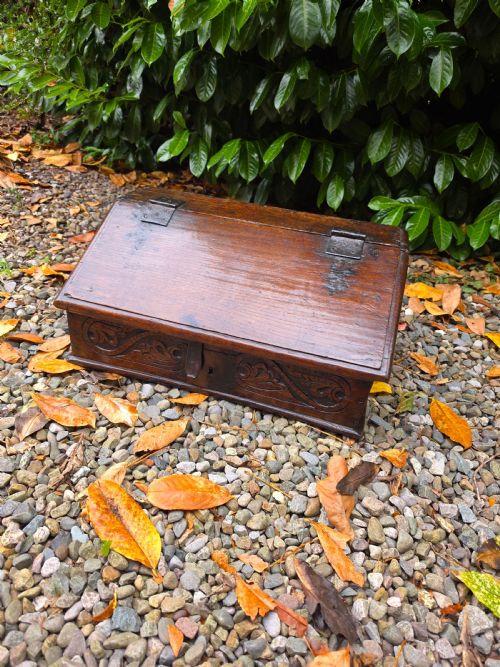
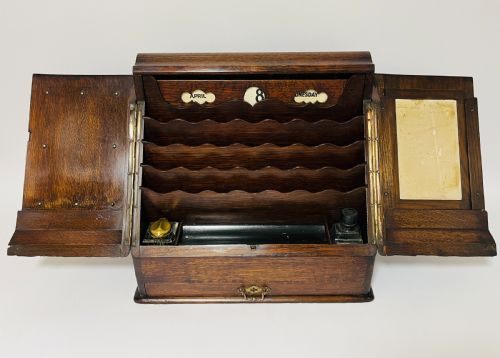
Buyers seeking a sloped oak desk box will find pieces varying from plain utilitarian containers to carved ecclesiastical boxes and refined Georgian chests. Many retain interior compartments or drawers intended for ink and paper storage.
Materials and Construction
Constructed predominantly from solid oak, these boxes often incorporate secondary elements of brass, iron, and glass for hinges, lockplates, and inkwells. Some pieces feature decorative inlay work using holly and bog oak or incorporate leather and fabric linings.
Joinery methods range from early pegged frame construction seen on seventeenth-century pieces to later dovetailed carcases and applied carved friezes on eighteenth-century and Victorian examples.
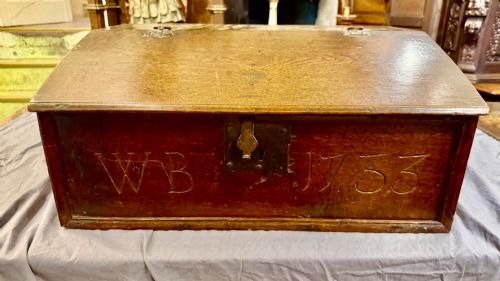
Several seventeenth-century boxes retain the original owner's carved initials and dates, recording personal touches left by writers centuries ago.
Quality and Character
The standard of a sloped oak desk box rests upon the crispness of its original carving, the integrity of the timber, and the survival of interior fittings such as small drawers and dividers. Untouched surfaces and patination achieved through centuries of handling distinguish superior examples from heavily restored ones.
Construction details like hand-cut dovetails, original brass hardware, and intact locking mechanisms indicate higher workshop standards. Boxes retaining specific regional characteristics or documented provenance hold distinct distinction among collectors.
The Sloped Oak Desk Box Glossary
- Bible box
- A receptacle originally designed to hold a family bible, often featuring a sloping lid that doubled as a reading or writing rest.
- Slant front
- An inclined writing flap that hinges downward or lifts to grant access to internal paper compartments and small drawers.
- Stationery cabinet
- An upright tabletop chest with doors or a fall-front, designed to organise paper, envelopes, and writing implements in Victorian and Edwardian interiors.
- Pollard oak
- Timber taken from the upper branches of pollarded oak trees, exhibiting a dense, clustered grain pattern highly prized for decorative veneer.
- Frieze
- A decorative horizontal band carved into the wooden surface of a box, frequently seen on seventeenth-century and eighteenth-century examples.
Sloped Oak Desk Box: Frequently Asked Questions
What is a sloped oak desk box used for?
These boxes provided a portable or tabletop writing surface before permanent fitted desks became common in every home. Interiors typically housed paper, ink bottles, and letters.
Today they function as practical desktop organisers or decorative period objects for contemporary studies and living spaces.
How do I date an old oak desk box?
Dating relies on construction methods, hinge types, lock mechanisms, and stylistic decorative carving. Seventeenth-century pieces often display pegged joints and incised geometric patterns.
Eighteenth and nineteenth-century examples introduce dovetailed carcases, finer mouldings, and interior arrangements suited to changing stationery fashions.
Are these boxes portable?
Many early boxes and writing slopes feature compact dimensions intended for movement between rooms or transport on journeys. Brass side handles on certain nineteenth-century variants assist with lifting.
Larger stationery cabinets and bureau boxes on stands remained stationary furniture pieces placed permanently on tables.
What maintenance do antique oak boxes need?
Maintaining dry ambient conditions protects the timber from splitting and prevents iron hinges from rusting. Occasional application of suitable wax feeds the grain.
Avoiding direct sunlight preserves the natural tone and historic patination of the oak surface over time.