
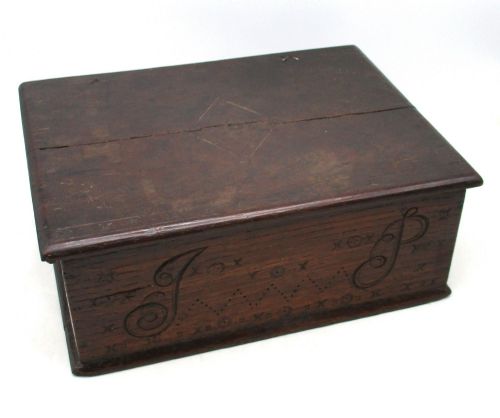
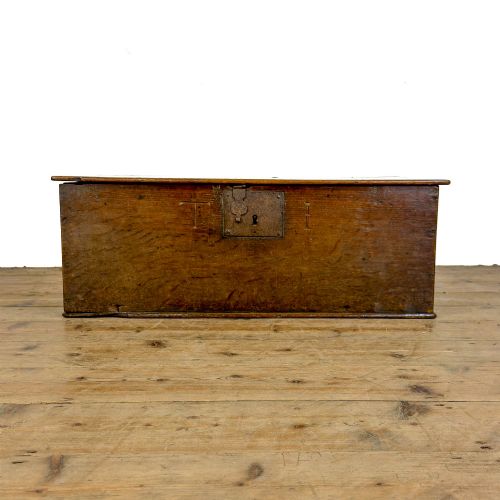
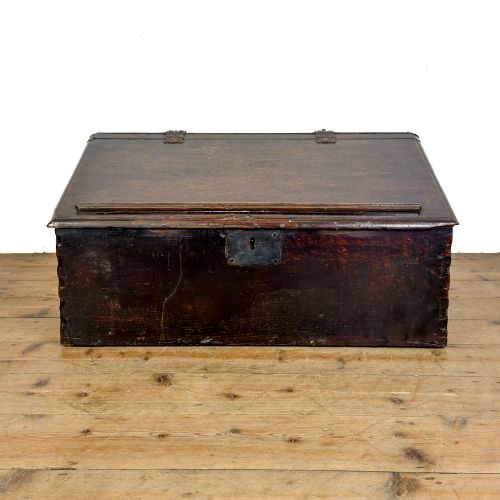
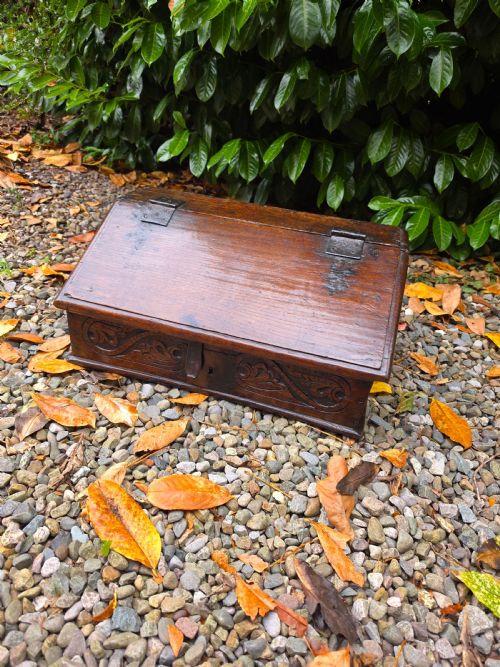
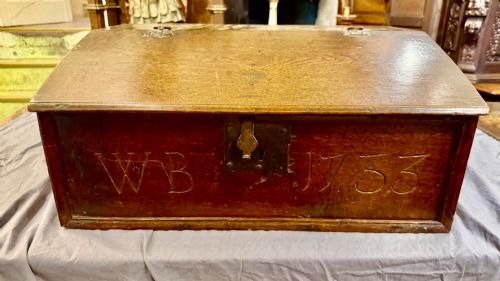
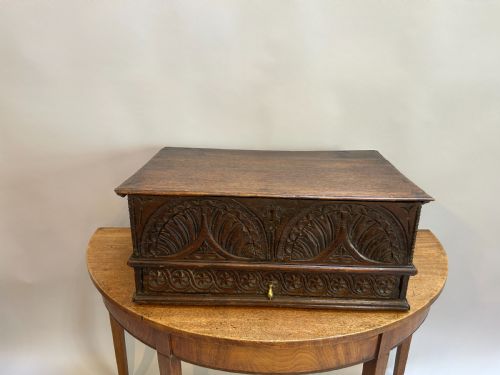
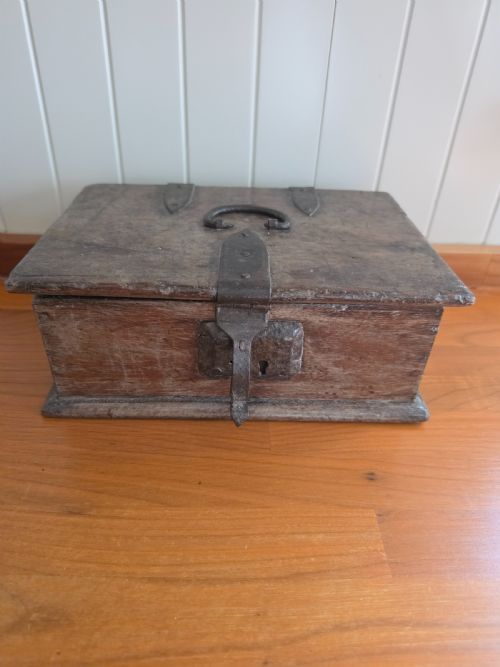


Rustic Oak Document Box
These rustic oak document box pieces are sturdy timber containers built to hold papers and books, offering tangible historical character for any interior.
Rustic Oak Document Box
A rustic oak document box is a timber container designed for holding papers, manuscripts, and books securely in domestic or institutional settings. When searching this phrase, buyers encounter various historical forms including bible boxes, desk boxes, and travelling strong boxes.
The pieces available span several centuries, with examples originating from the sixteenth century through to the nineteenth century. Most frequently, buyers meet seventeenth century and eighteenth century items showing regional English, Welsh, or Scandinavian folk art characteristics.
Forms range from simple lidded coffers to slant front desk boxes and fitted containers featuring secret drawers. These objects reflect the practical storage needs of past households before modern cabinetry became standard.
Materials and construction
Makers utilised solid oak timber as the primary material, chosen for its durability and abundant local availability. Carpenters shaped and joined the wood using traditional framing methods suited to heavy daily use.
Iron and wrought iron fittings, including hinges, hasps, and locking mechanisms, reinforced the structural integrity of the containers. Brass details and occasional pigment decorations appear on specific Scandinavian and regional items to add surface contrast.
Some seventeenth-century desks managed to keep secrets safe by hiding tiny drawers behind sliding panels.
Assessing quality and character
The standard of craftsmanship varies from utilitarian vernacular work to more deliberate carving and architectural moulding. Boxes featuring integrated secret drawers or complex slant fronts generally represent higher levels of period joinery.
Surface preservation and the survival of original ironwork heavily influence the desirability of each piece. Original timber patination acquired through centuries of handling distinguishes superior examples from heavily restored or altered items.
The Rustic Oak Document Box Glossary
- Bible Box
- A small wooden desk or storage chest originally built to house a family bible. These pieces often feature sloping lids designed for reading or writing.
- Travelling Strong Box
- A heavily reinforced portable container constructed for secure transport of valuables. They typically include robust iron straps and secure locking systems.
- Desk Tidy
- A compartmented tabletop box used for organising writing materials and small documents. They frequently incorporate hidden drawers for secure storage.
- Jacobean
- A design style spanning the late sixteenth and seventeenth centuries. Characterised by robust proportions and geometric carved ornamentation.
- Scandinavian Folk Art
- Regional decorative traditions utilising painted pigment finishes on wooden surfaces. These objects display distinctive local motifs and colour palettes.
Rustic Oak Document Box: Frequently Asked Questions
What is a rustic oak document box used for?
These boxes served primarily to store important papers, deeds, and bound books safely away from damp and damage. Today, they function as practical desktop storage or decorative accents in traditional and modern interiors.
Their sturdy timber construction makes them suitable for holding everyday items while displaying historical character.
How do I date an oak document box?
Dating relies on examining construction techniques, hardware style, and timber characteristics. Seventeenth-century examples often display simpler joined frames and hand-forged ironwork, while later Georgian pieces incorporate refined mouldings and fitted interiors.
Comparing the patination and joinery methods helps place a piece within its broad historical period.
Are these boxes secure?
Historical locking mechanisms and iron hasps provided basic security for valuables in past centuries. Modern owners generally treat them as decorative storage rather than high-security safes.
Original locks and keys may still function, but they reflect historical technology rather than contemporary security standards.
Where were these document boxes made?
The pieces originate from workshops across England, Wales, and Scandinavia. Regional carpentry traditions influenced the specific construction methods and decorative carved details found on individual items.
Local timber availability dictated the use of solid oak across these distinct geographic areas.