
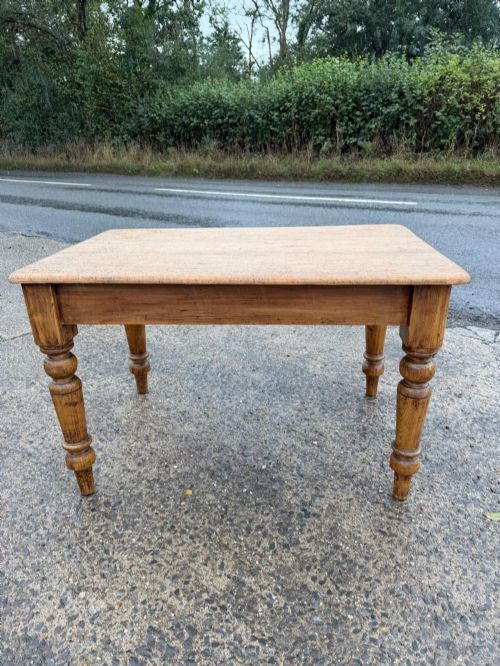
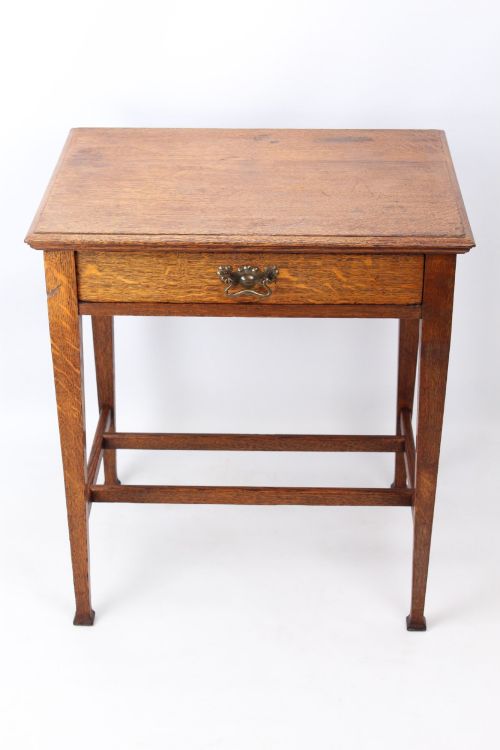
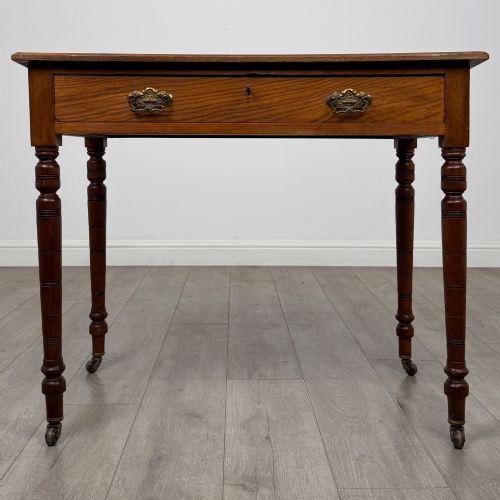
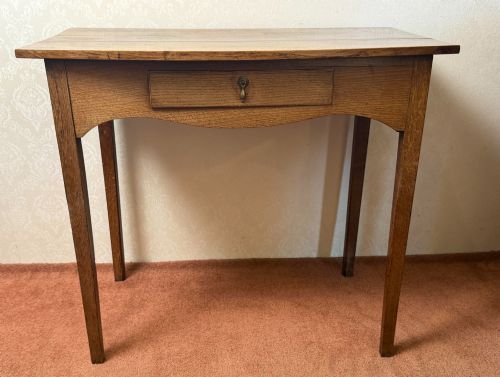
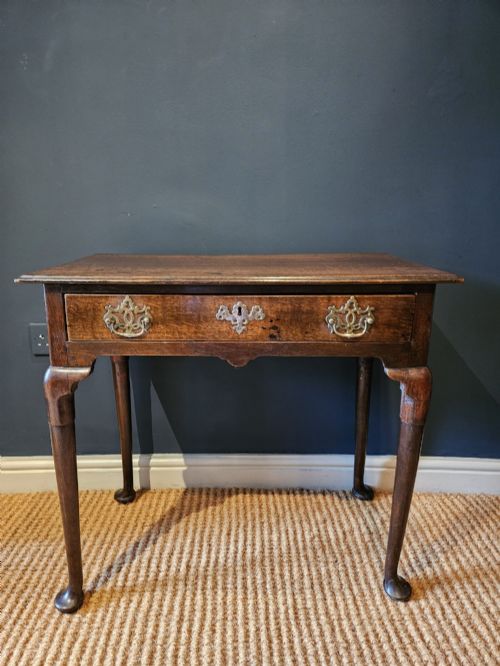
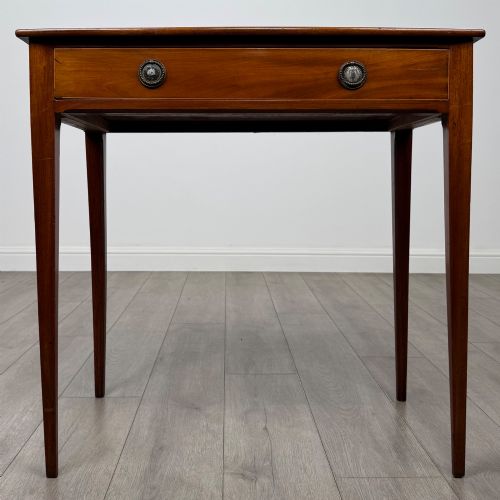
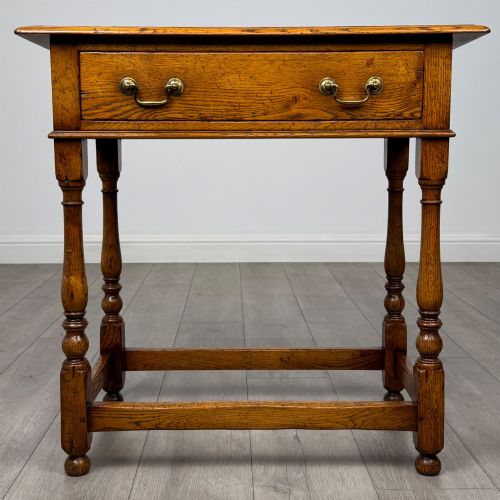
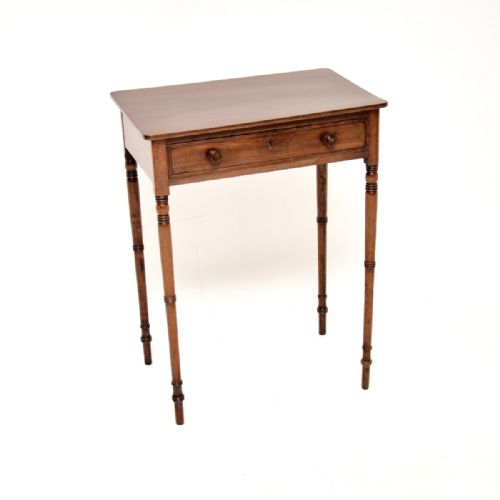

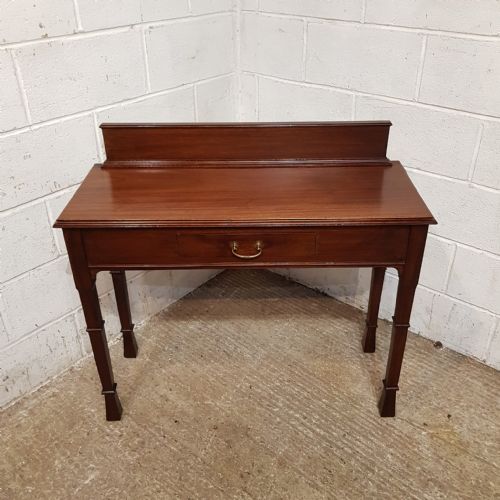
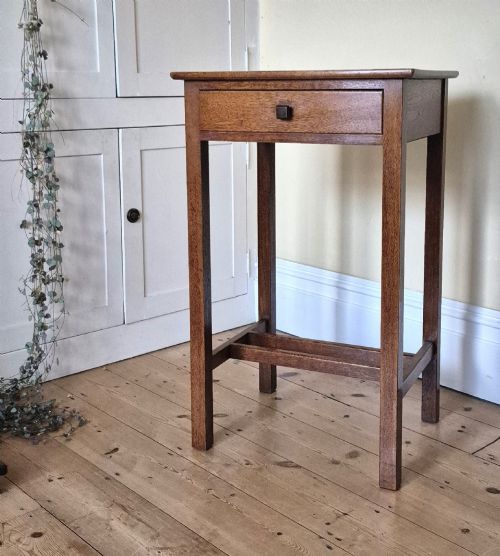
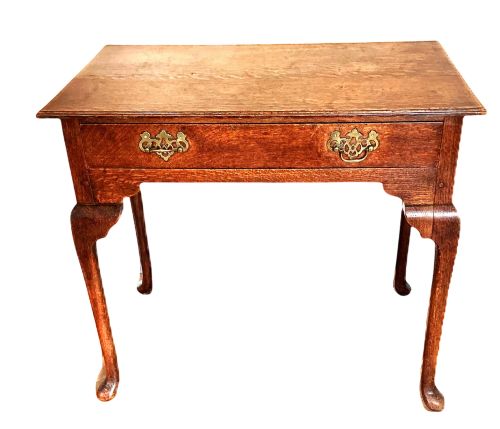
Single Drawer Hall Table
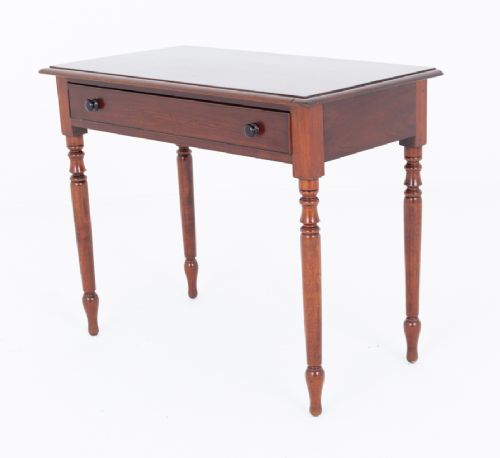
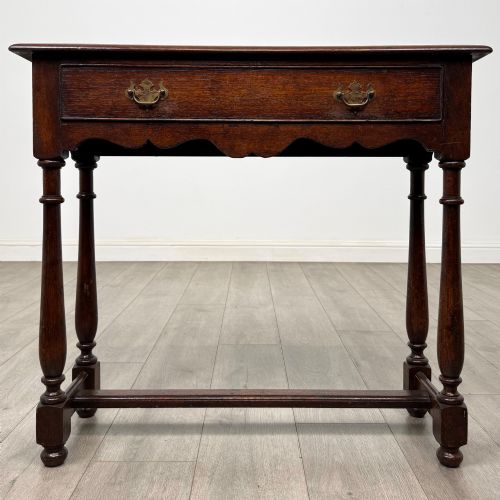
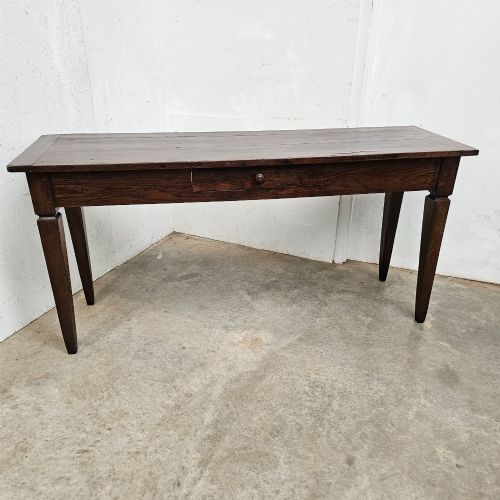
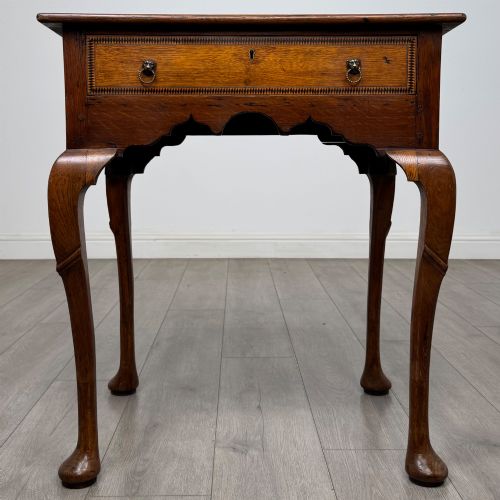
A single drawer hall table is a slender, practical piece designed for narrow entryways, appearing here in woods from oak to mahogany.
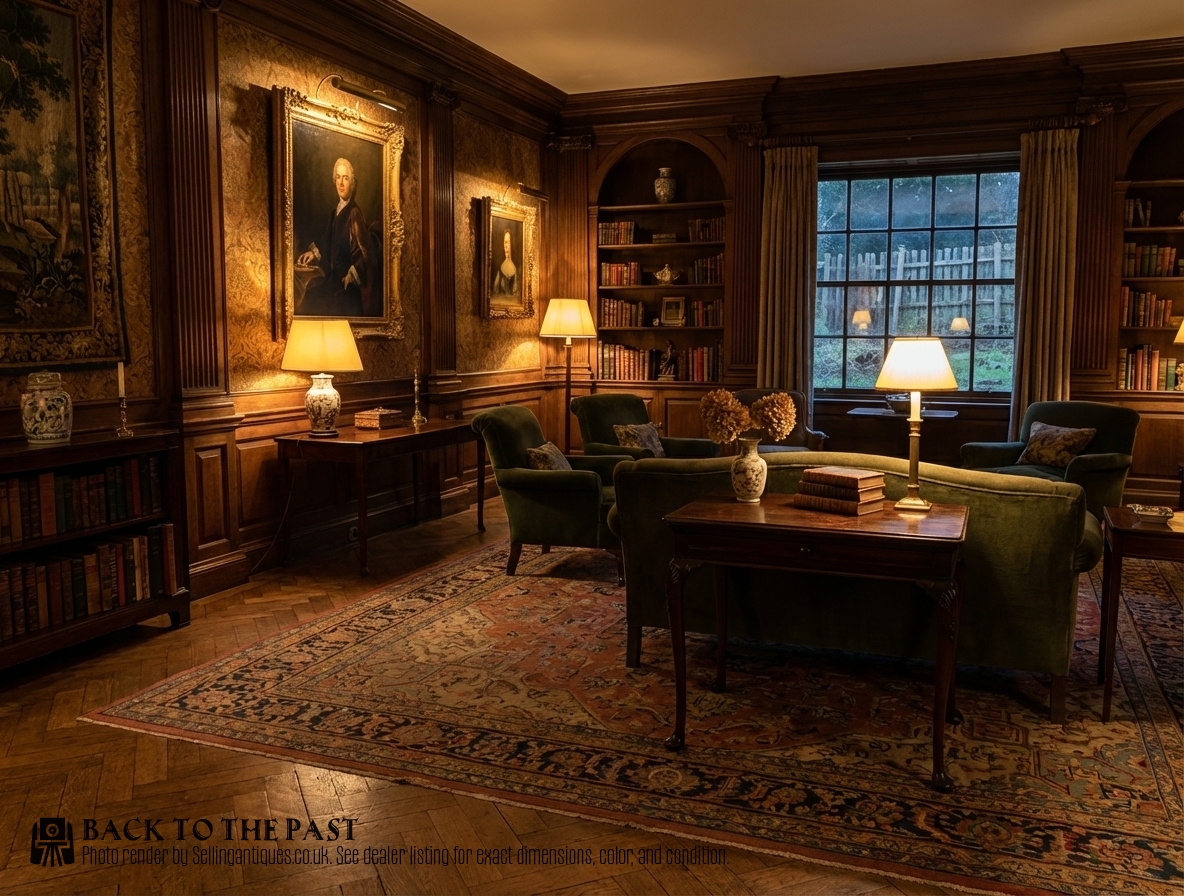
Single Drawer Hall Table
A single drawer hall table is a compact surface built to occupy narrow corridors, landings, and entrance spaces without blocking movement. These forms overlap heavily with side tables, lowboys, and writing desks that feature a single frieze drawer.
The pieces on this page span from the late seventeenth century through the Edwardian period and Victorian eras. Oak and mahogany dominate the selection, appearing alongside pine, walnut, fruitwood, elm, and yew wood.
Georgian and Victorian examples represent the core of what you will encounter, built with straightforward rectangular tops or occasional bow fronts. Makers often adapted lowboys and writing tables to serve the same functional role in the hallway.
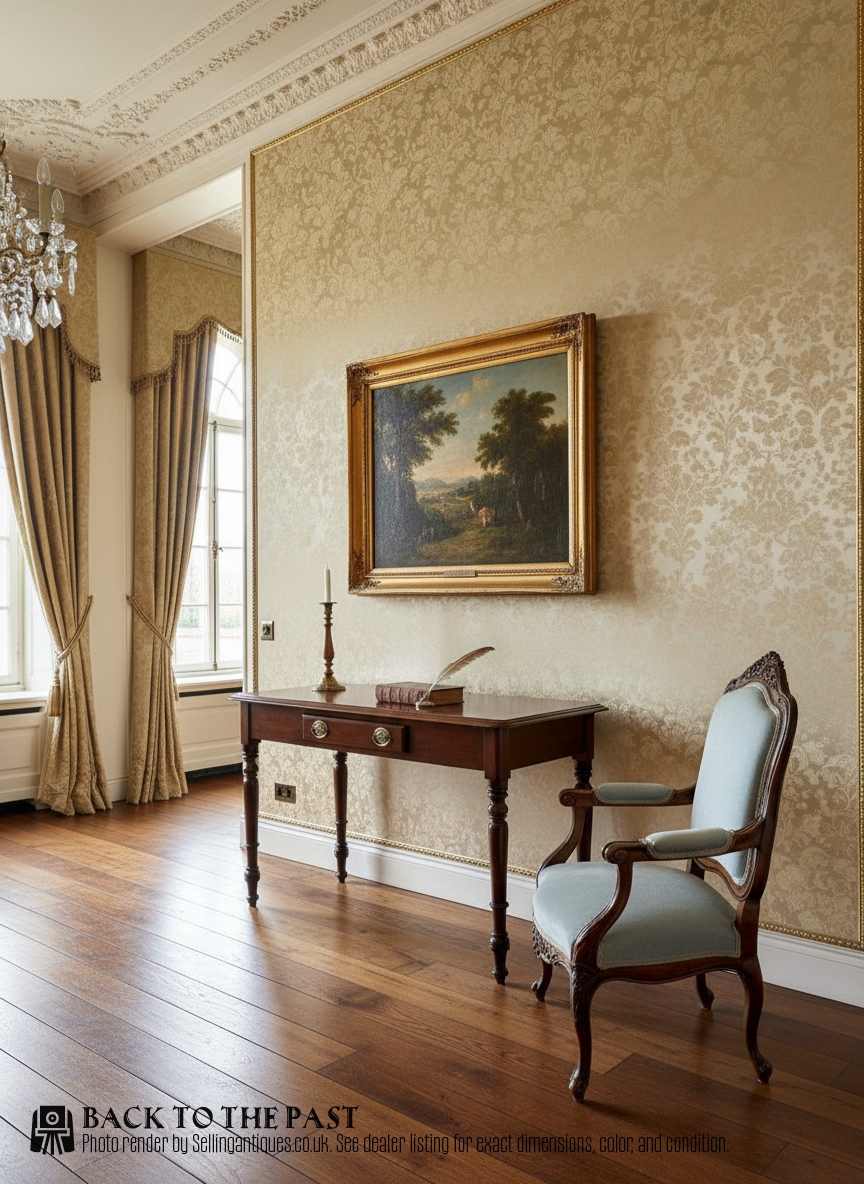
Materials and construction methods
Cabinetmakers utilised solid timbers such as oak for earlier seventeenth and eighteenth-century pieces, later shifting towards figured mahogany and pine in the Victorian period. Elm, fruitwood, and yew wood appear in regional and occasional pieces, showing varied grain patterns.
Joinery relied on traditional methods like mortise and tenon frames, hand-cut dovetails within the drawer construction, and occasional string inlay. Timber selection dictated whether the piece received a clear polish to highlight the natural grain or a painted finish.
Styles represented range from George II and George III to Arts and Crafts, French Provincial, and English Country.
Separating the ordinary from the exceptional
Quality rests on the integrity of the timber selection and the restraint of the proportions, particularly in how the single drawer integrates into the frieze. Superior examples show careful timber matching across the top and drawer front rather than hasty board assembly.
Subtle details like fine string inlay, original brass hardware, and crisp edge mouldings distinguish finer workshop production from plain utilitarian items. The graduation of timber thickness and the snugness of the drawer fit indicate the maker's competence.
The Single Drawer Hall Table Glossary
- Frieze
- The horizontal band running directly beneath the tabletop, which typically houses the single drawer in these tables.
- Lowboy
- A small oak or mahogany dressing or side table with one or more rows of drawers, frequently utilised as a hall table.
- String inlay
- A narrow, contrasting line of wood inlaid into the surface of the furniture to create a delicate border.
- Dovetail
- A joint formed by interlocking wedge-shaped fingers, commonly used to construct the sides of the single drawer.
- Bow front
- A convex, curved front profile seen on specific Georgian and Victorian examples.
Single Drawer Hall Table: Frequently Asked Questions
How were single drawer hall tables originally used?
These tables served primarily as practical surfaces in entrance halls and corridors for placing correspondence, keys, and small daily items.
Their narrow depth ensured they remained out of the way of foot traffic while providing a convenient drop zone near the front door.
What periods do these hall tables come from?
The selection spans several centuries, starting from late seventeenth-century oak and elm pieces through Georgian, Victorian, and Edwardian eras.
Earlier examples display simpler joined construction in oak or fruitwood, while later nineteenth-century versions frequently utilise mahogany or pine.
How do I fit a hall table into a small space?
Measure the width of your corridor and check the depth of the table top, as many side tables and lowboys are built with very shallow profiles.
Position the table flat against the wall where the single drawer can open freely without obstructing doors or passage.
How can I tell a Georgian table from a Victorian one?
Georgian pieces often feature cleaner architectural lines, denser mahogany or solid oak timbers, and hand-cut joinery specific to the eighteenth century.
Victorian versions frequently introduce softer pines, machine-assisted construction details, or applied decorative inlays like stringing.