


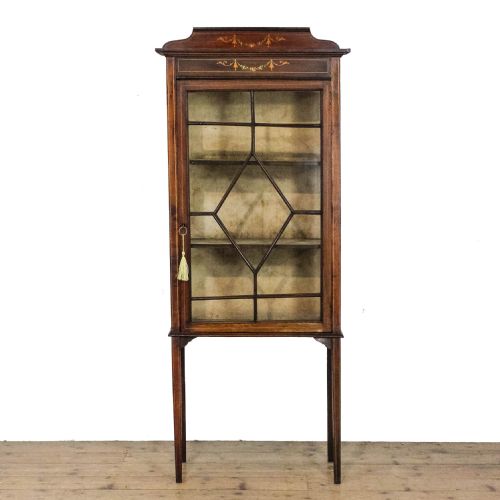
Single Door Glass Bookcase
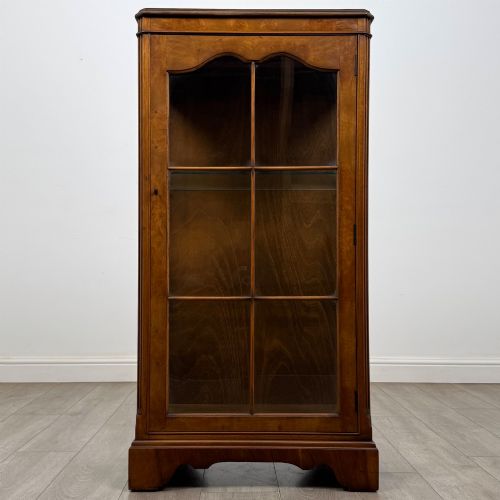
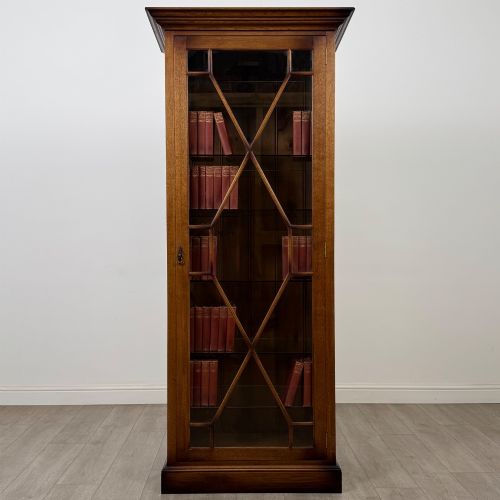
A single door glass bookcase provides a neat vertical housing for books and display, uniting transparency with compact timber framing.

Single Door Glass Bookcase
When searching for a single door glass bookcase, buyers encounter a variety of upright display pieces and pier cabinets spanning the Victorian and Edwardian periods.
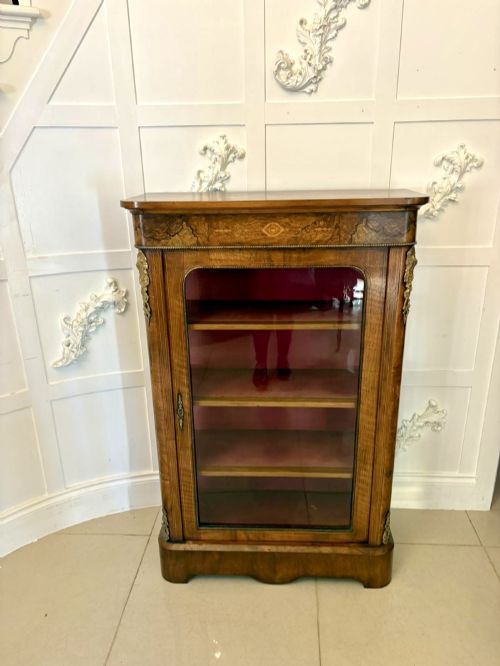
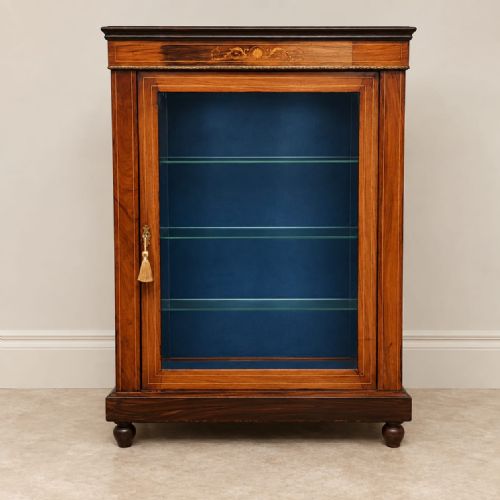
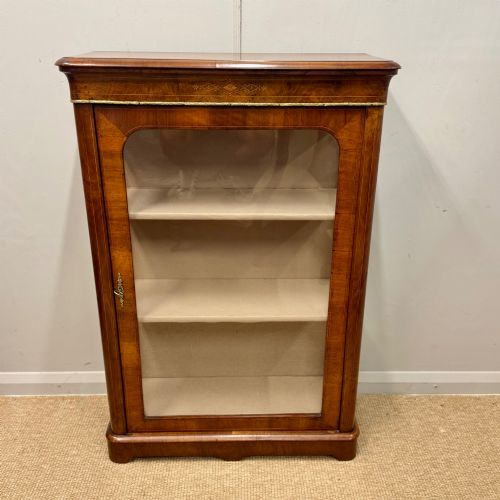
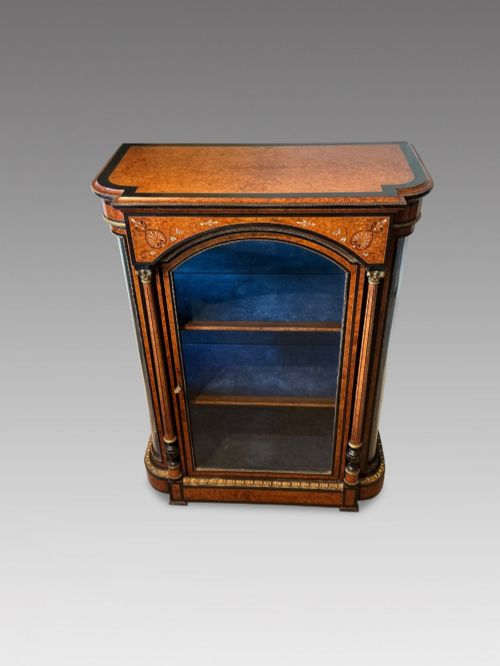
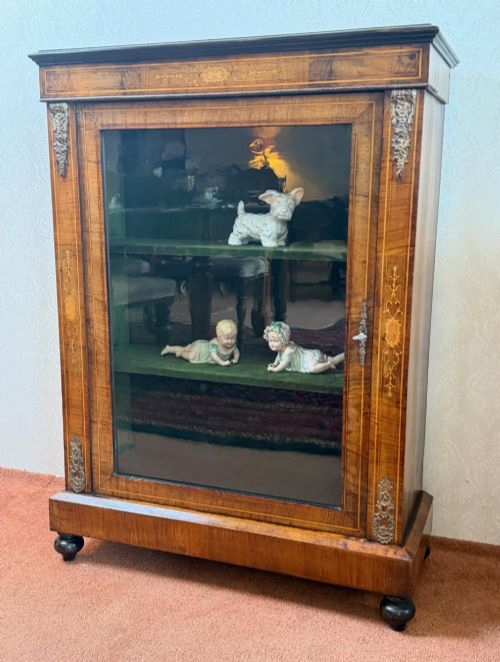
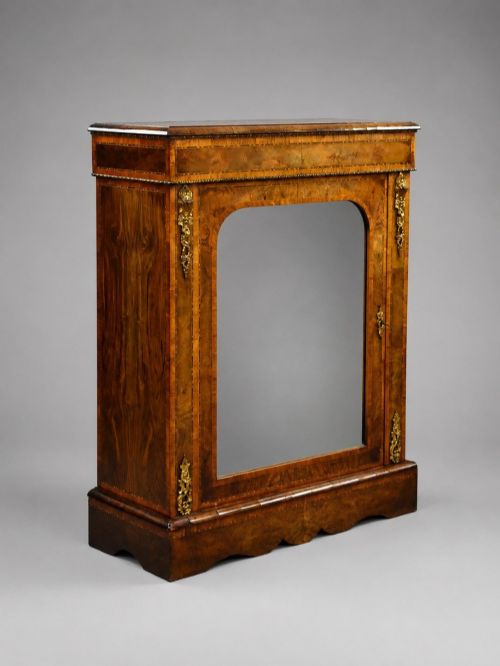
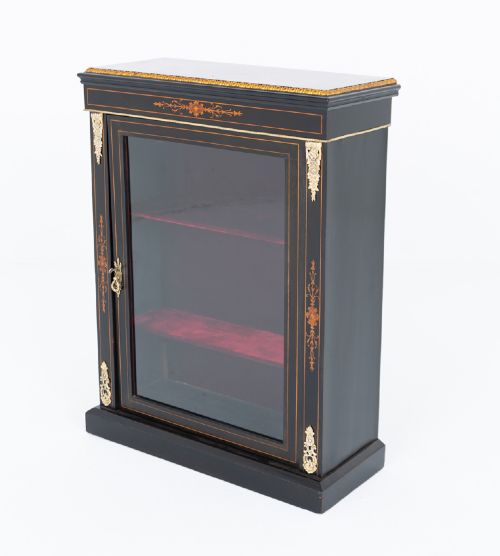
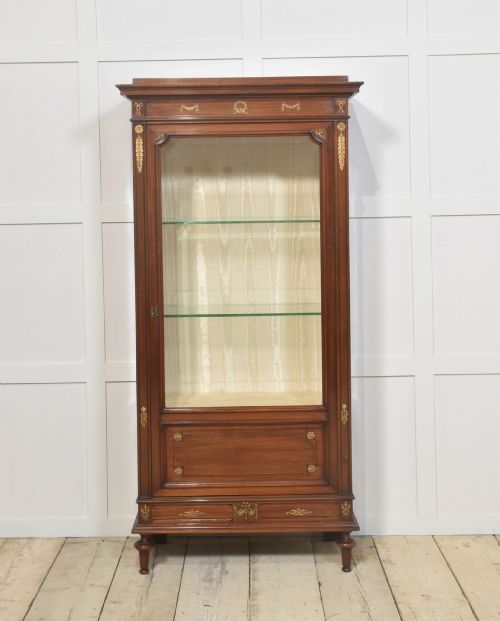
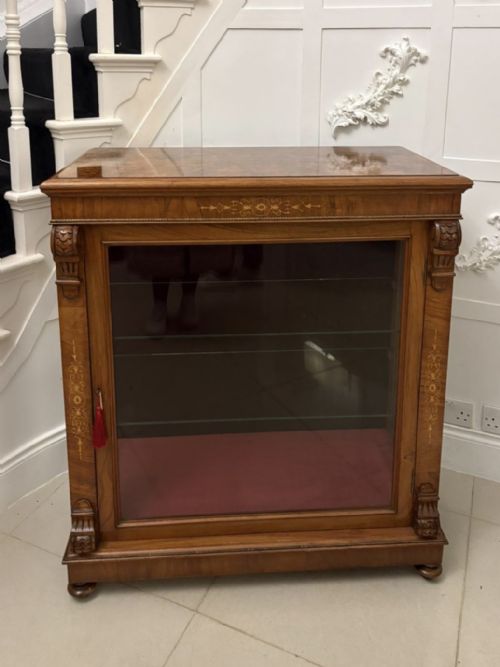
The form most frequently met on this page is the walnut pier cabinet, alongside mahogany and satinwood display cabinets featuring a single glazed door for showcasing volumes or ornaments.
Originating largely from the nineteenth and early twentieth centuries, these cabinets serve modest spaces where a full-width bookcase proves too expansive.
How they were made
Carinthian and English workshops constructed these cabinets primarily in walnut, mahogany, satinwood, and ebonised timber, mounted with brass hardware and occasionally ormolu details.
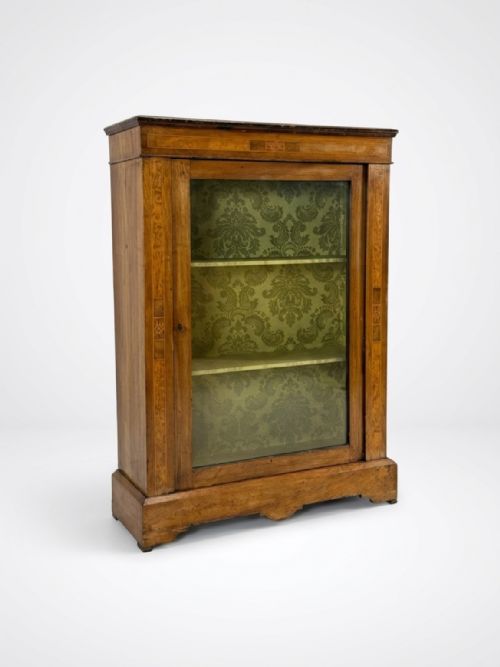
Glass panels form the single door front, supported by intricate marquetry, boxwood inlay, and sometimes fabric or velvet linings within the display interior.
Some French examples arrive with concave glass doors, offering a curved window to the books and curiosities kept inside.
What varies in quality
The standard of timber selection and the precision of the boxwood or marquetry inlay set the finer examples apart from simpler utilitarian cupboards.
Refinement in the casting of brass mounts, the clarity of the curved or flat glass, and the overall balance of proportion dictate the tier of craftsmanship.
Druce & Co
The Single Door Glass Bookcase Glossary
- Pier cabinet
- A low, upright display cupboard traditionally designed to stand against the narrow wall space between windows.
- Marquetry
- Decorative veneer applied to furniture in patterns using different woods, metals, or shell.
- Vitrine
- A glass-fronted display cabinet used specifically for showcasing fine porcelain, books, or curiosities.
- Satinwood
- A durable, lustrous hardwood from the Indian Ocean region prized for its pale, golden yellow colour and fine grain.
Single Door Glass Bookcase: Frequently Asked Questions
Where should I put a pier cabinet?
These narrow cabinets suit alcoves, hallways, or smaller reception rooms where floor space remains at a premium.
Their upright proportions allow them to hold books or collections without dominating the room.
How do I tell Victorian from Edwardian pieces?
Victorian examples tend to employ heavier timbers like burr walnut and rosewood, often featuring rich boxwood marquetry.
Edwardian pieces frequently showcase lighter satinwood or mahogany with a more restrained approach to inlay.
Can these cabinets hold heavy books?
While the glass doors and adjustable shelving accommodate volumes, they were frequently designed as display cupboards or pier cabinets rather than heavy library repositories.
Lighter volumes and decorative objects suit their internal structure best.
What is ebonisation?
Ebonisation is a finishing process that stains timber, usually fruitwood or mahogany, to imitate the dark, dense appearance of ebony.
This technique appeared frequently on Victorian pier cabinets to create sharp contrast with gilt mounts.