

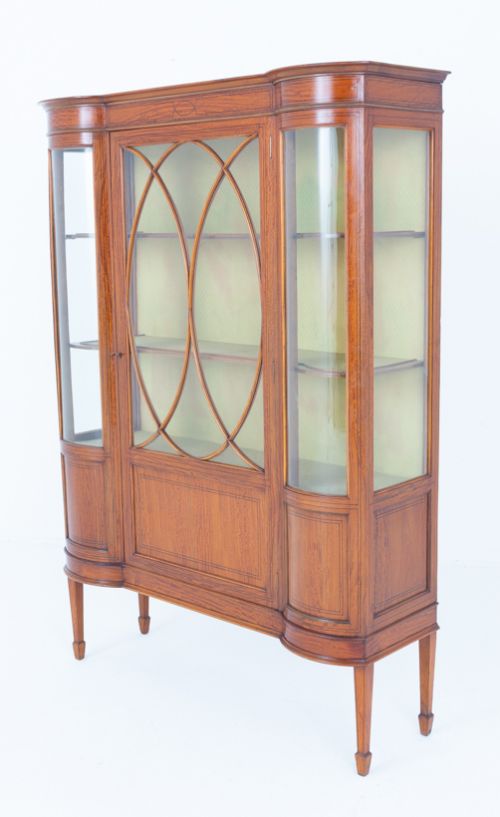


Vintage Bow Front Vitrine
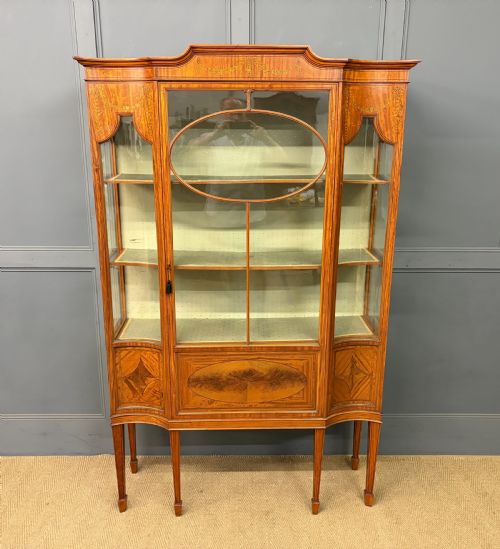
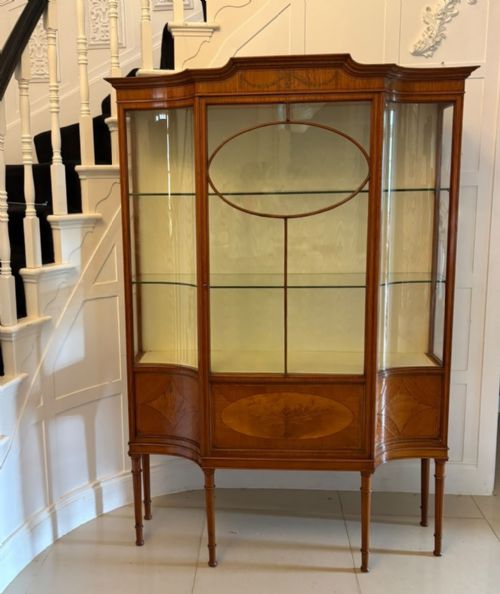
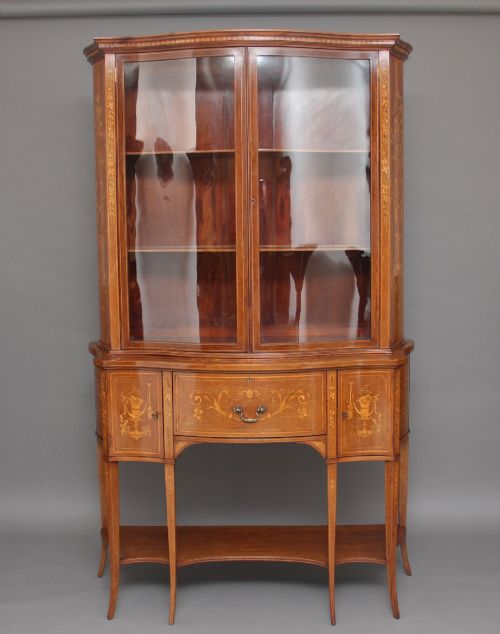
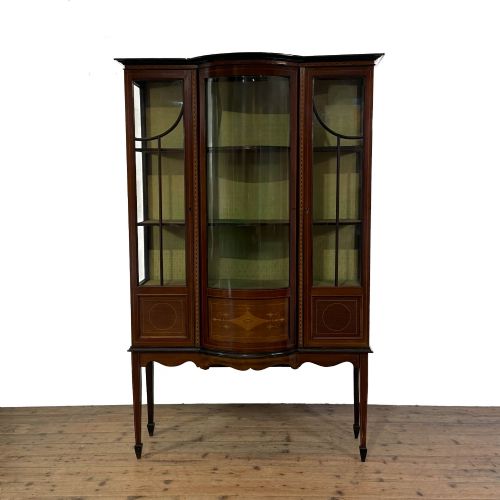
A vintage bow front vitrine brings curved glass and refined timberwork together to display treasured objects with distinct grace.

Vintage Bow Front Vitrine
A vintage bow front vitrine takes the form of a display cabinet or bookcase designed with a rounded or curved glass front to showcase china, books, and decorative items. These pieces emerge predominantly from the Victorian and Edwardian eras, spanning the late nineteenth century into the early decades of the twentieth century.
The prevailing style on this page is the Sheraton Revival, often constructed with mahogany or satinwood and enriched with delicate inlay work. Collectors also encounter variations in burr walnut and painted finishes, ranging from domestic drawing-room cabinets to shop display fittings.
The silhouette relies on the outward curve of the central glazing to catch ambient light from multiple angles, making it a functional centrepiece for a sitting room or hallway.
Judgements of quality
Quality rests upon the crispness of the cabinet work, particularly how smoothly the curved glass frames meet the surrounding timber and whether the inlaid details demonstrate precision rather than hasty execution. Grain selection in the primary timbers, such as figured mahogany or burr walnut, elevates the visual presence of the cabinet significantly.
The structural refinement of the feet, cornices, and internal shelving distinguishes higher-tier pieces from simpler utilitarian examples. Cabinets retaining original brass fittings and undamaged curved glass panes command greater appreciation among serious collectors.
Evidence shows several pieces incorporating shop display origins alongside domestic drawing-room cabinets.
Maple & Co.
The Vintage Bow Front Vitrine Glossary
- Vitrine
- A glass-fronted cabinet designed specifically for the display of fine objects or porcelain. The term derives from the French word for glass.
- Bow front
- A convex, outwardly curved front section on a piece of furniture that softens the corners and expands internal viewing angles. This contour requires specialised joinery to fit the curved glass.
- Sheraton Revival
- A late nineteenth and early twentieth century design movement inspired by the neoclassical furniture of George Sheraton. It relies on light proportions, satinwood veneers, and restrained classical inlay.
- Inlay
- A decorative technique where pieces of contrasting wood, shell, or metal are inserted into recessed portions of the primary timber surface to form patterns. It adds surface texture without altering the flat plane of the wood.
- Burr walnut
- A veneer sliced from the knotty growths or burls of a walnut tree, producing swirling, highly figured grain patterns. Cabinet makers prized this material for its rich visual depth.
Vintage Bow Front Vitrine: Frequently Asked Questions
What is a bow front vitrine used for?
These cabinets serve primarily to display porcelain, glassware, books, and collections of small objects while protecting them from dust. The curved glass front enhances visibility from various angles in a room.
Historically, they occupied drawing rooms and parlours where hosts exhibited their finest possessions to guests. Today, they continue this role in domestic interiors while adding period character.
How do I date an Edwardian vitrine?
Dating relies on stylistic markers, construction methods, and materials recorded in the specific piece. Edwardian examples often feature Sheraton Revival influences, lighter satinwood or mahogany timbers, and refined floral inlay.
Later pieces from the early decades of the twentieth century may show slightly simpler internal fittings or machine-cut elements compared to hand-carved Victorian predecessors.
What woods were used for these cabinets?
Mahogany forms the structural basis for the majority of these cabinets, frequently paired with satinwood borders or stringing. Burr walnut also appears, offering highly figured, swirling grain patterns across the primary surfaces.
Secondary woods like pine or oak typically make up internal carcases and shelving where visibility is secondary to structural support.
How do I care for a vintage cabinet?
Maintain a stable indoor environment away from direct sunlight and extreme temperature fluctuations to protect the timber veneers and original glass. Gentle dusting with a dry, soft cloth preserves the polished finish.
Avoid using silicone-based polishes or harsh chemical cleaners, as these can penetrate old finishes and damage delicate inlay work over time.