
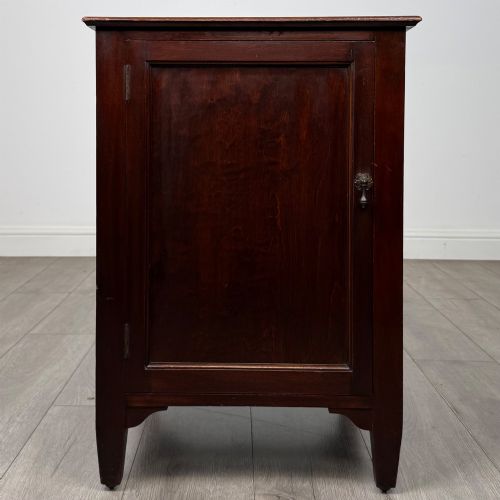
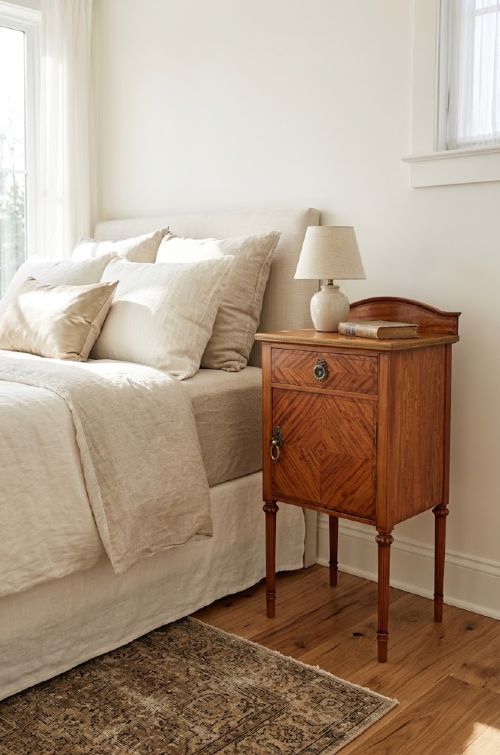
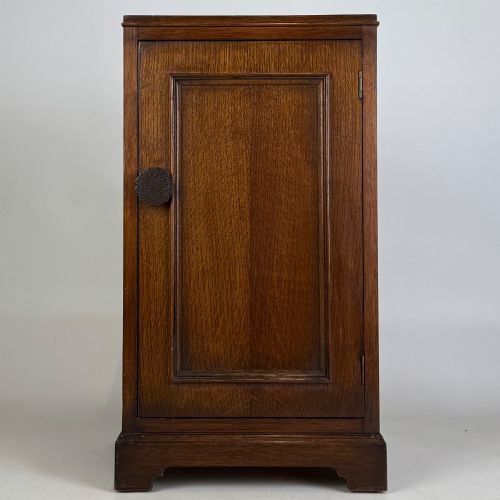
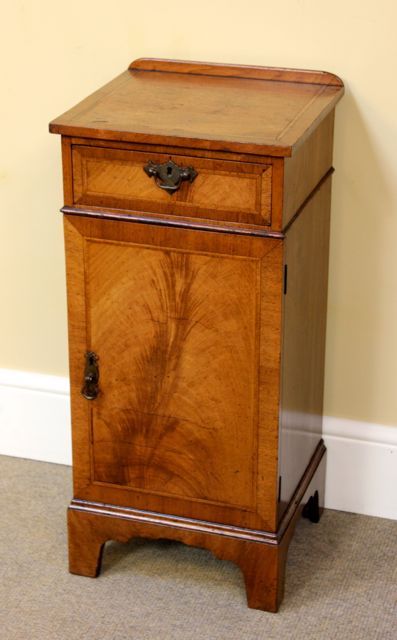
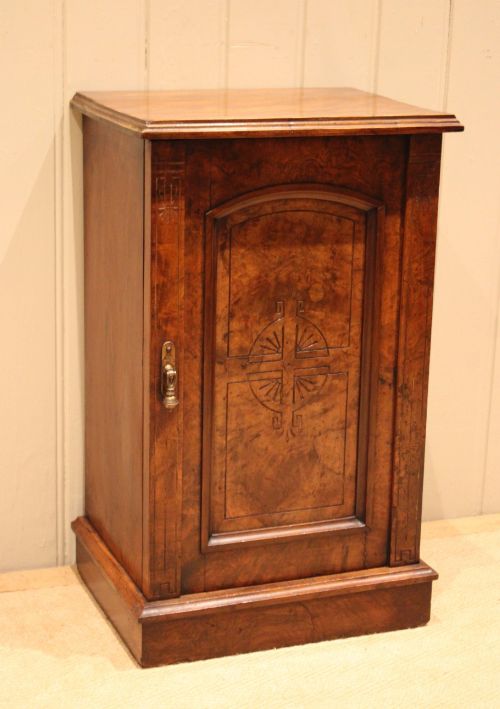
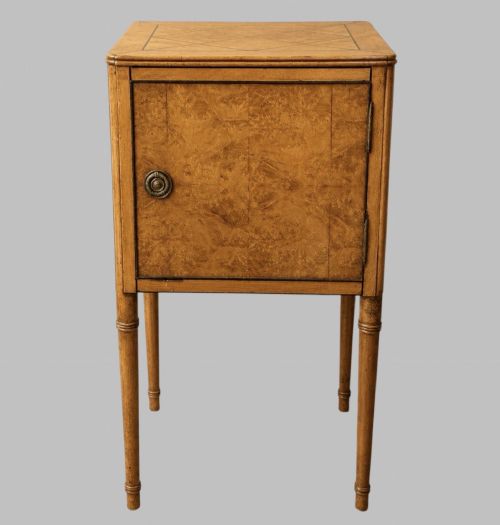
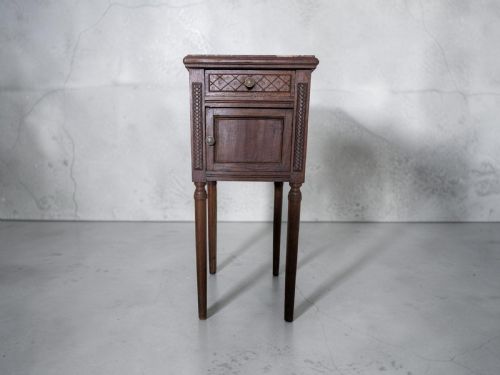

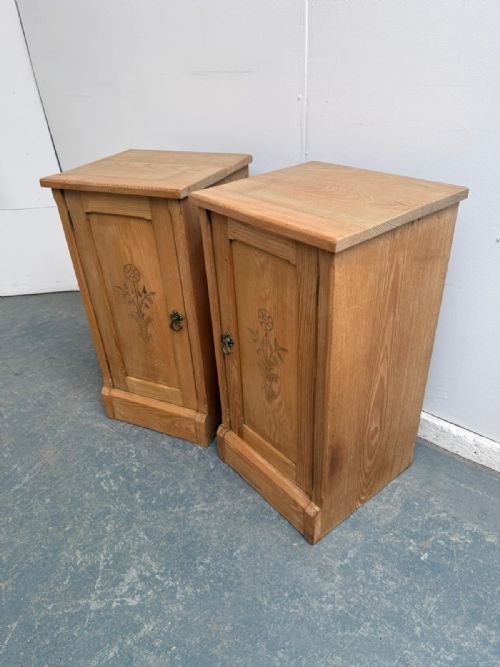
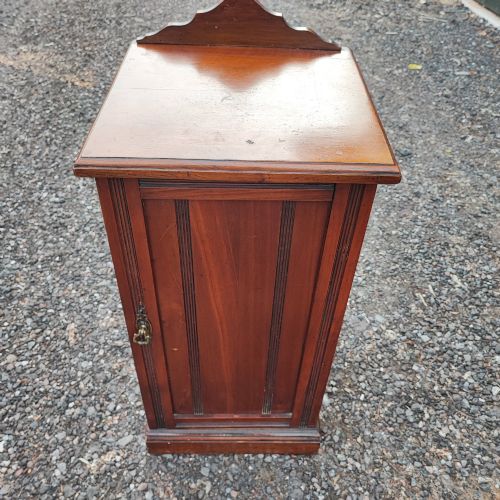
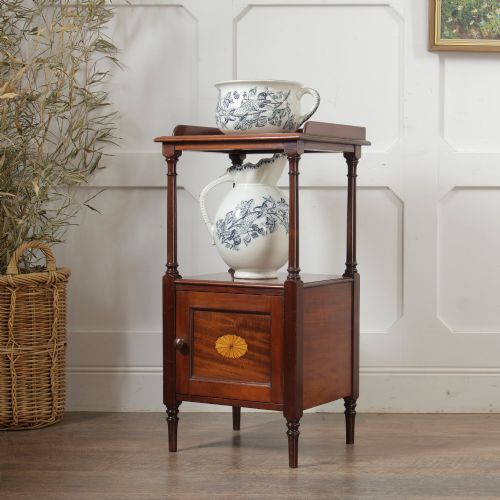
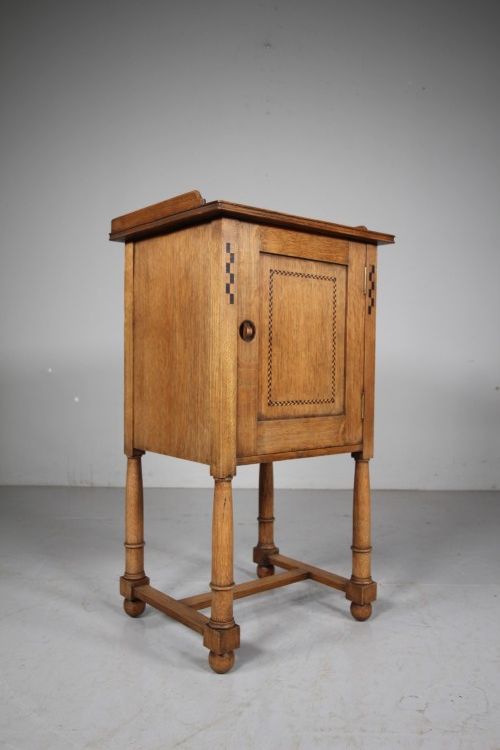
Single Door Bedside Cupboard
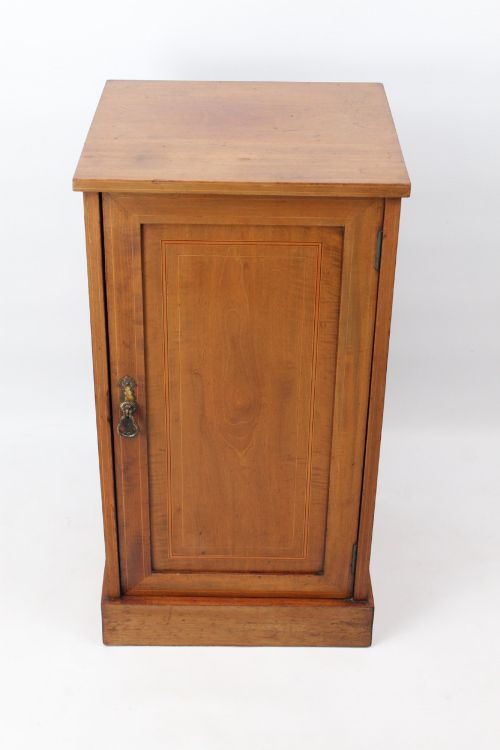
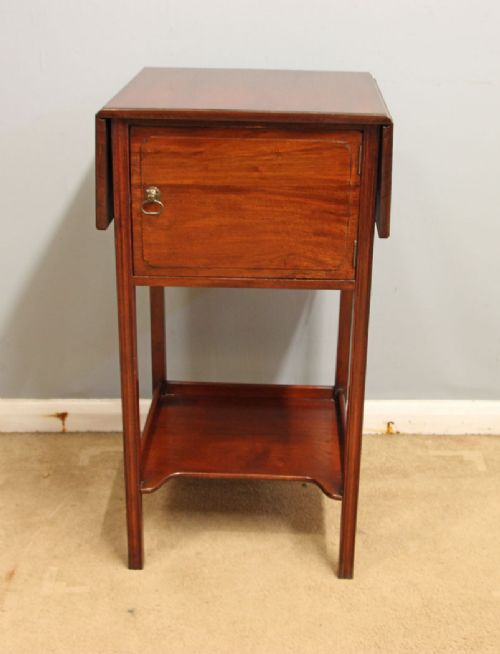
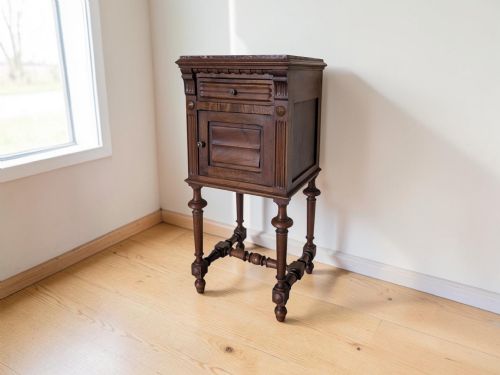
A single door bedside cupboard is a compact bedside companion offering enclosed storage, most frequently found in mahogany or walnut from the Victorian and Edwardian eras.
Single Door Bedside Cupboard
A single door bedside cupboard provides practical bedside storage in a compact footprint, historically designed to house a chamber pot or night necessities. Buyers seeking a single door bedside cupboard will encounter a diverse selection spanning the Georgian, Regency, Victorian, Edwardian, and Arts and Crafts periods. The majority of pieces on this page originate from the nineteenth and early twentieth centuries, reflecting the domestic habits of those eras.
Makers and cabinetmakers produced these items in various woods, including mahogany, walnut, oak, and satinwood. Object names in the records alternate between bedside cabinets, pot cupboards, and nightstands, yet the underlying form remains a single door enclosure. These pieces suit modern bedrooms as functional bedside tables with discrete interior space.
Materials and construction
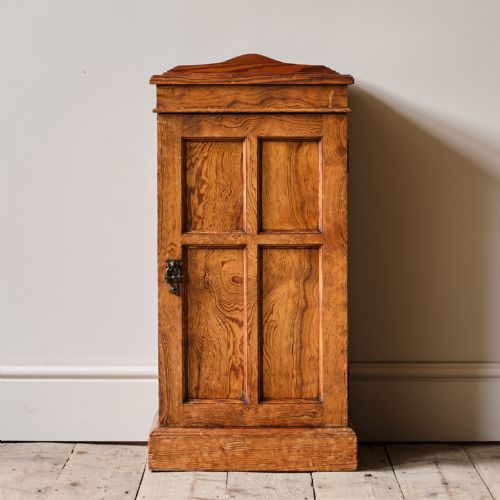
Cabinetmakers relied heavily on hardwoods such as mahogany and walnut, frequently selecting burr walnut veneers for decorative front panels. Oak and pine appear in pieces from the Arts and Crafts and Gothic Revival styles, sometimes paired with stained finishes or exposed grain. Construction methods involved traditional joinery to build sturdy single door enclosures capable of withstanding daily use.
Secondary materials included brass for handles and hinges, glass for glazed doors where applicable, and occasional painted finishes on pine and oak. Inlaid details in satinwood or exotic hardwoods decorated Edwardian examples, while waxed or polished surfaces protected the primary timber.
Single Door Bedside Cupboard Retail Price Guide 2026
Typical asking prices for single door bedside cupboard among the pieces listed under this phrase on Sellingantiques today, from the lower quarter to the upper quarter. They describe what is for sale here now, not the wider market.
Design styles span Georgian, Regency, Victorian, Edwardian, Arts and Crafts, Gothic Revival, and Aesthetic Movement.
Indicators of quality
Quality in a single door bedside cupboard rests primarily on the choice of timber and the fineness of its grain. Burr walnut and figured mahogany command attention for their visual depth, whereas simpler pine or stained oak variants offer a more utilitarian charm. The selection of secondary woods and the precision of inlaid details further distinguish standard items from finer productions.
The integrity of the construction and the retention of original hardware, such as brass pulls and hinges, elevate certain pieces above others. Maker attribution, through stamps or known workshop characteristics, adds a distinct layer of distinction to the construction pedigree.
Walter Carter Harrods·Heals·Howard and Sons·Holland and Sons
The Single Door Bedside Cupboard Glossary
- Pot cupboard
- A traditional term for a bedside cabinet originally built to enclose a chamber pot behind its single door.
- Nightstand
- An alternative descriptor for a small bedside table or cabinet positioned next to a bed.
- Burr walnut
- A highly figured wood veneer taken from the burl growth of a walnut tree, prized for its swirling grain patterns.
- Aesthetic Movement
- A late nineteenth-century design style emphasising visual beauty over narrative subject matter, often seen in decorative cabinet details.
- Gothic Revival
- An architectural and decorative style drawing inspiration from medieval forms, characterised by pointed arches and robust oak construction.
Single Door Bedside Cupboard: Frequently Asked Questions
What is a pot cupboard?
A pot cupboard is a historic term for a small bedside cabinet designed with an enclosed single door. Originally, these units held a chamber pot inside the main compartment.
Over time, the interior shelving adapted to general bedside storage while retaining the compact single door format.
How do I date a bedside cabinet?
Dating relies on identifying stylistic markers, timber choices, and construction methods associated with specific periods like the Victorian or Edwardian eras. Mahogany and walnut dominate nineteenth-century pieces, while lighter satinwood and simpler oak mark later decades.
Maker stamps or retailer marks, when present, provide a more precise point of origin.
Where should I place one?
These cupboards fit naturally beside a bed as functional bedside tables with concealed storage behind the door. Their modest proportions also allow them to serve as small side cabinets in narrow hallways or reception rooms.
The enclosed shelf space keeps books and personal items out of sight.
Are pairs common?
Matching pairs occasionally appear in the records, though many pieces survive as single items. Finding a true pair often points to higher-end original commissions for larger bedrooms.
Single examples work effectively as standalone accent pieces.