




Silver Wine Carafe
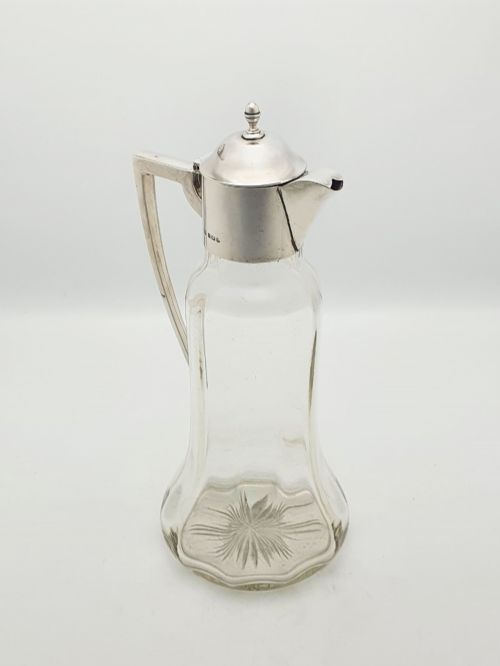
These silver wine carafe examples bring together nineteenth-century glass and precious metal mountings for the dining table.
Silver Wine Carafe
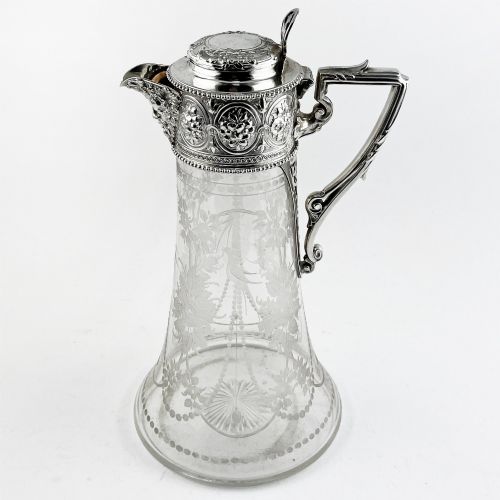
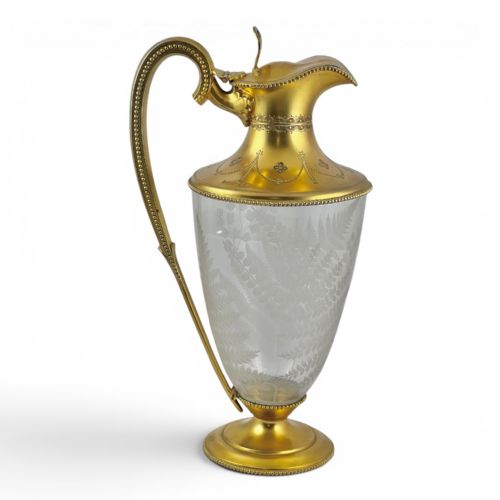
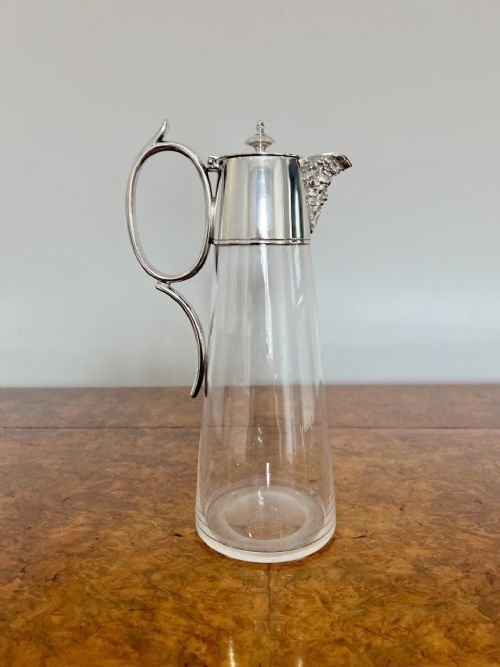
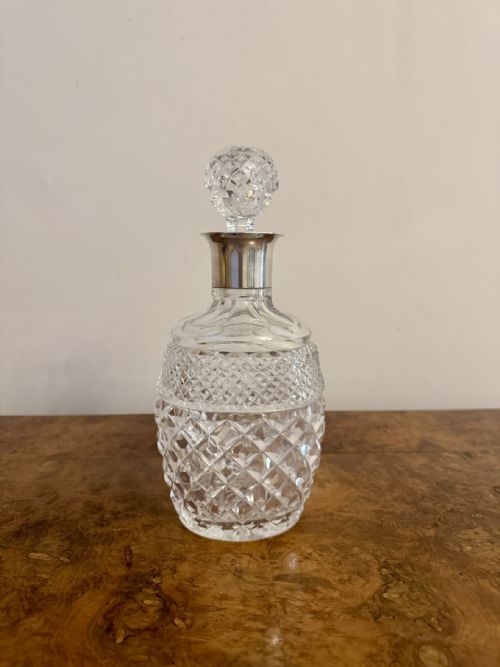
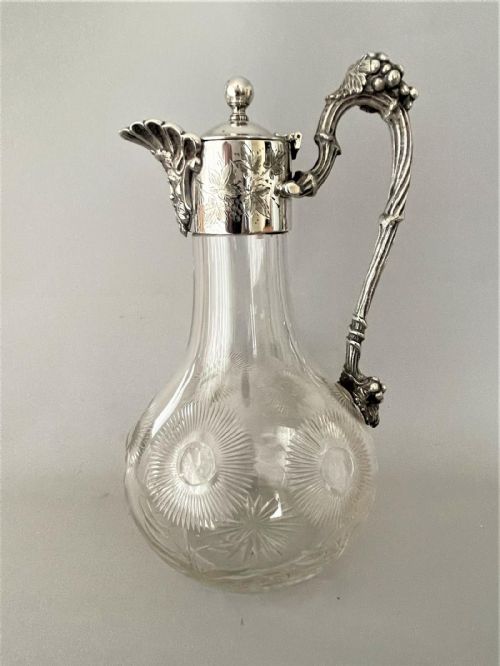
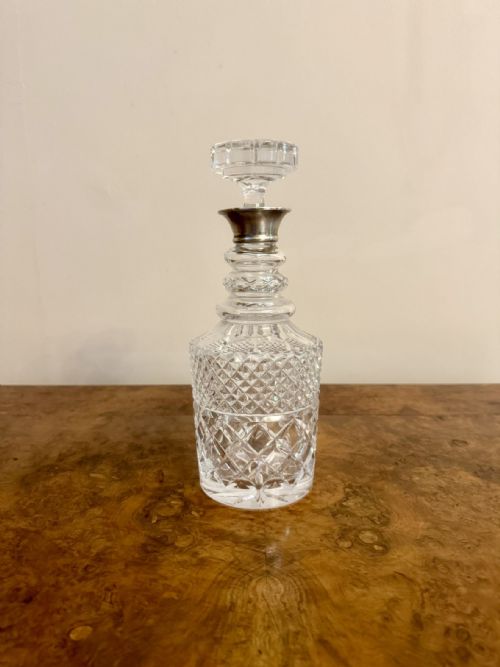
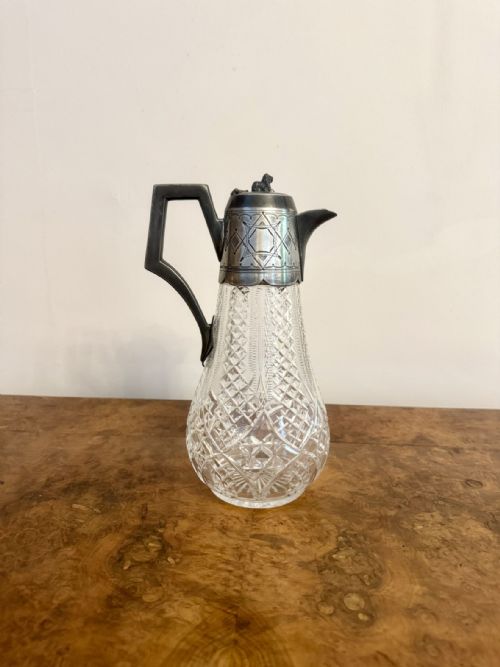
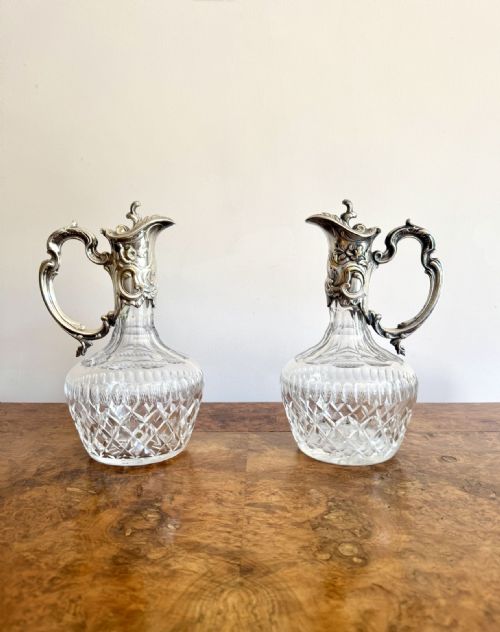
A silver wine carafe search encompasses claret jugs, decanters, ewers, and pitchers spanning the Victorian, Edwardian, and mid-twentieth-century periods. The pieces on this page appear most frequently as glass vessels fitted with silver plate or sterling silver collars, handles, and mounts.
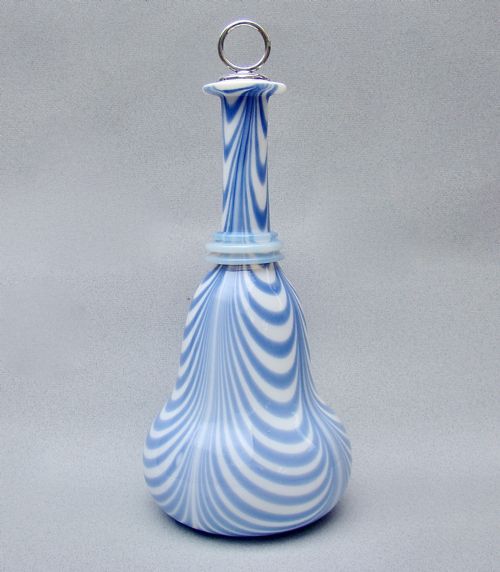
Victorian examples frequently display floral engraving or heavy cut glass, whilst Edwardian pieces often present cleaner glass silhouettes with silver collars. Makers also produced coloured glass vessels, including green, blue, amethyst, and cranberry tones, fitted with silver necks or mounts.
Distinctions in quality
Quality rests in the weight and clarity of the glass vessel, the crispness of any wheel-cut or etched detailing, and the substantial nature of the silver mountings. Heavy crystal bodies and thick sterling silver collars demonstrate higher production standards than lighter plated alternatives.
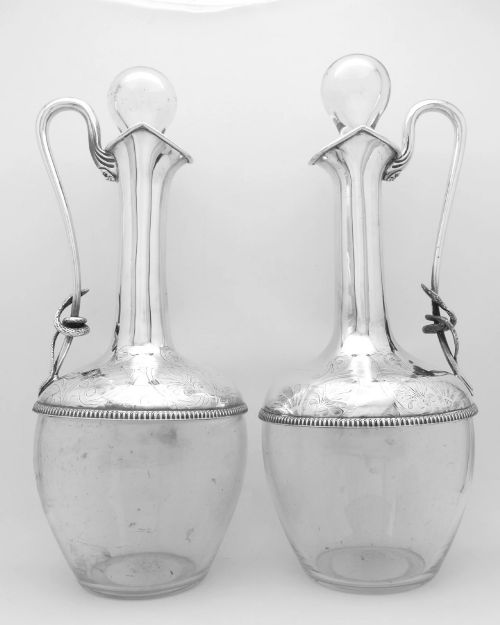
Design ambition separates standard vessels from exceptional works, visible in sculptural cast handles like serpents or Bacchus masks, and identifiable manufacturer attributions. The integration between the metal collar and the glass rim indicates the precision of the original silversmith.
Glass bodies appear in clear crystal, cut glass, etched designs, and coloured glass including green, blue, amethyst, and cranberry hues.
Asprey and Co. Ltd·Elkington·Hukin and Heath·Archibald Knox for Liberty
The Silver Wine Carafe Glossary
- Claret jug
- A specialised pouring vessel designed for serving red wine, typically featuring a glass body with a silver handle, hinged lid, and spout. These vessels became prominent during the Victorian period for formal dining.
- Silver plate
- A manufacturing method where a thin layer of silver is bonded to a base metal such as copper or Britannia metal. Old Sheffield plate represents an early form of this technique.
- Sterling silver
- An alloy consisting of silver and other metals, usually copper, containing 92.5 percent silver by mass. This standard metal appears frequently in the collars and mounts of better-quality vessels.
- Silver gilt
- Silver that has been coated with a thin layer of gold on its surface. This treatment creates a warm, two-tone appearance inside or outside the metal mounts.
- Etched glass
- Glass decorated by applying an acid or using a sharp tool to cut designs into the surface. This technique produces delicate floral or geometric patterns on the body of the vessel.
Silver Wine Carafe: Frequently Asked Questions
What is the difference between a claret jug and a decanter?
Claret jugs incorporate a hinged lid, handle, and pouring spout specifically designed for serving wine directly at the table. Decanters more often feature a stopper rather than a hinged mechanism.
Both forms utilise glass bodies paired with silver collars, though claret jugs tend to emphasise the metal handle and mount as central decorative elements.
How can I date an unmarked silver collar?
Dating relies upon the glass manufacturing technique, the shape of the vessel, and the style of any engraved decoration. Victorian pieces often show deep floral cutting or coloured glass, whilst Edwardian examples favour lighter profiles.
Compare the silhouette and handle attachment style to documented pieces from the same period to narrow down the manufacturing decade.
Were these vessels used only for wine?
Whilst primarily created for claret and other wines, these jugs and pitchers also held spirits and water. Smaller versions served as whisky noggins for individual portions.
The inclusion of a hinged lid helped preserve the contents during formal meals and gatherings.