



Pair Wine Decanters
Pair wine decanters bring symmetry to a dining table, combining practical glass and metalwork with periods from the Georgian era onwards.
Pair Wine Decanters
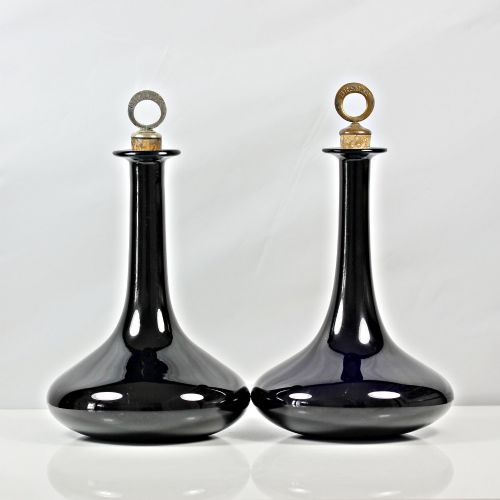
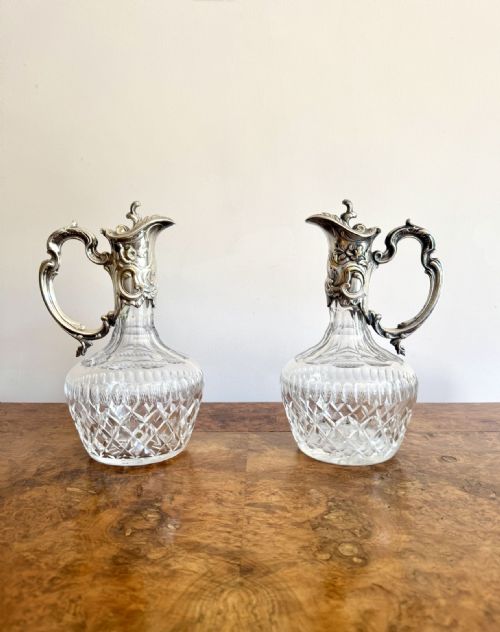
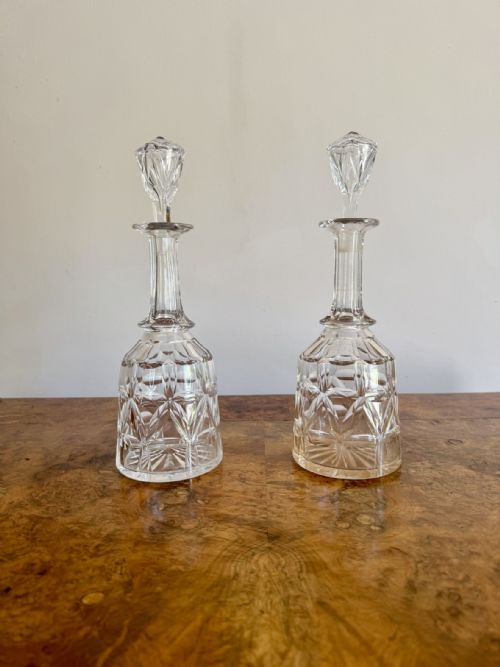
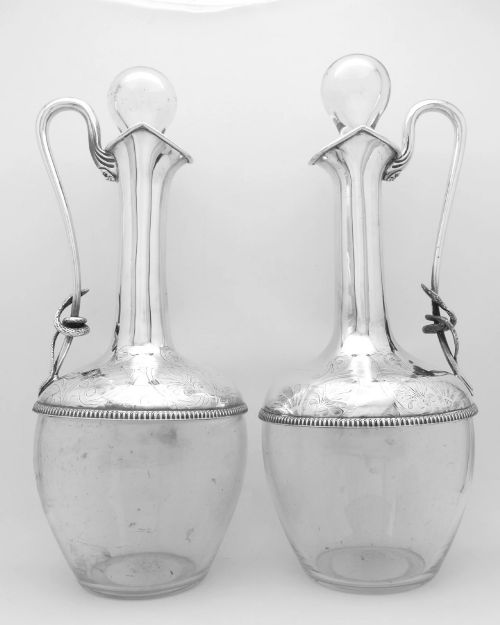
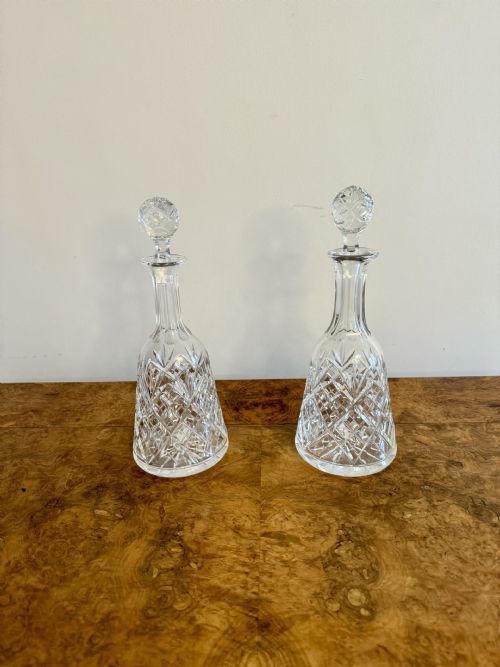
When you search for pair wine decanters, you encounter matching sets designed to hold and serve wine, often accompanied by matching bottle coasters or stands. These objects span from the eighteenth century into the twentieth century, taking forms such as shaft and globe glass vessels, ships decanters, and tall claret jugs.
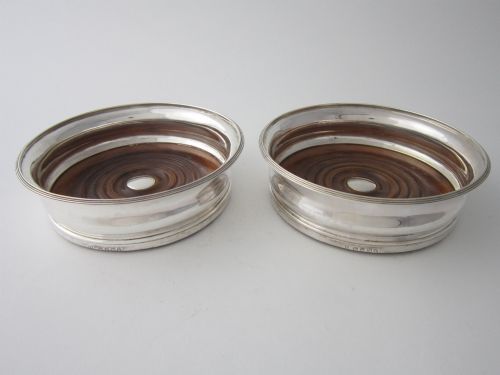
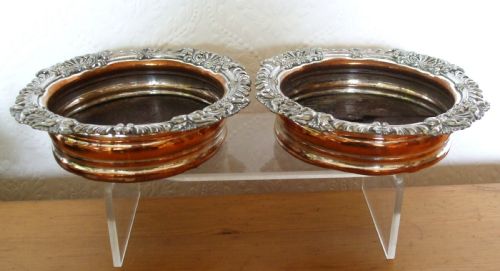
The Victorian and Edwardian periods provide a large share of the examples seen here, alongside Georgian and Regency specimens. Alongside standard glass decanters, the selection includes silver-plated and sterling silver wine coasters lined with wood or treen to protect polished dining tables.
How they were made
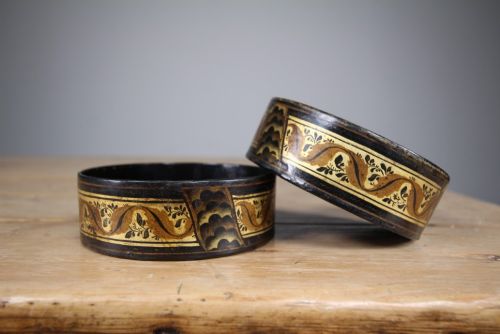
Makers shaped these pieces using blown and cut glass, lead crystal, and coloured glass varieties like Bristol blue, cranberry overlay, and deep green. Metal components rely on sterling silver, silver plate, and Old Sheffield Plate fused to copper bases, frequently paired with turned rosewood, mahogany, or papier-mâché.
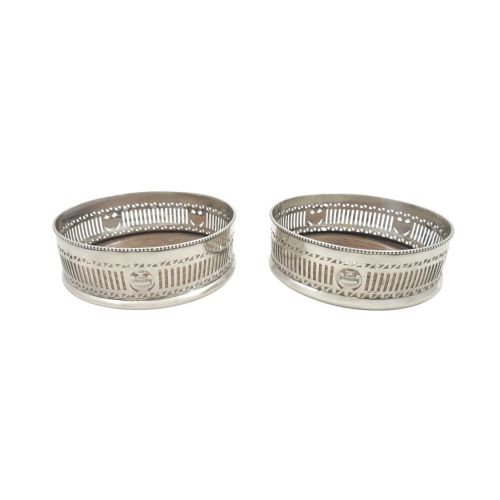
Techniques such as pillar cutting, wheel engraving, and applied serpent handles give weight and texture to the glass bodies. Silver mounts and coasters often display pierced galleries, bead borders, or cast floral motifs secured to wooden bases with central bosses.
Some nineteenth-century vessels doubled as spirit carriers locked away from thirsty household staff.
What varies in quality
The distinction between ordinary and superior examples lies in the crispness of the glass cutting and the weight of the metal mounts. Heavy lead crystal with deep, sharp facets and clear ringing tones sits above thin, lightly pressed glass.
In silver-plated and silver items, the depth of the chasing, the retention of the original plating over copper, and the precise fitting of stoppers dictate the standard. Finer coasters feature tightly turned timber bases and substantial silver galleries rather than thin, modern reinforcements.
Matthew Boulton·Asprey
The Pair Wine Decanters Glossary
- Claret jug
- A specialised vessel for serving red wine, usually featuring a handle and a hinged metal lid mounted to a glass body. These often date from the Victorian and Edwardian eras.
- Old Sheffield Plate
- A method of fusing a thin sheet of silver to a thicker copper base before rolling and shaping. This technique creates a durable material typical of Georgian and early nineteenth-century coasters.
- Prussian decanter
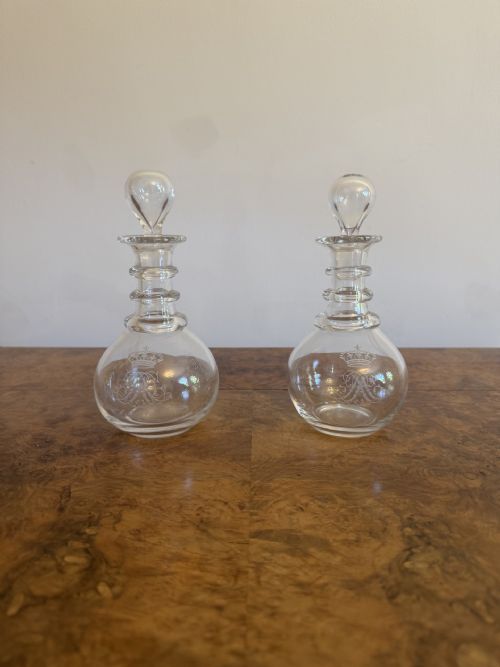
- A form characterised by a tapering body and three or more distinct glass rings around the neck. This shape gained popularity during the Georgian and Regency periods.
- Ships decanter
- A bottle designed with a broad, stable base to prevent tipping aboard a vessel at sea. They appear frequently in late nineteenth and early twentieth-century British glass.
- Treen
- Small domestic wooden objects turned on a lathe, such as the wooden bases found inside silver and plated bottle coasters. Collectors prize items showing rich grain and patination.
Pair Wine Decanters: Frequently Asked Questions
How do I date an old decanter?
Examine the base for a pontil mark where the blowing iron was snapped off, which usually indicates an earlier date before smooth machine-ground bottoms became common.
Check the stopper for matching number etchings and look at the cut of the glass or style of the silver mounts to align with Georgian, Victorian, or Edwardian manufacturing traits.
What were wine coasters used for?
Wine coasters protected polished mahogany and rosewood dining tables from drips and rings left by wet bottles as they circulated around the guests.
They allowed bottles to be slid smoothly across the table surface during after-dinner port and wine drinking.
Are silver plated coasters durable?
Old Sheffield Plate and early silver-plated items use thick fused layers that withstand careful handling and cleaning over generations.
Owners should use gentle silver creams and avoid harsh abrasives to preserve the underlying copper layer from showing through the wear.
Why do some decanters have coloured glass?
Coloured glass variations like cranberry, Bristol blue, and dark green helped protect light-sensitive wines from degradation before modern storage methods.
Victorian makers also favored these striking hues for decorative display on sideboards and dining tables.