



Engraved Silver Decanter
An engraved silver decanter brings weight and polish to a sideboard, pairing cut glass with pierced or chased metalwork.
Engraved Silver Decanter
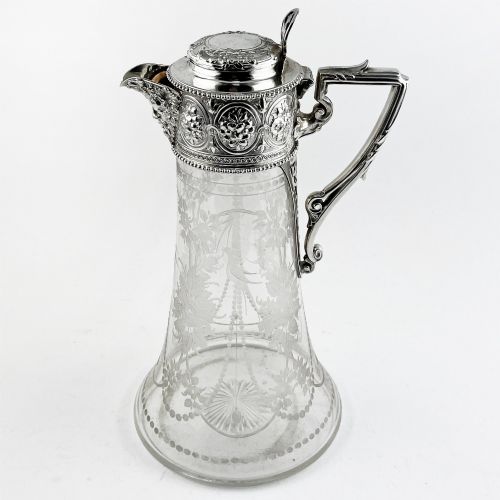
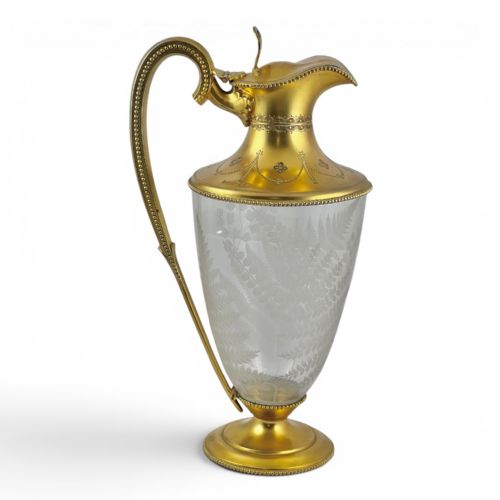
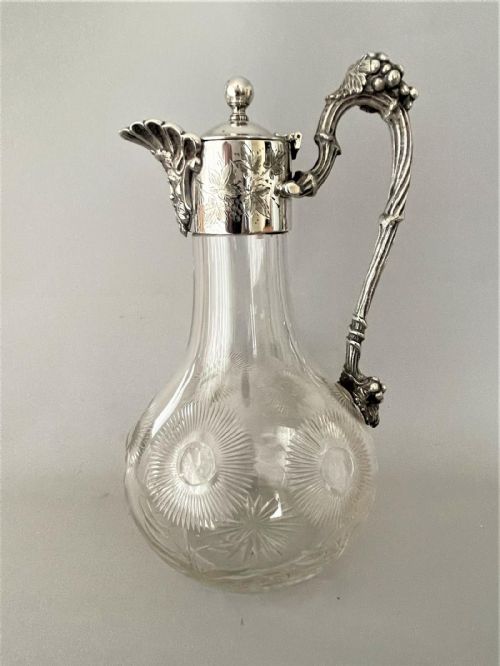
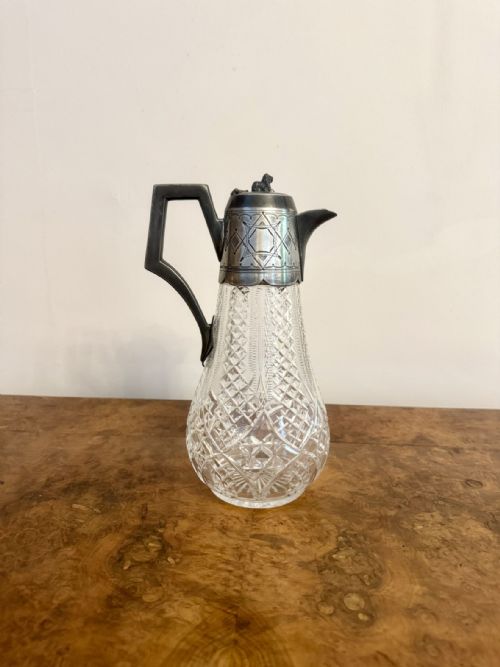
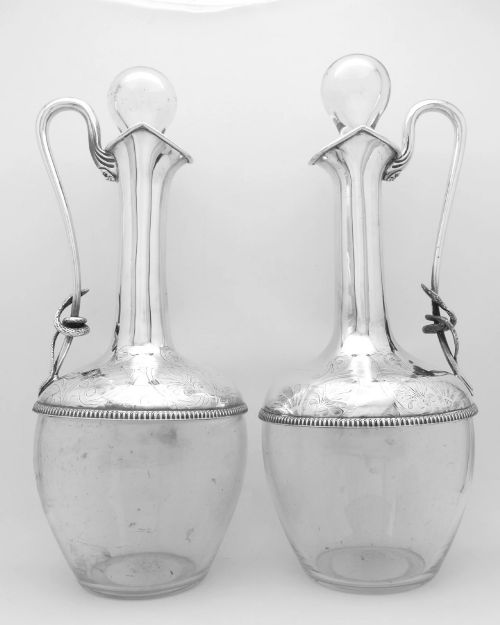
When you search for an engraved silver decanter, you encounter a mix of complete vessels and the intricate silver labels that identified their contents. The complete examples often pair heavy cut or etched glass bodies with solid silver mounts, collars, or hinged lids.
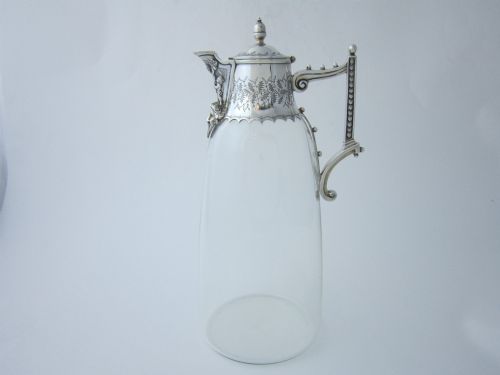
The selection ranges across the Georgian, Victorian, and Edwardian periods, taking forms such as claret jugs, scent bottles, and wine coolers alongside standalone bottle tickets. Glass vessels appear in clear crystal, amber, amethyst, and cranberry hues, frequently showing floral or foliate engraving.
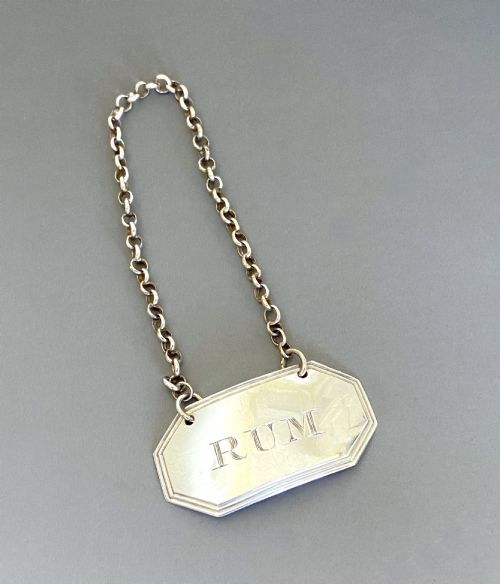
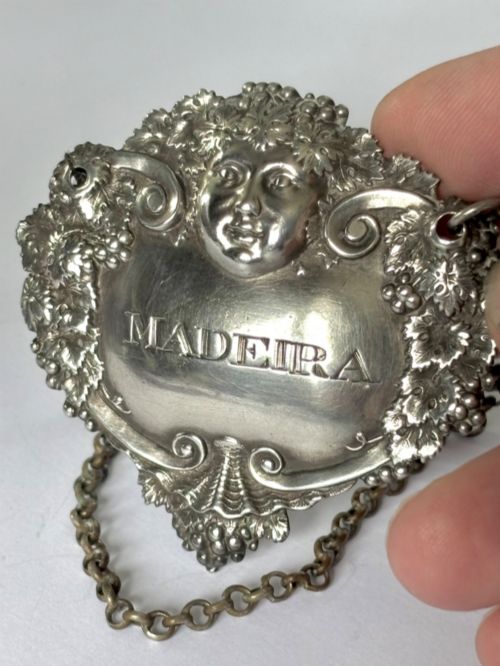
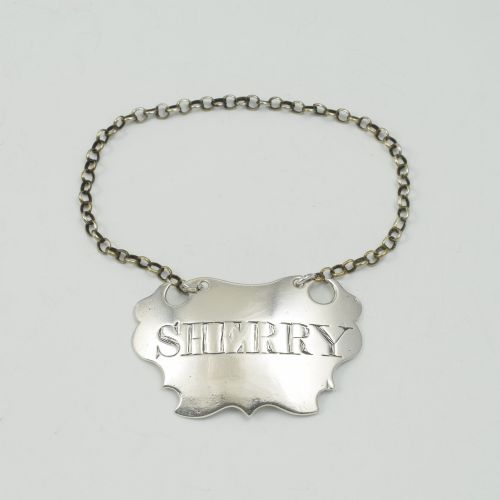
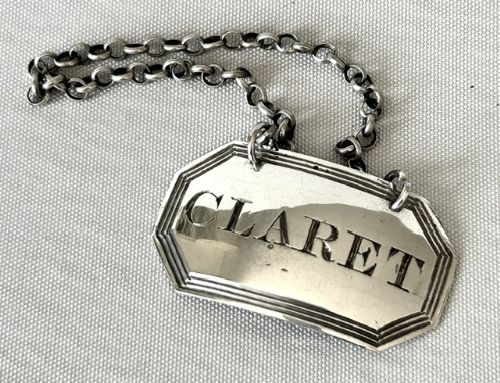
Smaller items like silver wine labels are particularly common, stamped or pierced with titles such as Madeira, Sherry, and Rum. These smaller pieces demonstrate the same detailed craftsmanship as the larger mounted jugs found on this page.
Silver and Glass Craftsmanship
Makers combined sterling silver or silver plate with blown and cut glass, securing mounts with precise collars and handles. Glass bodies were heavily faceted or wheel-etched with geometric and botanical motifs before being fitted with metal hardware.
Silversmiths utilised casting, piercing, and hand-engraving to form the neck rings, escutcheon labels, and hinged lids. Silver gilt and contrasting metal finishes were sometimes applied to enrich the decorative effect of the mounts.
Assessing Craftsmanship
Quality rests on the crispness of the hand-engraving upon both the silver and the glass surface, alongside the weight and clarity of the crystal body. Sharp, deeply cut facets and well-defined lettering on escutcheon labels distinguish finer items from simpler production pieces.
The integration of the silver mount to the glass vessel indicates superior manufacture, where collars and handles fit securely without excessive solder. Maker marks and clear hallmarks further elevate a piece by confirming the status of the silversmith and the purity of the metal.
Elizabeth Morley·Asprey and Co. Ltd·Digby Scott Benjamin Smith·John Reily·John and Thomas Settle·William Davenport
The Engraved Silver Decanter Glossary
- Decanter label
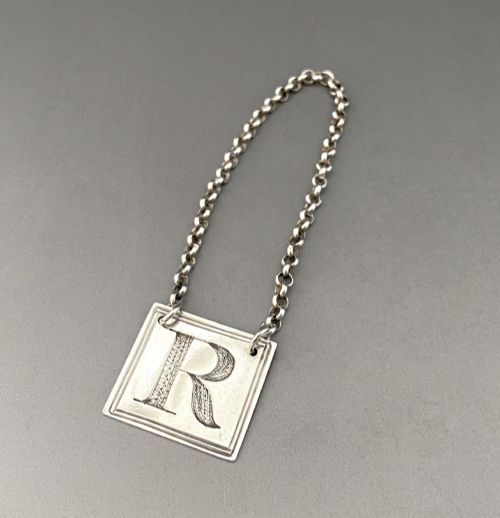
- A small metal tag hung from the neck of a bottle by a chain to identify the wine within. These items were often shaped as escutcheons, vine leaves, or rectangles.
- Claret jug
- A tall pouring vessel specifically designed for serving red wine, typically featuring a handle, a hinged lid, and a glass body mounted in silver or silver plate.
- Silver gilt
- Sterling silver that has been coated with a thin layer of gold, providing a rich yellow finish to the interior or exterior of mounts.
- Wine coaster
- A small circular tray with a wooden base and a silver or plated rim, designed to protect the dining table while holding a bottle.
- Escutcheon
- A shield-shaped plate used predominantly for decanter labels or keyhole covers, allowing space for engraved titles or armorial crests.
Engraved Silver Decanter: Frequently Asked Questions
How do I date a silver decanter label?
Dating relies heavily upon the assay office marks, maker stamps, and the style of the script used for the engraved title. Georgian examples often feature bright-cut engraving and simpler rectangular or crescent shapes.
Later Victorian versions introduced heavier cast borders, vine leaf motifs, and more ornate lettering styles that reflect the tastes of the later nineteenth century.
What is the difference between silver and silver plate on these jugs?
Solid silver pieces bear official hallmarks indicating the purity of the metal and the assay office responsible for testing. Silver plated items consist of a base metal foundation coated with a thin layer of silver.
Plated items gained immense popularity during the Victorian period because they offered the appearance of solid silver at a lower cost.
How were decanter labels used historically?
Labels hung around the necks of wine bottles or decanters using small link chains to prevent guests from pouring the wrong vintage. They were especially useful in dimly lit dining rooms when candles provided the only illumination.
Specific titles indicated spirits and fortified wines like Madeira, Sherry, Claret, and Brandy.
Can I use antique cut glass decanters for serving wine today?
Many antique glass decanters remain entirely functional for serving wine or port at the table. Hand-blown glass requires careful hand washing rather than dishwasher cleaning to protect the original material.
Checking the interior for staining or sediment helps determine whether a piece requires gentle cleaning before use.