



Silver Topped Walking Stick
A silver topped walking stick brings together the refinement of precious metal work and the practical utility of a gentleman's or lady's daily support.
Silver Topped Walking Stick
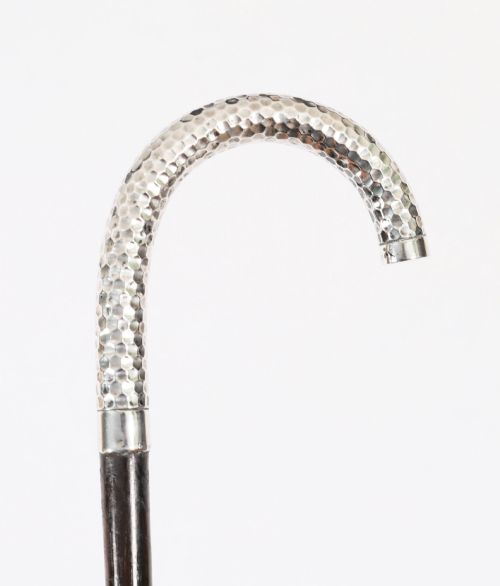
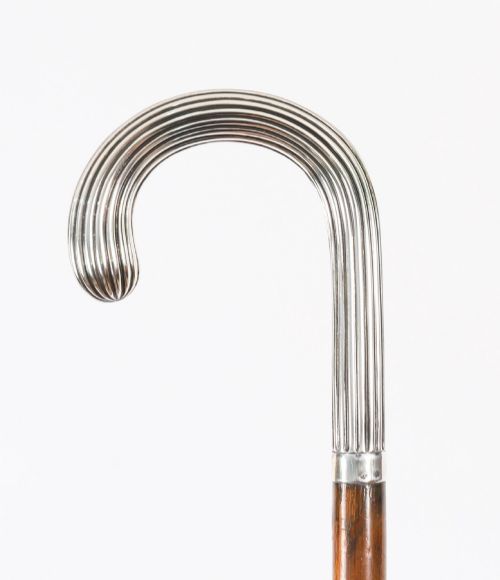
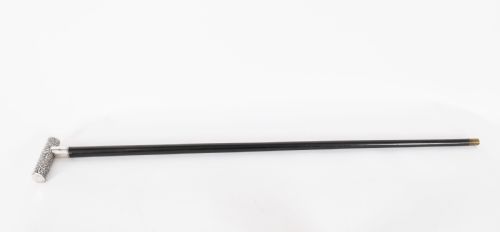
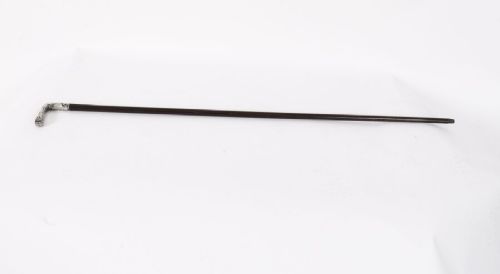
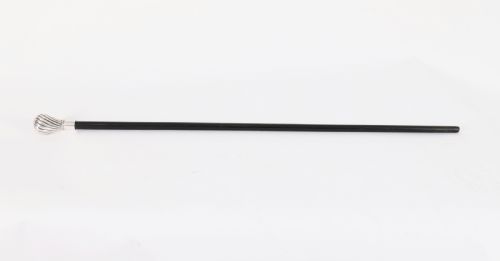
A silver topped walking stick is a supportive shaft fitted with a precious metal handle or pommel, originating primarily across nineteenth-century and early twentieth-century Europe and Asia. The examples met most often on this page combine silver mounts with shafts of ebonised wood, malacca, bamboo, or hardwoods like rosewood and palm wood.
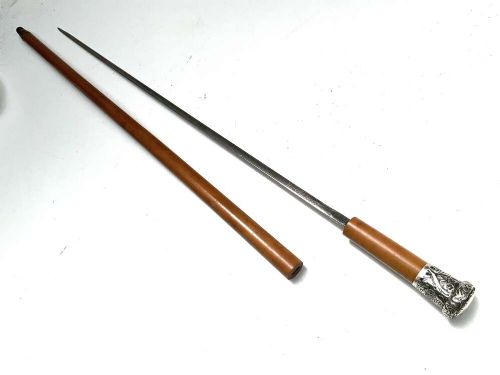
The assortment includes standard walking canes, swagger sticks, parasol handles, and specialised pieces containing concealed blades or timepieces. Makers from London, Paris, and regional workshops produced items ranging from plain gentleman's sticks to elaborate export pieces featuring chased or repoussé decoration.
Materials and Technique
The construction pairs a durable natural shaft with a formed silver head, frequently secured by a small metal pin or collar. Shafts utilise treated timbers such as ebonised oak or flexible malacca, while handles are shaped from sterling silver, silver plate, or occasionally horn and bone.
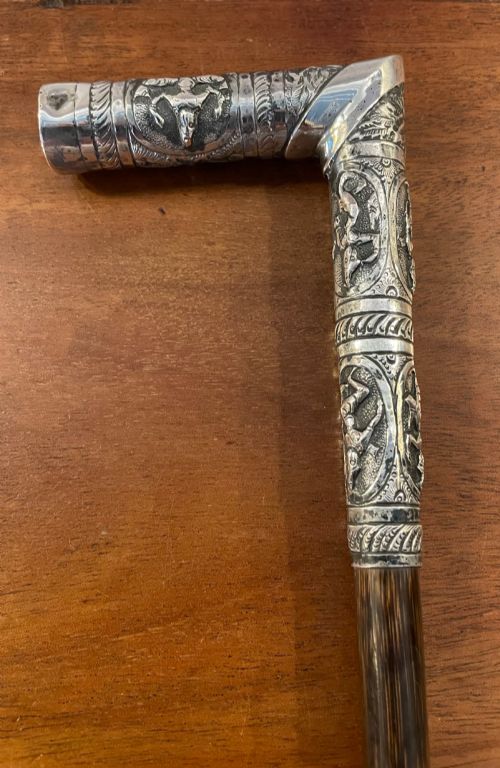
Metalwork techniques involve casting, repoussé, engraving, and chasing to produce detailed motifs like animal heads, botanical patterns, or neo-classical scrolls. Artisans then joined the hollow metal top to the tapered wooden body using traditional adhesives and mechanical fixings.
Among the historical items found here are clever concealments, including walking sticks housing functioning timepieces, opera glasses, and hidden sword blades.
The Measure of Craft
Quality rests in the weight and thickness of the silver handle, the depth and crispness of the hand-chased or engraved details, and the integrity of the join between metal and wood. Superior pieces exhibit well-balanced proportions and substantial metal gauge rather than thin plating over base metal.
The selection of the shaft material also dictates standard, with dense hardwoods, snakewood, or polished malacca commanding greater regard than plain softwoods. Maker marks, provincial hallmarks, and signed collars from established retailers further distinguish exceptional examples from mass-produced items.
Wang Hing and Company·Briggs of London·Asprey
The Silver Topped Walking Stick Glossary
- Repoussé
- A metalworking technique where the silver is hammered from the reverse side to form a raised design in relief. This method allows artisans to create intricate floral or figural motifs on the handle.
- Knop
- A rounded knob or pommel forming the top grip of the walking stick. It often provides the primary decorative surface for silver mounts or engraved ciphers.
- Ebonised
- Wood that has been treated and stained to imitate the dark, dense appearance of ebony. Ebonised oak and fruitwood were common choices for nineteenth-century shafts.
- Sword stick
- A walking cane containing a concealed steel blade within the wooden shaft. These pieces typically feature a locking mechanism to secure the blade safely inside.
- Hallmark
- An official stamp applied to silver items indicating purity, the assay office, and the year of testing. English and continental pieces often display these marks on the collar or handle.
Silver Topped Walking Stick: Frequently Asked Questions
How do I date a silver topped walking stick?
Dating relies heavily on legible hallmarks stamped into the silver handle or collar, which reveal the assay office and exact year of testing. Style indicators, such as Art Nouveau curves or neo-classical symmetry, also help narrow down the period when hallmarks are absent.
Changes in fashion and materials provide additional clues, as certain woods and handle shapes were favoured more strongly during the Victorian and Edwardian eras than in later decades.
How are these sticks best displayed at home?
Displaying these pieces safely involves using a sturdy umbrella stand or a wall-mounted rack that supports the weight vertically without placing undue stress on the silver handle. Keeping them away from direct sunlight and excessive humidity protects both the wooden shaft and the polished metal.
Handling the silver occasionally with clean hands helps maintain the patina, while allowing the natural grain of the wood to remain visible in an interior setting.
What is the difference between a cane and a swagger stick?
A walking cane is a full-length support designed for walking and general daily use, measuring around ninety centimetres or more. A swagger stick is noticeably shorter and lighter, traditionally carried tucked under the arm by officers and officials.
While canes feature varied handles made of silver, horn, or carved wood, swagger sticks usually have a simpler silver top and a uniform military provenance.