



Silver Tea Service Pot
A silver tea service pot brings historic weight to the table, combining sterling silver and silver plate across Georgian, Victorian, and Edwardian forms.
Silver Tea Service Pot
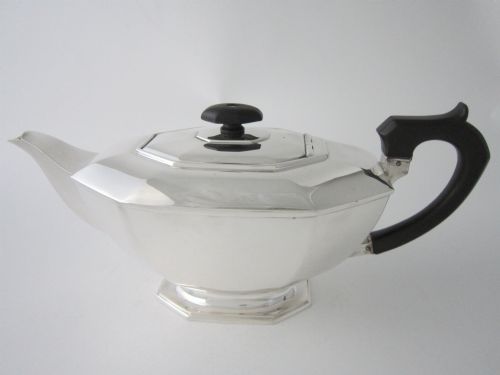
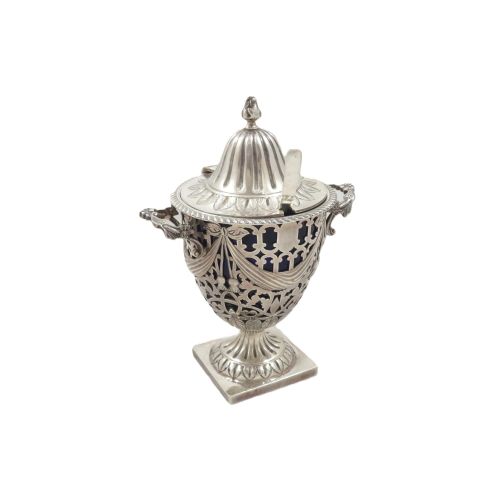
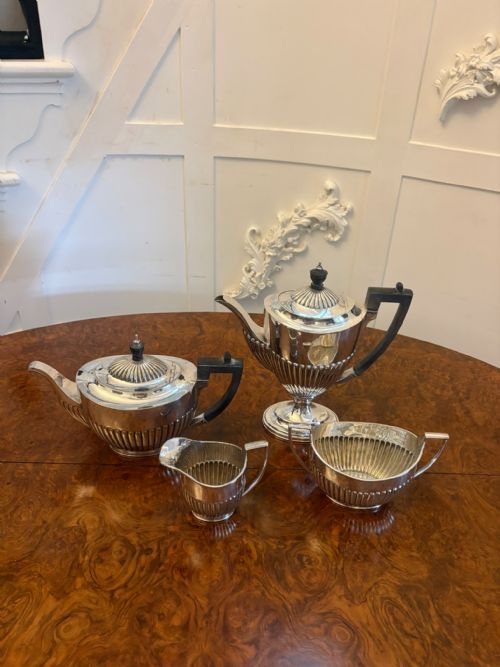
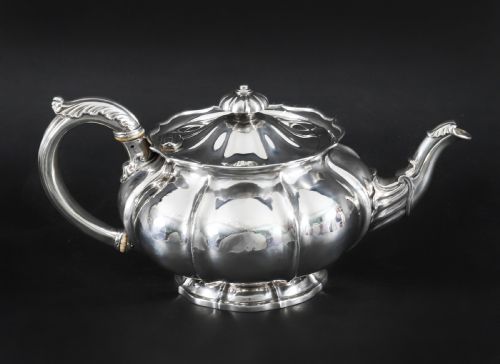
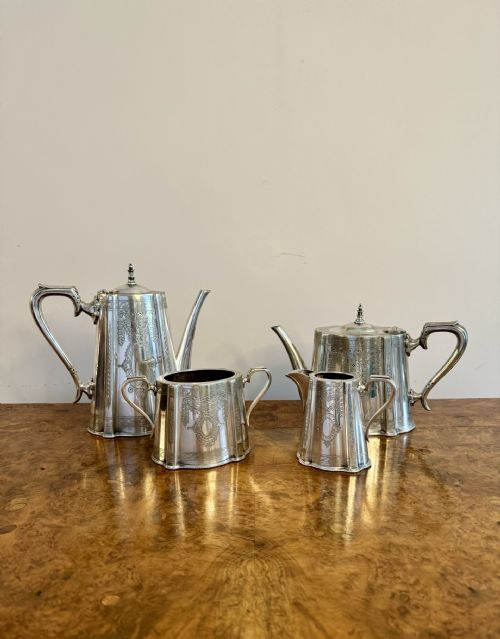
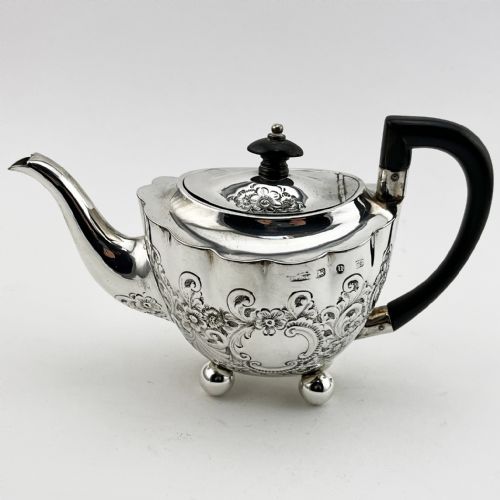
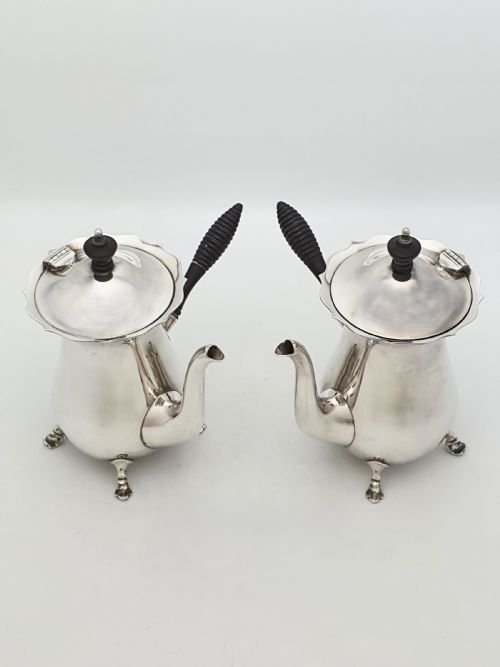
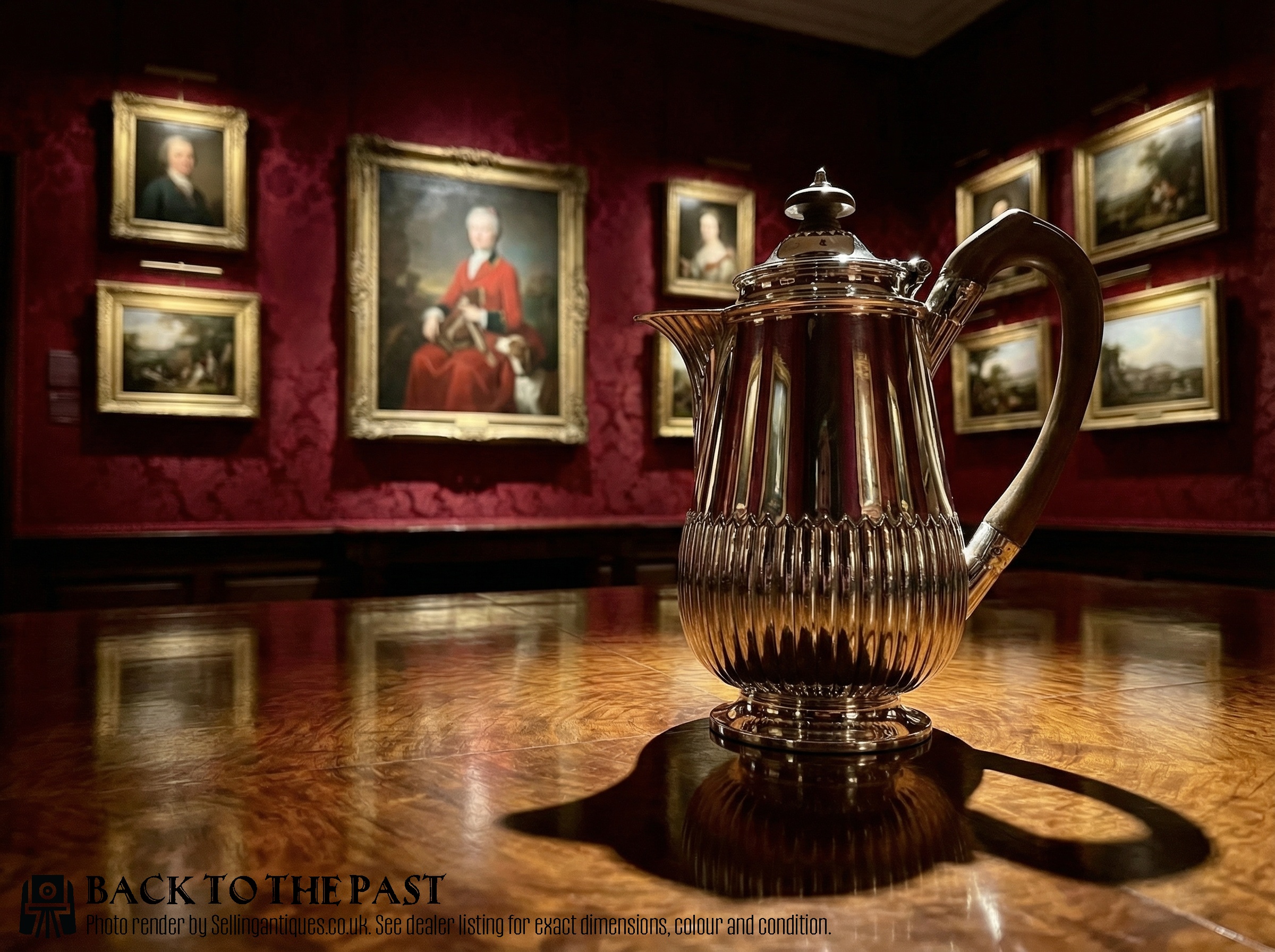
When you search for a silver tea service pot, you encounter an array of teapots, coffee pots, and complete tea services spanning the Georgian, Victorian, and Edwardian eras. These vessels range from individual bachelor teapots and sugar baskets to large four and five piece tea and coffee sets.
The pieces on this page originate from diverse workshops and provincial makers, appearing in both sterling silver and silver plate. Forms vary from simple early nineteenth century shapes to ornate Edwardian Rococo Revival and Art Deco designs.
How they were made
Silversmiths formed these pots using sterling silver or silver plate, frequently incorporating insulating elements such as ebonised wood, ebony, and bone into handles and finials. Old Sheffield Plate and electroplated nickel silver also appear widely across the nineteenth and twentieth century pieces.
Craftsmen applied techniques including hand-hammering, piercing, and intricate casting to achieve Neoclassical, Regency, and ornate Edwardian styles. Fitted wooden cases and stands accompanied select luxury sets produced by prominent makers.
Several bachelor teapots remind us that historical tea parties occasionally catered to very solitary drinkers.
What varies in quality
The distinction between standard examples and top tier pieces rests on the crispness of chased decoration and the weight of the metal. Heavier gauge sterling silver and well preserved Old Sheffield Plate command greater attention from collectors.
Completeness also dictates value, particularly when matching sugar bowls, cream jugs, and coffee pots survive alongside the main pot in an original fitted case. Maker attribution and provincial hallmarks further elevate specific items above ordinary production.
Paul Storr·Walker and Hall·Joseph Craddock·Harry Atkin·Charles Edward
The Silver Tea Service Pot Glossary
- Sterling silver
- A silver alloy containing 92.5 percent pure silver by mass, standard for British hallmarked tea ware.
- Silver plate
- A base metal, such as copper or nickel silver, coated with a thin layer of pure silver.
- Old Sheffield plate
- An early method of fusing a thin sheet of silver to a thicker copper core before shaping.
- Bachelor teapot
- A smaller scale teapot designed for single portions or small household use.
- Café au lait pot
- A tall pot specifically designed for serving hot milk alongside coffee.
Silver Tea Service Pot: Frequently Asked Questions
How do I date an unmarked pot?
Dating relies primarily on stylistic shifts, such as moving from Georgian Neoclassical symmetry to Victorian and Edwardian ornamentation.
Matching handle materials like ebonised wood or bone alongside shape profiles helps narrow the manufacturing decade.
What is Old Sheffield Plate?
Old Sheffield Plate involves fusing silver to a copper base before hammering or rolling it into vessel forms.
This technique predates modern electroplating and produces a warm tone where copper occasionally shows through high wear points.
Are tea services usually complete?
Many surviving sets include teapots, coffee pots, sugar bowls, and cream jugs assembled together over time.
Completely original services that retain their fitted cases or match exact hallmarked dates remain less common.
How should I clean silver pots?
Routine maintenance requires gentle washing with warm soapy water and careful drying with a soft cloth.
Harsh chemical dips damage thin silver plate and remove patination that accumulates over centuries of use.