




Silver Tazza Bowl
These pieces elevate fruit and flowers on stems, bringing weight and height to a table.
Silver Tazza Bowl
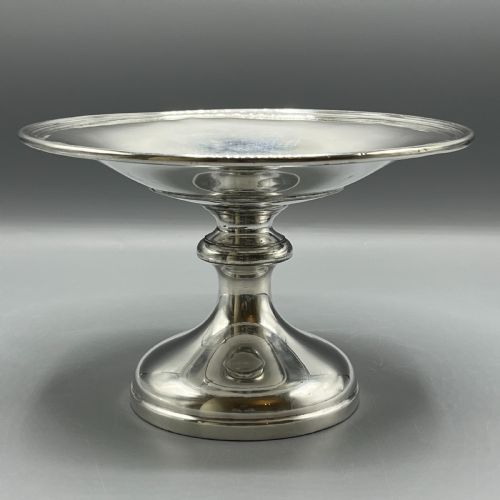
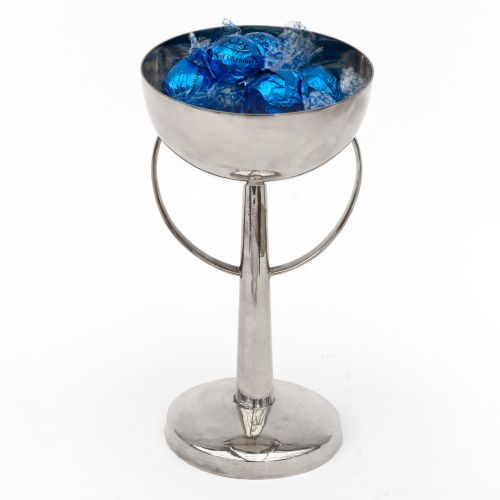
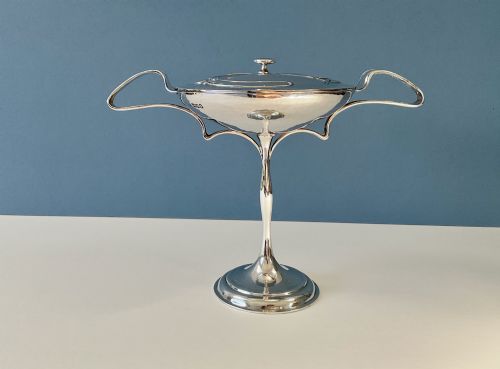
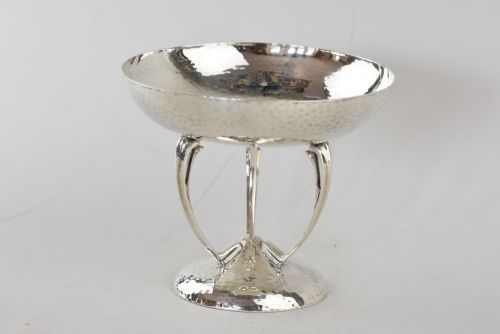
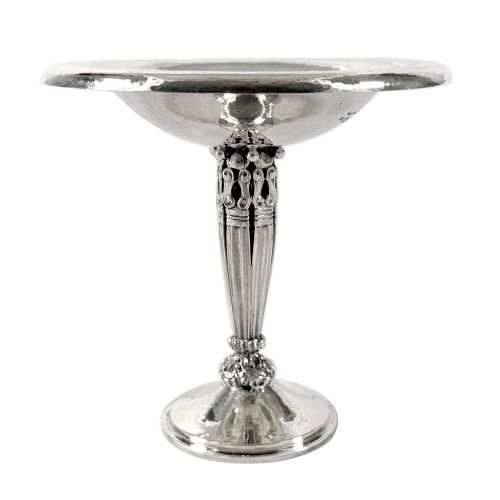
A silver tazza bowl stands raised upon a central foot or pedestal, serving as a formal centrepiece or fruit dish. You will frequently encounter Edwardian and Art Nouveau examples alongside clean-lined Art Deco versions and earlier Georgian pieces.
Makers shaped these pedestal vessels in sterling silver, silver plate, bronze, and glass, often pairing heavy metal bases with cut glass bowls or gilt interiors. Forms range from broad, shallow dishes to pierced centrepieces and small bon bon dishes.
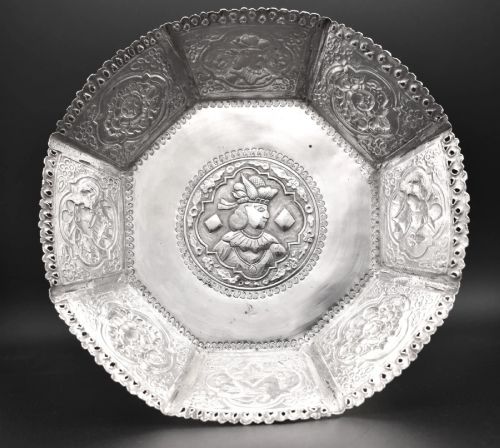
The phrase encompasses varied styles from British Arts and Crafts and Victorian workshops to Anglo-Indian repoussé and continental productions. Collectors select them to anchor a dining table or display fruit with architectural presence.
How they were made
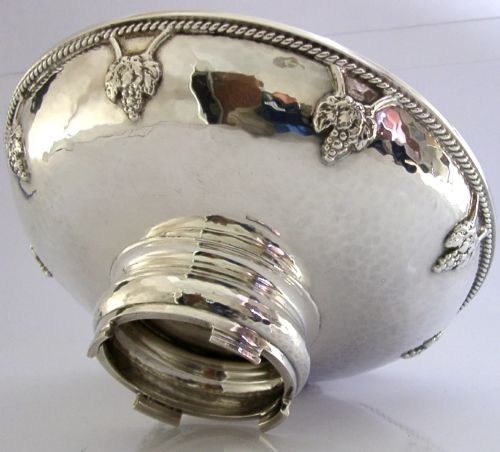
Silversmiths hammered sterling silver or silver plate from flat sheets, raising the metal over stakes to form the bowl and pedestal foot. Many Edwardian and Arts and Crafts examples display visible hand-hammered marks from this rigorous process.
Workers employed piercing, repoussé, and wirework techniques to decorate the bowls with lattice patterns, botanical motifs, and Persian-inspired designs. Cast details, such as harvest motifs or three-legged supports, were soldered separately to the main body.
Silver Tazza Bowl Retail Price Guide 2026
Typical asking prices for silver tazza bowl among the pieces listed under this phrase on Sellingantiques today, from the lower quarter to the upper quarter. They describe what is for sale here now, not the wider market.
Listings feature sterling silver, silver plate, bronze, glass, and vermeil across periods spanning the Georgian era to the 1960s.
What varies in quality
Weight and gauge set the foundation, as heavier sterling silver examples resist distortion and hold their form on the stem. Finer pieces demonstrate crisp detail in repoussé work and piercing rather than soft, shallow stamping.
The integration of mixed materials distinguishes superior production, particularly where cut glass bowls fit precisely into silver mounts or where bronze and silvered elements join seamlessly. Maker attribution to known firms adds considerable distinction to the physical construction.
A E Jones·Goldsmiths and Silversmiths Company·Charles Boyton·Walker and Hall·WMF·James Dixon and Sons·Christofle et Cie·Charles Reily and George Storer·Mappin and Webb·R and W Sorley
The Silver Tazza Bowl Glossary
- Tazza
- A shallow bowl mounted on a pedestal foot, used for serving fruit or displaying items on a table. The form originates from Renaissance Italy.
- Comport
- An alternative term for a pedestal dish or tazza used for dessert or fruit service. They frequently appear in matched pairs on dining tables.
- Repoussé
- A metalworking technique where the artisan hammers the design from the reverse side to create raised relief on the front. This creates tactile, three-dimensional floral and scroll patterns.
- Reticulated
- Decorated with an openwork pattern resembling a net or lattice. Pierced silver panels allow light to pass through the vessel wall.
- Vermeil
- Sterling silver plated with a thin layer of gold, often found coating the interior of these bowls. This provides a rich contrast to the exterior silver.
Silver Tazza Bowl: Frequently Asked Questions
What is a silver tazza bowl used for?
These elevated vessels traditionally held fruit, sweetmeats, or flowers at the centre of a formal dining table. Their height created tiered displays that left room for other tableware beneath.
Today, they function as decorative objects or practical containers for display on sideboards and tables.
How do I clean an antique tazza?
Gentle washing with warm water and mild soap removes dust and oils without harming the metal surface. Avoid harsh chemical dips that strip away patination accumulated over generations.
Soft cotton cloths help polish sterling silver or silver plate safely. Care must be taken around glass liners or delicate wirework components.
How can I tell an Edwardian piece from Art Deco?
Edwardian examples often feature botanical motifs, flowing lines, and pierced lattice work influenced by earlier Victorian styles. They lean towards ornate, traditional ornamentation.
Art Deco pieces favour geometric discipline, clean vertical stems, and streamlined surfaces reflecting the aesthetic of the 1920s and 1930s.