
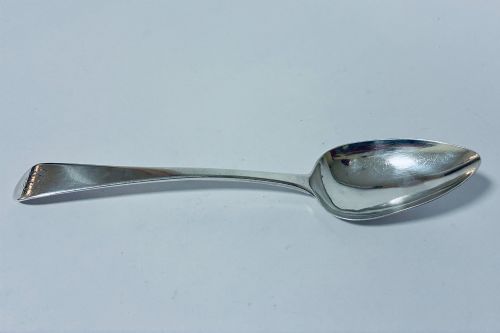
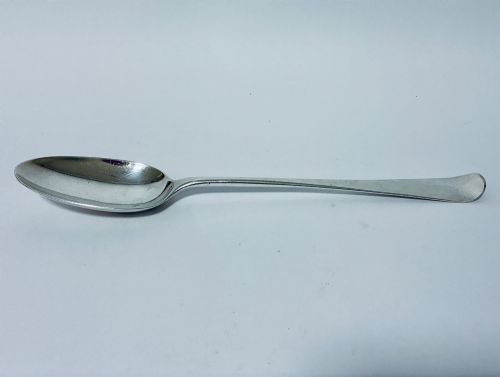
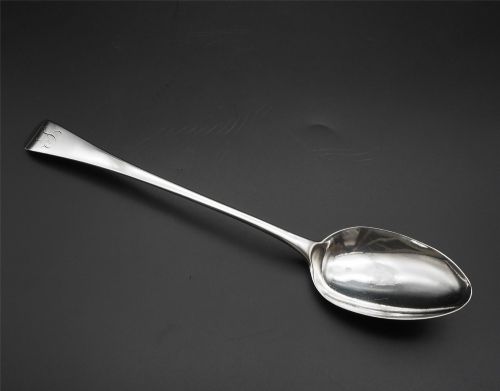
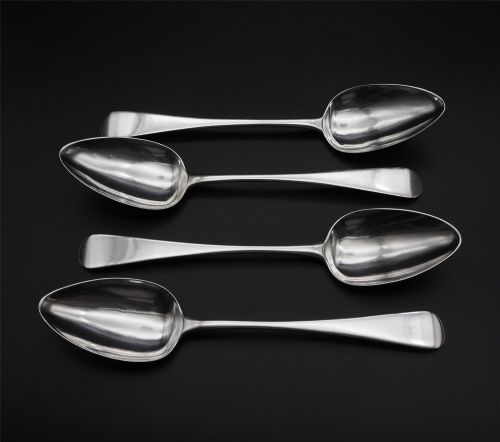
Silver Table Serving Spoons
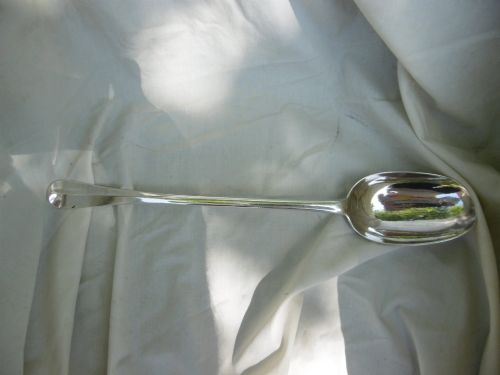
Silver table serving spoons range from early eighteenth-century basters and hash spoons to cased Victorian sets made for formal dining.
Silver Table Serving Spoons
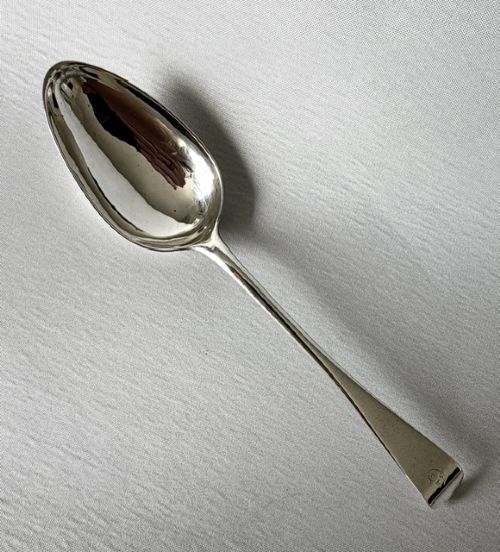
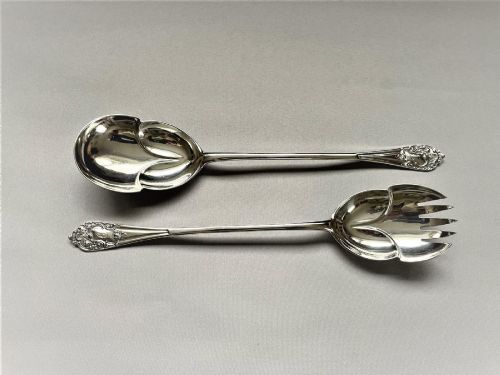
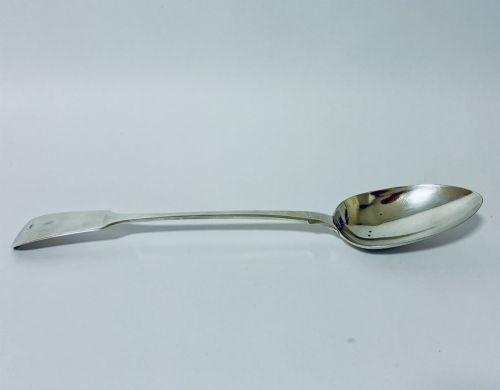
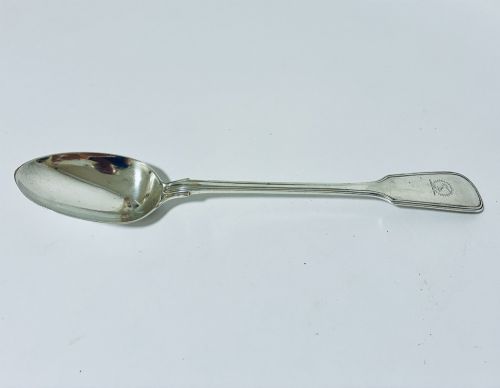
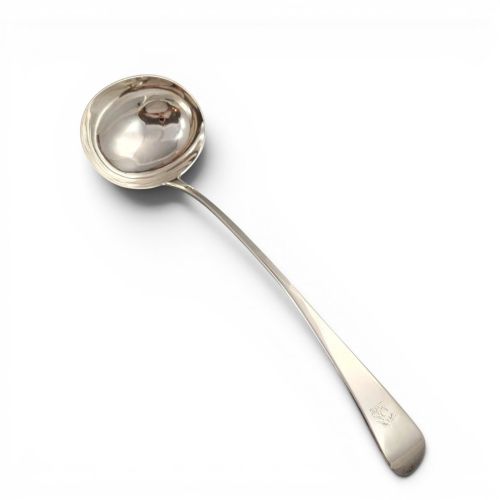
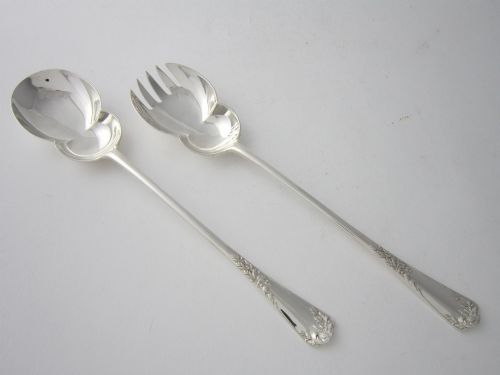
Silver table serving spoons encompass substantial forms used historically for dishing food at the table, including basting spoons, hash spoons, soup ladles, and salad servers. These pieces span the Georgian, Victorian, and Edwardian periods, alongside earlier eighteenth-century examples featuring rat tail bowls or dognose terminals.
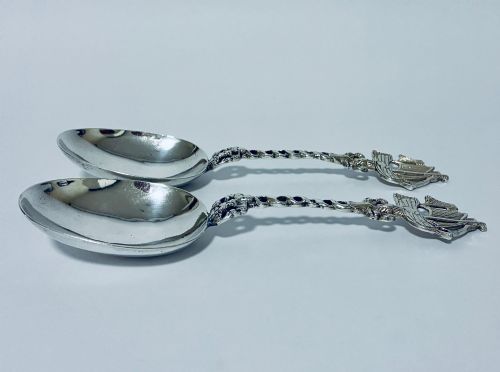
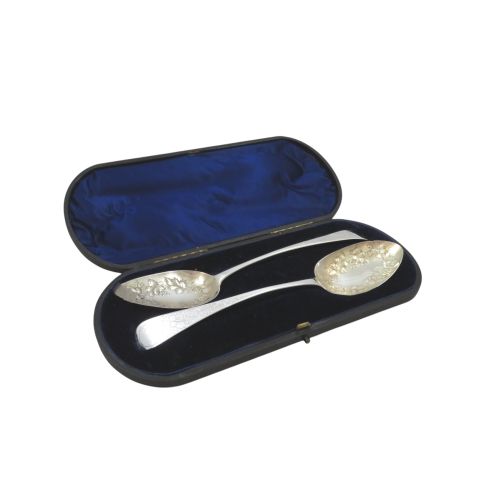
The buyer meets many matched pairs and individual examples bearing regional British hallmarks from London, Newcastle, Exeter, and York, as well as Irish and Scottish provincial towns. Cased sets of berry spoons and boxed serving pieces also appear frequently across the selection.
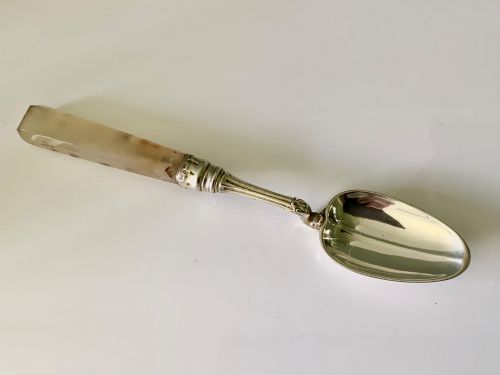
Forms extend beyond standard flatware to specialised utensils like spoon warmers and bifurcated pieces with agate handles, reflecting the diverse dining customs of the eighteenth and nineteenth centuries.
How They Were Made
Makers shaped these utensils primarily from sterling silver and Britannia standard silver, hammering and casting the metal to achieve balanced, heavy handles and deep bowls. Many items incorporate subsidiary materials such as silver plate, gilt washes, leatherette and velvet presentation cases, and inset agate handles.
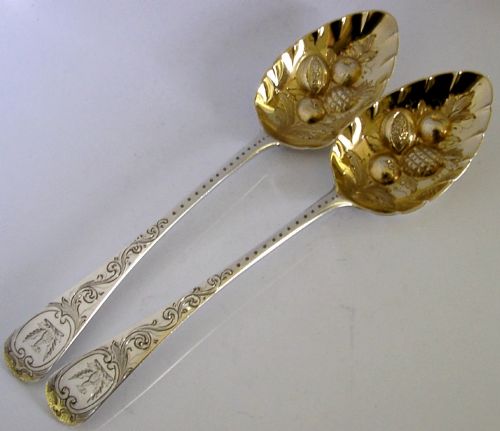
Silversmiths applied decorative techniques ranging from bright-cut engraving and family crests to repoussé fruit motifs on later berry spoons. Standard patterns like Old English, Fiddle, and Queens provide structural uniformity across different regional assay offices.
Listings feature sterling silver, silver plate, and gilt elements alongside provincial British assay marks from York, Exeter, and Newcastle.
What Varies in Quality
Weight and gauge of the metal set the foundation for quality, with heavier basters and hash spoons demonstrating superior durability and material substance. Crisply struck hallmarks and legible maker marks indicate better workshop standards.
The integrity of secondary decoration, such as hand-engraved crests or detailed chasing on berry spoons, determines distinction. Original fitted cases and matched provenance elevate the standing of a service within its period.
Andrew Archer·William Scarlett·John Locker·John Wilks·James Tait·J Ladyman·George Smith III·John Henry And Charles Lias·Georg Jensen
The Silver Table Serving Spoons Glossary
- Basting spoon
- A large utensil designed originally for spooning juices over roasting meat. These pieces measure considerably longer than standard tablespoons.
- Berry spoon
- A tablespoon retroactively decorated with chased fruit and foliage, often during the Victorian era. The bowls frequently feature fruit repoussé work.
- Rat tail
- A dorsal ridge running down the back of a spoon bowl from the handle junction. This feature reinforces the joint on early pieces.
- Dognose spoon
- An early flatware style featuring a rounded terminal with a central notch. This form predates the standard upturned handle.
- Britannia standard
- A higher purity of silver standard enforced by law in England during the early eighteenth century. It contains more pure silver than sterling.
Silver Table Serving Spoons: Frequently Asked Questions
What is a hash spoon?
A hash spoon is an oversized serving implement from the eighteenth century, built with an extended shaft and a deep bowl for portioning hearty dishes.
These pieces typically exceed thirty centimetres in length and demonstrate the heavy gauge metal characteristic of early dining silver.
How do I identify a berry spoon?
Berry spoons display heavily chased or repoussé fruit and leaf ornamentation across the bowl and handle, usually added to older spoons during the Victorian period.
Original bowls often show plain surfaces beneath later decorative work executed by jobbing silversmiths.
What are provincial silver marks?
Provincial marks are town symbols stamped by regional British assay offices outside London, such as Newcastle, Exeter, York, and Scottish burghs.
These stamps help collectors pinpoint the exact geographical origin and workshop producing the serving utensil.
How should I store silver serving spoons?
Silver serving spoons keep best in tarnish-resistant cloth rolls or dedicated fitted presentation cases lined with velvet or silk.
Keeping the metal away from ambient air and rubber compounds prevents rapid oxidation and preserves the surface finish.