
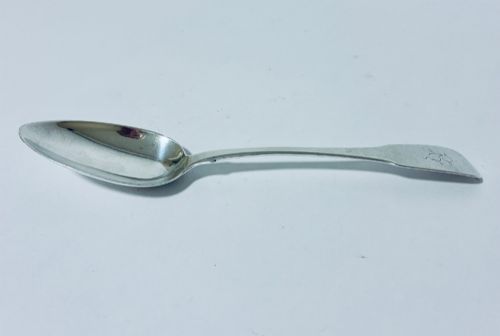
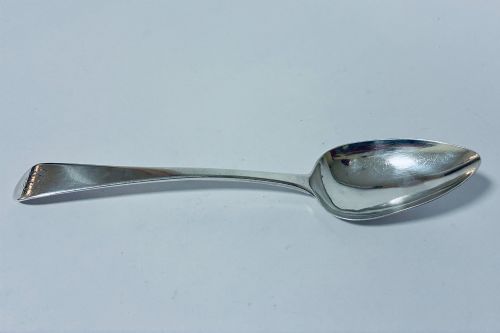
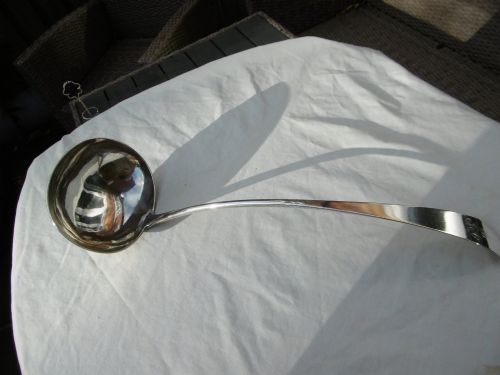
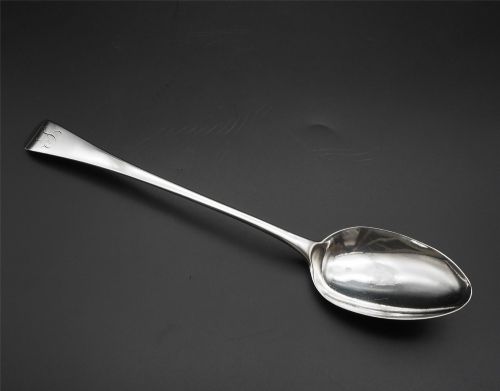
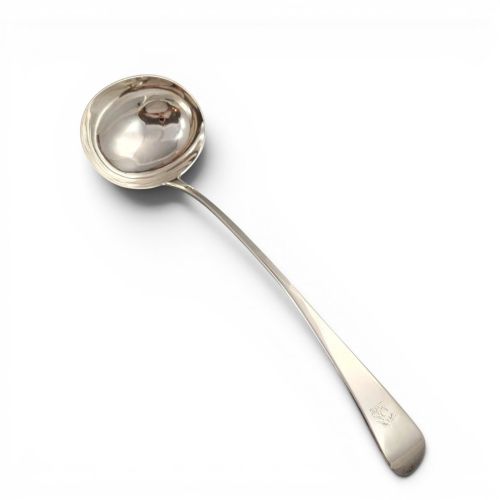


Engraved Sterling Serving Spoons
Engraved sterling serving spoons bring heavy Georgian and Victorian silver to the table, offering the weight and craftsmanship of eighteenth and nineteenth century dining.
Engraved Sterling Serving Spoons
Most entries belong to the broader categories of flatware and cutlery, utilising silver, sterling silver, and silver gilt. The forms vary from standard Old English pattern tablespoons to specialised items such as salad servers, straining spoons, and leaf-shaped serving implements. Many older pieces emerge in fitted presentation boxes lined with velvet, silk, or leatherette, preserving the items alongside their original maker marks and town hallmarks.
Materials and construction
Silversmiths constructed these pieces primarily from solid sterling silver, utilising heavy-gauge metal to withstand the demands of formal dining and large-scale serving. Workshops in London, Dublin, Edinburgh, Glasgow, and various provincial centres hammered, cast, and shaped the silver by hand before applying detailed hand-engraving and crests to the handles.
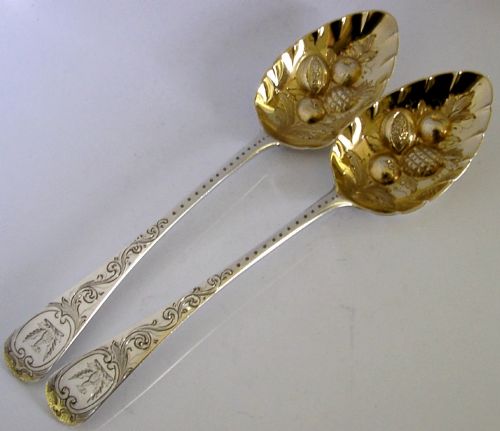
Certain items feature a gold wash or silver gilt finish, imparting a rich yellow lustre over the sterling silver base. Presentation boxes lined with velvet, silk, and leatherette were custom-built to house specific pairs or sets, protecting the polished surfaces and intricate detailing during storage.
Materials documented across the current inventory include sterling silver, silver gilt, gold wash, silk, velvet, and leatherette.
Quality factors in antique serving silver
The standard of an engraved serving spoon rests upon the crispness of the hand-engraving and the preservation of the original crests and decorative motifs. Crisp linear work and deep, legible hallmarks stamped by provincial or London assay offices distinguish superior pieces from those worn flat by generations of use and polishing.
Weight and balance significantly affect the quality of these heavy serving utensils, with thicker gauges of silver commanding greater regard among collectors. The presence of matching pairs, original fitted boxes lined in silk or velvet, and documented provincial town marks further elevate the standing of individual pieces.
Milne and Campbell·John Craig·William Chawner II·Michael Smith·R Grey·Sebastian Crespell·Jabez Daniell
The Engraved Sterling Serving Spoons Glossary
- Berry spoon
- A serving spoon, typically Georgian in origin, whose bowl is later or contemporarily embossed and engraved with fruit and foliage. These spoons were often adapted or created for serving dessert.
- Basting spoon
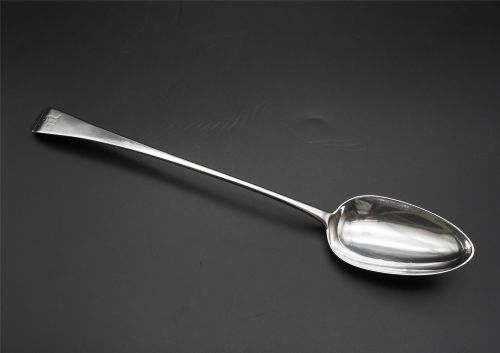
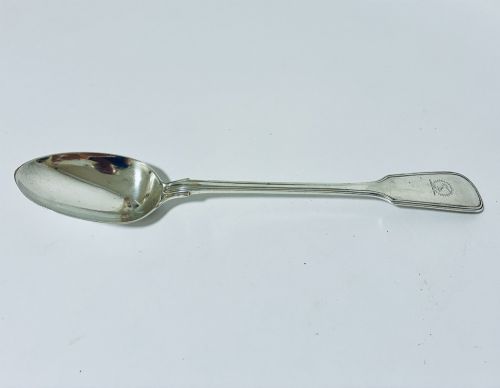
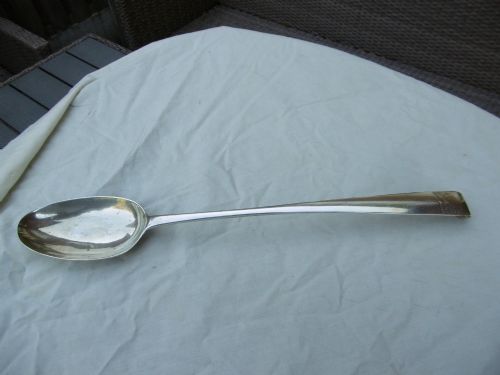
- A large flatware utensil resembling an oversized tablespoon, utilised in the eighteenth and nineteenth centuries for spooning juices over roasting meat. They frequently feature detailed armorial crests.
- Silver gilt
- Sterling silver that has been coated with a thin layer of gold, providing a rich yellow surface colour. This finish appears on specialised Victorian serving pieces.
- Provincial silver
- Items manufactured outside the major assay towns of London, bearing marks from regional centres such as Inverness, York, Exeter, or Glasgow. These pieces offer regional stylistic variations.
- Old English pattern
- A traditional eighteenth-century flatware design featuring a downward-turning rounded handle end with a distinct ridge. It remains a staple of Georgian silver production.
Engraved Sterling Serving Spoons: Frequently Asked Questions
What is a basting spoon used for?
Basting spoons functioned primarily in the kitchen or at the table for gathering pan juices and pouring them over roasting meats.
Their substantial length and heavy gauge of silver kept the user's hand safely away from heat while providing the leverage needed for heavy service.
Why do some spoons have fruit engraved on them?
Many Georgian and Victorian spoons feature embossed fruit and leaf designs added to the bowl alongside handle engraving.
Known as berry spoons, these pieces were frequently utilised for serving soft fruits and desserts during formal nineteenth-century dining.
How do I read silver hallmarks?
British hallmarks typically display a maker mark, a standard mark denoting sterling purity, a town mark indicating the assay office, and a date letter.
Checking these stamps allows collectors to identify the exact year of manufacture and the city where the silversmith registered their business.
What does provincial silver mean?
Provincial silver refers to pieces made and hallmarked outside major official centres like London, originating instead in regional towns.
Scottish, Irish, and English provincial items often display unique local maker marks that distinguish them from standard metropolitan production.