


Silver Table Salts Pair
These silver table salts pair listings offer matched vessels for dining table seasoning, spanning Georgian elegance to Victorian novelty.
Silver Table Salts Pair
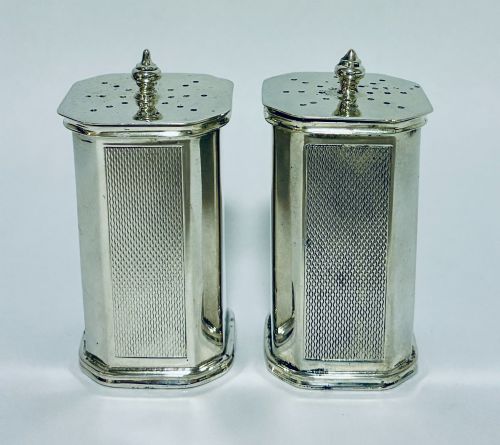
A silver table salts pair consists of matched open cellars or shakers designed for dining table use, appearing frequently in Victorian and Georgian forms.
Buyers encounter open salt cellars, pedestal dishes, boat shapes, and novelty designs shaped like animals or wheelbarrows.
The selection ranges from early George II trencher salts to Edwardian pepperettes and cased sets.
Materials and construction
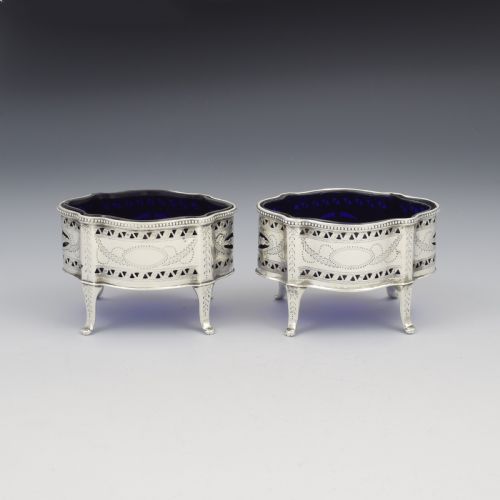
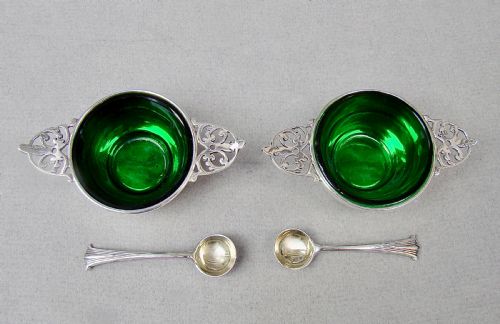
Pieces are fabricated from sterling silver, silver plate, and gilt silver, often paired with cobalt or green glass liners.
Manufacturing techniques include piercing, casting, and repoussé work, alongside specialised gilt interiors applied to silver surfaces.
Materials recorded across the archive include sterling silver, silver plate, cobalt glass, and gilt silver interiors.
Assessing quality in table salts
Maker marks, structural weight, and balanced proportions distinguish standard production items from distinguished silversmith output.
Josiah Williams & Co·David Hennell·Bateman·Sampson Mordan·Thomas Johnson·Vale Brothers and Sermon·Hampston Prince & Cattles·Rebecca Emes & Edward Barnard·William Kersill·Alice & George Burrows·Henry Holland·Joseph Angell I·John Samuel Hunt
The Silver Table Salts Pair Glossary
- Trencher salt
- A heavy, often multi-sided salt cellar placed directly on the dining table before individual small cellars became common.
- Cauldron salt
- A small round salt cellar raised on three feet, frequently mirroring larger dining table holloware.
- Gilt interior
- A gold wash applied to the inside of a silver salt to protect the metal from corrosive salt.
- Novelty salt
- A salt cellar shaped to represent an animal, human figure, or object rather than traditional geometric forms.
- Salt liner
- A removable glass insert, often blue or green, placed inside an open silver salt to hold the salt crystals.
Silver Table Salts Pair: Frequently Asked Questions
What is a silver table salts pair used for?
These matched vessels held loose salt on the dining table before modern shaker bottles became standard practice in domestic settings.
Diners used small spoons or pinched the salt directly from the open cellars to season individual plates.
How do I identify a Georgian salt cellar?
Georgian examples often feature cast silver bodies with specific maker marks, lion paw feet, or classical cauldron shapes.
They date from the eighteenth and early nineteenth centuries, displaying heavier gauge silver than later Victorian pieces.
Why do some salts have glass liners?
Salt is highly corrosive and causes pitting and damage to silver over extended periods of contact.
Removable glass liners, often in blue or green, protected the silver interior while holding the seasoning.
How do I care for antique silver salts?
Keep the silver clean using appropriate polishing cloths designed for precious metals, avoiding abrasive substances.
Remove glass liners carefully for washing to prevent chipping the historical glass.