



Novelty Silver Salt Cellar
These novelty silver salt cellar pieces bring animal and vehicle forms to the dining table, offering both amusement and utility for a collector.
Novelty Silver Salt Cellar
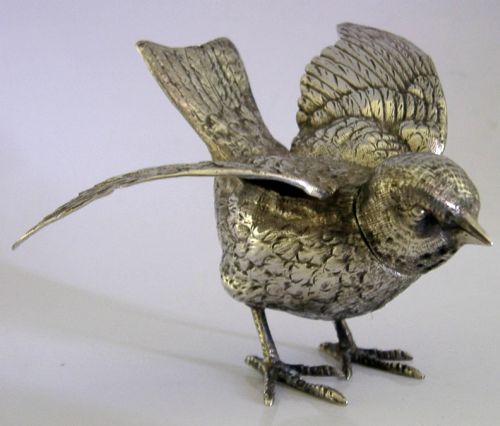
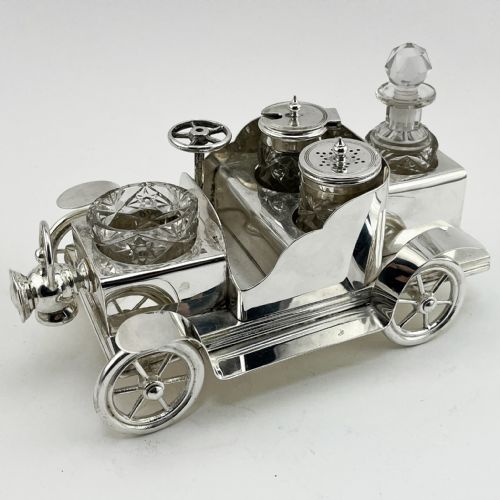
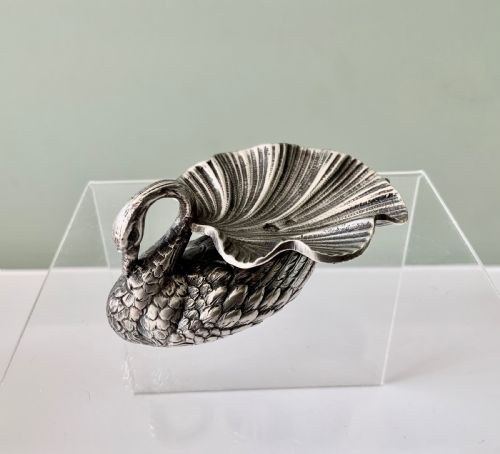
A novelty silver salt cellar takes whimsical shapes such as birds, chicks, swans, owls, wheelbarrows, carriages, cars, and musical instruments. These figural and thematic pieces turn everyday dining equipment into miniature sculptures.
The pieces on this page span the nineteenth century, Victorian, Edwardian, and later twentieth-century periods. You will encounter both solid sterling silver and silver-plated examples, often formed as matched pairs or part of wider cruet sets.
How they were made
Silversmiths utilised casting and detailed hand-chasing to create textured surfaces like feathers on birds or wooden panels on vehicles. Sterling silver and silver plate provide the durable metallic foundation for these complex shapes.
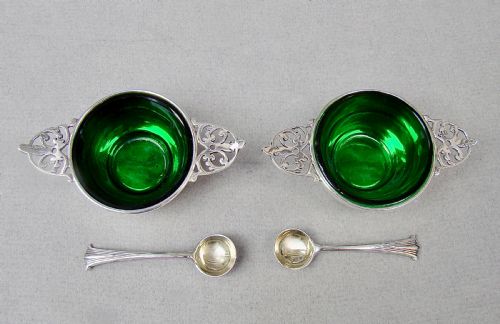
Cut glass and green glass components frequently pair with the metal work, forming the body of salt cellars or holding the condiment containers within wheeled cruet frames.
Garden wheelbarrows and vintage cars double as functional dining table salt cellars.
What varies in quality
The precision of the casting and the crispness of the surface detail distinguish standard items from the finest examples. Master silversmiths achieved expressive postures and realistic textures that lesser makers missed.
Maker marks, clear hallmarks, and original matched pairs or complete cased sets elevate the standing of a piece. The integration of glass elements and moving parts like wheels also influences the overall standard.
Josiah Williams & Co·Sampson Mordan·Thomas Johnson·Berthold Muller·Wilson & Davis
The Novelty Silver Salt Cellar Glossary
- Cruet set
- A collection of condiment containers, such as salt cellars, pepper pots, and mustard pots, held together in a stand or frame.
- Silver gilt
- Silver that has been coated with a thin layer of gold on its surface, often seen on the interior of salt cellars to protect the metal from corrosion.
- Quaich
- A traditional Scottish two-handled drinking vessel, occasionally adapted in miniature form as a novelty salt cellar.
- Chasing
- A metalsmithing technique where the silversmith punches and hammers the metal from the front to raise and define surface patterns.
Novelty Silver Salt Cellar: Frequently Asked Questions
How were novelty salt cellars used on the table?
These pieces held salt and other seasonings for diners to access during formal meals. They sat directly on the table, often as pairs or within larger cruet frames.
Guests would use small spoons to take salt from the open cellars or shake it from figural containers like birds and owls.
How do I identify Victorian pieces?
Victorian pieces often carry specific date letters and hallmarks associated with nineteenth-century assay offices in London and other British cities.
Stylistic clues such as naturalistic bird designs and heavy silver plating also point to the Victorian era.
Are these pieces made of solid silver?
The listings include both solid sterling silver and silver-plated examples. Hallmarks stamped into the metal usually indicate solid silver.
Silver-plated items use a base metal beneath a protective layer of silver.
How should I clean my silver salt cellar?
Gentle washing with warm water and mild soap removes daily dust without harming the metal or glass. A soft cloth helps maintain the shine.
Harsh abrasive polishes can wear down fine chasing and thin silver plating over time.