
Silver Table Centrepiece Dish
A silver table centrepiece dish anchors a dining table with reflective metal and coloured glass.
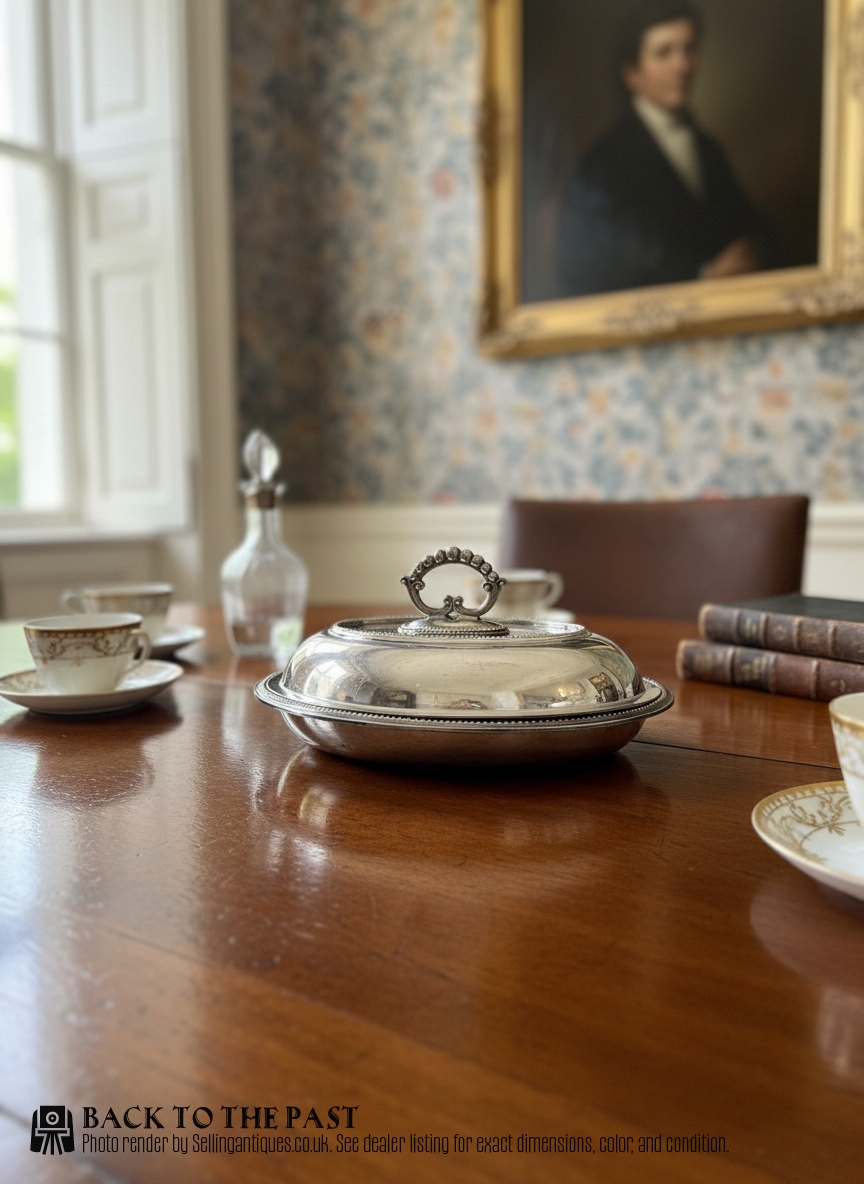
Silver Table Centrepiece Dish
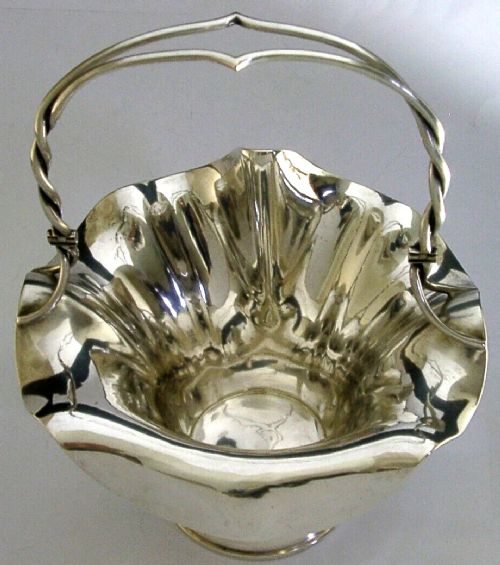
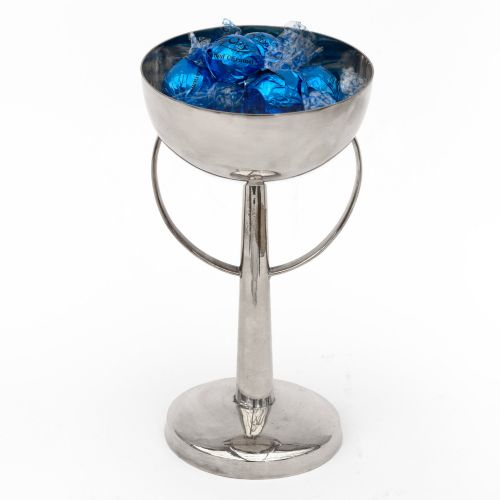
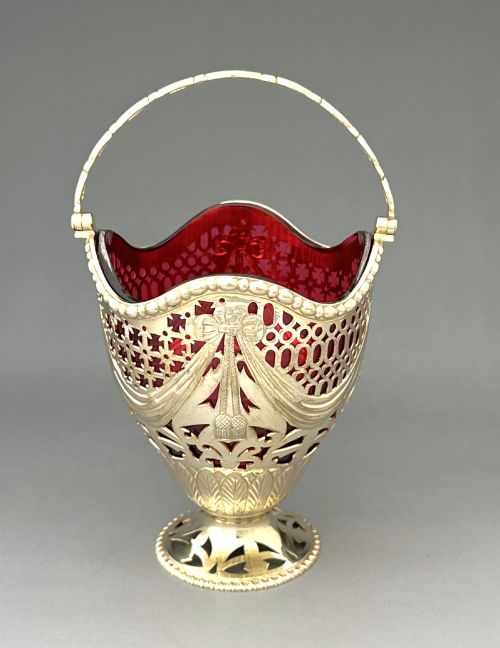
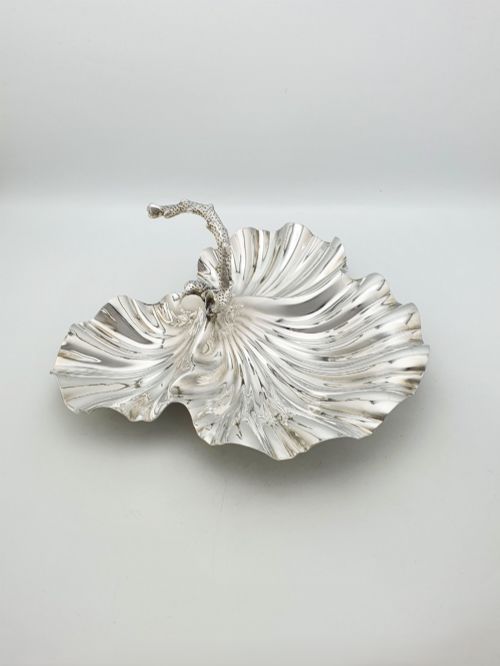
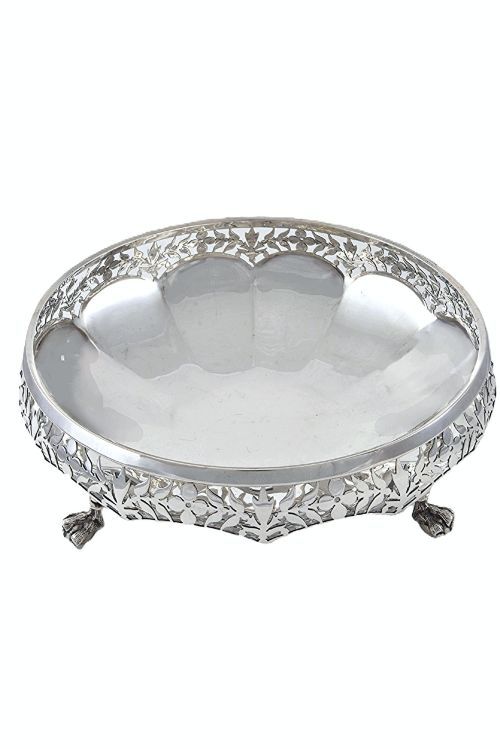
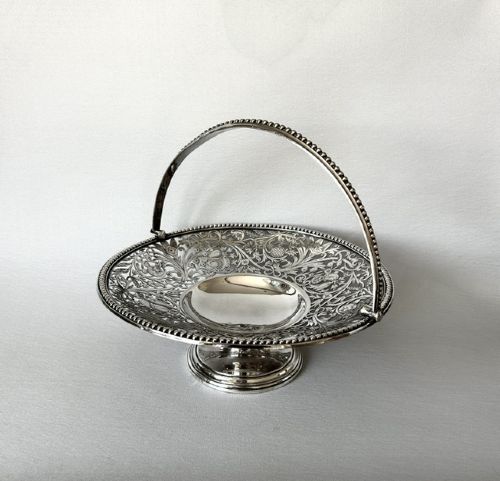
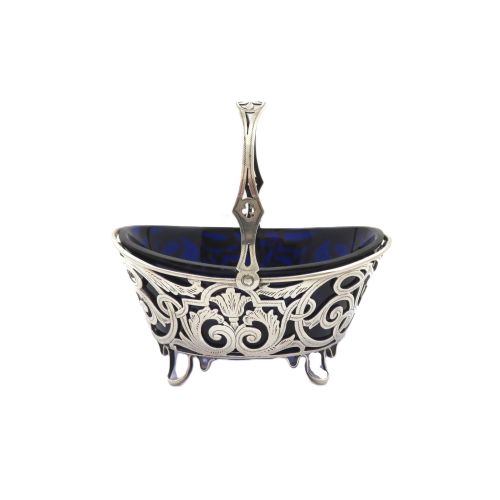
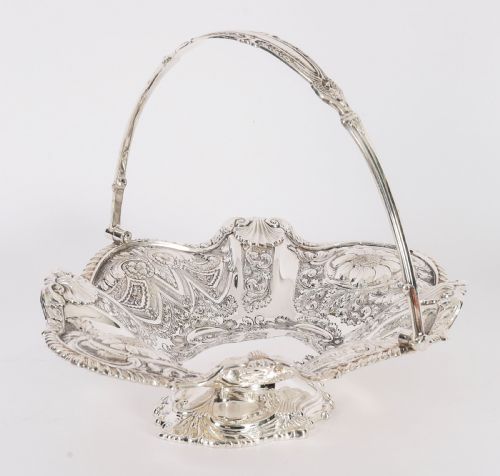
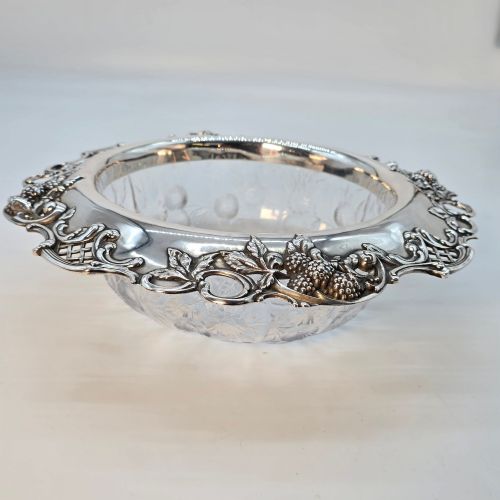
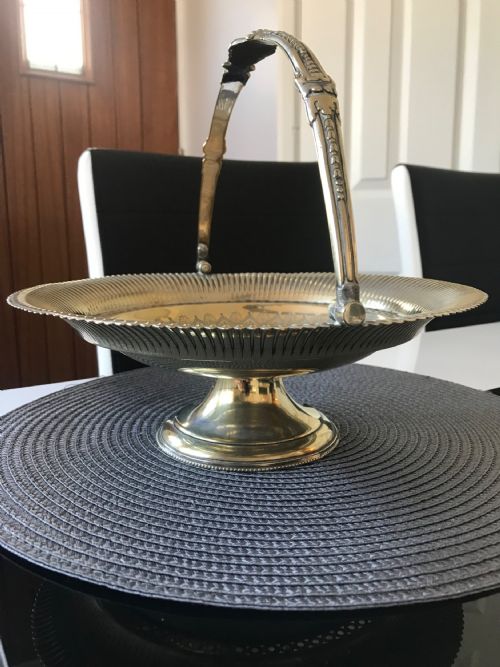
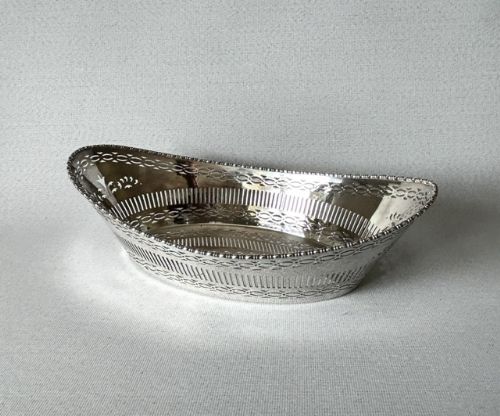
A silver table centrepiece dish serves as a decorative focal point for the dining table, appearing in forms such as bowls, baskets, tazzas and shell dishes. The pieces on this page span the eighteenth century through to the mid twentieth century, covering Georgian, Victorian, Edwardian, Art Nouveau and Art Deco eras.
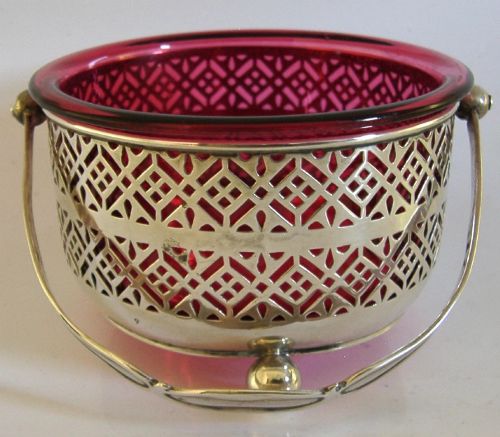
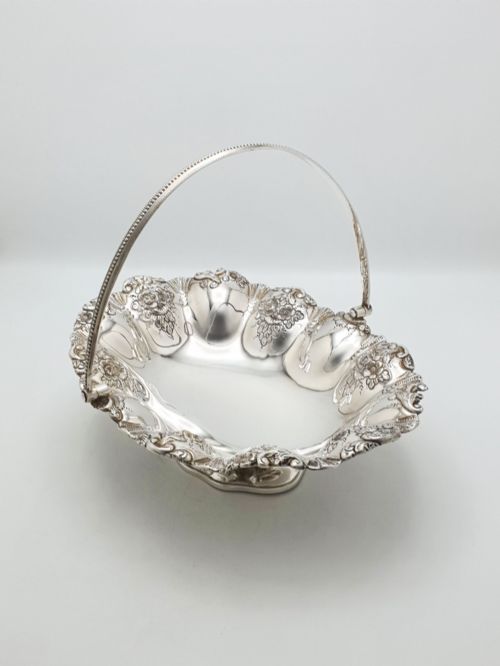
Buyers will frequently encounter Edwardian and Victorian examples alongside twentieth century pieces. These range from heavy solid silver baskets and pedestal bowls to silver plated fruit baskets fitted with glass liners.
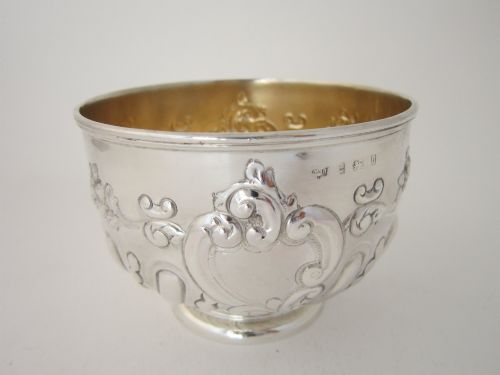
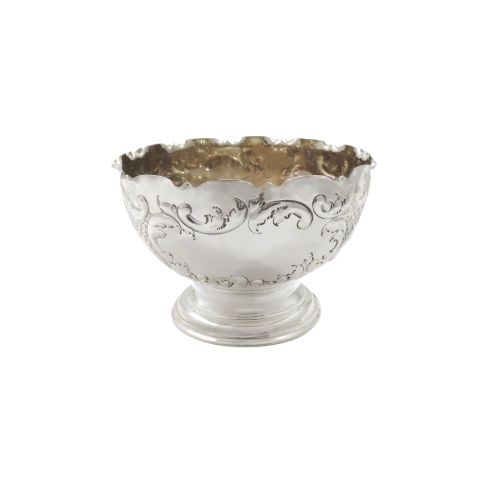
Design influences vary widely across the selection. Neo-Classical motifs, Rococo revival floral repoussé, organic Art Nouveau curves and planished Arts and Crafts surfaces all define the objects available.
Materials and construction
Craftsmen shaped these items using sterling silver, solid silver, silver plate, Old Sheffield plate and electroplated nickel silver. Many pieces combine metalwork with blown or moulded glass elements, including cranberry glass, amber glass, ruby glass and green vaseline glass.
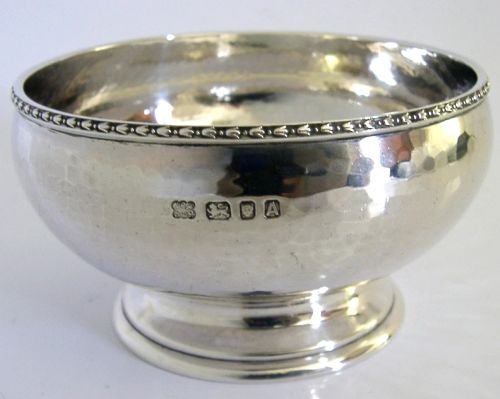
Techniques recorded in the listings include piercing, hammering, planishing, casting and floral repoussé work. Some vessels feature parcel gilt interiors or structural mounts paired with crystal and cut glass bodies.
Listings incorporate glass inserts in cranberry, amber, ruby and green vaseline varieties alongside sterling silver and silver plate.
Distinguishing quality
Superior examples display crisp chasing, substantial metal weight and careful hand-finishing on handles, rims and feet. The integration of high-grade coloured glass liners with fitted metal mounts demonstrates greater original expenditure.
The distinction between solid sterling silver and plated wares lies in material longevity, though master silversmiths and notable firms produced plated vessels with equal structural and artistic ambition.
Tiffany & Co.·Mappin & Webb·Charles Boyton·WMF·Thomas Bradbury·George W. Scott & Sons Ltd·Doulton Burslem
The Silver Table Centrepiece Dish Glossary
- Silver plate
- A layer of silver fused or electroplated onto a base metal such as copper or nickel silver. This technique allowed makers to achieve the appearance of solid silver at a lower production cost.
- Repoussé
- A metalworking technique where the artisan hammers the design from the reverse side to form raised floral or scroll patterns on the front. It is commonly found on Victorian and Edwardian bowls and trays.
- Vaseline glass
- A type of glass containing uranium dioxide that produces a distinctive yellow-green hue and glows under ultraviolet light. It frequently appears paired with silver plated baskets from the turn of the twentieth century.
- Old Sheffield plate
- An early form of composite metal made by fusing a thin sheet of silver to a thicker copper core. Pieces utilising this method date from the eighteenth and early nineteenth centuries.
- Tazza
- A shallow bowl or saucer raised on a central foot or pedestal, used for serving fruit or confections. They appear in both silver plate and sterling silver across various decorative styles.
Silver Table Centrepiece Dish: Frequently Asked Questions
What is a silver table centrepiece dish used for?
These vessels were historically placed in the middle of dining tables to serve fruit, bread, cakes or sweetmeats during formal meals. They also functioned purely as decorative objects to display coloured glass liners.
Today, they serve a similar decorative purpose on dining tables, sideboards or coffee tables within the home.
How do I tell sterling silver from silver plate?
Sterling silver items typically bear official hallmarks stamped into the metal, indicating the purity standard, assay office and date of manufacture. Silver plated items lack these specific sterling marks and may show base metal beneath worn areas.
Examination of the hallmarks provides the most reliable method for identifying solid silver pieces.
How do I care for antique silver and glass?
Silver requires occasional gentle cleaning with a specialised cloth to remove tarnish without abrading the surface detail or repoussé work. Glass liners should be washed by hand in warm soapy water and dried thoroughly before replacement.
Avoiding harsh chemical dips preserves the original patination and finish of the metal.
How do I date a silver centrepiece dish?
Dating relies heavily on British hallmarks found on sterling silver pieces, which include specific letters corresponding to the year of assay. Stylistic indicators such as Art Nouveau whiplash lines, Edwardian floral repoussé or geometric Art Deco forms also narrow down the period of production.
Construction methods like Old Sheffield plating point towards the eighteenth or early nineteenth century.